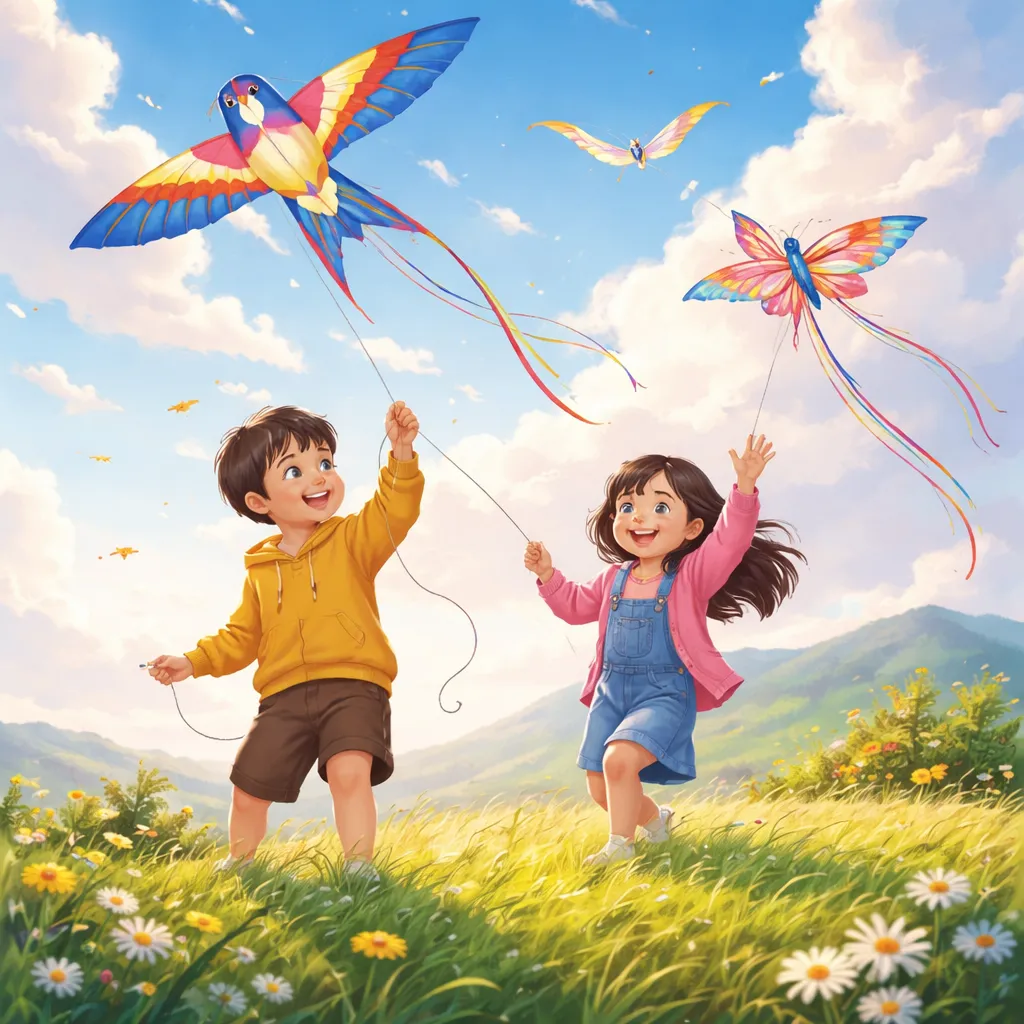

Some songs lift our spirits as high as kites in the wind. The Chinese Songs: Little Kite (小风筝) does exactly that. This joyful children's song celebrates the beauty of kites dancing in the spring sky. For families learning English and Chinese together, this song offers a wonderful way to explore sky words, colors, and the pure joy of watching something soar. Let us discover what makes this traditional song so uplifting for young learners.
What Is the Story Behind This Famous Song?
The Chinese Songs: Little Kite (小风筝) is a beloved children's song from China. It describes a colorful kite flying high in the blue sky, dancing with the wind. The song captures the excitement of spring when families go to parks and open fields to fly kites together.
Kite flying is an ancient tradition in China, dating back over two thousand years. Chinese kites come in many shapes and colors. Some look like birds, butterflies, or dragons. Others are simple diamond shapes with long tails. The spring festival of Qingming is a traditional time for kite flying.
The song personifies the kite as a little friend who plays in the sky. The wind carries it higher and higher. The string connects it to the child on the ground. This connection between earth and sky represents dreams and hopes reaching upward.
The melody is light and bouncy, like a kite dancing on wind currents. Children often stretch their arms like kites while singing, imagining themselves flying high above.
Understanding this背景 helps families appreciate the song's connection to Chinese culture and the universal joy of kite flying. It opens conversations about wind, weather, and the simple pleasure of watching something beautiful in the sky.
The Complete Lyrics of the Song
Reading the words helps us understand this joyful kite dance. Here are the lyrics to the Chinese Songs: Little Kite (小风筝) in Chinese characters, pinyin, and English.
小风筝,小风筝,飞在蓝蓝天空中
Xiǎo fēngzheng, xiǎo fēngzheng, fēi zài lán lán tiānkōng zhōng
Little kite, little kite, flying in blue blue sky
风儿吹,线儿牵,高高飞上白云间
Fēng er chuī, xiàn er qiān, gāo gāo fēi shàng bái yún jiān
Wind blows, string pulls, high fly up to white clouds
小风筝,小风筝,带着快乐到处游
Xiǎo fēngzheng, xiǎo fēngzheng, dài zhe kuàilè dàochù yóu
Little kite, little kite, carrying happiness everywhere travel
摆摆尾,摇摇头,好像一只小蜻蜓
Bǎi bǎi wěi, yáo yáo tóu, hǎo xiàng yī zhǐ xiǎo qīngtíng
Swing swing tail, shake shake head, just like a little dragonfly
小风筝,小风筝,飞得高呀飞得远
Xiǎo fēngzheng, xiǎo fēngzheng, fēi de gāo ya fēi de yuǎn
Little kite, little kite, fly so high and fly so far
线儿放,线儿收,快快回到我身边
Xiàn er fàng, xiàn er shōu, kuài kuài huí dào wǒ shēn biān
String let out, string pull in, quickly quickly return to my side
Learning New Words from the Song
The Chinese Songs: Little Kite (小风筝) introduces many useful words. Let us explore them in both Chinese and English.
First, "小风筝" (xiǎo fēngzheng) means little kite. "风" (fēng) means wind. "筝" (zheng) is a type of musical instrument, but together "风筝" means kite, something that rides the wind.
"飞在" (fēi zài) means flying in. "飞" (fēi) is one of the first action words children learn. Birds fly. Planes fly. Kites fly.
"蓝蓝天空中" (lán lán tiānkōng zhōng) means in the blue blue sky. Repeating "蓝" (lán) makes the color more vivid. "天空" (tiānkōng) means sky. "中" (zhōng) means inside or middle.
"风儿吹" (fēng er chuī) means wind blows. "线儿牵" (xiàn er qiān) means string pulls. The "儿" (er) adds a gentle, affectionate tone to both words.
"高高飞上" (gāo gāo fēi shàng) means high high fly up. Repeating "高" (gāo) emphasizes how high the kite goes.
"白云间" (bái yún jiān) means among white clouds. "白" (bái) is white. "云" (yún) is cloud. "间" (jiān) means between or among.
"带着快乐" (dài zhe kuàilè) means carrying happiness. "快乐" (kuàilè) is happiness, a word children love to learn.
"到处游" (dàochù yóu) means travel everywhere. "游" (yóu) means to roam or travel, like a fish swimming or a kite floating.
"摆摆尾" (bǎi bǎi wěi) means swing swing tail. The kite's tail moves in the wind. "摇摇头" (yáo yáo tóu) means shake shake head. These movements make the kite seem alive.
"好像" (hǎo xiàng) means just like or similar to. "一只小蜻蜓" (yī zhǐ xiǎo qīngtíng) means one little dragonfly. The kite dances like a dragonfly in the air.
"飞得高呀飞得远" (fēi de gāo ya fēi de yuǎn) means fly so high and fly so far. "得" (de) connects the verb to the description.
"线儿放" (xiàn er fàng) means string let out. "线儿收" (xiàn er shōu) means string pull in. These are the actions kite flyers do.
"快快回到我身边" (kuài kuài huí dào wǒ shēn biān) means quickly quickly return to my side. After flying high, the kite comes home.
Exploring Pronunciation and Rhythm
The Chinese Songs: Little Kite (小风筝) offers wonderful practice with Mandarin tones and rhythm. The bouncy melody matches the kite's dancing movement.
Listen to "Xiǎo fēngzheng, xiǎo fēngzheng" repeated. The tones go: xiǎo (third tone, falling then rising), fēng (first tone, high level), zheng (first tone). The repetition helps children practice the first tone's high, steady pitch.
The phrase "fēi de gāo ya fēi de yuǎn" has a flowing rhythm. "Fēi" (first tone), "de" (neutral tone), "gāo" (first tone), "ya" (particle), "fēi" (first tone), "de" (neutral), "yuǎn" (third tone). The particle "ya" adds a playful feeling.
"Bǎi bǎi wěi, yáo yáo tóu" uses third tone for "bǎi" (falling then rising) and second tone for "yáo" (rising). The repeated words sound like the kite's gentle movements.
Finding Grammar Patterns in the Lyrics
The Chinese Songs: Little Kite (小风筝) offers useful grammar examples for Chinese learners. One pattern appears with the directional complement "上" (shàng) in "飞上" (fēi shàng). This shows upward movement. "回到" (huí dào) uses "到" (dào) to show arrival.
The song uses "得" (de) in "飞得高" (fēi de gāo) to connect the verb to its description. This structure is essential for describing how actions are done. For example, "跑得快" (run fast) or "吃得多" (eat a lot).
Another pattern appears with repeated verbs. "摆摆" (bǎi bǎi) and "摇摇头" (yáo yáo tóu) show actions done lightly or repeatedly. This reduplication pattern is common in Chinese.
The particle "着" (zhe) in "带着" (dài zhe) shows an ongoing state. The kite carries happiness continuously as it flies.
The word "好像" (hǎo xiàng) introduces a comparison. This helps children learn to describe things by comparing them to familiar objects.
Fun Learning Activities for the Whole Family
Listening to the Chinese Songs: Little Kite (小风筝) can inspire many family activities. Here are some ideas to try together.
First, make a simple kite together. Use paper, sticks, string, and ribbon. Let children decorate their kites with colors and patterns. Practice Chinese words while crafting. "纸" (zhǐ) for paper, "线" (xiàn) for string, "颜色" (yánsè) for colors. This connects language to hands-on creation.
Second, fly your kite on a windy day. Find an open space with good wind. Take turns holding the string and watching the kite soar. Use Chinese words from the song. "风儿吹" (wind blows), "飞得高" (fly high), "线儿放" (let out string). This makes the song come alive.
Third, observe real kites if possible. Visit a park where people fly kites. Notice different shapes and colors. Describe them in Chinese. "那只风筝像蜻蜓" (that kite looks like a dragonfly) or "红色的风筝" (red kite). This builds observation and description skills.
Creating Printable Materials at Home
Families can make simple learning tools based on the Chinese Songs: Little Kite (小风筝). These activities help reinforce new ideas.
Create bilingual kite vocabulary flashcards. On one side, write the Chinese character and pinyin for kite words. Kite, 风筝. Wind, 风. Sky, 天空. Cloud, 云. String, 线. On the other side, write the English word and draw a picture. Review these cards together on windy days.
Make a kite coloring page. Draw different kite shapes. Diamond, bird, butterfly, dragon. Let children color them brightly. Label each shape in Chinese and English. "小鸟风筝" (little bird kite) or "蝴蝶风筝" (butterfly kite). This builds vocabulary through art.
Create a fill-in-the-blank page using song lyrics in pinyin. Remove key words like "fēngzheng", "tiānkōng", "fēng", "yún", "kuàilè", and "qīngtíng". Leave blanks where those words belong. Listen to the song together and fill in the missing words. This builds listening and character recognition.
Connecting the Song to Daily Life
The Chinese Songs: Little Kite (小风筝) connects to daily life through wind and sky. Every child has felt wind on their face. Every child has looked up at clouds.
Talk with your children about what they see in the sky. Birds, planes, clouds, and sometimes kites. Use Chinese words to describe them. "看,一只鸟" (look, a bird) or "云好白" (clouds are so white). This builds observation vocabulary.
The song also teaches about connection. The string connects the kite to the child. In life, we are connected to people we love. Talk about family connections using Chinese. "妈妈爱我" (mom loves me) or "我们是一家人" (we are a family). This builds emotional vocabulary.
Parents can model wonder at the sky. Point out beautiful clouds or a soaring bird. Say "真美啊" (so beautiful). This encourages children to notice and describe the world.
Educational Games to Play Together
Games make learning with the Chinese Songs: Little Kite (小风筝) exciting. Here are some simple games to try.
Play the kite and wind game. One person is the kite and stands with arms out. Another is the wind and blows gently. The kite moves in the direction of the wind. Use Chinese commands. "风吹向左边" (wind blows to the left) or "飞高点" (fly higher). This builds listening and direction vocabulary.
Try the color kite game. Cut out paper kites in different colors. Spread them on the floor. Call out a color in Chinese. "红色的风筝" (red kite). Children find that kite and hold it up. This builds color recognition.
Play the string game. Use a long string or rope. One person holds one end and lets out string while another "flies" away. Practice Chinese phrases. "放线" (let out string) and "收线" (pull in string). This builds action vocabulary.
Why This Song Helps Language Learning
The Chinese Songs: Little Kite (小风筝) helps learners in special ways. The bouncy tempo makes words easy to hear. Each syllable is clear. This helps children catch new vocabulary without feeling rushed.
The repetition in the song reinforces key phrases. "小风筝" repeats throughout. "飞" appears many times. Repetition builds memory without effort.
The sky theme connects to universal experiences. Children everywhere look up at the sky. This makes the Chinese words meaningful and memorable.
The playful imagery of kites dancing captures imagination. Children love pretending to be kites. This engagement keeps them interested in the language.
Making Music Part of Your Routine
Families can make songs a regular part of bilingual learning. Choose one song each week to explore together. Listen on windy days or while looking out windows.
The Chinese Songs: Little Kite (小风筝) works perfectly for spring days. Play it when the wind is blowing and kites might be flying. Let the music lift your spirits like a kite.
Remember that language learning thrives in joyful moments. When children associate Chinese with dancing kites and blue skies, they learn naturally. They understand that words connect to beautiful experiences.
Keep singing, keep flying kites, and keep reaching for the sky together. In the great blue sky of bilingual learning, every new word is like a kite soaring higher and higher.