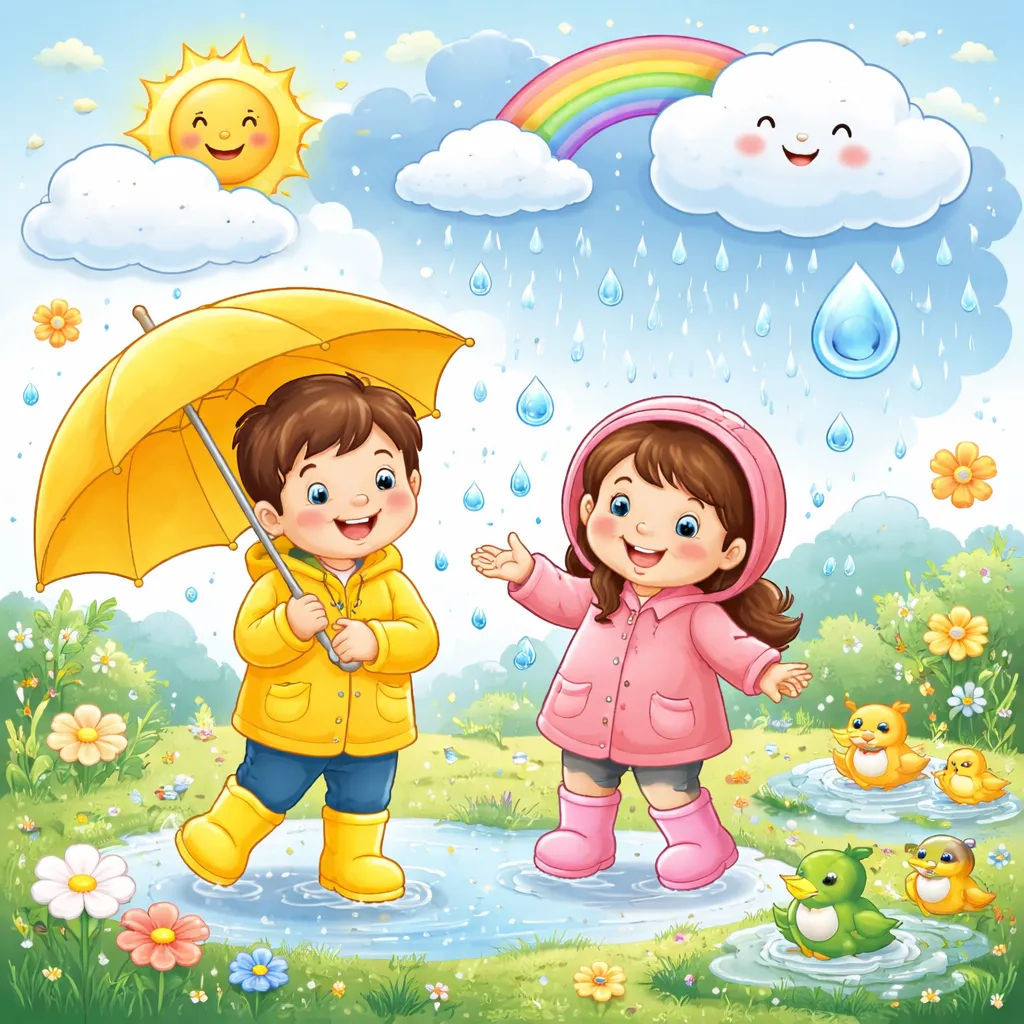

Some songs bring the freshness of rain right into our homes. The Chinese Songs: Little Raindrops (小雨点) does exactly that. This gentle children's song celebrates rain falling from the sky, watering flowers and making everything fresh. For families learning English and Chinese together, this song offers a beautiful way to explore weather words, nature vocabulary, and the joy of rainy days. Let us discover what makes this traditional song so refreshing for young learners.
What Is the Story Behind This Famous Song?
The Chinese Songs: Little Raindrops (小雨点) is a beloved children's song from China. It describes rain falling gently from the sky and bringing life to flowers and plants. The song personifies raindrops as little visitors who come to play and help things grow.
In Chinese culture, rain is seen as a blessing. It waters crops, fills rivers, and brings life to the earth. Farmers pray for rain at the right times. Children learn to appreciate rain as something beautiful and necessary, not just an inconvenience.
The song uses simple, repetitive language that young children can easily learn. Each verse describes raindrops falling on different things. Flowers smile. Grass grows green. The whole world feels fresh and clean.
The melody is gentle and soothing, like rain itself. It moves up and down like falling drops. Children often sway while singing, imagining themselves as raindrops floating down from clouds.
Understanding this背景 helps families appreciate the song's connection to nature. It opens conversations about weather, seasons, and how rain helps our world.
The Complete Lyrics of the Song
Reading the words helps us understand this gentle rain picture. Here are the lyrics to the Chinese Songs: Little Raindrops (小雨点) in Chinese characters, pinyin, and English.
小雨点,小雨点,从天空飘下来
Xiǎo yǔ diǎn, xiǎo yǔ diǎn, cóng tiān kōng piāo xià lái
Little raindrops, little raindrops, from the sky float down
飘到花园里,花儿朵朵开
Piāo dào huā yuán lǐ, huā er duǒ duǒ kāi
Float to the garden, flowers bloom one by one
小雨点,小雨点,从天空飘下来
Xiǎo yǔ diǎn, xiǎo yǔ diǎn, cóng tiān kōng piāo xià lái
Little raindrops, little raindrops, from the sky float down
飘到草地上,草儿青青翠
Piāo dào cǎo dì shàng, cǎo er qīng qīng cuì
Float to the grassland, grass fresh and green
小雨点,小雨点,从天空飘下来
Xiǎo yǔ diǎn, xiǎo yǔ diǎn, cóng tiān kōng piāo xià lái
Little raindrops, little raindrops, from the sky float down
飘到小河里,河水笑微微
Piāo dào xiǎo hé lǐ, hé shuǐ xiào wēi wēi
Float to the small river, river water smiles gently
Learning New Words from the Song
The Chinese Songs: Little Raindrops (小雨点) introduces many useful words. Let us explore them in both Chinese and English.
First, "小雨点" (xiǎo yǔ diǎn) means little raindrops. "小" (xiǎo) means small. "雨" (yǔ) means rain. "点" (diǎn) means drop or point. Together they paint a picture of tiny water drops falling.
"从天空飘下来" (cóng tiān kōng piāo xià lái) means from the sky float down. "从" (cóng) means from. "天空" (tiān kōng) means sky. "飘" (piāo) means float gently. "下来" (xià lái) means come down. This whole phrase describes rain's gentle movement.
"飘到" (piāo dào) means float to. The raindrops travel to different places.
"花园里" (huā yuán lǐ) means inside the garden. "花" (huā) means flower. "园" (yuán) means garden. "里" (lǐ) means inside.
"花儿朵朵开" (huā er duǒ duǒ kāi) means flowers bloom one by one. "朵朵" (duǒ duǒ) repeats the word for flower, showing many flowers. "开" (kāi) means open or bloom.
"草地上" (cǎo dì shàng) means on the grassland. "草" (cǎo) means grass. "地" (dì) means ground. "上" (shàng) means on top.
"草儿青青翠" (cǎo er qīng qīng cuì) means grass fresh and green. "青青" (qīng qīng) repeats the word for green, showing bright green color. "翠" (cuì) means jade green, a rich, beautiful green.
"小河里" (xiǎo hé lǐ) means inside the small river. "河" (hé) means river.
"河水笑微微" (hé shuǐ xiào wēi wēi) means river water smiles gently. This personification gives the river human feelings. "笑" (xiào) means smile. "微微" (wēi wēi) means slightly or gently.
Exploring Pronunciation and Rhythm
The Chinese Songs: Little Raindrops (小雨点) offers wonderful practice with Mandarin tones and rhythm. The gentle, falling melody matches the meaning perfectly.
Listen to the opening "Xiǎo yǔ diǎn, xiǎo yǔ diǎn". The tones go: xiǎo (third tone, falling then rising), yǔ (third tone), diǎn (third tone). Three third tones in a row require careful pronunciation. The repetition helps children practice this pattern.
The phrase "piāo xià lái" uses first tone for "piāo" (high and level), fourth tone for "xià" (falling), and second tone for "lái" (rising). This combination creates a floating feeling in the mouth.
The repeated "朵朵" (duǒ duǒ) and "青青" (qīng qīng) are common in Chinese songs. This repetition makes the song easier to learn and more pleasing to hear.
Finding Grammar Patterns in the Lyrics
The Chinese Songs: Little Raindrops (小雨点) offers useful grammar examples for Chinese learners. One pattern appears with the directional complement "下来" (xià lái) in "飘下来" (piāo xià lái). This shows movement downward toward the speaker. Similar patterns appear in many Chinese sentences.
The song uses "到" (dào) to show destination. "飘到花园里" (piāo dào huā yuán lǐ) means float to the garden. This structure is essential for talking about movement.
Another pattern appears with location words. "里" (lǐ) means inside. "上" (shàng) means on top. These small words are crucial for describing where things are.
The song uses repetition of adjectives for emphasis. "青青" (qīng qīng) is stronger than just "青" (qīng). This pattern appears often in Chinese.
The personification "河水笑微微" (hé shuǐ xiào wēi wēi) teaches that Chinese, like English, can give human qualities to nature.
Fun Learning Activities for the Whole Family
Listening to the Chinese Songs: Little Raindrops (小雨点) can inspire many family activities. Here are some ideas to try together.
First, observe rain together. When it rains, watch the drops fall. Where do they go? On flowers? On grass? In rivers? Use both English and Chinese to describe what you see. "Raindrops on the flowers" or "小雨点在花上". This connects the song to real weather.
Second, create rain art. Use blue paper and water droppers to make raindrop paintings. Drop water on paper and watch it spread. Describe the process in Chinese. "小雨点飘下来" (little raindrops float down). This combines art with language.
Third, go on a rainy day walk. Wear boots and splash in puddles. Notice how rain changes everything. Leaves look brighter. Air smells fresher. Use Chinese words from the song to describe what you see. "草儿青青翠" (grass fresh and green) or "花儿朵朵开" (flowers bloom).
Creating Printable Materials at Home
Families can make simple learning tools based on the Chinese Songs: Little Raindrops (小雨点). These activities help reinforce new ideas.
Create bilingual weather flashcards. On one side, write the Chinese character and pinyin for weather words. Rain, 雨. Cloud, 云. Sun, 太阳. Wind, 风. On the other side, write the English word and draw a picture. Review these cards together when the weather matches.
Make a raindrop counting book. Fold papers together to make a small book. On each page, draw a different number of raindrops. Write the number in Chinese and English. "三小雨点" or "three raindrops". This builds number vocabulary.
Create a fill-in-the-blank page using song lyrics in pinyin. Remove key words like "yǔ diǎn", "tiān kōng", "huā yuán", "cǎo dì", and "xiǎo hé". Leave blanks where those words belong. Listen to the song together and fill in the missing words. This builds listening and character recognition.
Connecting the Song to Daily Life
The Chinese Songs: Little Raindrops (小雨点) connects to daily life through weather. Rain is part of every child's experience. Some days are rainy. Some are sunny. The song helps children talk about these experiences in Chinese.
Talk with your children about how rain makes them feel. Some people feel cozy on rainy days. Others feel sad. Use both languages to share feelings. "I like watching rain" or "我喜欢看雨". This builds emotional vocabulary.
The song also teaches about how rain helps things grow. Plants need water. Farmers need rain. Talk about where food comes from and how rain helps. Use Chinese words for plants and food. This connects language to science and nature.
Parents can model appreciation for rain. Instead of saying rain ruins plans, say "Rain helps the flowers grow" or "雨帮助花儿开". This positive attitude helps children see rain as a gift.
Educational Games to Play Together
Games make learning with the Chinese Songs: Little Raindrops (小雨点) exciting. Here are some simple games to try.
Play the raindrop game. One person is a cloud and drops soft objects like cotton balls as "raindrops". Others catch them and say where they landed. "飘到花上" (float to the flower) or "飘到草上" (float to the grass). This builds location vocabulary.
Try the weather reporter game. One person pretends to be a weather reporter on TV. They describe today's weather in Chinese. "今天有小雨点" (today has little raindrops) or "太阳很大" (sun is big). Others listen and respond. This builds weather vocabulary.
Play the bloom and grow game. Children pretend to be flowers or grass. When you say "下雨了" (it's raining), they slowly stand up and bloom. When you say "太阳出来了" (sun comes out), they stretch and smile. This builds listening and movement.
Why This Song Helps Language Learning
The Chinese Songs: Little Raindrops (小雨点) helps learners in special ways. The gentle tempo makes words easy to hear. Each syllable is clear. This helps children catch new vocabulary without feeling rushed.
The repetition in the song reinforces key phrases. "小雨点" repeats at the beginning of each verse. "飘到" repeats with each new place. Repetition builds memory without effort.
The nature theme connects to universal experiences. Children everywhere know rain. This makes the Chinese words meaningful and memorable.
The personification of nature makes the song feel magical. Flowers bloom. Rivers smile. This magic captures children's imagination and keeps them engaged.
Making Music Part of Your Routine
Families can make songs a regular part of bilingual learning. Choose one song each week to explore together. Listen during rainy days or while looking out windows.
The Chinese Songs: Little Raindrops (小雨点) works perfectly for rainy afternoons. Play it while watching real rain. Let the music blend with the sound of falling drops.
Remember that language learning thrives in natural moments. When children associate Chinese with rain pattering on windows, they learn deeply. They understand that words connect to the world around them.
Keep singing, keep watching the rain, and keep celebrating the fresh language that falls like gentle drops into your family's life. In the garden of bilingual learning, every new word is like rain helping beautiful flowers grow.