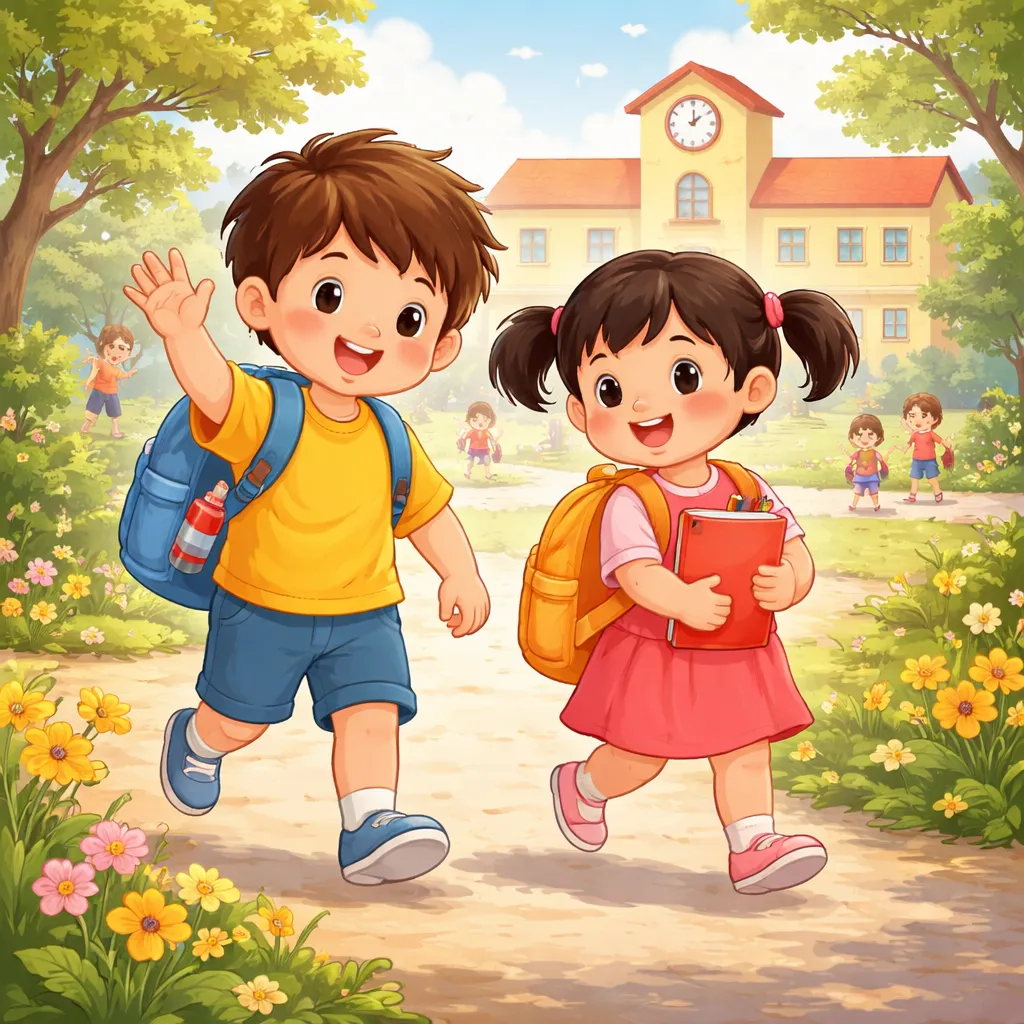

Some songs carry the happy feeling of going to school. The Chinese Songs: Little Schoolbag (小书包) does exactly that. This cheerful children's song celebrates the little schoolbag that holds books, pencils, and dreams. For families learning English and Chinese together, this song offers a wonderful way to explore school vocabulary, daily routines, and the excitement of learning. Let us discover what makes this traditional song so special for young learners.
What Is the Story Behind This Famous Song?
The Chinese Songs: Little Schoolbag (小书包) is a beloved children's song from China. It describes a child's schoolbag and all the wonderful things it contains. The song captures the anticipation and joy of going to school each day.
In China, as in many countries, starting school is a big milestone. Children receive their first schoolbag with great excitement. The bag represents growing up, learning new things, and making friends. It holds not just books and pencils, but hopes and dreams.
The song personifies the little schoolbag as a faithful friend who accompanies the child each day. It goes to school, comes home, and waits patiently for the next adventure. This makes the schoolbag feel alive and special.
The melody is bright and cheerful, like a happy morning. Children often bounce along while singing, imagining themselves walking to school with their bags on their backs.
Understanding this背景 helps families appreciate the song's connection to school life and the universal experience of carrying a bag full of learning tools. It opens conversations about school, responsibility, and the joy of education.
The Complete Lyrics of the Song
Reading the words helps us understand this happy school morning. Here are the lyrics to the Chinese Songs: Little Schoolbag (小书包) in Chinese characters, pinyin, and English.
小书包,小书包,背在我肩上
Xiǎo shū bāo, xiǎo shū bāo, bēi zài wǒ jiān shàng
Little schoolbag, little schoolbag, carry on my shoulder
装课本,装铅笔,陪我去学堂
Zhuāng kè běn, zhuāng qiān bǐ, péi wǒ qù xué táng
Hold textbooks, hold pencils, accompany me go to school
小书包,小书包,里面有梦想
Xiǎo shū bāo, xiǎo shū bāo, lǐ miàn yǒu mèng xiǎng
Little schoolbag, little schoolbag, inside have dreams
学知识,长本领,天天向上
Xué zhī shi, zhǎng běn lǐng, tiān tiān xiàng shàng
Learn knowledge, grow skills, every day upward
小书包,小书包,我的好朋友
Xiǎo shū bāo, xiǎo shū bāo, wǒ de hǎo péng you
Little schoolbag, little schoolbag, my good friend
放学了,回家去,明天再碰头
Fàng xué le, huí jiā qù, míng tiān zài pèng tóu
School ends, go home, tomorrow again meet
Learning New Words from the Song
The Chinese Songs: Little Schoolbag (小书包) introduces many useful words. Let us explore them in both Chinese and English.
First, "小书包" (xiǎo shū bāo) means little schoolbag. "书" (shū) means book. "包" (bāo) means bag. Together they describe a bag for books.
"背在我肩上" (bēi zài wǒ jiān shàng) means carry on my shoulder. "背" (bēi) means carry on back. "肩" (jiān) means shoulder. "上" (shàng) means on.
"装课本" (zhuāng kè běn) means hold textbooks. "装" (zhuāng) means pack or hold. "课本" (kè běn) means textbook.
"装铅笔" (zhuāng qiān bǐ) means hold pencils. "铅笔" (qiān bǐ) means pencil.
"陪我去学堂" (péi wǒ qù xué táng) means accompany me go to school. "陪" (péi) means accompany. "学堂" (xué táng) is an old word for school, still used in songs.
"里面有梦想" (lǐ miàn yǒu mèng xiǎng) means inside have dreams. "里面" (lǐ miàn) means inside. "梦想" (mèng xiǎng) means dreams.
"学知识" (xué zhī shi) means learn knowledge. "学" (xué) means learn. "知识" (zhī shi) means knowledge.
"长本领" (zhǎng běn lǐng) means grow skills. "本领" (běn lǐng) means ability or skill.
"天天向上" (tiān tiān xiàng shàng) means every day upward. This common phrase encourages progress.
"好朋友" (hǎo péng you) means good friend. The schoolbag becomes a friend.
"放学了" (fàng xué le) means school ends. "放" (fàng) means release. "学" (xué) means school.
"回家去" (huí jiā qù) means go home. "回" (huí) means return. "家" (jiā) means home.
"明天再碰头" (míng tiān zài pèng tóu) means tomorrow again meet. "明天" (míng tiān) means tomorrow. "碰头" (pèng tóu) means meet, literally "bump heads".
Exploring Pronunciation and Rhythm
The Chinese Songs: Little Schoolbag (小书包) offers wonderful practice with Mandarin tones and rhythm. The cheerful melody matches the happy school morning.
Listen to "Xiǎo shū bāo" repeated. The tones go: xiǎo (third tone, falling then rising), shū (first tone, high level), bāo (first tone, high level). The first tones are steady like a confident walk to school.
The phrase "bēi zài wǒ jiān shàng" uses first tone for "bēi" (high level), fourth tone for "zài" (falling), third tone for "wǒ" (falling then rising), first tone for "jiān" (high level), and fourth tone for "shàng" (falling). This variety keeps the melody interesting.
"Tiān tiān xiàng shàng" uses first tone for "tiān" (high level), repeated, fourth tone for "xiàng" (falling), and fourth tone for "shàng" (falling). The falling tones emphasize the upward movement.
Finding Grammar Patterns in the Lyrics
The Chinese Songs: Little Schoolbag (小书包) offers useful grammar examples for Chinese learners. One pattern appears with location words. "里面" (lǐ miàn) means inside. This word helps describe where things are.
The song uses the verb "装" (zhuāng) meaning to pack or hold. This verb is useful for talking about containers.
Another pattern appears with serial verbs. "陪我去学堂" uses "陪" (accompany) and "去" (go) together. This structure shows one action helping another.
The phrase "天天向上" (tiān tiān xiàng shàng) shows how repeating "天" (day) means "every day". "向上" (xiàng shàng) means upward, combining direction with movement.
The word "再" (zài) in "明天再碰头" means "again" for future actions. This teaches how to talk about repeated events.
Fun Learning Activities for the Whole Family
Listening to the Chinese Songs: Little Schoolbag (小书包) can inspire many family activities. Here are some ideas to try together.
First, pack a schoolbag together. Gather actual school supplies. Name each item in Chinese as you pack it. "课本" (textbook), "铅笔" (pencil), "橡皮" (eraser), "尺子" (ruler). This connects language to real objects.
Second, create a schoolbag craft. Use paper or fabric to make a little schoolbag. Decorate it with drawings of school supplies. Label each item in Chinese. Hang it where everyone can see. This builds vocabulary through art.
Third, practice the morning routine. Act out getting ready for school. Put on the schoolbag. Walk to school. Greet teachers and friends. Use Chinese phrases from the song. "背书包" (carry schoolbag), "去学堂" (go to school), "放学了" (school ends). This makes language part of daily play.
Creating Printable Materials at Home
Families can make simple learning tools based on the Chinese Songs: Little Schoolbag (小书包). These activities help reinforce new ideas.
Create bilingual school supply flashcards. On one side, write the Chinese character and pinyin for school items. Schoolbag, 书包. Book, 书. Pencil, 铅笔. Eraser, 橡皮. On the other side, draw a picture and write the English word. Practice by packing an actual bag with the items.
Make a daily schedule chart. Draw a simple chart showing school day activities. Morning routine, classes, lunch, going home. Label each in Chinese. "上学" (go to school), "上课" (have class), "放学" (school ends). This builds time and routine vocabulary.
Create a fill-in-the-blank page using song lyrics in pinyin. Remove key words like "shū bāo", "kè běn", "qiān bǐ", "xué táng", "mèng xiǎng", and "péng you". Leave blanks where those words belong. Listen to the song together and fill in the missing words. This builds listening and character recognition.
Connecting the Song to Daily Life
The Chinese Songs: Little Schoolbag (小书包) connects to daily life through school routines. Every school day, children pack their bags and head to class.
Talk with your children about their school day. What do they pack? What do they learn? Who are their friends? Use Chinese to share. "我书包里有语文书" (my bag has Chinese book) or "我今天学数学" (today I learned math). This builds personal connection to vocabulary.
The song also teaches about responsibility. The child takes care of their schoolbag and its contents. In daily life, children can learn to organize their own things. Use Chinese to encourage this. "整理你的书包" (organize your schoolbag) or "铅笔放好了吗" (are pencils put away).
Parents can model enthusiasm for learning. When children come home, ask "今天学了什么" (what did you learn today). This shows that learning matters and gives practice using Chinese.
Educational Games to Play Together
Games make learning with the Chinese Songs: Little Schoolbag (小书包) exciting. Here are some simple games to try.
Play the school supply scavenger hunt. Call out items in Chinese. "找铅笔" (find pencil), "找橡皮" (find eraser). Children find them and hold them up. This builds listening and object recognition.
Try the what's in my bag game. Place several school items in a bag. Children reach in without looking, feel one item, and guess what it is in Chinese. "是铅笔" (it's a pencil) or "是课本" (it's a textbook). This builds sensory vocabulary.
Play the school day sequence game. Put pictures of school activities in order. Morning, classes, lunch, going home. Describe each in Chinese. "早上背书包" (morning carry bag), "下午放学" (afternoon school ends). This builds sequencing skills.
Why This Song Helps Language Learning
The Chinese Songs: Little Schoolbag (小书包) helps learners in special ways. The cheerful tempo makes words easy to hear. Each phrase is clear. This helps children catch new vocabulary without feeling rushed.
The school theme connects to daily experience. Children live this vocabulary every day. This makes the Chinese words meaningful and immediately useful.
The personification of the schoolbag as a friend creates emotional connection. Children care about their bags and remember words associated with them.
The routine vocabulary helps children talk about their own day. They can use these words immediately in real situations.
Making Music Part of Your Routine
Families can make songs a regular part of bilingual learning. Choose one song each week to explore together. Listen during morning routines or while packing schoolbags.
The Chinese Songs: Little Schoolbag (小书包) works perfectly for school mornings. Play it while getting ready. Let the music add joy to the routine.
Remember that language learning thrives in daily moments. When children associate Chinese with their own schoolbags and classrooms, they learn naturally. They understand that words connect to their real lives.
Keep singing, keep packing, and keep learning together. In the great school of bilingual learning, every new word is like a pencil or book, ready to help your child grow smarter every day.