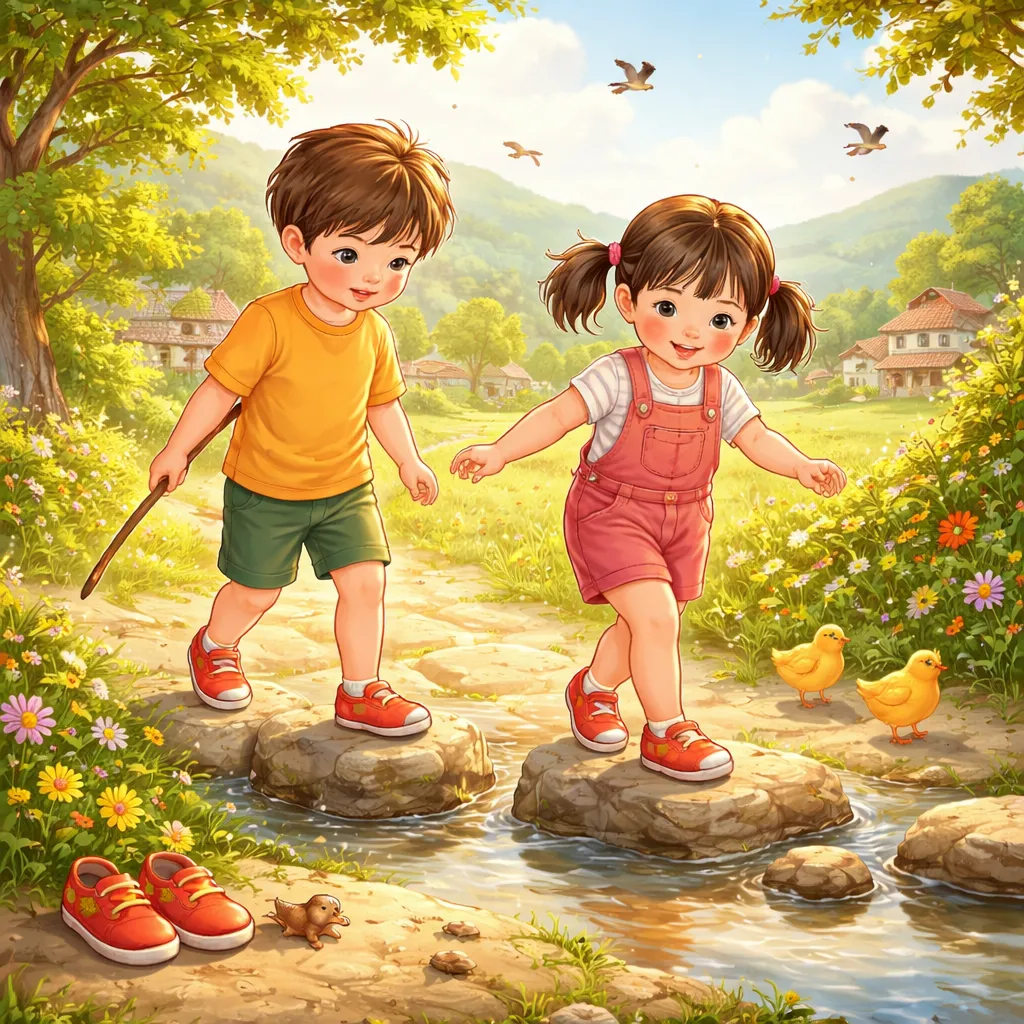

Some songs take children on journeys step by step. The Chinese Songs: Little Shoes (小鞋子) does exactly that. This cheerful children's song celebrates the little shoes that carry children through their day, protecting their feet and taking them on adventures. For families learning English and Chinese together, this song offers a wonderful way to explore clothing vocabulary, movement words, and the simple joy of walking and running. Let us discover what makes this traditional song so meaningful for young learners.
What Is the Story Behind This Famous Song?
The Chinese Songs: Little Shoes (小鞋子) is a beloved children's song from China. It describes a child's shoes as faithful companions that walk, run, and jump through each day. The song helps children appreciate the shoes that protect their feet and take them everywhere.
In Chinese culture, shoes carry special meaning. New shoes mark growth and new adventures. Taking care of shoes teaches responsibility. The song turns this daily routine into a celebration of movement and gratitude.
The song personifies the little shoes as friends who work hard all day. They don't complain about walking or running. They simply carry the child wherever they want to go. At night, they rest, ready for the next day.
The melody is bouncy and rhythmic, like little feet pattering along. Children often tap their feet while singing, imagining their own shoes dancing.
Understanding this背景 helps families appreciate the song's connection to daily movement and the universal experience of outgrowing shoes as we grow. It opens conversations about gratitude, growth, and the adventures our feet take us on.
The Complete Lyrics of the Song
Reading the words helps us understand this journey of little feet. Here are the lyrics to the Chinese Songs: Little Shoes (小鞋子) in Chinese characters, pinyin, and English.
小鞋子,小鞋子,穿在我脚上
Xiǎo xié zi, xiǎo xié zi, chuān zài wǒ jiǎo shàng
Little shoes, little shoes, wear on my feet
走路跑步和跳跃,带我去远方
Zǒu lù pǎo bù hé tiào yuè, dài wǒ qù yuǎn fāng
Walk run and jump, take me to faraway places
小鞋子,小鞋子,左右是一双
Xiǎo xié zi, xiǎo xié zi, zuǒ yòu shì yī shuāng
Little shoes, little shoes, left right are one pair
一步一步向前走,脚印在地上
Yī bù yī bù xiàng qián zǒu, jiǎo yìn zài dì shàng
One step one step forward walk, footprints on ground
小鞋子,小鞋子,陪我长大啦
Xiǎo xié zi, xiǎo xié zi, péi wǒ zhǎng dà la
Little shoes, little shoes, accompany me grow big
脱下来,放整齐,明天再穿上
Tuō xià lái, fàng zhěng qí, míng tiān zài chuān shàng
Take off, put neatly, tomorrow again wear
Learning New Words from the Song
The Chinese Songs: Little Shoes (小鞋子) introduces many useful words. Let us explore them in both Chinese and English.
First, "小鞋子" (xiǎo xié zi) means little shoes. "鞋" (xié) means shoe. "子" (zi) is a common noun suffix.
"穿在我脚上" (chuān zài wǒ jiǎo shàng) means wear on my feet. "脚" (jiǎo) means foot. "上" (shàng) means on.
"走路跑步和跳跃" (zǒu lù pǎo bù hé tiào yuè) means walk run and jump. "走路" (zǒu lù) means walk. "跑步" (pǎo bù) means run. "跳跃" (tiào yuè) means jump. "和" (hé) means and.
"带我去远方" (dài wǒ qù yuǎn fāng) means take me to faraway places. "带" (dài) means bring or take. "远方" (yuǎn fāng) means distant places.
"左右是一双" (zuǒ yòu shì yī shuāng) means left right are one pair. "左" (zuǒ) is left. "右" (yòu) is right. "双" (shuāng) is a measure word for pairs.
"一步一步向前走" (yī bù yī bù xiàng qián zǒu) means one step one step forward walk. "步" (bù) means step. "向前" (xiàng qián) means forward.
"脚印在地上" (jiǎo yìn zài dì shàng) means footprints on ground. "脚印" (jiǎo yìn) means footprint. "地" (dì) means ground.
"陪我长大啦" (péi wǒ zhǎng dà la) means accompany me grow big. The shoes are there through all the growing.
"脱下来" (tuō xià lái) means take off. "脱" (tuō) is the verb for removing clothes or shoes.
"放整齐" (fàng zhěng qí) means put neatly. Taking care of shoes shows respect.
"明天再穿上" (míng tiān zài chuān shàng) means tomorrow again wear. The shoes will be ready for another day.
Exploring Pronunciation and Rhythm
The Chinese Songs: Little Shoes (小鞋子) offers wonderful practice with Mandarin tones and rhythm. The bouncy melody matches little feet walking.
Listen to "Xiǎo xié zi" repeated. The tones go: xiǎo (third tone, falling then rising), xié (second tone, rising), zi (neutral). The rising tone on "xié" lifts like a foot stepping.
The phrase "zǒu lù pǎo bù hé tiào yuè" uses third tone for "zǒu" (falling then rising), fourth tone for "lù" (falling), third tone for "pǎo" (falling then rising), fourth tone for "bù" (falling), second tone for "hé" (rising), fourth tone for "tiào" (falling), and fourth tone for "yuè" (falling). The variety of tones creates a lively rhythm.
"Yī bù yī bù xiàng qián zǒu" uses first tone for "yī" (high level), fourth tone for "bù" (falling), repeated, fourth tone for "xiàng" (falling), second tone for "qián" (rising), and third tone for "zǒu" (falling then rising). The pattern feels like steady steps forward.
Finding Grammar Patterns in the Lyrics
The Chinese Songs: Little Shoes (小鞋子) offers useful grammar examples for Chinese learners. One pattern appears with the verb "穿" (chuān) meaning wear. "穿在脚上" shows wearing on the feet.
The song uses directional complements. "脱下来" (tuō xià lái) uses "下来" (xià lái) to show removing downward. "穿上" (chuān shàng) uses "上" (shàng) to show putting on.
Another pattern appears with measure words. "一双" (yī shuāng) is the measure word for pairs. This is essential for talking about shoes.
The phrase "一步一步" (yī bù yī bù) repeats the number and measure word to mean "step by step". This structure shows gradual progress.
"向前" (xiàng qián) uses "向" (xiàng) to show direction. Moving forward is a common phrase.
The word "再" (zài) in "明天再穿上" means "again" for future actions.
Fun Learning Activities for the Whole Family
Listening to the Chinese Songs: Little Shoes (小鞋子) can inspire many family activities. Here are some ideas to try together.
First, practice putting on shoes while singing. Each morning, sing the song while putting on shoes. Name left and right in Chinese. "左脚" (left foot), "右脚" (right foot), "穿鞋子" (put on shoes). This turns routine into language practice.
Second, go on a listening walk. Walk outside and listen to the sounds of feet on different surfaces. Describe them in Chinese. "地上有脚印" (footprints on ground), "走路啪啪响" (walking makes pat pat sound). This builds observation vocabulary.
Third, measure growing feet. Trace your child's feet on paper every few months. Compare sizes and talk about growing in Chinese. "脚长大了" (feet grew bigger), "需要新鞋子" (need new shoes). This connects language to physical growth.
Creating Printable Materials at Home
Families can make simple learning tools based on the Chinese Songs: Little Shoes (小鞋子). These activities help reinforce new ideas.
Create bilingual shoe flashcards. On one side, write the Chinese character and pinyin for shoe-related words. Shoes, 鞋子. Left, 左. Right, 右. Foot, 脚. Step, 步. On the other side, draw a picture and write the English word. Practice by pointing to real shoes and feet.
Make a footprint measuring chart. Draw or print footprints of different sizes. Label sizes in Chinese. "小脚" (small foot), "中脚" (medium foot), "大脚" (big foot). Measure family feet and match to sizes.
Create a fill-in-the-blank page using song lyrics in pinyin. Remove key words like "xié zi", "jiǎo", "zǒu", "pǎo", "tiào", "bù", and "tuō". Leave blanks where those words belong. Listen to the song together and fill in the missing words. This builds listening and character recognition.
Connecting the Song to Daily Life
The Chinese Songs: Little Shoes (小鞋子) connects to daily life through movement and growth. Every child wears shoes. Every child walks, runs, and jumps.
Talk with your children about where their shoes take them. To school, to the park, to visit friends. Use Chinese to share. "鞋子带我去公园" (shoes take me to park), "我走路去学校" (I walk to school). This builds personal connection to vocabulary.
The song also teaches about care for belongings. Taking off shoes and putting them neatly shows respect. Use Chinese to encourage this. "脱鞋子" (take off shoes), "放整齐" (put neatly), "谢谢鞋子" (thank you shoes).
Parents can model gratitude for shoes. When taking off shoes, say "谢谢鞋子陪我一天" (thank you shoes for accompanying me all day). This teaches appreciation.
Educational Games to Play Together
Games make learning with the Chinese Songs: Little Shoes (小鞋子) exciting. Here are some simple games to try.
Play the follow the leader game with actions from the song. One person leads and calls out actions in Chinese. "走路" (walk), "跑步" (run), "跳跃" (jump). Others follow. This builds action vocabulary.
Try the left and right game. Call out "左脚" (left foot) or "右脚" (right foot). Children lift that foot. Add "穿鞋子" (put on shoes) and they pretend to put a shoe on that foot. This builds direction vocabulary.
Play the footprint hopscotch. Draw or place footprints on the floor in a path. Children follow the prints, counting steps in Chinese. "一步" (one step), "两步" (two steps). This builds number and movement vocabulary.
Why This Song Helps Language Learning
The Chinese Songs: Little Shoes (小鞋子) helps learners in special ways. The cheerful tempo makes words easy to hear. Each phrase is clear. This helps children catch new vocabulary without feeling rushed.
The movement theme connects to physical activity. Children learn action words they can use immediately. Walk, run, jump appear in daily conversation.
The left and right words are essential for direction. Learning them through song makes them stick.
The growth theme parallels children's own development. They understand getting bigger and needing new shoes. This personal connection deepens learning.
Making Music Part of Your Routine
Families can make songs a regular part of bilingual learning. Choose one song each week to explore together. Listen during morning routines or while walking.
The Chinese Songs: Little Shoes (小鞋子) works perfectly for starting the day. Play it while putting on shoes. Let the music step along with your child.
Remember that language learning thrives in active moments. When children associate Chinese with walking and running, they learn naturally. They understand that words connect to their whole bodies in motion.
Keep singing, keep stepping, and keep growing together. In the great journey of bilingual learning, every new word is like a little shoe, ready to carry your child on exciting adventures.