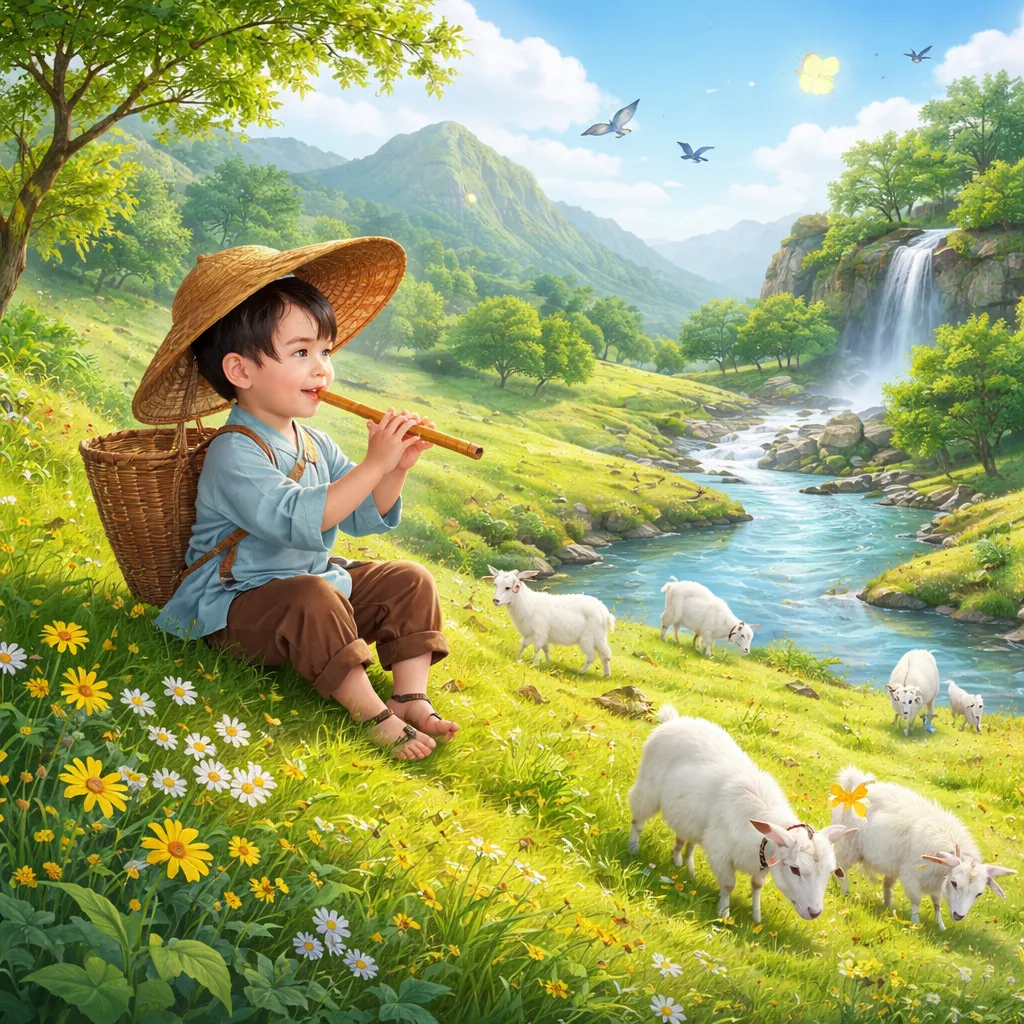

Some songs carry the fresh air of countryside mornings. The Chinese Songs: The Little Shepherd (小牧童) does exactly that. This gentle Chinese folk song tells of a young shepherd watching over sheep in green fields. The simple melody and peaceful words paint a picture of rural life that children everywhere can understand. For families learning English and Chinese together, this song offers a wonderful bridge between cultures. Let us discover what makes this traditional song so valuable for young learners.
What Is the Story Behind This Famous Song?
The Chinese Songs: The Little Shepherd (小牧童) is a traditional folk song from China. It describes the daily life of a shepherd boy who cares for his sheep in the countryside. The song captures the simplicity and peace of rural life, away from busy cities.
Shepherding is an ancient occupation found in cultures worldwide. A shepherd leads sheep to fresh grass and water, protects them from danger, and brings them home at night. In many cultures, the shepherd represents care, patience, and connection to nature.
This song uses simple language to paint a vivid picture. The little shepherd wakes early, takes his sheep to the hills, watches clouds float by, and plays his flute. The music imitates the sound of a bamboo flute, an instrument often played by real shepherds.
For Chinese children, this song connects them to their cultural heritage. For children learning Chinese, it offers gentle introduction to nature vocabulary and rural life. The slow tempo and clear pronunciation make it perfect for language learners.
Understanding this背景 helps families appreciate the song's cultural roots. It opens conversations about how children live in different parts of the world.
The Complete Lyrics of the Song
Reading the words helps us understand this peaceful scene. Here are the lyrics to the Chinese Songs: The Little Shepherd (小牧童) in Chinese characters, pinyin, and English.
小牧童,小牧童,赶着羊儿上山坡
Xiǎo mùtóng, xiǎo mùtóng, gǎn zhe yáng er shàng shānpō
Little shepherd, little shepherd, drive the sheep up the hillside
青草多,青草多,羊儿吃得乐呵呵
Qīng cǎo duō, qīng cǎo duō, yáng er chī de lè hē hē
Green grass plenty, green grass plenty, sheep eat happily
吹竹笛,吹竹笛,声声飘过小山河
Chuī zhú dí, chuī zhú dí, shēng shēng piāo guò xiǎo shān hé
Play bamboo flute, play bamboo flute, sounds float over small hills and rivers
太阳落,太阳落,赶着羊儿回家窝
Tài yáng luò, tài yáng luò, gǎn zhe yáng er huí jiā wō
Sun sets, sun sets, drive the sheep back to home nest
Learning New Words from the Song
The Chinese Songs: The Little Shepherd (小牧童) introduces many useful words. Let us explore them in both Chinese and English.
First, "小牧童" (xiǎo mùtóng) means little shepherd. "小" (xiǎo) means small or little. "牧" (mù) relates to herding animals. "童" (tóng) means child. Together they paint a picture of a young boy caring for animals.
"赶着" (gǎn zhe) means driving or herding. This action word shows the shepherd moving his sheep along.
"羊儿" (yáng er) means sheep. The "儿" (er) at the end adds a gentle, affectionate tone. Chinese often adds this to make words sound cute.
"上山坡" (shàng shānpō) means go up the hillside. "上" (shàng) means up or ascend. "山坡" (shānpō) means hillside or slope.
"青草" (qīng cǎo) means green grass. "青" (qīng) is a color word for green or blue-green. "草" (cǎo) means grass.
"乐呵呵" (lè hē hē) describes happy laughter. This phrase paints a picture of contented sheep, almost as if they are smiling while eating.
"吹竹笛" (chuī zhú dí) means play bamboo flute. "吹" (chuī) means blow. "竹" (zhú) means bamboo. "笛" (dí) means flute.
"声声" (shēng shēng) means sound after sound, each note. Repeating words in Chinese adds emphasis.
"飘过" (piāo guò) means float across. Music floats through the air like clouds.
"小山河" (xiǎo shān hé) means small hills and rivers. This phrase paints a picture of gentle countryside.
"太阳落" (tài yáng luò) means sun sets. "太阳" (tài yáng) is sun. "落" (luò) means fall or set.
"回家窝" (huí jiā wō) means return to home nest. "窝" (wō) means nest or cozy home. This word makes the sheep's home sound warm and safe.
Exploring Pronunciation and Rhythm
The Chinese Songs: The Little Shepherd (小牧童) offers wonderful practice with Mandarin tones and rhythm. Chinese is a tonal language, meaning the same sound can mean different things depending on pitch.
Listen to the first line "Xiǎo mùtóng, xiǎo mùtóng". The tones go: xiǎo (third tone, falling then rising), mù (fourth tone, falling), tóng (second tone, rising). The repetition helps children practice these tones naturally.
The phrase "lè hē hē" uses first tone for "hē", which is high and level. The smiling sound matches the meaning.
The repeated words like "shēng shēng" and the parallel structure make the song easy to follow. Each line has a pattern that helps learners predict what comes next.
Finding Grammar Patterns in the Lyrics
The Chinese Songs: The Little Shepherd (小牧童) offers useful grammar examples for Chinese learners. One pattern appears with the particle "着" (zhe) in "赶着" (gǎn zhe). This shows an ongoing action. The shepherd is in the middle of driving sheep. English might use "-ing" for similar meaning.
The song uses repetition for emphasis. "青草多,青草多" (qīng cǎo duō) repeats to stress how much grass there is. This is common in Chinese songs and speech.
Another pattern appears with the directional complement. "上山坡" (shàng shānpō) uses "上" (shàng) to show upward movement. "回家窝" (huí jiā wō) uses "回" (huí) to show returning. These direction words combine with verbs to show movement.
The song uses time words to structure the day. "太阳落" (tài yáng luò) marks evening, completing the daily cycle from morning to night.
Fun Learning Activities for the Whole Family
Listening to the Chinese Songs: The Little Shepherd (小牧童) can inspire many family activities. Here are some ideas to try together.
First, learn about shepherding. What does a shepherd do? If possible, visit a farm with sheep. Watch how they move and eat. Use both English and Chinese words for what you see. "Sheep, 羊" or "grass, 草". This builds bilingual vocabulary.
Second, practice with bamboo flutes or recorders. If you have a simple flute, try making sounds like the shepherd. Talk about how music floats across hills. Use Chinese words "吹竹笛" (chuī zhú dí) while playing.
Third, create a daily cycle chart. Draw the sun rising and setting. Show the shepherd going up the hill in morning and returning at night. Label times in both languages. This builds understanding of daily routines.
Creating Printable Materials at Home
Families can make simple learning tools based on the Chinese Songs: The Little Shepherd (小牧童). These activities help reinforce new ideas.
Create bilingual flashcards with words from the song. On one side, write the Chinese character and pinyin. On the other side, write the English word and draw a picture. Shepherd, 牧童. Sheep, 羊. Grass, 草. Flute, 笛. Sun, 太阳. Review these cards together.
Make a shepherd scene coloring page. Draw a hillside with grass, sheep, a shepherd boy, and a setting sun. Label each part in Chinese and English. Color together while saying the words.
Create a fill-in-the-blank page using song lyrics in pinyin. Remove key words like "xiǎo mùtóng", "yáng er", "qīng cǎo", "zhú dí", and "tài yáng". Leave blanks where those words belong. Listen to the song together and fill in the missing words. This builds listening and character recognition.
Connecting the Song to Daily Life
The Chinese Songs: The Little Shepherd (小牧童) connects to daily life through nature and daily routines. Every day has a morning and evening. Every child knows what it feels like to come home at day's end.
Talk with your children about your daily rhythms. When does the sun rise where you live? When does it set? What do you do in the morning? What about evening? Use both English and Chinese to share. "We wake up when the sun rises" or "太阳升起我们起床". This builds bilingual conversation skills.
The song also teaches about caring for others. The shepherd cares for his sheep. In families, we care for each other. Talk about ways family members help. Use Chinese words for family roles. This builds connection between language and love.
Parents can model appreciation for nature. When outside, point to grass and say "青草" (qīng cǎo). Point to the sun and say "太阳" (tài yáng). This makes language learning part of everyday observation.
Educational Games to Play Together
Games make learning with the Chinese Songs: The Little Shepherd (小牧童) exciting. Here are some simple games to try.
Play the shepherd says game like Simon Says. One person is the shepherd and gives commands in Chinese. "上山坡" (go up the hill) or "吹竹笛" (play flute). Others follow only when "shepherd says" comes first. This builds listening skills.
Try the animal sounds game. Make sounds of different animals including sheep. Others guess which animal in Chinese. "羊" (yáng) for sheep sounds. This builds animal vocabulary.
Play the daily routine matching game. Create cards with pictures of morning, noon, and evening activities. Match them to Chinese phrases from the song. "太阳落" with evening pictures. "上山坡" with morning pictures. This builds time vocabulary.
Why This Song Helps Language Learning
The Chinese Songs: The Little Shepherd (小牧童) helps learners in special ways. The slow tempo makes words easy to hear. Each syllable is clear. This helps children catch new vocabulary without feeling rushed.
The repetition in the song reinforces key phrases. "小牧童" repeats at the beginning. "青草多" repeats. Repetition builds memory without effort.
The nature theme connects to universal experiences. Children everywhere know grass, sun, and animals. This makes the Chinese words meaningful.
The parallel structure helps learners predict language patterns. Each line follows a similar form, making the song easier to learn.
Making Music Part of Your Routine
Families can make songs a regular part of bilingual learning. Choose one song each week to explore together. Listen during quiet moments or while looking at nature.
The Chinese Songs: The Little Shepherd (小牧童) works perfectly for winding down. Its gentle rhythm calms and soothes. Play it at quiet time. Let the music carry your family to peaceful green hills.
Remember that language learning thrives in peaceful moments. When children associate Chinese with gentle shepherds and happy sheep, they feel safe and happy. They learn that Chinese is not just lessons. It is the language of green grass and floating flute music.
Keep singing, keep shepherding, and keep exploring the beautiful sounds of Chinese together. In the green hills of language learning, every new word is like a fresh blade of grass, sweet and full of life.