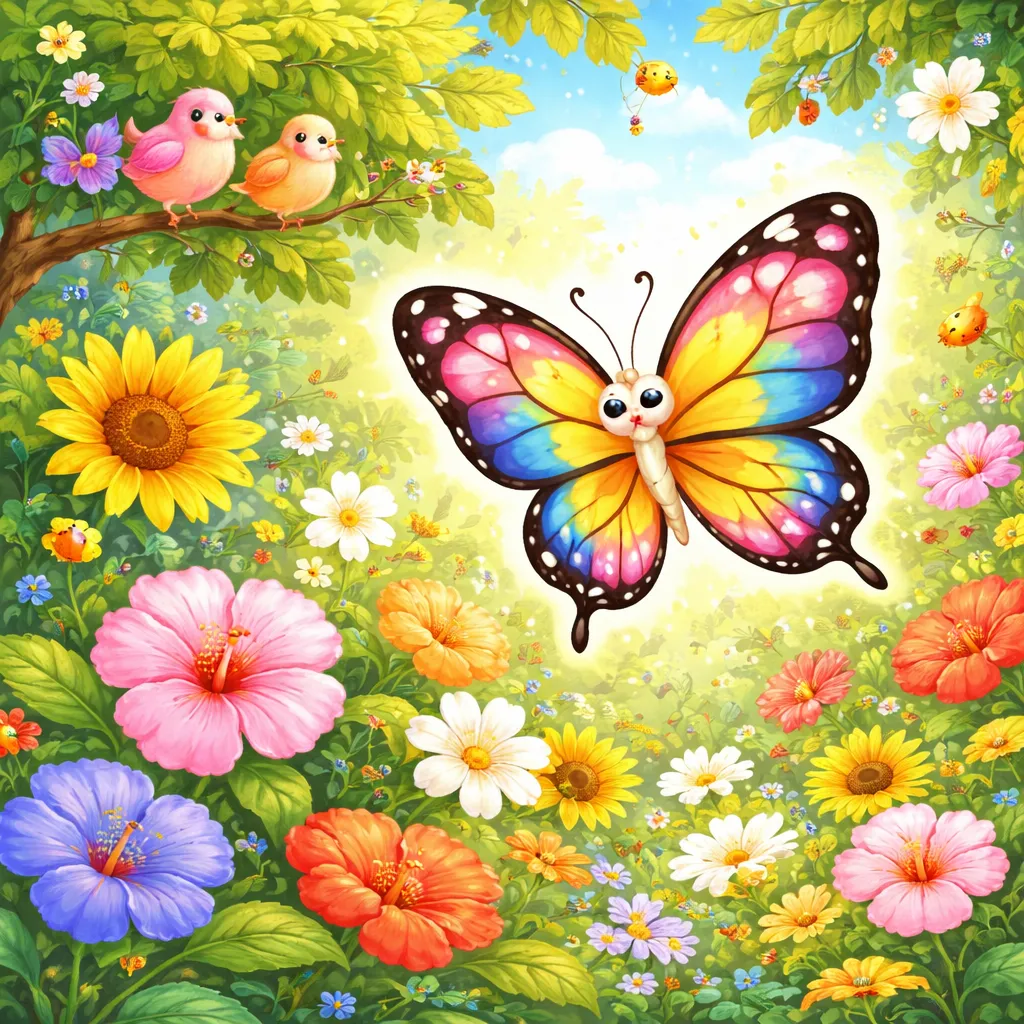

Have you ever seen a butterfly? It flutters through the air with beautiful, colorful wings. No two butterflies look exactly the same. In Indonesia, the word for butterfly is “kupu-kupu,” and there is a gentle, lovely song about a little butterfly. It is a song about its colors and its graceful flight. Let’s look at the beauty of “The Little Butterfly (Kupu-kupu Kecil).”
About the Song
Here are the gentle and descriptive lyrics of a popular traditional Indonesian children’s song about a little butterfly:
Kupu-kupu kecil, terbang di taman,
Sayapmu indah, warna-warni.
Ada merah, ada kuning,
Terbanglah dengan lembut.
Kupu-kupu kecil, hinggap di bunga,
Istirahat sejenak, di bawah matahari.
Betapa cantiknya kamu, kupu-kupu kecil,
Menghiasi dunia.
English Translation:
Little butterfly, flying in the garden,
Your wings are beautiful, colorful.
There is red, there is yellow,
Fly gently.
Little butterfly, perched on a flower,
Resting for a moment, under the sun.
How pretty you are, little butterfly,
Decorating the world.
This is a sweet and calm Indonesian folk song for children. The song is a quiet, admiring look at a butterfly. We see the “kupu-kupu kecil” flying gracefully in the garden. Its wings are not plain. They are “indah” (beautiful) and “warna-warni” (colorful). The song names some colors: “ada merah, ada kuning” (there is red, there is yellow). The butterfly flies softly. Then, it rests, “hinggap di bunga,” on a flower. It rests under the warm sun. The singer thinks the butterfly is very pretty and says it makes the world more beautiful. It is a song about noticing and appreciating beauty in nature.
What the Song is About
The song is like a peaceful poem about a butterfly. You are sitting quietly in a “taman,” a garden. You see a “kupu-kupu kecil.” It is “terbang di taman,” flying so lightly, as if dancing on the air. You look closely at its wings, “sayapmu.” They are amazing! They are “indah” and full of many colors, “warna-warni.” You can see patches of red, “merah,” and yellow, “kuning.” You watch it “terbanglah dengan lembut,” fly so gently.
The butterfly gets a little tired. It finds a pretty flower. It “hinggap di bunga,” perches on the flower. It is “istirahat sejenak,” resting for a moment “di bawah matahari,” under the sun. You look at it and feel happy. You want to tell the butterfly, “Betapa cantiknya kamu!” You think, this little creature is “menghiasi dunia,” decorating the whole world with its beauty. The song teaches us to stop, look, and admire.
When to Sing It
This song is perfect for calm, observant moments. You can sing it softly while watching real butterflies in a park or garden, gently pointing out the colors you see. You can sing it during a quiet art time, while drawing or coloring your own beautiful butterfly with many colors. You can also sing it as a lullaby or a gentle song before naptime, with soft, fluttering hand movements.
What Children Can Learn
This beautiful, descriptive song is a wonderful teacher for learning colors, using simple prepositions to describe location, and giving compliments in Indonesian.
Vocabulary
The song teaches us lovely Indonesian words for nature, colors, and descriptions. “Butterfly” (Kupu-kupu). “Small/little” (kecil). “To fly” (terbang). “In” (di). “Garden” (taman). “Wing” (sayap). “Your” (-mu in “sayapmu”). “Beautiful” (indah). “Colorful” (warna-warni). “There is/exists” (ada). “Red” (merah). “Yellow” (kuning). “To fly (command/let’s fly)” (terbanglah). “With” (dengan). “Gently/softly” (lembut). “To perch/alight” (hinggap). “On” (di). “Flower” (bunga). “To rest” (istirahat). “For a moment” (sejenak). “Under” (di bawah). “Sun” (matahari). “How” (betapa). “Pretty” (cantik). “You” (kamu). “To decorate” (menghiasi). “World” (dunia).
Let’s use these words! You can describe things: “Buku ini warna-warni.” (This book is colorful.) “Ada biru di langit.” (There is blue in the sky.) New word: Biru. This means “blue.” You can say, “Sayap kupu-kupu ada biru.” (The butterfly’s wings have blue.)
Language Skills
This song is excellent for learning to describe where something is using the simple preposition “di” (in, on, at) and for using the suffix “-mu” to mean “your” when talking to someone or something directly.
Concept Definition: We are learning about using the word “di” to tell a location. “Di” can mean in, on, or at, depending on the place. We are also learning to show something belongs to “you” by adding “-mu” to the end of a noun, like “sayap” (wing) becomes “sayapmu” (your wing).
Features and Types: The word “di” is always followed by a place. The pattern is: “[Action/Subject] + di + [Place].” In the song, it’s “terbang di taman” (fly in the garden) and “hinggap di bunga” (perch on a flower). The suffix “-mu” is added directly to a noun. The pattern is: “[Noun] + -mu.” It shows the noun belongs to the person you are talking to.
How to Spot Them: Here is the “Location Finder” trick. Look for the word “di” right before a place word like “taman” (garden) or “bunga” (flower). Ask yourself: “Does this word tell me where something is happening?” For “your,” look for a noun that ends with “-mu.” Ask: “Is this word like ‘your [something]’?”
How to Use Them: A great way to describe location and give a compliment is the “Where and Whose” formula. The pattern is: “[Thing] + [action] + di [place].” and to say “your [thing]” use “[thing]mu.”
Example from the song: Location: “Kupu-kupu kecil, terbang di taman.” “Your”: “Sayapmu indah.” (Your wings are beautiful.)
Example you can make: “Buku ada di meja.” (The book is on the table.) “Namamu bagus.” (Your name is good.)
Sounds & Rhythm Fun
Listen to the light, fluttering melody of the song. The tune for “Kupu-kupu Kecil” is often soft, smooth, and flowing, like a butterfly’s gentle flight. The rhythm is calm and steady, not too fast, which helps you picture the butterfly’s peaceful movement.
The words have a soft, musical sound. Saying “kupu-kupu” feels light on the tongue. The colors “merah” and “kuning” sound bright and clear. The phrase “warna-warni” (colorful) is fun to say. Words like “lembut” (gentle) and “cantik” (pretty) have a soft, nice sound. The song’s melody often rises and falls gently, like wings fluttering. This smooth rhythm is perfect for creating your own beautiful creature song. Try a bird song: “Burung kecil, terbang di langit, Bulumu indah, warna-warni…” (Little bird, flying in the sky, Your feathers are beautiful, colorful…).
Culture & Big Ideas
“Kupu-kupu Kecil” reflects the deep appreciation for natural beauty prevalent in Indonesian arts and daily life. Butterflies, with their transformation from caterpillar to winged beauty, are often seen as symbols of grace, change, and delicate beauty in many cultures, including Indonesia’s. Gardens (“taman”) are cherished spaces for relaxation and enjoying nature’s sights.
The song conveys three gentle and important ideas. First, it trains the skill of close observation and appreciation of detail by focusing on specific attributes of the butterfly—its location, the colors on its wings, and its gentle movement—encouraging mindful looking. Second, it introduces the language of admiration and compliment, through phrases like “Betapa cantiknya kamu” (How pretty you are), teaching how to verbally appreciate beauty in the world around us. Third, it connects individual beauty to a greater purpose with the line “menghiasi dunia” (decorating the world), suggesting that every beautiful thing, no matter how small, makes the world a more wonderful place for everyone.
Values & Imagination
Imagine you are the little butterfly. You are a “kupu-kupu kecil” with wings like a living painting. You “terbang di taman” with the softest, gentlest flaps. Your “sayapmu” are your pride. They are “warna-warni,” with splashes of “merah” and “kuning.” You fly “dengan lembut,” not wanting to disturb the quiet air.
You feel a little tired. You see a perfect pink flower. You “hinggap di bunga” to rest. The sun feels warm on your back. “Di bawah matahari,” you close your wings for a moment. If someone saw you, they might whisper, “Betapa cantiknya kamu!” You are not just resting. You are “menghiasi dunia,” adding a spot of perfect beauty to the garden. How does it feel to be so beautiful and to make the world prettier just by being in it? Draw the butterfly’s world. Draw a big garden (“taman”). Draw a bright sun (“matahari”). On a large flower (“bunga”), draw a detailed butterfly. Color its wings with “merah” and “kuning” and maybe “biru.” Write the word “indah” near it. This shows the song’s picture of beauty.
The song encourages us to slow down and really see the beautiful details in nature, to use kind words to describe what we see, and to understand that our own unique beauty (in how we act, create, and are) can also make the world a nicer place. A wonderful activity is the “Pujian Warna” (Color Compliment) game. Look around your room or outside. Find something colorful. Point to it and say in Indonesian: “(Object) ini warna-warni. Ada (color)!” (This [object] is colorful. There is [color]!). For example, “Buku ini warna-warni. Ada hijau!” (This book is colorful. There is green!). This connects the song’s vocabulary to giving real compliments.
So, from admiring the butterfly’s flight to praising its colors, this song is a lesson in seeing and celebrating beauty. It is a vocabulary lesson in colors, nature, and descriptions. It is a language lesson in using “di” for location and “-mu” for “your.” It is a music lesson in a gentle, fluttering tune. “The Little Butterfly (Kupu-kupu Kecil)” teaches us about observation, admiration, and adding beauty to the world.
Your Core Takeaways
You are now an expert on the Indonesian song “The Little Butterfly (Kupu-kupu Kecil).” You know it is a gentle song that describes a little butterfly flying gently in the garden, with beautiful, colorful wings of red and yellow, resting on a flower, and making the world beautiful. You’ve learned Indonesian words like “kupu-kupu,” “terbang,” “di,” “sayap,” “warna-warni,” “merah,” “kuning,” “bunga,” and “cantik,” and you’ve practiced using “di” for location (like “di taman”) and “-mu” to say “your” (like “sayapmu”). You’ve felt its soft, flowing rhythm. You’ve also discovered the song’s message about looking closely at nature, using words of praise, and how small beautiful things decorate our world.
Your Practice Missions
First, play the “Di Mana? Ada Apa?” (Where? What is there?) game. Take a favorite toy animal. Place it in different locations: on a book, under a table, in a box. Each time, say in Indonesian: “[Toy] ada di [place].” For example, “Beruang ada di bawah meja.” (The bear is under the table.). This mission helps you master the preposition “di” for describing location.
Second, create a “Kupu-kupu Pujian” (Butterfly Compliment). Draw and cut out a butterfly shape from paper. On one wing, write or draw something beautiful about nature you saw today (like a colorful flower). On the other wing, write or draw something kind about a friend or family member (like their nice smile). Give your butterfly to that person and say, “Kamu menghiasi hariku!” (You decorate my day!). This mission lets you use the song’s idea of giving compliments and making the world more beautiful.