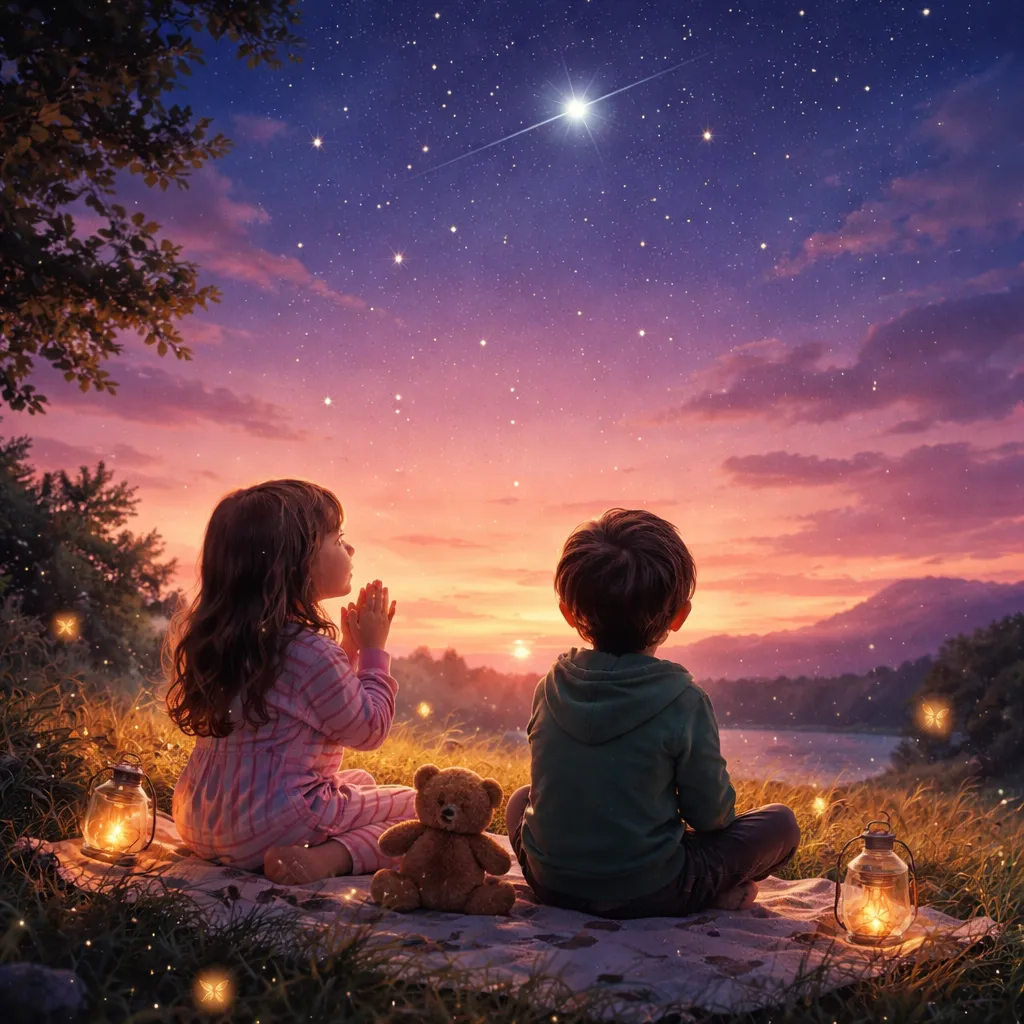

Look up at the sky when the sun goes down. First, you see a deep blue color. Then, one by one, little lights start to twinkle. Stars! Have you ever seen the very first star of the night? It shines all alone in the quiet evening sky. For hundreds of years, children and adults have made a special wish when they see that first star. They say a little magic poem to send their wish to the star. This beautiful, hopeful poem is the song Star Light, Star Bright. It is a tiny piece of night-time magic that you can hold in your heart.
About the Song
The song is actually a short, lovely rhyme people say out loud. It is a wish wrapped in words. Here is the whole, wonderful poem.
Full lyrics: Star light, star bright, / First star I see tonight, / I wish I may, I wish I might, / Have the wish I wish tonight.
This is a traditional American nursery rhyme and folk poem. Nobody knows who wrote it first. It is a piece of folklore, which means it was passed from parents to children for generations, like a precious secret. The poem is not really a song with a long melody, but more like a chant you can sing softly to yourself. It turns a simple moment—seeing a star—into a special, hopeful ceremony. It connects you to everyone else who has ever looked up at the stars and dreamed.
What the Song is About
The poem describes a quiet, personal moment. You are outside, or looking out a window. The sky is getting dark. You look up and search the sky. Then, you see it! The very first star to appear tonight. It shines with a clear, bright light. You talk directly to the star. You say, "Hello, bright star!" You tell the star your greatest hope. You say, "I really hope I can have the wish I am making right now." You close your eyes for a second and think your wish very hard. Then, you let the wish go, sending it up to the twinkling star.
Who Made It & Its Story
The creator of this lovely verse is unknown. It comes from the oral tradition of the United States and likely has roots in similar European folk traditions. For a very long time, people have believed that the first star of the evening has special power. This little rhyme gave words to that feeling. It became the official way to "talk" to the first star. It was first written down in a book in the late 1800s, but children were probably saying it long before that.
Why is this simple rhyme so loved all over the world? First, it is incredibly easy to remember. The words are short, sweet, and fit together perfectly. Second, it makes you feel connected to the huge, beautiful night sky. It turns a giant, distant star into a friend who listens. Third, it is all about hope. It encourages you to think about what you truly want, big or small. Saying the words feels like sharing a secret with the universe. It is a moment of calm and positive thinking at the end of a day.
When to Sing It
The best time to say Star Light, Star Bright is, of course, at night! But you can also say it when you need a little bit of hope. Here are the perfect moments for it.
Tonight, when you see the first star twinkle in the dark blue sky. Point at it and say the rhyme softly. When you are camping, lying in a sleeping bag and looking at a sky full of stars. Find the brightest one and share your wish. During a car ride at dusk, watching the sky change color. Say the rhyme when you spot the first pinprick of light. When you are feeling a little sad or worried. Close your eyes, imagine that bright star, and say the words to make a wish for happiness.
What Children Can Learn
Vocabulary & Language Skills
This short poem is full of beautiful, useful words. "Star light, star bright" is a way of talking to the star, calling it shiny and brilliant. The "first star" means the very initial one you see that night, not the second or third. "Tonight" means this very night that is happening right now. To "wish" is to want something very much and hope for it to come true. "I wish I may, I wish I might" are two old, polite ways of saying "I really hope I can." The poem shows a wonderful grammar pattern for expressing a wish. We start with "I wish" and then say what we hope for. The words "may" and "might" are special helper verbs that show hope and possibility. The line "Have the wish I wish tonight" is interesting. The first "wish" is a noun—the thing you want. The second "wish" is a verb—the action of hoping for it.
Sounds & Rhythm Fun
Listen to the music in the words. The most important sound is the long 'i' sound. Listen: "star bright," "see tonight," "wish I might," "wish tonight." These words all rhyme perfectly. This strong rhyme makes the poem stick in your mind like a little song. The rhythm is smooth and gentle, like a lullaby. It is not a bouncing rhythm. It is a flowing, calm rhythm. You say it slowly: "Star light, / star bright, / First star / I see / to-night." This gentle flow makes it feel like a quiet prayer or a soft thought, which is exactly what a wish should be.
Culture & Big Ideas
This rhyme is a key part of Western, and especially American, wishing traditions. Another famous one is wishing on a "shooting star" (a meteor). The idea is that the first star is a special sign. Making a wish on it is a way to send your hopes out into the world. The song teaches us about observation and hope. It tells you to be observant—to look carefully at the world around you and notice small wonders, like the first star. More importantly, it is all about the beautiful act of hoping. It encourages you to think about your dreams, say them out loud (or in your heart), and believe in good things. It is a small practice in positive thinking.
Values & Imagination
Imagine the star is listening. It is not just a ball of gas far away. It is a friendly eye winking at you from the darkness. What does your wish look like as it travels? Maybe it is a tiny, glowing bubble that floats all the way up to the star. Maybe the star catches it and tucks it away in a special place. This poem teaches you to find magic in everyday moments. A simple look at the sky becomes an adventure. It also connects you to all the people, everywhere and throughout time, who have looked at the same stars and dreamed their own dreams. Here is a small idea. Keep a "star wish" journal. When you say Star Light, Star Bright, draw a little star on a piece of paper and write or draw your wish next to it. See how your wishes change from night to night.
Your Core Takeaways
You have just learned a piece of nighttime magic. You know that Star Light, Star Bright is a traditional wishing rhyme for the first star of the night. You understand its beautiful words and how to use "I wish" to express a hope. You can hear its gentle, rhyming rhythm. Most importantly, you now have a special tool for your pocket. Whenever you see that first star, you have a way to greet it, share a dream with it, and feel connected to the wonderful, big world above you.
Your Practice Missions
First, be a star watcher. Tonight, look out your window just after the sun sets. Try to be the first person in your family to see the first star. When you do, say the rhyme out loud and make a wish. Second, create a wish for someone else. Think of a friend or family member. Draw a big, bright star on a piece of paper. Inside the star, write or draw a good wish for them, like "I wish for my sister to have a fun day." Give them your star wish.