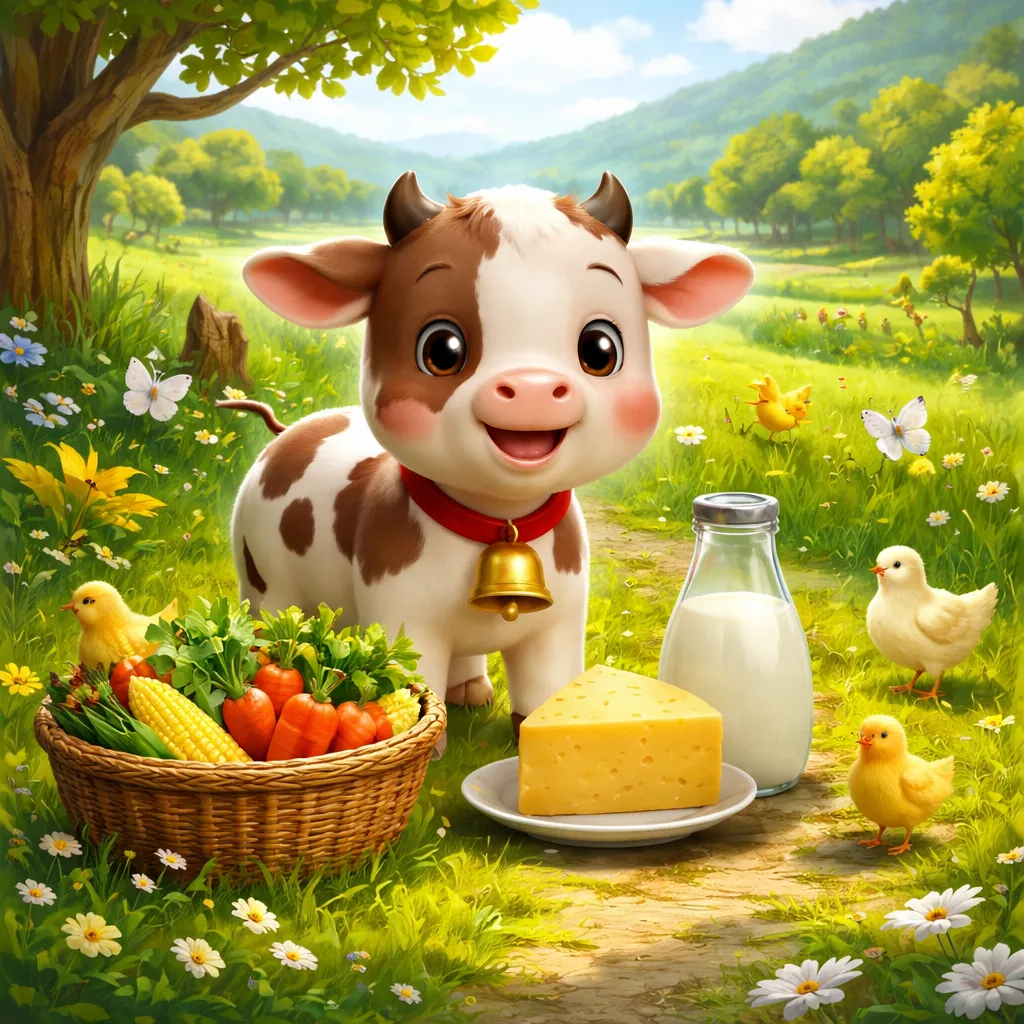

Think about a big, gentle cow with kind eyes. Cows give us one of our favorite drinks: milk! In Indonesia, the word for cow is “sapi,” and there is a heartwarming, thankful song about a little cow. It is a song about the good things she gives. Let’s learn about the giver in “The Little Cow (Sapi Kecil).”
About the Song
Here are the sweet and grateful lyrics of a beloved traditional Indonesian children’s song about a little cow:
Sapi kecil, sapi kecil,
Kau yang sangat baik.
Setiap hari memberi kami,
Susu yang segar.
Terima kasih, sapi kecil,
Untuk susumu.
Ayo kita minum susu,
Agar sehat selalu.
English Translation:
Little cow, little cow,
You are the one who is very good.
Every day you give us,
Fresh milk.
Thank you, little cow,
For your milk.
Let us drink milk,
So we are always healthy.
This is a classic and thankful Indonesian folk song for children. The song is a direct thank-you note to a cow. The singer speaks kindly to the “sapi kecil,” calling her “Kau yang sangat baik,” which means “You are the one who is very good.” Why is she so good? Because “Setiap hari memberi kami, Susu yang segar.” Every day she gives us fresh milk. The song then says a big “Terima kasih, sapi kecil,” which is how you say “Thank you” in Indonesian. The thanks are specifically “untuk susumu,” for your milk. The song ends with a happy call to action: “Ayo kita minum susu, Agar sehat selalu.” This means “Let us drink milk, so we are always healthy.” It is a song about gratitude, sharing, and the gift of healthy food.
What the Song is About
The song is a friendly talk with a helpful little cow. You look at the “sapi kecil” and want to tell her something nice. You say, “Kau yang sangat baik.” You are very good. Why do you think that?
You know the reason. “Setiap hari memberi kami, Susu yang segar.” Every single day, this cow works to give us something precious. She gives us milk that is fresh and good. This is a wonderful gift. So, you say thank you. “Terima kasih, sapi kecil, Untuk susumu.” Thank you, little cow, for your milk.
But the song does not stop at just saying thanks. It tells us what to do with this gift. “Ayo kita minum susu!” Let’s all drink the milk! And it tells us why. “Agar sehat selalu.” So that we can be strong and healthy all the time. The song shows a full circle: a kind animal gives a gift, we say thank you, and we use the gift to grow strong.
When to Sing It
This song is perfect for moments of gratitude and healthy habits. You can sing it happily at breakfast or dinner when you are drinking a glass of milk. You can sing it after visiting a farm or seeing a picture of a cow, to express thanks. You can also sing it as a “thank you” song to anyone who shares something with you, replacing “susu” (milk) with their gift.
What Children Can Learn
This grateful song is a wonderful teacher for learning how to express thanks, talk about daily gifts, and use the verb “memberi” (to give) to show kindness.
Vocabulary
The song teaches us essential Indonesian words for animals, character, actions, food, and health. “Cow” (Sapi). “Small/little” (kecil). “You” (kau). “That/which” (yang). “Very” (sangat). “Good” (baik). “Every day” (setiap hari). “To give” (memberi). “Us/we (including listener)” (kami/kita). “Milk” (susu). “Fresh” (segar). “Thank you” (terima kasih). “For” (untuk). “Your” (-mu in “susumu”). “Let’s” (ayo). “To drink” (minum). “So that” (agar). “Healthy” (sehat). “Always” (selalu).
Let’s use these words! You can thank other animals or people: “Terima kasih, ibu.” (Thank you, mom.) “Terima kasih untuk makanannya.” (Thank you for the food.) New word: Enak. This means “delicious.” You can say, “Susu ini sangat enak.” (This milk is very delicious.)
Language Skills
This song is perfect for learning to use the verb “memberi” (to give) to show someone giving something to someone else. It also teaches us the very important phrase “Terima kasih” (Thank you) and how to say what you are thankful for with “untuk” (for). We also see how to use “-mu” to mean “your.”
Concept Definition: We are learning about using the action word “memberi” which means to hand over something nice to someone else. It’s like sharing a toy. We are also learning the magic words “Terima kasih” and how to point to the reason for our thanks with “untuk.” Also, adding “-mu” to the end of a word means “your [something].”
Features and Types: The pattern for giving is: “[Giver] + memberi + [thing given] + kepada + [receiver].“ Often, “kepada” (to) is left out in simple songs. The pattern is: “[Giver] + memberi + [receiver] + [thing given].“ The pattern for thanking is: “Terima kasih + untuk + [thing/person].“ The “your” pattern is: “[Noun] + -mu.”
Example from the song: Giving: “Sapi memberi kami susu.“ (The cow gives us milk.) Thanking: “Terima kasih untuk susumu.“ (Thank you for your milk.) “Your”: “Susumu segar.” (Your milk is fresh.)
How to Spot Them: Here is the “Giving Finder” trick. Look for the word “memberi”. The word before it is often the giver, and the word after it tells you what is given or who receives it. Ask: “Is this sentence about someone giving something?“ For thanks, listen for “Terima kasih”. The word “untuk” often comes right after to tell you the reason. Ask: “Is this a sentence to say thank you?“
How to Use Them: A great way to talk about sharing is the “Give-Thanks” formula. Giving: “[Name] memberi [thing] kepada [name].“ Thanking: “Terima kasih, [name], untuk [thing].“ Your: “[Noun]mu…” (Your…).
Example from the song: “Sapi memberi kami susu.“ “Terima kasih untuk susumu.“
Example you can make: “Kakak memberi buku kepada adik.“ (Big sister gives a book to little sibling.) “Terima kasih untuk bukumu.“ (Thank you for your book.) “Bukumu bagus.“ (Your book is good.)
Sounds & Rhythm Fun
Listen to the warm, thankful melody of the song. The tune for “Sapi Kecil” is often gentle and flowing, with a rhythm that feels like a happy, contented walk. The repeated “s” sounds in “sapi,” “sangat,” “sus,” and “segar” make it soft and sweet to sing.
The words are full of kindness. Singing “Sapi kecil, sapi kecil” feels like a friendly greeting. The phrase “Kau yang sangat baik” has a sincere, warm sound. The most important phrase, “Terima kasih,” is clear and grateful. The words “ayo kita minum susu” are an upbeat, encouraging call. The song ends with the positive wish “agar sehat selalu,” which makes everyone feel good. This warm rhythm is perfect for creating your own “thank you” song. Try a bread song: “Ibu kecil, ibu kecil, Kau yang sangat baik. Memberi kami roti, Roti yang enak…“ (Dear mom, dear mom, You are very good. Gives us bread, Bread that is delicious…).
Culture & Big Ideas
“Sapi Kecil” reflects the important role of cows in many communities as providers of nutritious food like milk. The song teaches children from a young age to recognize and appreciate the source of their food, fostering a sense of gratitude and connection to nature and animals.
The song conveys three beautiful and important ideas. First, it teaches gratitude and saying “thank you” (“Terima kasih”) directly and specifically, showing appreciation for the gifts we receive from others, including animals. Second, it highlights the value of healthy habits, directly linking the gift of milk to the outcome of being strong and healthy (“agar sehat selalu”), encouraging children to value nutritious food. Third, it showcases the concept of mutual care—we care for animals, and they provide for us—promoting a sense of responsibility and kindness towards living things that help us.
Values & Imagination
Imagine you are visiting a green farm. You see a “sapi kecil” with gentle eyes. You walk up to her and say, “Kau yang sangat baik.” You are very good. You know she works hard. “Setiap hari memberi kami, Susu yang segar.” Every day, she gives fresh, white milk that tastes sweet and cool.
You feel a big “thank you” in your heart. You say it out loud: “Terima kasih, sapi kecil, Untuk susumu.” Thank you for this gift. Then, you take the milk she helped give. You hold a glass. You say to your friends or family, “Ayo kita minum susu!” Let’s all drink this milk together! As you drink, you think, “Agar sehat selalu.” This will help us grow strong, run fast, and play all day. How does it feel to say thank you for something that helps you grow? Draw the circle of giving. Draw the “sapi kecil” in a field. Draw an arrow from her to a bottle of “susu.” Draw people saying “Terima kasih!” with happy faces. Draw them drinking the milk and looking strong and “sehat.” This shows the song’s story of gratitude and health.
The song encourages us to always look for the helpers and givers around us, to say thank you with our words, and to take good care of our bodies with healthy choices. A wonderful activity is the “Memberi dan Terima Kasih” (Giving and Thank You) game. With a friend, take turns “giving” a toy. The giver says, “Aku memberi [toy] kepada kamu.” (I give this [toy] to you.) The receiver takes it and says, “Terima kasih untuk [toy]nya!” (Thank you for the [toy]!). This connects the song’s key words to a simple act of sharing and gratitude.
So, from the cow giving milk to us saying thank you and drinking to be healthy, this song is a lesson in gratitude and care. It is a vocabulary lesson in animals, actions, and feelings. It is a language lesson in using “memberi” for giving and “terima kasih untuk” for thanking. It is a music lesson in a warm, thankful tune. “The Little Cow (Sapi Kecil)” teaches us to appreciate gifts, to say thank you, and to choose what makes us strong.
Your Core Takeaways
You are now an expert on the Indonesian song “The Little Cow (Sapi Kecil).” You know it is a thankful song where we tell a little cow she is very good because she gives us fresh milk every day, we thank her for her milk, and we drink it to stay healthy always. You’ve learned Indonesian words like “sapi,” “baik,” “memberi,” “kami,” “susu,” “segar,” “terima kasih,” “untuk,” “ayo,” “minum,” and “sehat,” and you’ve practiced using “memberi” to mean “to give” and “terima kasih untuk” to say “thank you for.” You’ve felt its warm, grateful rhythm. You’ve also discovered the song’s message about saying thank you, appreciating where our food comes from, and making healthy choices.
Your Practice Missions
First, play the “Aku Memberi” (I Give) game. Find three small objects (a crayon, a spoon, a block). Practice saying a sentence for each one: “Ibu memberi susu kepada aku.” (Mom gives milk to me.) “Ayah memberi buku kepada aku.” (Dad gives a book to me.) “Aku memberi mainan kepada adik.” (I give a toy to little sibling.) This mission helps you master the “memberi” (to give) sentence pattern.
Second, do a “Lingkaran Terima Kasih” (Thank You Circle) activity. At your next meal, look at your food. Can you think of who or what helped bring it to you? Say one “Terima kasih” (Thank you) out loud. It could be “Terima kasih untuk nasi” (Thank you for the rice) or “Terima kasih, ibu” (Thank you, mom). This mission lets you use the song’s key phrase of gratitude in your daily life.