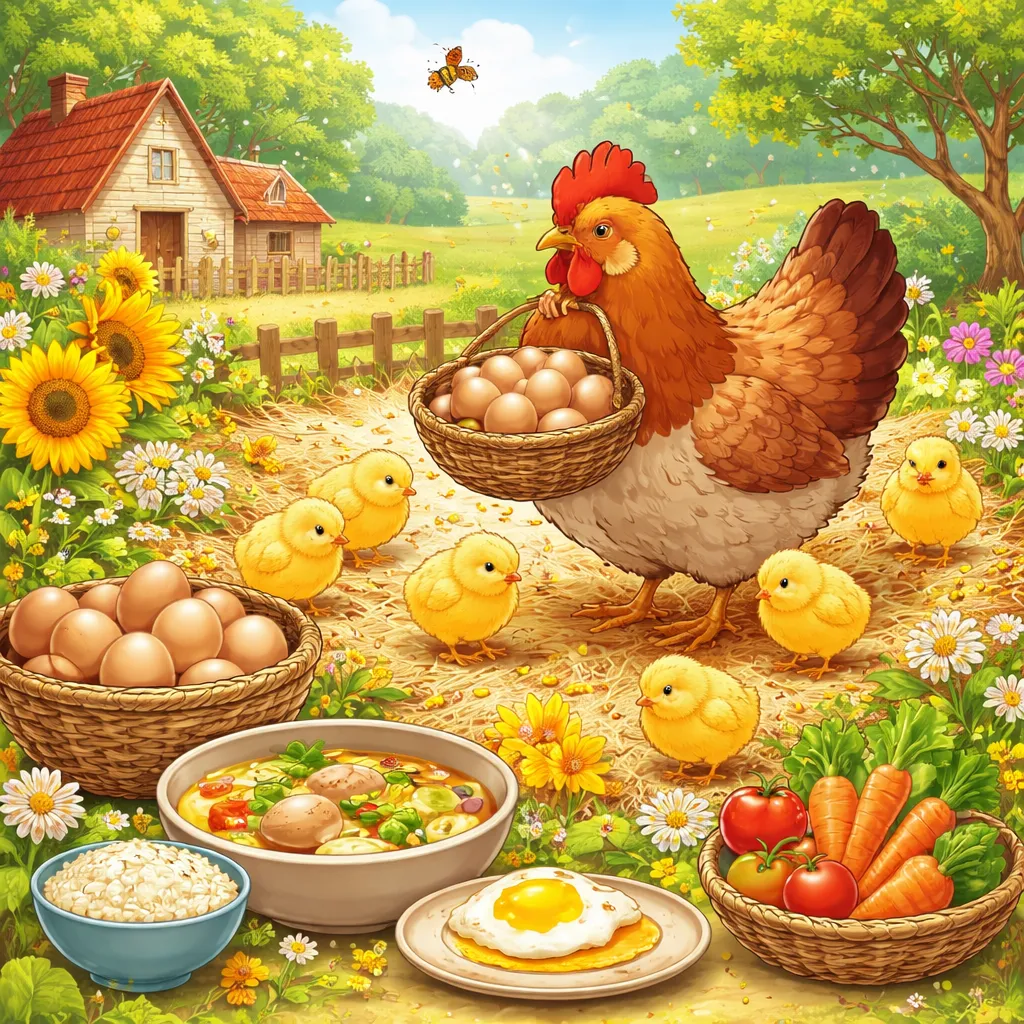

Have you ever had a warm, boiled egg for breakfast? Or seen a picture of a mother hen sitting on a nest, keeping her eggs warm? Hens are busy, gentle birds that give us a very special gift. In Korea, a country that values the gifts of the land, there is a happy song about this helpful farm friend. Let’s visit the farmyard with the Korean Song: The Little Hen (암탉).
About the Song
Here is a classic verse from this beloved song in Korean and English:
암탉 암탉 우리 암탉
(Amtak amtak uri amtak)
Hen, hen, our hen
알을 품고 따뜻하게
(Areul pumgo ttatteuthage)
Warming the eggs warmly
꼬꼬댁 꼬꼬댁 노래하며
(Kkokkodaek kkokkodaek noraeehamyeo)
Singing cluck cluck
맛있는 알을 낳아 주네
(Masinneun areul nawa june)
Laying delicious eggs for us
This song’s original Korean name is “암탉” (Amtak), which means “hen” (a female chicken). It is a very popular and traditional Korean children’s song. The song is a thankful tribute to the hard-working hen. The music is often steady, comforting, and includes the fun sound “꼬꼬댁” for a hen’s cluck. The Korean Song: The Little Hen (암탉) is a musical thank-you note, celebrating the hen’s care and the wonderful food it provides.
What the Song is About
The song is a song of gratitude. First, we call the hen “our hen,” which makes it feel like part of the family. We see her important job: “Warming the eggs warmly.” She sits on the eggs, using her own body heat to help new chicks grow. We hear her happy sound: “Singing cluck cluck.” Finally, we see the wonderful result of her care: “Laying delicious eggs for us.” The hen’s work gives us nutritious food. The whole song is about nurture, patience, and the simple, beautiful cycle of life on a farm.
Who Made It & Its Story
This song is a traditional Korean folk song, passed down through generations. The original creator is unknown, as it comes from Korea’s agricultural life, where farm animals were part of daily living. Hens are common in Korean countryside homes. The Korean Song: The Little Hen (암탉) is cherished for three comforting reasons. First, it teaches children in a simple way where an important food (eggs) comes from. Second, it shows the nurturing side of animals, highlighting care and patience. Third, its melody is often repetitive and cozy, easy to remember and hum, making it a favorite for singing about home and care.
When to Sing It
You can sing this song while helping in the kitchen, especially when cooking or eating eggs. It’s perfect to hum while pretending to take care of toy animals, keeping them warm. You could also sing it on a visit to a farm or when you see birds building nests.
The Korean Song: The Little Hen (암탉) shows us a lesson in care and giving. But to really appreciate the hen’s gift, we can learn more. This song is a nest of knowledge. It teaches us new words, how to talk about providing, and the value of farm life. Let’s peek inside and see what we can learn.
What Children Can Learn
Vocabulary
This song helps us learn words for farming, animals, and care.
Brood: To sit on eggs to keep them warm for hatching. The hen broods over her eggs.
Poultry: Domesticated birds kept for eggs or meat. Hens are a type of poultry.
Coop: A cage or pen for keeping poultry. The hen lives in a coop.
Nurture: To care for and encourage the growth of. The hen nurtures her eggs.
Sustenance: Food and drink that supports life. Eggs provide sustenance.
Cycle: A series of events that repeat. The song shows the life cycle of an egg.
Language Skills
This song uses Present Continuous Tense for ongoing actions. It describes what the hen is doing right now in the song’s scene.
What Is It?: Think of the Present Continuous as the “Right Now” tense. It shows actions that are in progress. The hen is warming the eggs right now.
Finding the Secret: Look for the verb “to be” (am, is, are) plus a verb ending in “-ing.” Ask: “Is this action happening at this moment?”
Using It:
◦   Formula: [Subject] + is/am/are + [verb-ing].

◦   Examples: “The hen is sitting. I am singing. We are learning.”

◦   In the song: The hen is warming the eggs and is singing.
Sounds & Rhythm Fun
Listen to the clucking rhythm! The Korean Song: The Little Hen (암탉) has a steady, comforting beat. The “꼬꼬댁” sound is repeated, imitating the hen’s cluck. This simple, repetitive rhythm is cozy and makes the song easy to remember. It feels like the steady, reliable routine of farm life. You can use this same steady, comforting rhythm to make up a song about any caring routine, like tucking in a toy or watering a plant.
Culture & Big Ideas
This song connects to traditional Korean rural life. A major holiday celebrating harvest and family is Chuseok (Korean Thanksgiving), when people give thanks for food, much of which comes from farms. The song reflects gratitude for nature’s provisions. The Korean Song: The Little Hen (암탉) teaches three important ideas. First, Nurture and Patience: Good things, like eggs and chicks, come from careful, patient care. Second, Animals as Providers: Farm animals work hard to give us food, and we should be thankful. Third, The Warmth of Home: The image of the hen warming her eggs symbolizes the safety, warmth, and care found in a loving home.
Values & Imagination
Imagine you are the little hen. How does it feel to keep the eggs warm? What do you cluck about? This song teaches you to appreciate the work that goes into the food you eat and to be grateful for caregivers. It shows that patience and warmth bring forth new life. A simple idea: The next time you eat an egg, think of the hen. You can even say a quiet “thank you.” Or, try to carefully carry a small ball (an “egg”) across the room without dropping it. You are practicing being a careful caretaker.
Your Core Takeaways
The Korean Song: The Little Hen (암탉) is a warm, comforting lesson in gratitude, nurture, and the cycles of farm life. You learned words like “brood,” “poultry,” and “sustenance.” You discovered how to use the Present Continuous tense for actions happening now. You clucked to the song’s steady, cozy rhythm. You also connected the hen to Korean values of thankfulness during Chuseok. Most importantly, the song teaches that good things come from patient care, that we should be thankful for our food, and that providing for others is a gentle, powerful form of love.
Your Practice Missions
- Be a “Right Now” Caretaker. Find a toy or a pillow. Pretend it is an egg. For one minute, gently take care of it. Describe what you are doing using “-ing” words. Example: “I am holding you warmly. I am keeping you safe.” This practices the Present Continuous tense and empathy.
- Create a “Thank You, Hen” Card. Draw a picture of a hen on a nest. On the inside, write or draw one reason you are thankful for hens (they give us eggs, they are soft, they take care of chicks). Give your card to a family member and explain it. This turns the song’s gratitude into a creative gift.