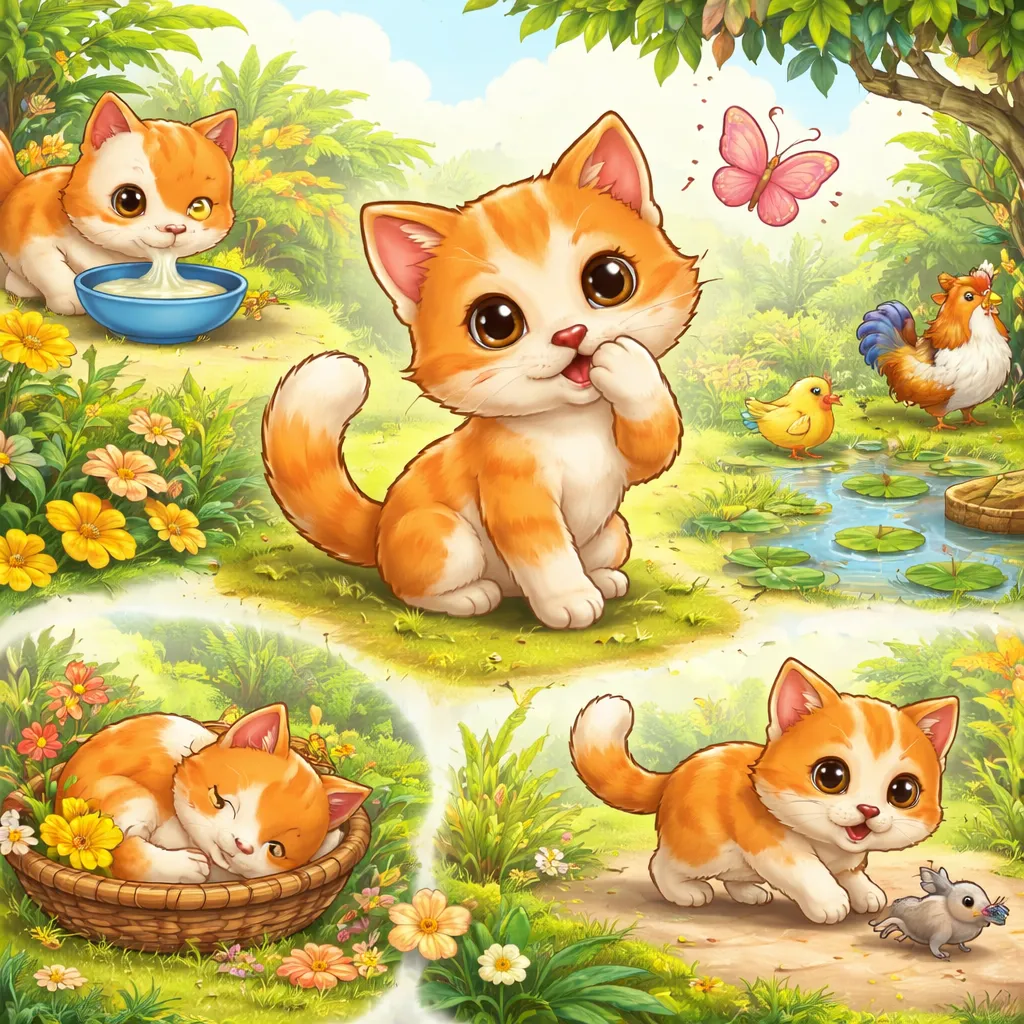

Do you have a pet cat at home, or have you seen one in your neighborhood? Cats are funny and sweet. They sleep in the sun, play with toys, and sometimes make a soft “meow” sound. In Indonesia, many families have cats, and there is a lovely, simple song about a little cat’s day. It is a song about a friendly, furry friend. Let’s meet “The Little Cat (Kucing Kecil).”
About the Song
Here are the gentle and kind lyrics of a popular traditional Indonesian children’s song about a little cat:
Kucing kecil, kucing kecil,
Manis dan lucu.
Apa yang kau lakukan
Sepanjang hari?
Aku bermain bola benang,
Aku minum susu.
Aku tidur di bawah kursi,
Kring-kring, kring-kring.
Kucing kecil, kucing kecil,
Aku sayang kamu.
Mari kita bermain bersama,
Selalu berteman.
English Translation:
Little cat, little cat,
Sweet and cute.
What are you doing
All day long?
I play with a ball of yarn,
I drink milk.
I sleep under the chair,
Meow-meow, meow-meow.
Little cat, little cat,
I love you.
Let’s play together,
Always be friends.
This is a classic and friendly Indonesian folk song for children. The song is a kind conversation with a pet cat. First, we greet the cat and say it is sweet and cute. We ask it a friendly question: “What are you doing all day?” Then, the cat answers! It tells us about its simple, happy day: playing with yarn, drinking milk, and sleeping under a chair, with a soft “meow.” Finally, we tell the cat we love it and want to play and be friends forever. It is a song about caring for pets, daily routines, and friendship.
What the Song is About
The song is a sweet chat with a furry little friend. You see a small, fluffy cat. You say hello: “Kucing kecil, kucing kecil.” You think it is “manis dan lucu” (sweet and cute). You are curious about its life. You ask, “Apa yang kau lakukan sepanjang hari?” (What are you doing all day long?).
Then, the little cat answers you. It has a simple, happy day. First, it plays. “Aku bermain bola benang.” It bats a soft ball of yarn with its paws. Then, it gets a drink. “Aku minum susu.” It laps up a bowl of yummy milk. Later, it gets sleepy. “Aku tidur di bawah kursi.” It curls up for a nap under a chair, safe and cozy. It adds a happy sound, “Kring-kring, kring-kring,” which is the Indonesian sound for a cat’s meow.
Hearing about its lovely day makes you smile. You tell the cat, “Aku sayang kamu” (I love you). You want to join the fun. “Mari kita bermain bersama” (Let’s play together). You promise to “selalu berteman” (always be friends). It is a song about loving and playing with a pet.
When to Sing It
This song is perfect for cozy, playful moments with pets or toys. You can sing it gently while petting a real cat or playing with a stuffed toy cat, acting out the actions of playing, drinking, and sleeping. You can sing it during a quiet playtime at home, rolling a ball of yarn or string across the floor like the cat in the song. You can also sing it as a happy friendship song with a friend, pretending one of you is the kind cat and the other is the caring friend.
What Children Can Learn
This friendly, action-based song is a wonderful teacher of simple daily activities, expressing affection, and animal sounds in Indonesian.
Vocabulary
The song teaches us lovely Indonesian words for pets, actions, and friendship. “Cat” (Kucing). “Small/little” (kecil). “Sweet” (manis). “Cute/funny” (lucu). “What” (Apa). “That” (yang). “You” (kau). “Are doing” (lakukan). “All day long” (sepanjang hari). “I/me” (aku). “Play” (bermain). “Ball” (bola). “Yarn/thread” (benang). “Drink” (minum). “Milk” (susu). “Sleep” (tidur). “Under” (di bawah). “Chair” (kursi). “Meow” (Kring-kring). “Love” (sayang). “Let’s” (Mari). “We” (kita). “Together” (bersama). “Always” (selalu). “Friends” (teman).
Let’s use these words! You can talk about your pet or toy: “Kucingku manis.” (My cat is sweet.) “Aku suka susu.” (I like milk.) New word: Anjing. This means “dog.” You can say, “Anjing kecil lucu.” (The little dog is cute.)
Language Skills
This song beautifully teaches how to ask about activities and how to talk about what you or someone else is doing. It uses the key question phrase “Apa yang kau lakukan?” (What are you doing?) and simple sentences to describe actions.
Concept Definition: We are learning about asking someone about their activities. “Apa yang kau lakukan?” is a friendly way to ask “What are you up to?” We are also learning how to talk about what we do using simple “I do” patterns with verbs like “bermain” (play), “minum” (drink), and “tidur” (sleep).
Features and Types: The question pattern is: “Apa yang + [someone] + lakukan?” In the song, it’s “Apa yang kau lakukan?” The answer uses “Aku + [verb] + [object/place].” to tell your activity. For example, “Aku bermain bola benang.” (I play with a ball of yarn.) The verb (like bermain, minum, tidur) comes right after “Aku” (I).
How to Spot Them: Here is the “Action Question” trick. Listen for the words “Apa yang” at the start. This often starts a question about an action. Ask yourself: “Is this question asking about what activity is happening?” For answers, look for the word “Aku” (I) followed by an action word. Ask: “Is this sentence telling me what ‘I’ am doing?”
How to Use Them: A great way to have a friendly chat is the “Daily Activity” formula. The pattern is: “Apa yang kamu lakukan?” (What are you doing?) / “Aku [verb] [object/place].” (I am [verb-ing] [something/somewhere].)
Example from the song: “Apa yang kau lakukan?” / The cat answers: “Aku bermain bola benang.” and “Aku tidur di bawah kursi.”
Example you can make: “Apa yang kamu lakukan?” / “Aku membaca buku.” (I am reading a book.) or “Aku makan roti.” (I am eating bread.)
Sounds & Rhythm Fun
Listen to the gentle, bouncy melody of the song. The tune for “Kucing Kecil” is light and playful, with a rhythm that feels like a cat pouncing softly or walking. The repetition of “kucing kecil” at the start and end makes the song feel warm and cozy, like a hug for the cat.
The words have playful sounds. The “cing” in “kucing” and “kring” in the meow sound similar, which is fun. The sound “kring-kring” is the Indonesian onomatopoeia for a cat’s meow—it’s cheerful and catchy! The rhythm is steady and easy to clap along to, which helps you remember the cat’s activities. This happy melody is perfect for creating your own pet song. Try a rabbit song: “Kelinci kecil, kelinci kecil… Apa yang kau lakukan? Aku melompat di rumput… Hop-hop, hop-hop!” (Little rabbit, little rabbit… What are you doing? I jump on the grass… Hop-hop, hop-hop!).
Culture & Big Ideas
“Kucing Kecil” reflects the common presence of cats as beloved pets in many Indonesian homes and neighborhoods. The song mirrors the gentle, caring way children are often taught to interact with animals, emphasizing kindness, play, and friendship rather than just observation. It shows a pet as a member of the daily routine.
The song conveys three gentle and important ideas. First, it teaches empathy and curiosity about another creature’s life by encouraging the question “What are you doing all day?”, which helps children think about the experiences and needs of their pets. Second, it celebrates the simple, comforting joys of daily routines—playing, eating, sleeping—and finds happiness in these ordinary, shared moments with a companion. Third, it explicitly models expressing affection and commitment in a friendship, with the direct and heartfelt lines “Aku sayang kamu” (I love you) and “selalu berteman” (always be friends), which are core values in Indonesian social relationships.
Values & Imagination
Imagine you are the little cat. You are a soft, orange cat with green eyes. You wake up from your nap. You hear a kind voice say, “Kucing kecil, manis dan lucu.” You stretch. The person asks you, “Apa yang kau lakukan?” You think about your day.
First, you see a red ball of yarn. You pat it with your paw. “Aku bermain bola benang,” you think. It rolls and you chase it! Then you feel thirsty. You walk to your bowl. “Aku minum susu.” The milk is cool and tasty. After playing and drinking, you feel sleepy again. You find a cozy spot “di bawah kursi.” “Aku tidur di bawah kursi.” It is quiet and dark there. As you fall asleep, you softly say, “Kring-kring, kring-kring.” How does it feel to have a friend who loves you and wants to play? Draw the cat’s day. Draw three small boxes like a comic strip. In the first, draw the cat playing with yarn. In the second, draw it drinking milk. In the third, draw it sleeping under a chair. Write the Indonesian words “bermain,” “minum,” and “tidur” under each picture. This shows the song’s simple story.
The song encourages us to be kind and curious about our pets, to enjoy simple play, and to tell our friends—whether they have two legs or four—that we love them. A wonderful activity is the “Hari Kucing Kecil” (Little Cat’s Day) game. With a friend or a stuffed animal, take turns asking “Apa yang kamu lakukan?” Then, act out an activity like the cat did: pretend to play with yarn, drink from a bowl, or take a nap under a table. Say the Indonesian words as you do the actions. This connects the song’s vocabulary to imaginative play.
So, from asking the cat about its day to promising to be its friend, this song is a lesson in care. It is a vocabulary lesson in pet care, daily actions, and loving words. It is a language lesson in asking “Apa yang kau lakukan?” and describing simple activities. It is a music lesson in a gentle, playful tune with a fun “meow” sound. “The Little Cat (Kucing Kecil)” teaches us about kindness, daily routines, and friendship with animals.
Your Core Takeaways
You are now an expert on the Indonesian song “The Little Cat (Kucing Kecil).” You know it is a sweet song where you greet a cute cat, ask what it does all day, listen to it describe playing with yarn, drinking milk, and sleeping under a chair, and then tell it you love it and want to be friends. You’ve learned Indonesian words like “kucing,” “manis,” “lucu,” “bermain,” “minum,” “tidur,” “sayang,” and “teman,” and you’ve practiced asking “Apa yang kau lakukan?” (What are you doing?) and describing activities like “Aku minum susu.” (I drink milk.). You’ve felt its gentle, bouncy rhythm and learned the Indonesian cat sound “kring-kring.” You’ve also discovered the song’s message about caring for pets, enjoying simple daily joys, and expressing love and friendship.
Your Practice Missions
First, play the “Apa yang Kucing Lakukan?” (What is the Cat Doing?) game. Grab a toy cat or draw a picture of one. Move it and make it do an action (like sleep, eat, play). Ask your toy, “Kucing kecil, apa yang kamu lakukan?” Then answer for it in Indonesian, for example, “Aku tidur!” or “Aku makan!” Use the verbs from the song. This mission helps you practice the key question and answer pattern in a fun, imaginative way.
Second, make a “Buku Harian Kucing Kecil” (Little Cat’s Diary). Take three pieces of paper. On each, draw the cat doing one thing from the song: playing, drinking, sleeping. Under each picture, write the sentence from the song: “Aku bermain bola benang,” “Aku minum susu,” “Aku tidur di bawah kursi.” Staple the pages to make a tiny book. “Read” your book to a friend or family member. This mission lets you use the song’s sentences to create your own storybook.