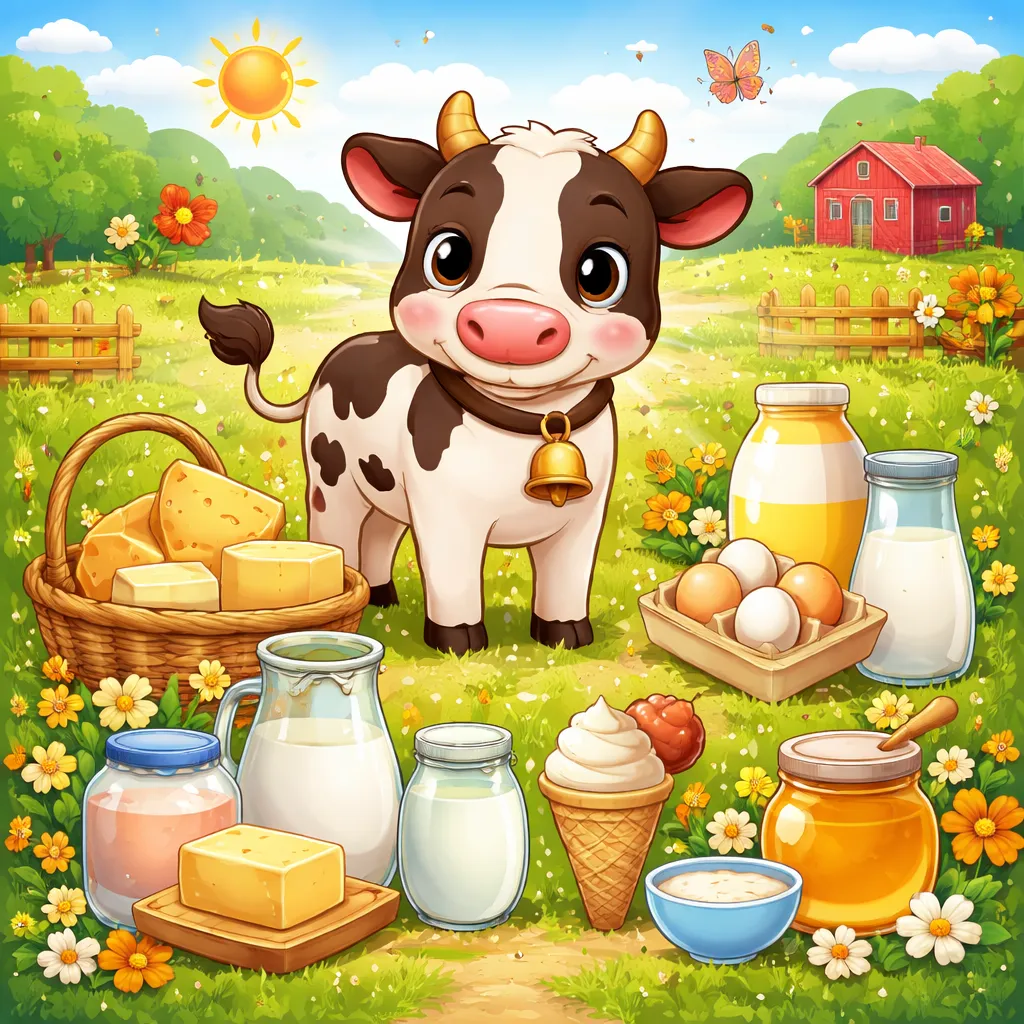

Have you ever poured cold, white milk on your cereal? Or enjoyed a delicious piece of cheese? These wonderful foods often start with a gentle farm animal. In Portugal, there is a kind and generous song about a little cow that gives us a special gift. Let’s visit the farm and learn the giving song “The Little Cow (A Vaquinha).”
About the Song
Here are the warm, thankful lyrics of a cherished traditional Portuguese children’s song. This version celebrates the cow’s gift:
A vaquinha, a vaquinha
Tem pintas, tem pintas.
A vaquinha, a vaquinha
Dá leite, dá leite.
A vaquinha, a vaquinha
Diz muuu, muuu, muuu.
A vaquinha, a vaquinha
Vive no campo, no campo.
English Translation:
The little cow, the little cow
Has spots, has spots.
The little cow, the little cow
Gives milk, gives milk.
The little cow, the little cow
Says moo, moo, moo.
The little cow, the little cow
Lives in the countryside, in the countryside.
This is a gentle Portuguese-language children’s song from Portugal that thanks a farm animal for its goodness. The word “vaquinha” is the affectionate, diminutive form for “little cow” or “calf.” The song is a thankful description. It introduces us to a friendly little cow with a special pattern on its coat. “The little cow has spots, has spots,” the song tells us. This little cow is not just pretty; it is also very generous. “The little cow gives milk, gives milk.” The cow talks to us with its deep, calm sound. “The little cow says moo, moo, moo.” And where does this helpful animal live? In the wide, open fields. “The little cow lives in the countryside, in the countryside.” The song is about observing, appreciating, and being thankful for the gifts that animals give us.
What the Song is About
The song is a grateful portrait of a cow’s life on the farm. Imagine a sunny field. A kind-looking cow stands there, its coat a beautiful pattern of white and black spots. “The little cow has spots, has spots,” the song says happily. The cow is not just for looking at; it provides something important.
Every day, the farmer milks the cow, and the cow gives its milk. “The little cow gives milk, gives milk.” This milk is used for so many things we love. The cow stands calmly and lets out a long, low sound. “The little cow says moo, moo, moo.” It is a peaceful sound of farm life. The cow’s home is this big, green field under the open sky. “The little cow lives in the countryside, in the countryside.” The song shows us the cow’s beauty, its useful gift, its sound, and its peaceful home.
Who Made It & Its Story
“A Vaquinha” is a classic Portuguese folk song, deeply rooted in the country’s agricultural traditions and rural way of life. Its specific creator is unknown, as it has been sung for generations to teach children about farm animals and where food comes from. The song reflects the historical and cultural importance of cattle in Portugal, especially in regions like the Ribatejo or the Azores, where dairy farming is common. It connects to a simple, thankful understanding of nature’s gifts. The song helps children link the milk they drink to the animal that produces it, fostering gratitude and awareness.
This gentle song is loved for three meaningful reasons. First, it introduces key Portuguese verbs for possession and giving, like “tem” (has) and “dá” (gives), in a very concrete and thankful context. Second, it uses a calm, repetitive, and melodic structure that is easy to remember and sing, making the lesson about farm life pleasant and engaging. Third, it teaches gratitude and awareness about the source of our food, showing the direct connection between a caring animal (“a vaquinha”) and a staple food (“o leite”), which is a core value in many cultures.
When to Sing It
This song is perfect for thankful, everyday moments. You can sing it happily at breakfast time when you pour milk on your cereal or enjoy a yogurt. You can hum it during a car ride through the countryside, looking for cows in the fields. You can also chant it with friends, taking turns describing the cow’s spots, its gift of milk, its moo, and its home.
What Children Can Learn
This thankful song is a wonderful teacher about farm animals, their features, and the verb “to give” in Portuguese.
Vocabulary
The song teaches us words for animals, features, actions, sounds, and places in Portuguese. “The little cow” (A vaquinha). “Has” (Tem). “Spots” (pintas). “Gives” (Dá). “Milk” (leite). “Says” (Diz). “Moo” (Muuu). “Lives” (Vive). “In the” (no). “Countryside” (campo).
Let’s use these words! You can say, “O dalmatian tem pintas.” (The dalmatian has spots.) Or, “A minha mãe dá um abraço.” (My mom gives a hug.) New word: Dairy. This word describes things made from milk, like cheese, yogurt, and butter, all gifts that start with the “leite” from the “vaquinha.”
Language Skills
This song beautifully introduces the verb “dá,” which is the form of the verb “dar” (to give) used for he, she, or it. It shows how to express that someone or something gives us something.
Concept Definition: The word “dá” is an action word that means “he gives,” “she gives,” or “it gives.” It tells us about a very kind action: sharing something with someone else. In the song, the little cow (“ela” – she) is the one doing the giving. “A vaquinha dá leite.” (The little cow gives milk.) The cow is sharing her milk with us.
Features and Types: The verb “dar” (to give) changes a little depending on who is doing the giving. “Dá” is the special form we use when we talk about one other person, animal, or thing (not you or me). In the song, the cow (one animal) is the giver, so we say “dá.” We use it for facts and habits, like “The cow gives milk every day.”
How to Spot Them: Here is a simple “sharing action” trick. Look for an action where something is being shared or handed over. Then, ask: “Who is doing the sharing?” If the answer is a he, she, or it, the word is often “dá.” In the song, who gives? The cow (it). What action word do we see? “Dá.”
How to Use Them: A great way to talk about kind actions is the “Giver Gives Gift” formula. The pattern is: “[The Giver (he/she/it)] + dá + [The Gift].”
Example from the song: “A vaquinha dá leite.” (The little cow gives milk.)
Example you can make: “O sol dá luz.” (The sun gives light.) “A árvore dá fruta.” (The tree gives fruit.)
Sounds & Rhythm Fun
Listen to the steady, contented rhythm of the melody. The tune is often smooth and reassuring, like the calm steps of a cow. The repetition of each line, like “dá leite, dá leite,” makes the act of giving sound regular and kind. The best part is the low, resonant sound effect: “Diz muuu, muuu, muuu.” This is the classic sound a cow makes, and it’s fun to say in a deep, relaxed voice. The “-inha” ending in “vaquinha” and the “-eite” in “leite” give the song a gentle, musical rhyme.
The rhythm is steady and peaceful, perfect for gentle clapping or swaying side to side. The repeating lines help you remember the kind message easily. The “muuu, muuu, muuu” is a fun, low sound to sing together. This musical pattern is perfect for creating your own song about a giving animal. You can write your own “A Galinha” (The Hen) song! Use the same tune. Try: “A galinha, a galinha, tem penas, tem penas. A galinha, a galinha, dá ovos, dá ovos… Diz cócórócócó… Vive no galinheiro, no galinheiro…” (The hen, the hen, has feathers, has feathers. The hen, the hen, gives eggs, gives eggs… Says cluck cluck cluck… Lives in the henhouse, in the henhouse…)
Culture & Big Ideas
“A Vaquinha” connects to the deeply rooted agricultural traditions and the importance of dairy farming in the Portuguese countryside (“o campo”). Cows are essential for milk, which is used to make Portugal’s famous cheeses like “Queijo da Serra” and delicious desserts. The song reflects a culture that values knowing where food comes from and respects the animals that provide it. It paints a picture of a peaceful, pastoral life that is an important part of Portugal’s identity.
The song conveys three important, thankful ideas. First, it teaches gratitude and connection to our food sources, showing the direct link between a living animal and the nourishing milk it provides. Second, it introduces the concept of animals having useful and generous roles in our lives, fostering a sense of respect and care for them. Third, it reinforces observation of animal characteristics (like spots) and their natural habitats (the countryside), building basic biological and geographical awareness.
Values & Imagination
Imagine you are visiting the “campo” on a warm morning. You see the “vaquinha.” Its black and white spots look like puzzle pieces on its soft coat. “The little cow has spots, has spots,” you think. The farmer gently milks the cow, and the warm, white milk flows into a pail. “The little cow gives milk, gives milk.” You are thankful because this milk will become your cheese and yogurt. The cow turns its head and lets out a long, deep call. “The little cow says moo, moo, moo.” All around it is the green field, its peaceful home. “The little cow lives in the countryside, in the countryside.” How do the spots look? How does the fresh milk smell? Draw the little cow’s world. Draw a green field with a spotted cow. Draw a pail full of milk. Draw the cow saying “MUUU” in a speech bubble. Draw a child drinking a glass of milk connected to the cow with a line. Write the word “DÁ” (gives) on that line. This shows the song’s story of giving.
The song encourages us to be thankful for nature’s gifts, to respect farm animals, and to understand where our food comes from. A wonderful activity is the “Thankful for Milk” moment. The next time you drink milk or eat yogurt or cheese, think of the “vaquinha.” Say a simple “Obrigado(a), vaquinha!” (Thank you, little cow!) in Portuguese. You can also draw a picture of the cow and the foods it helps make. This connects you to the song’s spirit of gratitude and connection.
So, from its spotted coat to the milk it gives, this song is a lesson in thankfulness. It is a vocabulary lesson in farm animals, features, and actions. It is a language lesson in using the verb “dá” (gives) to talk about sharing. It is a music lesson in a steady, peaceful, giving melody. “The Little Cow (A Vaquinha)” teaches us to observe animals, appreciate their gifts, and feel grateful for the food from the countryside.
Your Core Takeaways
You are now an expert on the song “The Little Cow (A Vaquinha).” You know it is a Portuguese song about a spotted cow that gives us milk, says moo, and lives in the countryside. You’ve learned Portuguese words like “vaquinha,” “pintas,” “dá,” “leite,” “muuu,” and “campo,” and you’ve practiced using the verb “dá” to talk about what someone or something gives. You’ve felt its steady, thankful rhythm and created your own verse about a giving animal. You’ve also discovered the song’s message about gratitude, the usefulness of farm animals, and the connection between nature and our food.
Your Practice Missions
First, play the “O que é que dá?” (What gives what?) game. Look around nature or think of animals. Ask and answer in Portuguese using the “Giver Gives Gift” formula. Example: “A vaca dá leite.” (The cow gives milk.) “A flor dá perfume.” (The flower gives perfume.) “A nuvem dá chuva.” (The cloud gives rain.) See how many kind “giving” sentences you can make. This mission helps you master the verb “dá” from the song.
Second, be a “Food Source Detective.” At your next meal, find one thing that comes from an animal, like milk, cheese, eggs, or honey. Say out loud in Portuguese: “Isto vem do/da [animal].” (This comes from the [animal].) For example, “O queijo vem da vaca.” (Cheese comes from the cow.) This mission helps you use the song’s theme to think gratefully about the origins of your food.