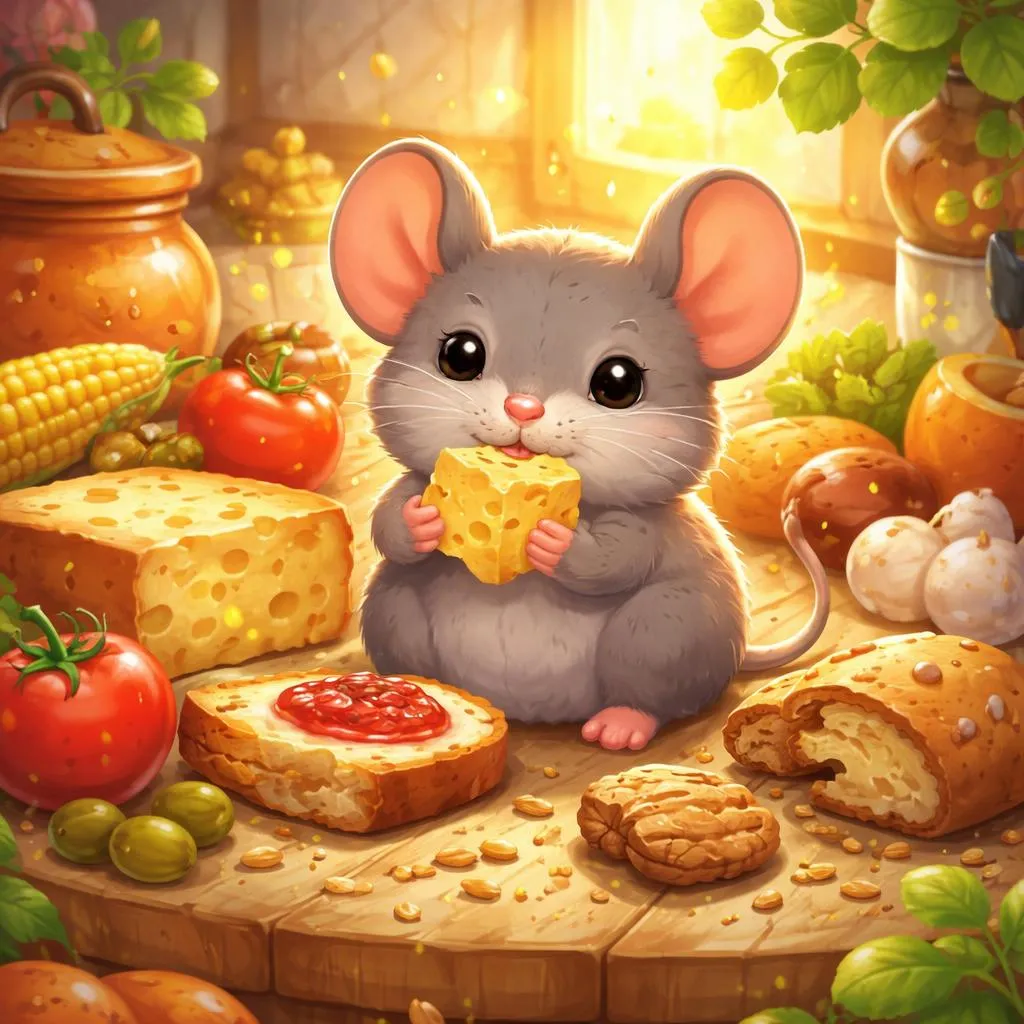

Have you ever seen a quick, little mouse scurrying along a wall? Have you imagined what a mouse might be looking for in a big, quiet kitchen? Mice are often seen as clever and sneaky creatures in stories. In Portugal, there is a playful, sneaky song about a little mouse on a delicious mission. Let’s be very quiet and learn the mischievous song “The Little Mouse (O Ratinho).”
About the Song
Here are the classic, simple lyrics of a very popular traditional Portuguese children’s song. This version is a fun call-and-response about the mouse’s favorite food:
(Todos): Ratinho, ratinho!
Onde vais, ratinho?
(Ratinho): Vou, vou, vou!
Buscar o meu queijinho!
(Todos): Ratinho, ratinho!
O que vais fazer, ratinho?
(Ratinho): Vou, vou, vou!
O meu queijo comer!
English Translation:
(Everyone): Little mouse, little mouse!
Where are you going, little mouse?
(Mouse): I go, I go, I go!
To get my little cheese!
(Everyone): Little mouse, little mouse!
What are you going to do, little mouse?
(Mouse): I go, I go, I go!
To eat my cheese!
This is a famous Portuguese-language children’s song from Portugal that imagines a funny conversation with a mouse. The word “ratinho” is the cute, diminutive form for “little mouse.” The song is a playful guessing game. Everyone calls out to the little mouse, asking it two important questions. First, “Where are you going?” The mouse’s answer is quick and excited: “I go, I go, I go! To get my little cheese!” Then, everyone asks, “What are you going to do?” The mouse gives the same happy reply, but with the final, delicious goal: “I go, I go, I go! To eat my cheese!” The song is all about the mouse’s single-minded, happy mission for its favorite snack.
What the Song is About
The song is a short, funny dialogue full of sneaky energy. Imagine a tiny, gray mouse with shiny black eyes and twitchy whiskers. It is peeking out from a small hole in the wall. A group of children spots it and calls out playfully, “Little mouse, little mouse! Where are you going, little mouse?”
The mouse stops for just a second. It looks toward the kitchen. It can almost smell the cheese. It answers with a quick, determined whisper, “I go, I go, I go! To get my little cheese!” It starts to scurry quietly along the floor. The children ask again, “Little mouse, little mouse! What are you going to do, little mouse?” The mouse doesn’t even look back. Its goal is clear. It repeats, even more eagerly, “I go, I go, I go! To eat my cheese!” The song captures the mouse’s focused adventure and everyone’s playful curiosity about it.
Who Made It & Its Story
“O Ratinho” is a classic Portuguese folk song and game, deeply rooted in the country’s tradition of circle games and call-and-response singing for children. Its specific creator is unknown, as it has been a playground and classroom staple for generations. The song reflects a common, playful theme in many cultures: the clever, food-loving mouse. In Portugal, it is often sung as a game where one child plays the mouse answering the questions, while the others sing the calls. It connects to a cultural love for simple, interactive games that spark imagination and laughter, using familiar household imagery like cheese (“queijo”).
This catchy song is adored for three clever reasons. First, it is a fantastic, memorable way to learn two essential Portuguese question words: “onde” (where) and “o que” (what), framed in a simple, repetitive dialogue. Second, its structure is perfectly designed for call-and-response play, with a catchy, rhythmic chant (“Vou, vou, vou!”) that builds excitement and is easy for everyone to join. Third, it taps into a child’s sense of playful mischief and curiosity, celebrating a small creature’s determined (and slightly naughty) quest for a tasty treat.
When to Sing It
This song is perfect for playful group activities. You can sing it as a game with friends, with one person being the sneaky mouse who answers, and everyone else asking the questions. You can chant it while playing with toy mice or during pretend play in a toy kitchen, acting out the mouse’s journey. You can also hum it at snack time when eating cheese, pretending to be the little mouse enjoying its prize.
What Children Can Learn
This interactive song is a wonderful teacher about asking questions, food words, and playful conversation in Portuguese.
Vocabulary
The song teaches us words for animals, actions, questions, and food in Portuguese. “The little mouse” (O ratinho). “Where” (Onde). “You go” or “are you going” (vais). “I go” or “I am going” (Vou). “To get” or “to fetch” (Buscar). “My” (meu). “Little cheese” or “my cheese” (meu queijinho/o meu queijo). “What” (O que). “To do” (fazer). “To eat” (comer).
Let’s use these words! You can ask, “Onde vais?” (Where are you going?) or “O que vais fazer?” (What are you going to do?). You can answer, “Vou comer.” (I am going to eat.) New word: Dialogue. This is when two or more people (or a person and a mouse!) talk to each other, asking and answering questions, just like in the song.
Language Skills
This song clearly teaches the use of two fundamental question words: “onde” (where) and “o que” (what). It also shows the structure of simple questions and answers in Portuguese, using the verb “ir” (to go) to talk about the near future.
Concept Definition: Question words are special words we use to ask for information. “Onde” is the word we use to ask about a place or location. “O que” is the word we use to ask about a thing or an action.
Features and Types: In the song, the group asks two different questions. First, they ask about the mouse’s destination: “Onde vais…?” (Where are you going…?). “Onde” seeks a place. The mouse answers with a goal involving a place: “Buscar o meu queijinho!” (To get my cheese!). Second, they ask about the mouse’s intention: “O que vais fazer…?” (What are you going to do…?). “O que” seeks an action. The mouse answers with the specific action: “O meu queijo comer!” (To eat my cheese!).
How to Spot Them: Here is a simple “question starter” trick. At the beginning of a question in Portuguese, if you see “Onde…?” it means someone is asking “Where…?”. If you see “O que…?” it means someone is asking “What…?”. They are your clues that a question is being asked.
How to Use Them: A great way to start a conversation is the “Curious Question Formula”. The patterns are: “Onde + [verb] + [subject]?” and “O que + [verb] + [subject] + [fazer]?”.
Example from the song: “Onde vais, ratinho?” (Where are you going, little mouse?) “O que vais fazer, ratinho?” (What are you going to do, little mouse?)
Example you can make: “Onde está o gato?” (Where is the cat?) “O que vais ler?” (What are you going to read?)
Sounds & Rhythm Fun
Listen to the call-and-response rhythm of the melody. The song has a clear, chanting quality. The group’s part, “Ratinho, ratinho! Onde vais, ratinho?” is often sung in a unison, calling tone. Then, the mouse’s solo answer, “Vou, vou, vou! Buscar o meu queijinho!” is usually quicker, more excited, and playful. The triple “Vou, vou, vou!” (I go, I go, I go!) sounds like the quick, scampering footsteps of a determined mouse. The word “queijinho” (little cheese) has a cute, sing-song ending.
The rhythm creates a fun back-and-forth game. The repetition of the structure makes it very easy to learn both parts. The excited “Vou, vou, vou!” is a fun part to sing with energy. This musical pattern is perfect for creating your own call-and-response animal song. You can write your own “O Cachorrinho” (The Little Dog) song! Use the same tune. Group: “Cachorrinho, cachorrinho! O que vais fazer, cachorrinho?” Dog: “Vou, vou, vou! O osso roer!” (I go, I go, I go! To gnaw the bone!)
Culture & Big Ideas
“O Ratinho” connects to the playful tradition of Portuguese children’s games (“jogos”) that involve singing, guessing, and role-playing, often played in schoolyards or at family gatherings. The mouse and cheese theme is universal, but it fits perfectly with Portugal’s rich variety of cheeses, from “queijo da serra” to “queijo fresco,” making the mouse’s quest very relatable! The song is a simple example of street and playground theater, where children take on roles and create a tiny story together.
The song conveys three engaging ideas. First, it teaches the basic structure of a conversation: asking a question and giving an answer. Second, it introduces the concept of purpose and intention—the mouse is going somewhere to do something specific (get cheese, eat cheese). Third, it playfully explores cunning and determination from the perspective of a small animal, encouraging children to imagine the secret lives and goals of creatures around them.
Values & Imagination
Imagine you are the “ratinho.” You are a tiny, clever mouse in the wall of a big, warm house. You hear the children call your name playfully. “Little mouse, little mouse! Where are you going, little mouse?” they ask. You stop and peek out. Your nose twitches. You have one mission. You whisper your answer, full of purpose: “I go, I go, I go! To get my little cheese!” You dart along the dark skirting board, your tiny feet a blur. They ask again, “Little mouse, little mouse! What are you going to do, little mouse?” You are already under the table, your eyes fixed on the beautiful yellow cheese on the counter. You answer with your mouth watering: “I go, I go, I go! To eat my cheese!” How do you sneak without making a sound? How does the cheese smell? Draw the little mouse’s adventure. Draw the mouse’s path from a hole in the wall to a big piece of cheese. Draw the mouse saying “Vou, vou, vou!” with little lines to show speed. Draw the children calling out with question marks above their heads. This shows the song’s call-and-response story.
The song encourages playful interaction, curiosity about animals, and understanding simple goals. A wonderful activity is the “Onde? O Que?” Game. With a friend or family member, take turns being the “questioner” and the “mouse.” The questioner points to an object and asks “Onde está a maçã?” (Where is the apple?) or “O que vais fazer com a bola?” (What are you going to do with the ball?). The “mouse” answers in Portuguese with a simple goal. This connects you to the song’s spirit of playful dialogue.
So, from the first call to the final cheesy goal, this song is a playful conversation. It is a vocabulary lesson in animals, food, and questions. It is a language lesson in using “onde” and “o que” to ask questions. It is a music lesson in a catchy, call-and-response chant. “The Little Mouse (O Ratinho)” teaches us about asking questions, having a determined goal, and enjoying a fun, sneaky story.
Your Core Takeaways
You are now an expert on the song “The Little Mouse (O Ratinho).” You know it is a Portuguese call-and-response song about a mouse on a mission to get and eat cheese. You’ve learned Portuguese words like “ratinho,” “onde,” “o que,” “vou,” “buscar,” and “queijo,” and you’ve practiced asking questions with “onde” and “o que.” You’ve felt its playful, back-and-forth rhythm and created your own animal dialogue verse. You’ve also discovered the song’s message about playful conversation, having a clear purpose, and using imagination for a tiny creature’s big adventure.
Your Practice Missions
First, play the “Mouse and Cheese” game. With a friend, act out the song. One of you is the group asking the two questions in Portuguese. The other is the mouse, answering with “Vou, vou, vou!” and the cheesy mission. Then, sneak quietly like a mouse to find a hidden “cheese” (a yellow toy or a drawing). This mission gets you speaking the dialogue and moving like the character.
Second, be a “Question Detective.” Look around your room. Ask two questions in Portuguese about objects you see. Use “Onde está…?” (Where is…?) for one thing, like your shoe. Use “O que é isto?” (What is this?) for another thing. Try to answer your own questions simply. This mission helps you practice the two main question words from the song in real life.