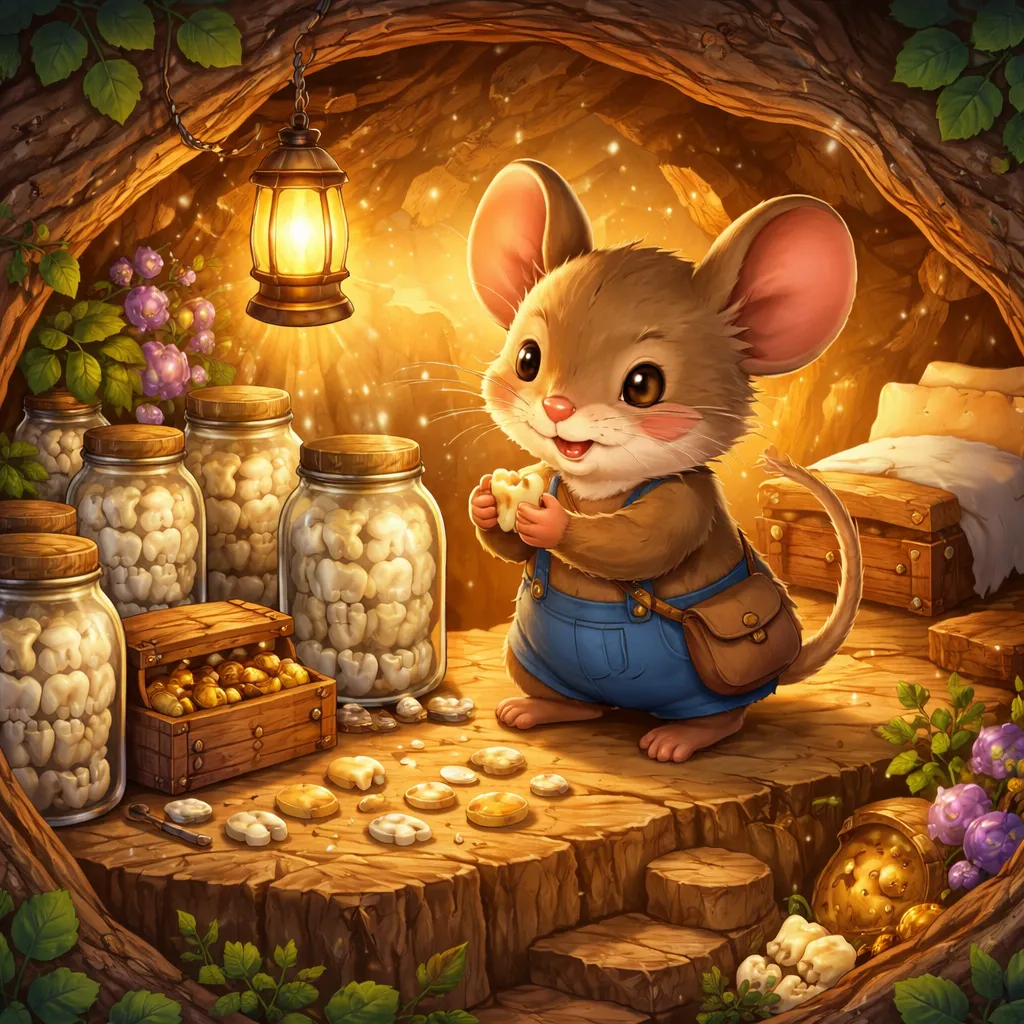

Have you ever lost a baby tooth? Did you put it under your pillow and hope for a surprise? In many places, a magical fairy might visit. But in Spanish-speaking countries all over the world, a tiny, sneaky, and kind creature is in charge of this important job. Let’s tiptoe quietly with the magical Spanish song “The Little Mouse (El ratoncito).”
About the Song
Let’s read the secretive, hopeful words of this traditional song.
El ratón, el ratón,
el ratón Pérez.
Se llevó mi diente
y me dejó un pastel.
El ratón, el ratón,
el ratón Pérez.
Se llevó mi diente
y me dejó un papel.
El ratón, el ratón,
el ratón Pérez.
Se llevó mi diente
y me dejó un botón.
English Translation:
The mouse, the mouse,
Pérez the mouse.
He took away my tooth
and left me a cake.
The mouse, the mouse,
Pérez the mouse.
He took away my tooth
and left me a piece of paper.
The mouse, the mouse,
Pérez the mouse.
He took away my tooth
and left me a button.
This is a beloved traditional Spanish children’s song about a famous magical character. The song is simple, repetitive, and full of playful surprise. In Spain and Latin America, when a child loses a baby tooth, they don’t wait for the Tooth Fairy. They wait for “El Ratoncito Pérez” (Pérez the Little Mouse) or simply “El Ratón” (The Mouse). The child places the lost tooth under their pillow at night. While they sleep, this clever little mouse sneaks in. He takes the tooth and leaves a small gift or coin in its place! The song imagines what fun things the mouse might leave: a cake, a note, or a shiny button. The melody is often light, quick, and a little sneaky-sounding, perfect for a nighttime adventure.
What the Song is About
The song paints a picture of morning magic after a big childhood event. A child has just lost a tooth. Before bed, they carefully place the tiny, white tooth under their pillow. They close their eyes and dream of the little mouse. In the night, a very small, quiet mouse named Pérez scurries into the room. He climbs up the bed, his tiny claws making no sound. He finds the tooth under the pillow. He picks it up with his little paws. Then, he leaves something special behind as a thank-you.
In the song, the mouse is very creative! Sometimes he leaves a delicious, tiny cake. Maybe it’s a sweet muffin just for the child. Another time, he might leave a folded piece of paper. Perhaps it’s a secret note or a drawing! Another time, he leaves a beautiful, shiny button that looks like a treasure. In the morning, the child wakes up and feels under the pillow. The tooth is gone! In its place is a wonderful little surprise from their secret mouse friend. The song is about the excitement of growing up and the fun of a magical tradition.
Who Made It & Its Story
“El ratoncito” is based on the very popular Hispanic tradition of “El Ratoncito Pérez” (Pérez’s Mouse). The song itself is a traditional folk song, and its specific creator is unknown. The character of the tooth mouse, however, has a famous origin! In the late 19th century, a Spanish writer named Luis Coloma wrote a story for the young King of Spain, Alfonso XIII, who had just lost a tooth. In the story, Coloma created “Ratoncito Pérez,” a mouse who lived in a cookie box and collected children’s teeth. This story made the mouse a national legend in Spain, and the tradition spread across Latin America. The song celebrates this cultural icon. It turns the sometimes-scary moment of losing a tooth into a fun, magical game. The mouse is a friendly, comforting figure who rewards bravery.
This simple song is beloved for three magical reasons. First, its tune is often quick, light, and easy to remember, making it fun to sing when you lose a tooth. Second, it celebrates a shared cultural rite of passage that connects millions of Spanish-speaking children, making them part of a special club. Third, it fuels wonderful imagination and softens the fear of losing a tooth, turning it into an adventure with a happy reward.
When to Sing It
This song is perfect for special, magical moments. You can sing it excitedly right after a tooth falls out, while you carefully place it under your pillow. You can chant it in the morning when you discover what the mouse left, as a happy “thank you” song. You can also hum it while playing pretend, imagining you are the little mouse sneaking around to collect “teeth” (like little white pebbles) from your stuffed animals.
What Children Can Learn
This magical song is a wonderful teacher about cultural traditions, Spanish language, and growing up.
Vocabulary
The song teaches us words for a magical creature, body parts, and small objects in Spanish. A “mouse” (ratón) is a very small animal with fur and a long tail. “Pérez” is a common Spanish last name, like Smith or Jones. A “tooth” (diente) is the hard, white part in your mouth for chewing. To “take away” or “carry off” (llevar) means to pick something up and bring it somewhere else. To “leave” (dejar) means to put something down and go away. A “cake” (pastel) is a sweet, baked dessert. A “piece of paper” (papel) is a sheet you can write or draw on. A “button” (botón) is a small, round thing you use to fasten clothes.
Let’s use these words! You can say, “The squirrel will take away the nut and hide it.” Or, “I will leave a note for my friend on her desk.” New word: Tradition. This is a special custom or belief that is passed down in a family or culture for a long time, like the tooth mouse tradition.
Language Skills
This song is a perfect lesson in using direct object pronouns and talking about completed past actions. The key phrases are “Se llevó mi diente” (He took my tooth) and “me dejó un pastel” (He left me a cake). The little word “se” is part of the verb “llevarse” (to take away). The endings “-ó” on “llevó” and “dejó” tell us this happened in the past, one time. The mouse already did this action.
The song also uses the indirect object pronoun “me” in “me dejó” (he left for me ). This shows the gift is for the singer. The repetitive structure “Se llevó mi diente y me dejó…” (He took my tooth and left me…) is great for practicing simple past tense sentences and connecting two actions that happened in order.
Sounds & Rhythm Fun
Listen to the light, quick, and playful rhythm of the melody. The song often has a bouncy, cheerful rhythm that makes you want to tiptoe or sneak around. The repetition of “El ratón, el ratón, el ratón Pérez” is very catchy and fun to say fast. The melody usually jumps a little on “Pérez,” making the mouse’s name sound important and fun. The Spanish lyrics have a clear, driving rhyme: “Pérez” rhymes with “pastel” and “papel” and “botón” in feeling, creating a musical pattern.
The rhythm is often quick and steady. Try a light, tiptoeing step: El ra-tón, el ra-tón, el ra-tón Pé-rez (El rah-tón, el rah-tón, el rah-tón Peh-rez). The short lines and repetition make it super easy to learn and remember. This quick, repetitive, and sneaky musical pattern makes the song exciting. You can write your own “magical visitor” song! Use the same bouncy rhythm. Try: “The fairy, the fairy, the shiny tooth fairy. She took my tiny tooth and left a silver coin. The fairy, the fairy, the shiny tooth fairy. She took my tiny tooth and left a sparkling stone.”
Culture & Big Ideas
“El ratoncito” is a direct window into the widespread Hispanic tradition of the Tooth Mouse, a charming alternative to the Anglo-Saxon Tooth Fairy. This tradition is a beloved part of growing up in Spain and Latin America. The character, often called “Ratoncito Pérez” or “El Ratón de los Dientes” (The Tooth Mouse), teaches children about the natural process of losing baby teeth in a fun, non-scary way. It connects to family rituals, as parents often help orchestrate the “mouse’s” visit. The song can be part of the celebration of losing a first tooth, a small family milestone marked with excitement and a little secret between parents and child. It teaches that growing up involves changes, but these changes can be magical and rewarding.
The song conveys three important ideas. First, it’s about finding magic and comfort in natural changes. Losing a tooth can be strange, but a magical mouse makes it an adventure. Second, it expresses the joy of anticipation and reward. The mouse’s exchange (tooth for gift) teaches about patience and the happiness of a surprise. Third, it highlights shared cultural stories that connect communities. Millions of children share this same mouse friend, creating a fun, common experience.
Values & Imagination
Imagine you are the child in the song. You wiggle your tooth until it pops out. How does it feel? Smooth? Tiny? You put it under your pillow. How does the pillow feel? Soft and lumpy with the tooth underneath? Now, imagine you are the little mouse, Pérez. You are very small. How do you climb onto the big bed? Do you use the blanket like a rope? You find the tooth. It’s shiny! What do you do with all the teeth you collect? Do you build a tiny, shiny castle? Then you leave a gift. What gift would you leave? Draw a two-part picture. On one side, draw the child sleeping, with the mouse sneaking under the pillow. On the other side, draw the child waking up, looking happily at the surprise left behind—a cake, a note, and a button. This shows the magical transaction.
The song encourages bravery with physical changes, excitement for family traditions, and rich imagination about secret night-time visitors. A great family activity is to create a “Mouse Door.” Tape a small, mouse-sized paper door at the base of a wall in the child’s room. When a tooth is lost, the child can place it in front of the door. Overnight, the “mouse” can take the tooth and leave a small gift by the door. Sing the song when you discover the gift. This brings the tradition to life in a tangible, fun way.
So, as the last line about the button fades, think about the secret magic in this quick tune. It is a vocabulary lesson in magic and small treasures. It is a grammar lesson in simple past tense actions in Spanish. It is a music lesson in a light, tiptoeing rhythm. From the first call to the mouse to the final surprise left behind, it wraps lessons in cultural tradition, growing up, and joyful imagination in a melody that makes you believe in nighttime magic. “The Little Mouse (El ratoncito)” teaches us that changes can be fun, that small surprises bring big smiles, and that sharing a story with millions of other children makes the world feel wonderfully connected.
Your Core Takeaways
You are now an expert on the song “The Little Mouse (El ratoncito).” You know it is a traditional Spanish song about the magical mouse who exchanges gifts for lost teeth. You’ve learned Spanish words like “ratón,” “diente,” and “dejar,” and you’ve practiced talking about completed past actions. You’ve felt its quick, sneaky rhythm and created your own magical visitor verse. You’ve also discovered the song’s cultural background and its messages about magical traditions, celebrating growth, and the joy of a secret exchange.
Your Practice Missions
First, stage a “Tooth Mouse Visit.” The next time you or a family member loses a baby tooth (or a pretend tooth like a white bean), place it under a pillow. In the morning, have a grown-up help the “mouse” leave a tiny surprise. Sing the song when you find it! This mission connects you directly to the cultural tradition.
Second, create a “Mouse’s Treasure” drawing. Imagine you are Ratoncito Pérez. What do you do with all the teeth you collect? Draw the mouse’s secret home. Is it a tiny house made of cookie boxes? Are the teeth used as shiny furniture, windows, or a sparkling path? Label three things in your drawing. This activity stretches your imagination about the song’s secret world.