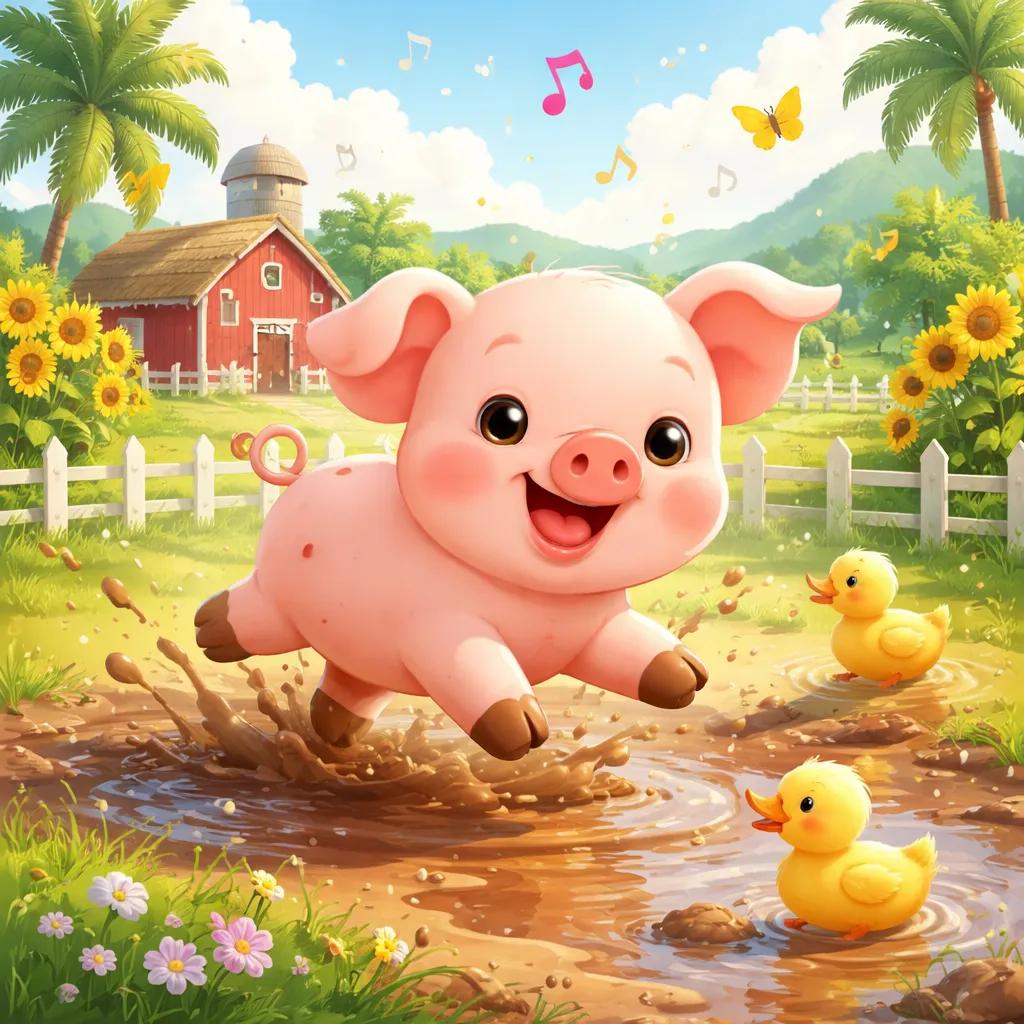

Imagine a happy little pig, with a curly tail, having the best day ever. What do you think it likes to do? In Indonesia, the word for pig is “babi,” and there is a fun, playful song about a little pig’s favorite things. It is a song about simple joys and funny sounds. Let’s discover the fun with “The Little Pig (Babi Kecil).”
About the Song
Here are the cheerful and funny lyrics of a well-loved traditional Indonesian children’s song about a little pig:
Babi kecil, babi kecil,
Tidur lelap, perut kenyang.
Bangun pagi, perut lapar,
Makan nasi hangat-hangat.
Ngek ngek ngek, ngek ngek ngek,
Babi kecil senang sekali.
Setiap hari, pergi bermain,
Di lumpur, ngek ngek ngek!
English Translation:
Little pig, little pig,
Sleeps soundly, tummy full.
Wakes up in the morning, tummy hungry,
Eats warm rice.
Oink oink oink, oink oink oink,
The little pig is very happy.
Every day, goes to play,
In the mud, oink oink oink!
This is a joyful and descriptive Indonesian folk song for children. The song shows us a day in the life of a happy “babi kecil.” The song starts with the pig sleeping deeply because its tummy is full: “Tidur lelap, perut kenyang.” Then, it wakes up hungry: “Bangun pagi, perut lapar,” and eats a nice meal of warm rice: “Makan nasi hangat-hangat.” After that, the pig is so happy it makes its sound, “Ngek ngek ngek,” which is how Indonesians write the sound a pig makes. The song tells us the little pig is very happy, “senang sekali,” and that every day it goes to play, “pergi bermain,” in its favorite place: the mud, “di lumpur!” It is a song about comfort, happiness, and playful messiness.
What the Song is About
The song paints a funny and cozy picture of a little pig’s perfect day. First, we see the “babi kecil” fast asleep. “Tidur lelap, perut kenyang.” It sleeps so well because it has a full tummy. Then, morning comes. The pig wakes up. “Bangun pagi, perut lapar.” It is hungry now! So, it eats. “Makan nasi hangat-hangat.” It eats a big bowl of nice, warm rice.
Now the pig has lots of energy! It is so happy. It says, “Ngek ngek ngek, ngek ngek ngek!” It is singing its happy pig song. The song tells us, “Babi kecil senang sekali.” The little pig is very happy. What does it do when it’s happy? “Setiap hari, pergi bermain, Di lumpur!” Every single day, it goes to play. And its favorite playground is the mud! It plays and rolls in the mud, going “ngek ngek ngek!” with joy.
When to Sing It
This song is perfect for playful and cozy times. You can sing it happily during playtime, especially if you’re playing with dirt or clay, pretending it’s mud. You can sing it after a meal, when your own “perut” (tummy) is “kenyang” (full) and you feel happy. You can also sing it as a silly before-bed song about sleeping soundly.
What Children Can Learn
This fun song is a wonderful teacher for learning about daily routines, expressing feelings, and using the fun sound words we call onomatopoeia.
Vocabulary
The song teaches us great Indonesian words for animals, daily actions, body parts, feelings, and places. “Pig” (Babi). “Small/little” (kecil). “To sleep” (tidur). “Soundly/deeply” (lelap). “Stomach/tummy” (perut). “Full” (kenyang). “To wake up” (bangun). “Morning” (pagi). “Hungry” (lapar). “To eat” (makan). “Rice” (nasi). “Warm” (hangat). “Oink (pig sound)” (ngek). “Happy” (senang). “Very” (sekali). “Every day” (setiap hari). “To go” (pergi). “To play” (bermain). “In” (di). “Mud” (lumpur).
Let’s use these words! You can talk about your own day: “Aku bangun pagi.” (I wake up in the morning.) “Perut aku lapar.” (My tummy is hungry.) New word: Kotor. This means “dirty.” You can say, “Babi main di lumpur, jadi kotor.” (The pig plays in the mud, so it gets dirty.)
Language Skills
This song is excellent for learning to talk about opposites and feelings, like “kenyang” (full) and “lapar” (hungry), or “senang” (happy). It also teaches us the useful word “di” which means “in,” “on,” or “at” a place, and introduces fun onomatopoeia (sound words) like “ngek ngek ngek.”
Concept Definition: We are learning about words that are opposites, like full and hungry, and words for feelings, like happy. We are also learning the small but powerful word “di” that tells us where something happens. And we’re learning sound words that copy the noise an animal or thing makes.
Features and Types: The pattern for talking about a state is: “[Subject] + [state/feeling word].“ The pattern for location is: “[Action] + di + [place].“ The pattern for sound words is you just say them: “[Sound word]!”
Example from the song: State/Feeling: “Perut kenyang.“ (Tummy is full.) “Babi kecil senang.“ (Little pig is happy.) Location: “Bermain di lumpur.“ (Play in the mud.) Sound: “Ngek ngek ngek!“
How to Spot Them: Here is the “Opposite/Feeling Finder” trick. Look for words that describe how someone or something is, not what they do. Ask: “Is this word describing a feeling (like happy) or a state (like full or hungry)?“ For location, look for the word “di”. The word right after it is usually the place. Ask: “Is this word telling me where the action is happening?“
How to Use Them: A great way to describe your day is the “Feel-Be-Do-Where” formula. Feel: “Perut aku [lapar/kenyang].“ (My tummy is [hungry/full].) Be: “Aku [senang].“ (I am [happy].) Do-Where: “Aku [action] di [place].“ (I [action] in/at [place].)
Example from the song: “Perut kenyang. Babi senang. Bermain di lumpur.“
Example you can make: “Perut aku lapar. Aku senang. Makan di meja.“ (My tummy is hungry. I am happy. Eat at the table.)
Sounds & Rhythm Fun
Listen to the bouncy, playful melody of the song. The tune for “Babi Kecil” is often cheerful and has a rhythm that feels like a happy trot or a playful roll. The best part is the funny pig sound “Ngek ngek ngek!” which is repeated and super fun to sing.
The words are full of fun sounds. The first part about sleeping and eating is calm and smooth. Then, the song bursts with the silly, repeated “Ngek ngek ngek!” The word “senang sekali” (very happy) sounds bright and smiley. The phrase “di lumpur” has a squishy, muddy sound that’s perfect. Ending with another “ngek ngek ngek!” leaves everyone laughing. This playful rhythm is perfect for creating your own animal sound song. Try a duck song: “Bebek kecil, makan roti… Kwek kwek kwek, senang sekali…“ (Little duck, eats bread… Quack quack quack, very happy…).
Culture & Big Ideas
“Babi Kecil” reflects a simple, joyful view of farm life. In many Indonesian rural settings, pigs are familiar farm animals. The song humorously and affectionately captures their well-known love for mud, which helps them stay cool, and their contentment with simple pleasures like eating and sleeping.
The song conveys three joyful and important ideas. First, it celebrates contentment and simple daily routines—sleeping well (“tidur lelap”), eating a warm meal (“makan nasi hangat”)—showing happiness in basic, comforting activities. Second, it encourages expressive joy and playfulness, as the pig shouts “ngek ngek ngek” and plays freely in the mud (“di lumpur”), reminding us that it’s good to show we are happy and to have fun. Third, it playfully accepts getting messy as part of fun and exploration, with the pig happily playing in the mud, which is a natural and enjoyable thing for it to do.
Values & Imagination
Imagine you are the “babi kecil.” You just woke up from a great sleep because your tummy was full. Now, in the morning, your tummy rumbles. “Perut lapar!” You are hungry. You see a bowl of warm, soft rice. “Makan nasi hangat-hangat.” Yum! Your tummy is full again, and you feel so good.
You are so full of energy and happiness! You want to shout! You go, “Ngek ngek ngek, ngek ngek ngek!” You are “senang sekali”! What do you do every day when you’re this happy? “Pergi bermain!” You go to play. And your favorite place? “Di lumpur!” You run and jump and roll in the soft, cool, squishy mud. It feels great! How does it feel to be so happily messy? Draw the pig’s happy day. Draw the pig sleeping with a smile. Draw it eating rice. Then, draw it looking super happy shouting “Ngek ngek ngek!” Finally, draw it playing “di lumpur,” all messy and joyful. This shows the song’s story of simple happiness.
The song encourages us to enjoy simple comforts like good sleep and warm food, to express our happiness out loud, and to not be afraid of playful, messy fun sometimes. A wonderful activity is the “Suara Senang” (Happy Sound) game. Think of an animal and its happy sound. Say, “Kalau [animal] senang, dia bilang [sound]!” (When a [animal] is happy, it says [sound]!). For example, “Kalau anjing senang, dia bilang guk guk guk!” This connects the song’s theme of expressing joy to other animals.
So, from the pig sleeping and eating to shouting and playing in the mud, this song is a lesson in simple joy. It is a vocabulary lesson in daily routines, feelings, and places. It is a language lesson in opposites, the location word “di,” and fun sound words. It is a music lesson in a cheerful, oinking tune. “The Little Pig (Babi Kecil)” teaches us to enjoy life’s simple pleasures, to show our happiness, and to have playful fun.
Your Core Takeaways
You are now an expert on the Indonesian song “The Little Pig (Babi Kecil).” You know it is a happy song about a little pig that sleeps with a full tummy, wakes up hungry to eat warm rice, gets very happy and says “ngek ngek ngek,” and goes to play in the mud every day. You’ve learned Indonesian words like “babi,” “tidur,” “kenyang,” “lapar,” “makan,” “senang,” “ngek,” “pergi,” “bermain,” and “di lumpur,” and you’ve practiced talking about feelings like “senang” and “lapar,” using “di” for places like “di lumpur,” and making animal sounds like “ngek ngek ngek!” You’ve felt its bouncy, playful rhythm. You’ve also discovered the song’s message about enjoying simple routines, expressing happiness loudly, and having fun during playtime.
Your Practice Missions
First, play the “Lapar atau Kenyang? Senang atau Tidak?” (Hungry or Full? Happy or Not?) game. At mealtime, point to your tummy and say how you feel: “Perut aku lapar!” before eating, and “Perut aku kenyang!” after eating. You can also say “Aku senang!” when you’re happy. This mission helps you master the opposites and feeling words from the song.
Second, have a “Bermain Di…” (Playing In/At…) adventure. Choose a place to play, like “di taman” (in the park), “di kamar” (in the room), or “di halaman” (in the yard). Say, “Aku pergi bermain di [place]!” and pretend to play there. You can even invent a happy sound for yourself, like “Hore hore hore!” This mission lets you use the song’s “di” for location and the idea of happy, playful fun.