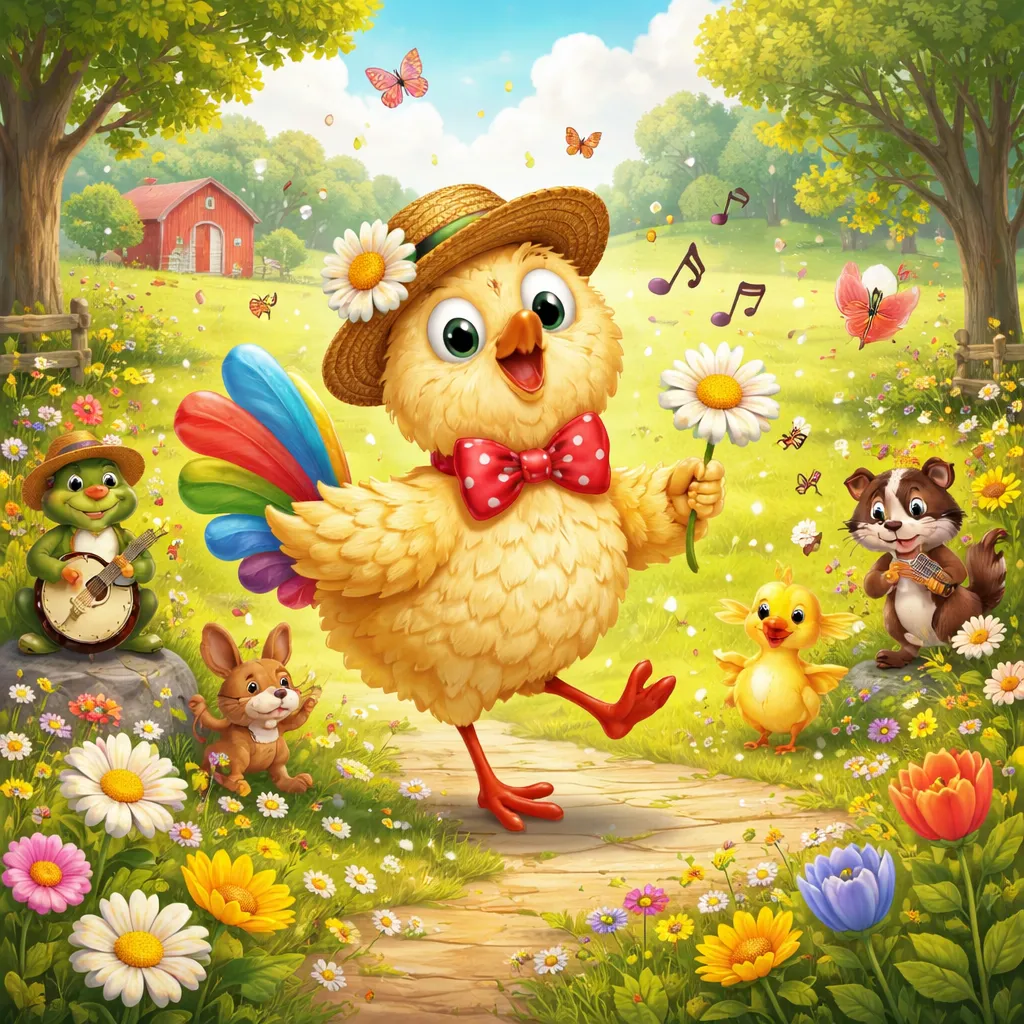

Have you ever heard a song that makes absolutely no sense, but it’s so fun to sing that you don’t even care? A song that makes you want to skip, clap, and laugh with its silly, bouncy words? There is a very old, very joyful song exactly like that. Let’s learn about the nonsense tune “Polly Wolly Doodle.”
About the Song
Let’s read the playful, famous words of this classic folk song.
Oh, I went down South for to see my Sal,
Sing Polly wolly doodle all the day.
My Sally am a spunky gal,
Sing Polly wolly doodle all the day.
Fare thee well, fare thee well,
Fare thee well, my fairy fay.
For I’m going to Louisiana
For to see my Susyanna,
Sing Polly wolly doodle all the day.
This song is a traditional American folk song from the 19th century. It is a lively, nonsensical minstrel song that became a popular children’s tune. The phrase “Polly Wolly Doodle” doesn’t really mean anything—it’s a joyful nonsense phrase meant to be fun to say. The song was first published in 1880, but it was sung long before that. It tells the story of a traveler going to see his sweetheart, but the story is just an excuse to sing the happy, repeating chorus. The song is famous for its catchy, easy-to-remember melody and its ability to get everyone joining in on the “Polly wolly doodle all the day” refrain.
What the Song is About
The song paints a simple, cheerful picture of a traveler in love. The singer is going “down South,” which means to the southern part of the United States. He is going to see his girlfriend, whose name is Sal. He describes her as a “spunky gal,” meaning a lively, brave girl.
But then, in the next verse, he says goodbye to a different person, his “fairy fay” (a poetic term for a loved one). He says he is going to Louisiana to see a different girl named Susyanna! The song is not a serious love story. It’s just a silly, happy song about traveling and having fun. The most important part is the chorus, which everyone shouts: “Sing Polly wolly doodle all the day!” It’s a command to be joyful and silly from morning until night, no matter what silly story the verses tell.
Who Made It & Its Story
“Polly Wolly Doodle” is a traditional folk song, so its original author is unknown. It was first published in a Harvard student songbook in 1880, but it was already being sung in minstrel shows and community gatherings for years before. The song’s nonsense words and simple structure made it easy to learn and perfect for group singing. It was especially popular in minstrel shows, a form of entertainment in the 1800s. Over time, the song shed its specific origins and became a beloved, harmless children’s song sung in schools, at camps, and around campfires.
This song has remained a favorite for three joyful reasons. First, its melody is incredibly catchy, bouncy, and easy to sing. Second, its chorus is pure, joyful nonsense that invites everyone to participate without worrying about the meaning. Third, it is wonderfully adaptable—you can make up your own silly verses, which encourages creativity and laughter.
When to Sing It
This song is perfect for any happy, active moment. You can sing it at the top of your lungs while on a swing, pumping your legs to the rhythm. You can sing it as a family on a long car ride, taking turns making up new, silly verses. You can also sing it while doing chores, turning boring work into a game by “polly wolly doodling” all the way through.
What Children Can Learn
This bouncy, silly song is a wonderful bundle of lessons. Let’s unpack the fun.
Vocabulary
The song teaches us playful, old-fashioned words. “Polly wolly doodle” is a nonsense phrase. “Down South” refers to the southern United States. A “spunky gal” is a brave, lively girl. “Fare thee well” is an old, poetic way to say “goodbye.” A “fairy fay” is a magical, fairy-like loved one. “Louisiana” is a state in the southern U.S.
Let’s use these words! You can say, “Fare thee well, see you tomorrow!” Or, “My friend is a spunky kid who loves adventure.” New word: Refrain. This is a part of a song that is repeated after each verse. The “Polly wolly doodle” part is the refrain.
Language Skills
This song is a great lesson in using the past tense for storytelling and the imperative mood for joyful commands. The verses use the past tense: “I went down South…” This sets up a little story.
The chorus uses the imperative mood to give a cheerful command: “Sing Polly wolly doodle all the day!” The song also uses the present tense to describe a permanent quality: “My Sally am a spunky gal.” (Note: “am” is used in a non-standard, old-fashioned way here; today we’d say “is.”) This mix of tenses is common in folk songs.
Sounds & Rhythm Fun
Listen to the bouncy, marching rhythm of the melody. The song uses a wonderful, repetitive refrain that everyone can remember. The verses have a clear rhyme scheme: “Sal” and “gal,” “well” and “fay,” “Louisiana” and “Susyanna.”
The rhythm is a steady, upbeat 4/4 time, perfect for clapping or marching. Try clapping on the beat: OH, I went DOWN SOUTH for to SEE my SAL. The melody is simple, based on just a few notes, and is incredibly easy to learn. This strong, repetitive, and joyful musical pattern is what makes the song so unforgettable. You can write your own nonsense song! Use the same bouncy rhythm. Try: “Oh, I went upstairs to find my ball, sing tinky tinky tonka all the day. My ball is a bouncy friend, sing tinky tinky tonka all the day!”
Culture & Big Ideas
“Polly Wolly Doodle” is a product of 19th-century American folk and minstrel culture. It reflects a time when entertainment was often homemade and communal. The song’s journey from minstrel stages to children’s playgrounds shows how music can be adapted and separated from its original context. Today, it is a celebration of pure, silly fun and the joy of singing together.
The song conveys three lighthearted ideas. First, it’s about the joy of nonsense and play. The song teaches that words don’t always have to be serious; they can be musical toys. Second, it highlights the fun of repetition and participation. The repeating chorus makes it easy for everyone to join in, building a sense of community. Third, it encourages creativity and improvisation. Because the verses are simple and silly, anyone can make up new ones, empowering children to be co-creators of the song.
Values & Imagination
Imagine you are the traveler in the song. What does the “down South” look like? Are there big trees, hot sun, and dusty roads? What do Sal and Susyanna look like? Are they wearing big hats? Why are you going to see two different people? Now, imagine the “Polly wolly doodle” itself. What is it? A dance? A feeling? A funny animal? Draw a picture of the scene. Show the traveler on a road, and in a thought bubble above his head, draw what you think a “Polly Wolly Doodle” might look like—maybe a colorful bird, a dancing puppet, or a swirling pattern.
The song inspires us to find joy in silliness and to create our own fun. A wonderful idea is to have a “Nonsense Verse Contest” with your family. Everyone has one minute to make up a new verse for the song. The sillier, the better! Vote for the funniest one. This celebrates creativity and laughter, just like the original song.
So, as the last “all the day” fades, think about the power of this simple, silly tune. It is a vocabulary lesson in playful, old words. It is a grammar lesson in storytelling and commands. It is a music lesson in a bouncy, communal rhythm. From the first line about going “down South” to the final shouted refrain, it wraps a lesson in joy, creativity, and community in a tune that makes your heart smile. “Polly Wolly Doodle” teaches us that fun doesn’t need to make sense, that singing together is a gift, and that sometimes, the best way to spend the day is to just “polly wolly doodle” it away.
Your Core Takeaways
You are now an expert on the song “Polly Wolly Doodle.” You know it is a 19th-century American folk song with nonsense lyrics. You’ve learned phrases like “fare thee well” and “spunky gal,” and you’ve practiced using the past tense and imperative mood. You’ve felt its bouncy, clapping rhythm and created your own nonsense verse. You’ve also discovered the song’s journey from minstrel shows to children’s music and its messages about the joy of play, community participation, and creative fun.
Your Practice Missions
First, host a “Polly Wolly Parade.” Grab some homemade instruments (pots, shakers) or just your hands. March around your home singing the song. Every time you sing the chorus, do a special dance move (spin, jump, wiggle). See how many family members you can get to join your joyful parade.
Second, create a “Wolly Doodle” creature. Since “Polly Wolly Doodle” is nonsense, use your imagination. Draw, paint, or build (with clay or blocks) your own idea of what a “Polly Wolly Doodle” might be. Is it an animal? A robot? A friendly monster? Give it a name and a silly sound. Introduce your creature to your family and explain what it does all day. This celebrates the creative, imaginative spirit of the song.