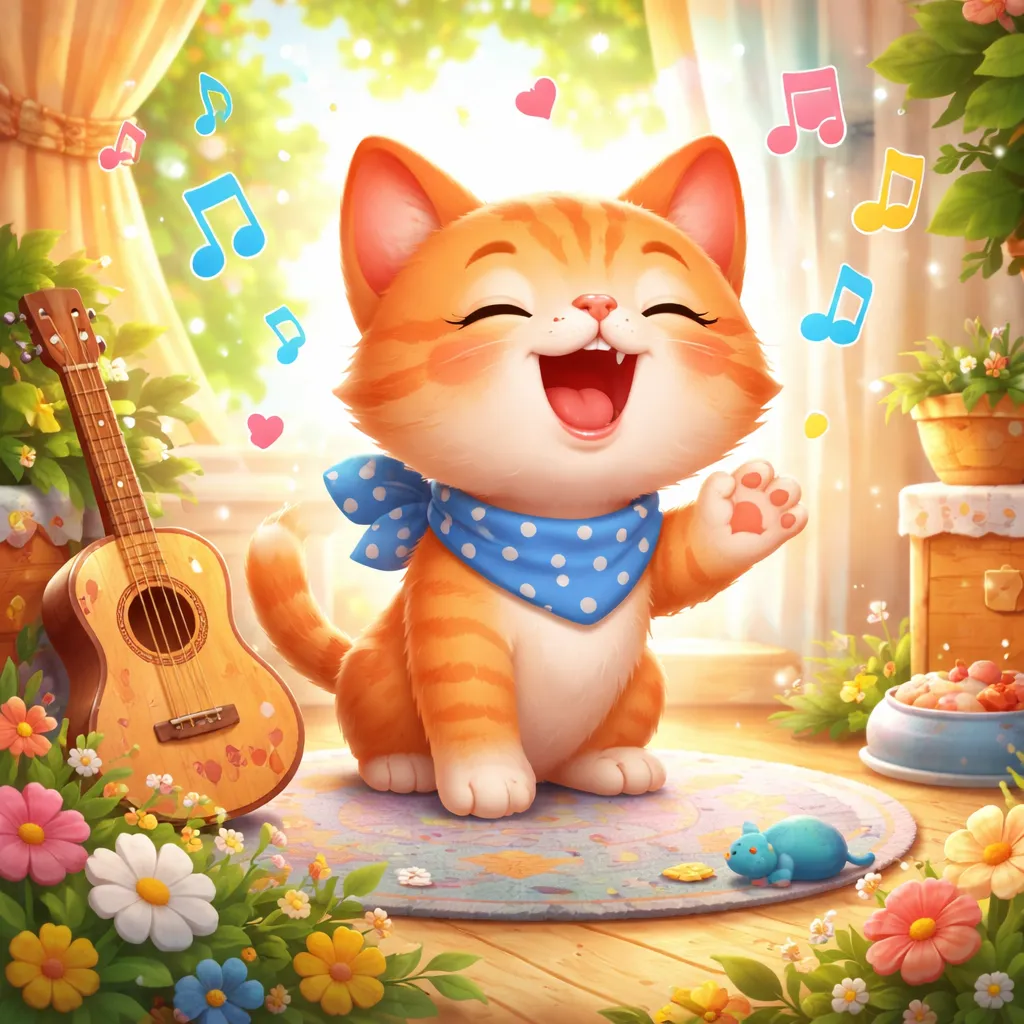

Have you ever watched a cat? It can be sleepy in a sunbeam one minute, and playful the next, chasing a ball of yarn. Cats are wonderful pets that fill our homes with purrs and gentle meows. In Portugal, there is a sweet, familiar song that imagines the thoughts of a little house cat. Let’s listen closely and learn the cozy song “The Little Cat (O Gatinho).”
About the Song
Here are the warm, simple lyrics of a cherished traditional Portuguese children’s song. This version is like a gentle conversation with a pet:
O gatinho, o gatinho
Está com fome, está com fome.
O gatinho, o gatinho
Quer o seu leitinho, quer o seu leitinho.
O gatinho, o gatinho
Diz miau, miau, miau.
O gatinho, o gatinho
É o meu amiguinho, é o meu amiguinho.
English Translation:
The little cat, the little cat
Is hungry, is hungry.
The little cat, the little cat
Wants its little milk, wants its little milk.
The little cat, the little cat
Says meow, meow, meow.
The little cat, the little cat
Is my little friend, is my little friend.
This is a gentle Portuguese-language children’s song from Portugal that describes a pet cat’s needs and its special bond with people. The word “gatinho” is the cute, affectionate way to say “little cat” or “kitten.” The song is a short, loving story about caring for a pet. It introduces us to a little cat who has a very clear need. The little cat is feeling hungry. “The little cat is hungry, is hungry,” the song tells us. What does a hungry little cat want? Its favorite drink! “The little cat wants its little milk, wants its little milk.” The cat tells us how it feels with its own special sound. “The little cat says meow, meow, meow.” And why do we care for this little cat? Because it is not just a pet; it is a companion. “The little cat is my little friend, is my little friend.” The song is about understanding, feeding, and loving a furry friend.
What the Song is About
The song is a simple, caring look at a pet cat’s world. Imagine a soft, fluffy kitten sitting by its empty food bowl. It looks up with big, round eyes. “The little cat is hungry, is hungry,” the song says softly. You can almost hear its tiny stomach rumble.
It walks over and rubs against your leg, asking for its favorite thing. “The little cat wants its little milk, wants its little milk.” It opens its mouth and lets out a soft, pleading sound. “The little cat says meow, meow, meow.” This sound is how the cat talks to us. When you pour the milk, the kitten purrs happily. You stroke its soft fur. This little creature brings so much joy. “The little cat is my little friend, is my little friend.” The song paints a picture of the gentle care and friendship between a child and their pet.
Who Made It & Its Story
“O Gatinho” is a classic Portuguese folk song, deeply rooted in the common experience of family life and pets in Portuguese homes. Its specific origin is unknown, having been passed down through generations as a gentle tune for young children. The song reflects the important role of cats as beloved companions in Portuguese culture, often seen in homes and neighborhoods. It connects to the universal theme of caring for animals and the simple, daily routines of feeding and bonding with a pet. The song is a staple in Portuguese early childhood, used to teach empathy, responsibility, and the names for common needs and pets.
This gentle song is cherished for three heartwarming reasons. First, it introduces essential vocabulary for states of being and wants in Portuguese, like “está com fome” (is hungry) and “quer” (wants), within a very relatable context. Second, it incorporates onomatopoeia with the cat’s sound “miau” (meow), which is fun to say and identical in many languages, making it instantly engaging. Third, it beautifully frames the pet-owner relationship as a friendship (“o meu amiguinho”), promoting themes of affection, care, and companionship from a very young age.
When to Sing It
This song is perfect for cozy, caring moments. You can sing it gently while pretending to feed a toy cat or a real pet, pouring imaginary milk into a bowl. You can hum it during quiet playtime, cuddling a stuffed animal and saying “miau, miau, miau.” You can also chant it with a friend, taking turns being the hungry cat and the caring friend who brings the milk.
What Children Can Learn
This caring song is a wonderful teacher about pets, expressing needs, and friendship in Portuguese.
Vocabulary
The song teaches us words for animals, feelings, wants, and relationships in Portuguese. “The little cat” (O gatinho). “Is” (Está – used for temporary states). “With hunger” or “hungry” (com fome). “Wants” (Quer). “Its” (seu). “Little milk” or “milk” (leitinho/o seu leite). “Says” (Diz). “Meow” (Miau). “Is” (É – used for permanent states). “My” (meu). “Little friend” (amiguinho).
Let’s use these words! You can say, “O cão está com fome.” (The dog is hungry.) Or, “O meu amiguinho quer brincar.” (My little friend wants to play.) New word: Companionship. This is the happy feeling of friendship and spending time with someone you care about, like the friendship between the child and the little cat in the song.
Language Skills
This song clearly teaches the concept of using two different verbs for “to be” in Portuguese: “estar” and “ser”, and how they are used for different situations. It also teaches the verb “querer” (to want) for expressing desires.
Concept Definition: In Portuguese, there are two main verbs that both mean “to be” in English: “estar” and “ser”. We use “estar” to talk about feelings, locations, or temporary conditions (things that can change). We use “ser” to talk about who someone is, their personality, or permanent facts (things that are always true).
Features and Types: Look at the song. The cat’s hunger is a temporary feeling. The song says, “O gatinho está com fome.” (The little cat is hungry.) We use “está” (from estar) because the cat won’t be hungry after it drinks its milk. The cat’s friendship is a more permanent fact about your relationship. The song says, “O gatinho é o meu amiguinho.” (The little cat is my little friend.) We use “é” (from ser) because you consider the cat your friend always, not just sometimes.
How to Spot Them: Here is a simple “feeling vs. fact” detective trick. Ask yourself: “Am I talking about a feeling, a location, or something temporary?” If YES, you probably need “estar”. Ask: “Am I talking about who someone is, what they are like, or a permanent fact?” If YES, you probably need “ser.”
How to Use Them: A great way to talk about yourself and others is the “Feeling and Being Formula”. The patterns are: “[Who] + está + [Feeling/Location].” and “[Who/What] + é + [Identity/Characteristic].”
Example from the song: “O gatinho está com fome.” (The little cat is hungry.) “O gatinho é o meu amiguinho.” (The little cat is my friend.)
Example you can make: “Eu estou feliz.” (I am happy – a feeling.) “Eu sou uma criança.” (I am a child – who I am.)
Sounds & Rhythm Fun
Listen to the gentle, melodic rhythm of the song. The tune is often smooth and soothing, like a cat’s purr. The repetition of each line, like “está com fome, está com fome,” makes the words easy to remember and emphasizes the cat’s need. The best part is the sound effect: “Diz miau, miau, miau.” This is the universal sound a cat makes, and it’s so fun to say in a soft, high voice! The word “amiguinho” (little friend) has a sweet, sing-song ending that sounds loving.
The rhythm is calm and steady, perfect for rocking a toy cat or swaying gently. The repeating lines help you learn the phrases without effort. The “miau, miau, miau” is a memorable and interactive part that everyone can meow together. This musical pattern is perfect for creating your own pet song. You can write your own “O Cãzinho” (The Little Dog) song! Use the same tune. Try: “O cãzinho, o cãzinho, está com sede, está com sede. O cãzinho, o cãzinho, quer a sua água, quer a sua água… Diz au au au… É o meu amiguinho…” (The little dog, the little dog, is thirsty, is thirsty. The little dog, the little dog, wants its water, wants its water… Says woof woof woof… Is my little friend…)
Culture & Big Ideas
“O Gatinho” connects to the commonplace presence of cats as beloved family pets and community animals in Portuguese towns and cities. It reflects a domestic, home-centered culture where caring for animals is a child’s early lesson in responsibility and empathy. The image of the cat wanting its “leitinho” (little milk) is a classic and universal symbol of pet care, easily understood by children everywhere.
The song conveys three important, gentle ideas. First, it teaches empathy and caregiving by encouraging children to recognize an animal’s need (hunger) and respond to it (giving milk). Second, it introduces the concept of verbal and non-verbal communication—the cat “says” meow to express itself, just as we use words. Third, it reinforces the value of friendship and companionship with animals, showing that pets are not just animals but “little friends” who are part of the family.
Values & Imagination
Imagine you are the person caring for the “gatinho.” You see your little cat sitting quietly. It looks at you and gives a soft meow. You understand. “The little cat is hungry, is hungry,” you think. You know exactly what it is asking for. “The little cat wants its little milk, wants its little milk.” You go to the kitchen and pour the cool, white milk into its special bowl. The cat follows you, saying “miau, miau, miau” to say thank you. As it drinks, you pet its soft head. You feel a warm, happy feeling. This little creature trusts you and loves you. “The little cat is my little friend, is my little friend.” How does the cat’s fur feel? How does it sound when it drinks its milk? Draw the little cat’s story. Draw the cat looking hungry by an empty bowl. Draw the full bowl of milk. Draw the cat drinking and you petting it. Draw a big heart between you and the cat. Write the sound “MIAU” in a speech bubble. This shows the song’s story of care and friendship.
The song encourages us to be kind and attentive to pets, to understand their needs, and to value their friendship. A wonderful activity is “Pet Care Pretend Play.” With a stuffed animal or a toy, act out the song. Pretend your toy is hungry. Say “Está com fome!” in Portuguese. Pretend to give it “leitinho” (milk) or “comida” (food). Pet it and say “É o meu amiguinho.” This connects you to the song’s spirit of caring and friendship.
So, from the first hungry meow to the final affirmation of friendship, this song is a lesson in kindness. It is a vocabulary lesson in pets, needs, and feelings. It is a language lesson in using “estar” for feelings and “ser” for identity. It is a music lesson in a gentle, repetitive, loving melody. “The Little Cat (O Gatinho)” teaches us about pet care, understanding needs, and the special friendship we share with our animal companions.
Your Core Takeaways
You are now an expert on the song “The Little Cat (O Gatinho).” You know it is a Portuguese song about a hungry cat that wants milk, says meow, and is a little friend. You’ve learned Portuguese words like “gatinho,” “está com fome,” “quer,” “leite,” “miau,” and “amiguinho,” and you’ve practiced the important difference between “estar” (for feelings) and “ser” (for identity). You’ve felt its gentle, caring rhythm and created your own pet care verse. You’ve also discovered the song’s message about understanding an animal’s needs, the importance of care, and the value of friendship with pets.
Your Practice Missions
First, play the “Estou” or “Sou” Game. Think about yourself. Say one sentence about a feeling you have right now using “Estou…” (I am…), like “Estou feliz” (I am happy). Then, say one sentence about who you are using “Sou…” (I am…), like “Sou um amigo” (I am a friend). This mission helps you practice the core grammar lesson from the song in a personal way.
Second, do a “Pet Needs Detective” mission. Watch a pet, a bird outside, or even a stuffed animal. In Portuguese, describe what it might need. Say: “O [animal] está com fome?” (Is the [animal] hungry?) or “O [animal] quer brincar?” (Does the [animal] want to play?). Then, say: “O [animal] é meu amigo.” (The [animal] is my friend.) This mission helps you use the song’s vocabulary to think with care and empathy about animals.