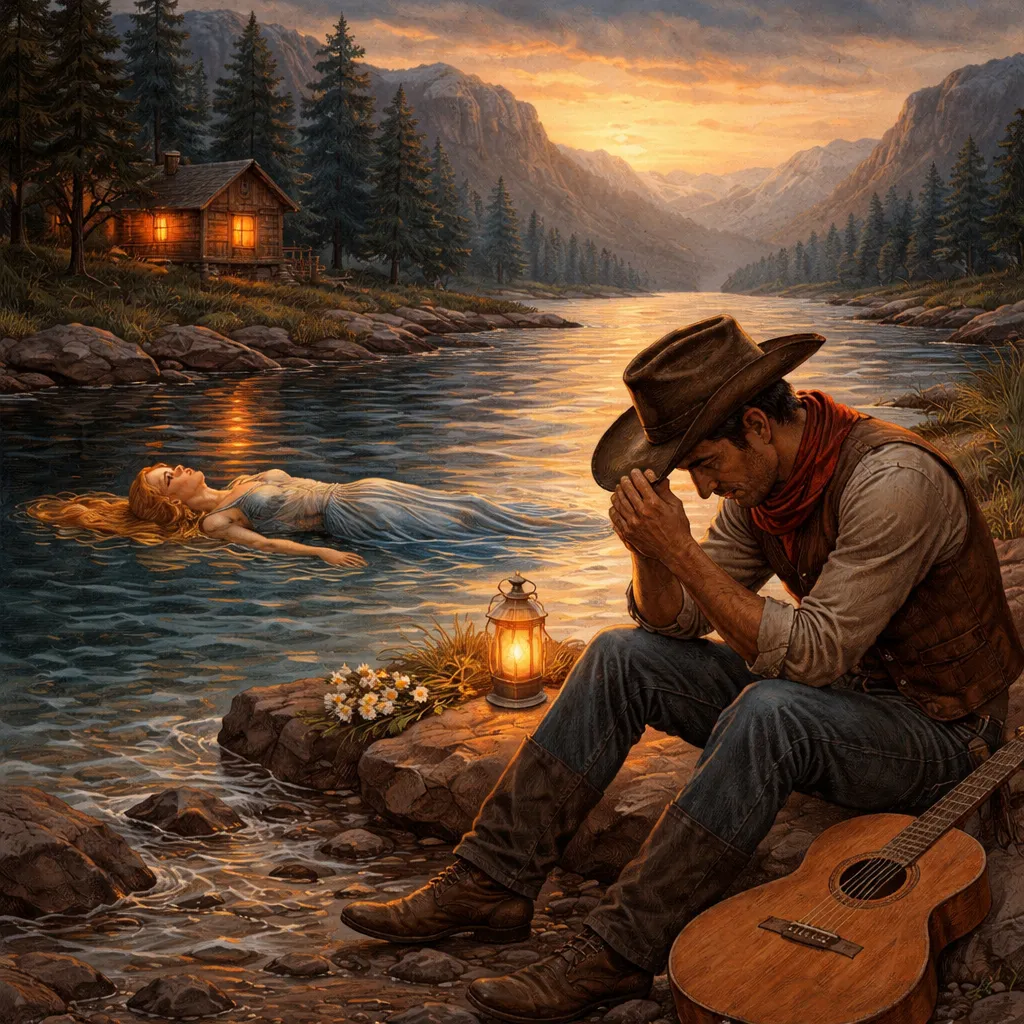

Have you ever heard a song that tells a whole story, like a movie in your mind? Some stories are happy, and some are a little bit sad. There is a very old song that tells a tale of love, loss, and a girl with a funny name. The tune is catchy, but the story is a tearjerker. Let’s learn about the folk ballad “Oh My Darling, Clementine.”
About the Song
Let’s read the first verse and the chorus of this famous story-song.
In a cavern, in a canyon,
Excavating for a mine,
Lived a miner, forty-niner,
And his daughter, Clementine.
Oh my darling, oh my darling,
Oh my darling, Clementine!
You are lost and gone forever,
Dreadful sorry, Clementine.
This song is a traditional American folk ballad. It is a narrative song, which means it tells a story. The melody is wistful and simple. The song tells the tragic story of a gold miner and his beloved daughter, Clementine, who accidentally drowns. The song is set during the California Gold Rush of 1849, which is why the father is called a “forty-niner.” Despite its sad subject, the song is often sung in a light, upbeat way, which makes its sad story even more memorable and strange. It was first published in 1884, and the writer is often credited to Percy Montrose, though it is based on older folk traditions.
What the Song is About
The song paints a vivid picture of life during the Gold Rush. First, we see where they live: in a rough camp near a mine, in a “cavern” or a “canyon.” The father is a miner, digging for gold. He has a daughter named Clementine, who is his “darling.”
The song then describes Clementine. She is young and lively. But tragedy strikes. The song tells us Clementine was clumsy. One day, while fetching water, she tripped on a splinter, fell into the river, and drowned. Her father, who could not swim, could only watch from the shore, helpless and heartbroken. The rest of the song is the miner’s sad lament. He sings “Oh my darling, Clementine” over and over, mourning that she is “lost and gone forever.” The song ends with him visiting her grave, a place marked only by a little wooden sign.
Who Made It & Its Story
The song “Oh My Darling, Clementine” is a folk ballad, and its exact origins are fuzzy. It was first published in 1884, and the sheet music attributes the words and music to Percy Montrose. However, it is likely that Montrose was writing down and popularizing a song that was already being sung in mining camps. The song’s story reflects the real dangers and hardships of frontier life during the Gold Rush, where accidents and illness were common, and the loss of loved ones was a shared experience.
This sad song has remained popular for three interesting reasons. First, its melody is incredibly catchy, easy to whistle, and simple to remember, which contrasts oddly with its sad words. Second, it tells a complete, dramatic story in just a few verses, which captures the imagination. Third, it is a direct window into a specific and exciting time in American history—the Gold Rush—making history feel personal and emotional.
When to Sing It
This song is perfect for storytelling moments. You can sing it slowly and sadly around a pretend campfire made of pillows and flashlights. You can sing it as a dramatic story-song during a long car ride, using different voices for the narrator and the miner. You can also hum the tune while drawing or building a scene from the story, like a mining camp by a river.
What Children Can Learn
This story-song is a rich source of learning. Let’s explore the lessons hidden in its mournful tune.
Vocabulary
The song teaches us old-fashioned and historical words. A “cavern” is a large cave. A “canyon” is a deep valley with steep sides. “Excavating” means digging. A “mine” is a deep hole or tunnel for digging out minerals like gold. A “miner” is a person who works in a mine. A “forty-niner” was a person who went to California in 1849 to search for gold. A “darling” is a beloved person. “Dreadful” means very or extremely.
Let’s use these words! You can say, “We explored a dark cavern.” Or, “The construction crew is excavating for a new building.” New word: Lament. This is a song, poem, or expression of great sadness or grief. The miner sings a lament for Clementine.
Language Skills
This song is a wonderful lesson in using the past tense to tell a story and the present tense to express eternal feelings. The story is told in the past tense: “Lived a miner…”, “You are lost…”.
However, the miner’s cry, “Oh my darling, Clementine!” is in the present tense, showing that his feeling of love and loss is happening right now as he sings. The song also uses adjective-noun combinations to create clear images: “a miner, forty-niner,” “his daughter, Clementine.” This is a common way in stories to introduce characters. The structure “You are lost and gone forever” is a permanent state, using the present tense to describe a fact that will not change.
Sounds & Rhythm Fun
Listen to the steady, marching, and slightly haunting rhythm of the melody. The song uses a clear and sad rhyme scheme: “mine” and “Clementine,” “Clementine” and “Clementine” (repeated), “forever” and “Clementine” (a near-rhyme). The “ine” sound in “Clementine” is repeated, making it memorable.
The rhythm is a moderate 4/4 time, like a slow walk. Try tapping your foot: In a CAVERN, in a CANyon, ExcaVATing for a MINE. The melody uses a small range of notes and has a descending pattern that sounds sighing or sad. This simple, repetitive, and mournful musical pattern makes the story easy to remember and emphasizes the sad mood. You can write your own story song! Use the same rhythm. Try: “In a treehouse, in the backyard, building castles in the sky, lived a child, an adventurer, with a puppy, Rover. Oh my puppy, oh my puppy, oh my puppy, Rover! You are chasing squirrels forever, I will miss you, Rover.”
Culture & Big Ideas
“Oh My Darling, Clementine” is a classic piece of American folk culture from the era of westward expansion. It comes from the time of the California Gold Rush, when thousands of people moved west in search of fortune, facing difficult and often lonely lives. The song reflects the harsh realities of that time—the danger of accidents, the simplicity of frontier life, and the deep emotional bonds of family in a rugged world.
The song conveys three core ideas. First, it’s about love and loss. The father’s deep love for his daughter is clear, and his grief is the center of the song, teaching about the strength of family bonds. Second, it touches on the fragility of life. The accident happens suddenly, from a simple misstep, reminding us to be careful and cherish our time. Third, it’s a song about memory and mourning. By singing about Clementine, the father (and we, the singers) keep her memory alive, showing how stories and songs can help us remember and honor those we’ve lost.
Values & Imagination
Imagine you are in the mining camp. What does the canyon look like? Are the walls red and rocky? What does the river sound like? Is it rushing and cold? What did Clementine look like? Did she wear a simple dress? Was she always singing? Imagine the moment she slipped. How did her father feel? Helpless? Terrified? Imagine visiting the grave with the “little wooden sign.” What is written on it? Draw a series of three pictures like a comic strip: 1) The miner and Clementine at the mine. 2) Clementine by the river. 3) The miner alone, singing sadly. This helps tell the story visually.
The song, while sad, can inspire us to be careful and to appreciate our loved ones. A simple idea is to have a “Cherish Our Darlings” moment. The song is about missing someone. Talk with your family about what you appreciate about each other. Give each person a compliment, telling them one thing that makes them a “darling” in your family. This focuses on the love in the song, not just the loss.
So, as the last, sorrowful “Clementine” fades, think about the power of this old story. It is a vocabulary lesson in history and emotion. It is a grammar lesson in storytelling with past and present. It is a music lesson in mournful, memorable melody. From the first description of the “cavern, in a canyon” to the final, repeated lament, it wraps a timeless lesson about love and loss in a tune that is strangely easy to sing and hard to forget. “Oh My Darling, Clementine” teaches us that songs can carry our deepest feelings, that history is made of personal stories, and that even a sad tale, when shared, can connect us to the hearts of people from a long, long time ago.
Your Core Takeaways
You are now an expert on the song “Oh My Darling, Clementine.” You know it is an American folk ballad from the Gold Rush era about a miner and his daughter. You’ve learned words like “forty-niner,” “cavern,” and “darling,” and you’ve practiced using the past tense to tell a story. You’ve felt its steady, sad rhythm and created your own story verse. You’ve also discovered the song’s connection to a tough time in history and its messages about family love, the suddenness of tragedy, and the importance of remembering.
Your Practice Missions
First, stage a “Clementine” radio play. Gather your family. Assign parts: a narrator, the miner, and Clementine. Use the song as your script. The narrator can read the verses, and everyone can join in on the “Oh my darling” chorus. Use sounds—like tapping for mining, splashing for water—to make it dramatic. This helps you tell the story together.
Second, design a “Commemorative Sign.” The song mentions a “little wooden sign” by Clementine’s grave. Using paper and art supplies, design a beautiful sign or marker for Clementine. What would you write on it to honor her? Her name? A kind word? Draw pictures of things she might have loved. Present your sign and explain your choices. This activity focuses on honoring and remembering, which is a key part of the song.