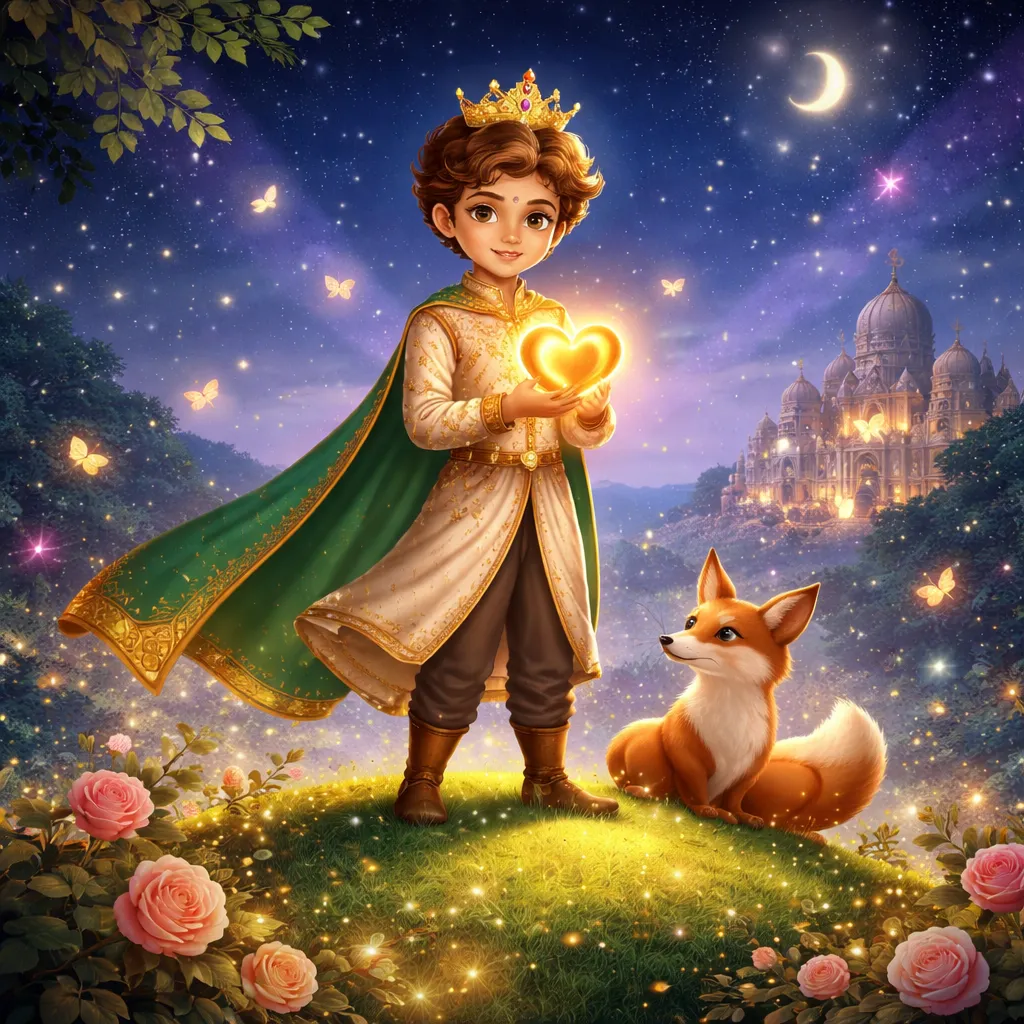

Have you ever played a game where you were the leader? Maybe you led a pretend expedition in the backyard, or you helped decide the rules for a game with friends. What does it mean to be a good leader? It’s not about bossing people around. In India, a land of great stories about kings and heroes, there’s a song that describes a different kind of prince. Let’s meet the hero of the Hindi Song: The Little Prince (राजकुमार).
About the Song
Here is a verse from this empowering song in Hindi and English:
मैं हूँ एक छोटा सा राजकुमार
(Main hoon ek chhota sa rajkumar)
I am a little prince
मेरी तलवार है मेरा साहस
(Meri talwar hai mera sahasa)
My sword is my courage
मैं रक्षा करूँगा, मदद करूँगा
(Main raksha karunga, madat karunga)
I will protect, I will help
यही मेरा है वादा
(Yahi mera hai vaada)
This is my promise
This song’s original name is “राजकुमार” (Rajkumar), the Hindi word for “prince.” It is a popular modern Indian children’s song. The song isn’t about living in luxury. It is about a boy declaring his royal duty. His sword isn’t a weapon of metal; it is the sword of his “courage.” The song redefines what it means to be princely, showing that true leadership comes from bravery, a promise to protect, and a commitment to help others. The Hindi Song: The Little Prince (राजकुमार) teaches that nobility is about action, not just a title.
What the Song is About
The song is a strong and noble promise. The singer begins by claiming his role: “I am a little prince.” He then shows us his most important tool. “My sword is my courage.” This means his bravery—to stand up for what’s right, to face fears—is his real power. His royal duty is clear and active: “I will protect, I will help.” The song pictures him shielding a friend from unkind words, helping someone who has fallen, or speaking up when he sees something wrong. He calls this duty his “promise.” It is a vow he makes to himself and to the people around him. The song paints a picture of a prince whose kingdom is his community and whose treasure is the safety and happiness he helps create.
Who Made It & Its Story
This song comes from the genre of modern Indian children’s music that focuses on positive masculinity and character building. While specific creators aren’t widely listed, the song reflects a meaningful cultural shift. It moves away from old tales where princes are just fighters or rescuers, towards a model where they are protectors and helpers. In a culture with epics like the Ramayana, which values “dharma” (duty/righteousness), this song makes that big idea relatable for a child. The Hindi Song: The Little Prince (राजकुमार) is popular for three reasons. First, it gives every child, especially boys, a positive model of strength based on protection and kindness. Second, it defines leadership through service and brave action, not through giving orders. Third, its melody is bold, anthemic, and easy to remember, making its message of responsibility feel empowering and important.
When to Sing It
Sing this song to yourself before a challenging task, like a test or a new game, to remind yourself of your “courage sword.” It’s perfect to hum with siblings or friends when you’re working as a team, reminding everyone to “protect and help” each other. You could also sing it as a class when discussing classroom rules, framing them as a “royal promise” everyone makes to keep the classroom safe and kind.
The Hindi Song: The Little Prince (राजकुमार) gives us a powerful blueprint for leadership. But the learning doesn’t stop with feeling brave. This song is also a guidebook. It teaches us new words for strength, shows us how to make promises about the future, and connects to timeless ideas about duty. Let’s explore the lessons within this royal vow.
What Children Can Learn
Vocabulary
This song builds our vocabulary for bravery, duty, and character.
Integrity: Doing the right thing even when it is hard and no one is watching. Admitting you made a mistake shows integrity.
Resolve: A firm decision to do or not to do something; determination. Finishing your homework before playing shows resolve.
Chivalry: Polite, kind, and honorable behavior, especially from someone in a position of strength. Holding a door open for someone is an act of chivalry.
Advocate: To speak or act in support of someone or something. You can advocate for a friend who is being treated unfairly.
Stewardship: The job of taking care of or protecting something valuable. Taking care of a classroom pet is an act of stewardship.
Gallant: Brave, heroic, and with noble manners. Helping an elderly person cross the street is a gallant act.
Language Skills
This song beautifully uses the simple future tense with “Will” to make a promise. “Will” shows something is going to happen later.
What Is It?: The word “will” is a promise word. It tells us about an action that is going to happen in the future. In this song, it’s not just a prediction; it’s a vow. “I will protect.” Think of it as your royal decree about what you are going to do.
Finding the Secret: Look for the word “will” followed by a simple verb (action word). It points forward in time. Ask: “Is this sentence making a promise or talking about something that is going to happen later?”
Using It:
◦   The formula is: [Subject] + will + [base verb].

◦   For promises and future actions: “I will help you.” “She will be there.” “We will finish the project.”

◦   In the song, the promise is clear: “I will protect. I will help.” This is the prince’s vow for the future.
Sounds & Rhythm Fun
Feel the strength in the music. The Hindi Song: The Little Prince (राजकुमार) has a strong, confident, and marching rhythm. It sounds like the steady, purposeful walk of a leader. The melody is bold and memorable, designed to make you feel capable and resolute. Words like “sahasa” (courage) and “vaada” (promise) are emphasized, giving them weight. This anthemic, determined rhythm makes you feel ready for action and helps cement the serious promise of the lyrics in your mind. You can use this same strong, marching rhythm to create a theme song for a team or club, listing the good things you “will” do together.
Culture & Big Ideas
This song connects to the Indian concept of “Dharma” (धर्म), which means one’s duty, righteousness, and moral law. A prince’s dharma is to protect his people. This song makes that a child’s dharma: to protect and help. A vibrant Indian festival that celebrates the victory of good and protection is Dussehra, which marks the victory of Prince Rama over a demon king. It symbolizes the triumph of duty and good over evil. The Hindi Song: The Little Prince (राजकुमार) teaches three core ideas. First, Strength for Service: True strength (your sword) is best used to protect and help others, not to show off or hurt. Second, Leadership as Promise: Being a leader means making a promise to look out for the well-being of your “kingdom” (your friends, family, class). Third, Courage of Conviction: The bravest thing is often to do the right thing, even if it’s scary or you stand alone.
Values & Imagination
Imagine your “sword of courage.” What does it look like? Is it glowing with the light of truth? How do you use it to “protect”? Maybe it cuts through lies or shields someone from sadness. This song teaches you that your choices are your royal tools. Choosing to be fair is a princely act. Choosing to include someone is a princely act. A simple idea: Create a “Promise Shield.” Draw a shield on paper. In the center, write your promise: “I will protect and help.” Around it, draw or write about small ways you can keep that promise this week.
Your Core Takeaways
The Hindi Song: The Little Prince (राजकुमार) is an anthem for courageous kindness and responsible leadership. You learned words like “integrity” and “resolve” that describe true character. You discovered how to use “will” to make a firm promise about the future. You felt the song’s strong, anthemic rhythm that inspires action. You also connected its message to the Indian cultural concept of dharma (duty) and festivals like Dussehra. Most importantly, the song teaches that every child can be a prince by using their courage as a sword to protect, making a promise to help, and leading through acts of service and bravery.
Your Practice Missions
- Craft Your “Courage Sword” Statement. With a grown-up, talk about one thing that sometimes feels scary or hard to do (like speaking in class, trying a new food, apologizing). Then, write or say one sentence using “will” to make a brave promise about it. Example: “Tomorrow, I will raise my hand to answer one question.” This turns your courage into a royal decree.
- Go on a “Protect and Help” Patrol. For ten minutes, walk around your home or a safe part of a park with a family member. Your mission is to find one small way to fulfill the prince’s promise. Can you “protect” a plant by watering it? Can you “help” by picking up a piece of litter? Complete your mission and tell your family, “The prince’s promise is kept!”