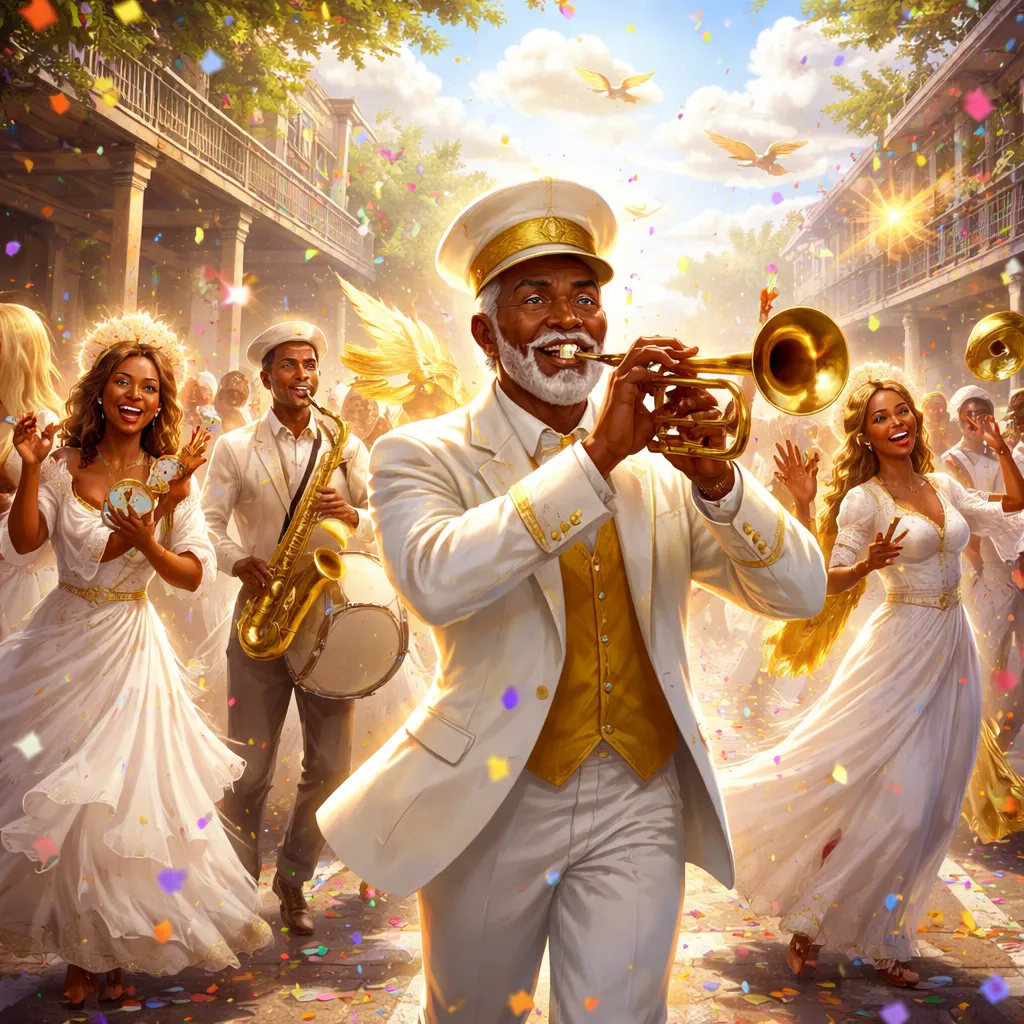

Have you ever heard a band playing in the street? The music is so happy and powerful that it makes you want to move your feet. There is a famous song that is played exactly like that, but it’s about a very special, hopeful day. It’s a song that looks forward to a joyful future. Let’s learn about the uplifting tune “When the Saints Go Marching In.”
About the Song
Let’s read the hopeful and repeating words of this classic song.
Oh, when the saints go marching in,
Oh, when the saints go marching in,
Lord, I want to be in that number,
When the saints go marching in.
This song is a traditional African-American spiritual and gospel song. It is a lively, rhythmic tune that expresses a deep hope. The “saints” in the song refer to faithful people who have lived good lives. The song imagines a future day in heaven when these saints march joyfully together. The singer’s wish is to be counted among them—to be “in that number.” While it started as a slow, solemn spiritual in churches, it became world-famous as a fast, happy jazz standard, especially in the city of New Orleans. It is now the most famous song played at a “jazz funeral,” where a slow, sad march to the cemetery turns into a joyful, dancing parade on the way back, celebrating the person’s life and their arrival in heaven.
What the Song is About
The song paints a picture of a magnificent, heavenly parade. Imagine a bright, golden street in a beautiful place. A glorious band is playing, and a line of people—the saints—are marching with smiles on their faces. They are happy and at peace.
The singer is watching this scene, either in their imagination or from a distance. They are filled with a strong wish. They sing about the moment “when” this parade happens. They say twice, with growing excitement, “Oh, when the saints go marching in.” Then, they make their personal request known to God: “Lord, I want to be in that number.” They want to join the parade. They want to be one of the saints marching in. The song is a musical prayer for a good life and a happy afterlife, set to a tune that makes you feel like you’re already marching.
Who Made It & Its Story
“When the Saints Go Marching In” is a traditional folk spiritual, so its original author is unknown. It was sung by African-American communities in the late 1800s, likely in the southern United States. The song was first published in 1896. Its transformation into a jazz anthem is credited to New Orleans musicians, most famously Louis Armstrong, who recorded a hugely popular version in 1938. In New Orleans culture, the song became central to the “second line” parade tradition, turning a song about the afterlife into a celebration of life itself for everyone in the community.
This song became a global anthem for three powerful reasons. First, its melody is incredibly simple, repetitive, and adaptable. It can be played slow and soulful or fast and jazzy, making it perfect for any mood. Second, its message of hope and inclusion is universal. The desire to be part of something good and joyful resonates with people of all backgrounds. Third, it is inseparable from the vibrant, celebratory culture of New Orleans jazz, which has spread its energy and style all over the world.
When to Sing It
This song is perfect for both thoughtful and celebratory moments. You can sing it as a happy marching song with your family while walking to the park, stomping your feet on the beat. You can sing it slowly and quietly as a hopeful wish before bedtime. You can also sing it at a family celebration, like a birthday, imagining a parade of all your loved ones marching in to celebrate.
What Children Can Learn
This powerful, adaptable song is full of wonderful lessons. Let’s join the parade and see what we can learn.
Vocabulary
The song teaches us important spiritual and musical words. “Saints” are people who are very holy and good, often in a religious sense. “Marching” means walking with regular, steady steps, like a soldier or in a parade. “In” here means entering or arriving at a place (like heaven). “Lord” is a title for God or Jesus. A “number” in this context means a group or a count of people. “Oh” is an exclamation expressing strong feeling.
Let’s use these words! You can say, “The band was marching in the holiday parade.” Or, “A large number of birds flew south for winter.” New word: Second Line. This is the group of people who follow the main parade in New Orleans, dancing and celebrating. The song is a “second line” classic.
Language Skills
This song is a great lesson in using “when” clauses to talk about the future and the verb “want to” to express desire. A “when” clause sets a time for something to happen. The song repeats: “Oh, when the saints go marching in.” This sets the scene for the singer’s wish.
The core of the song is the expression of desire: “I want to be in that number.” The structure is: Subject (I) + “want to” + base verb (be). This is a very common and useful way to talk about what you wish for. We use it all the time: “I want to play.” “She wants to read.” The song uses this structure to make a very important personal wish.
Sounds & Rhythm Fun
Listen to the strong, steady, marching rhythm of the song. The melody uses repetition to build energy. The first two lines are exactly the same. The notes often move up and down in steps, which makes it easy to sing. The word “marching” has two syllables that match the left-right steps of a march: MARCH-ing.
The rhythm is a clear, bouncing 4/4 time, perfect for strutting. Try clapping on beats 2 and 4 for a jazzy feel: oh, WHEN the SAINTS go MARCH-ing IN. The melody is simple, uses a small range of notes, and is incredibly catchy. This strong, repetitive, and flexible musical pattern is why the song is so easy to remember and can be played in so many different ways. You can write your own parade song! Use the same structure. Try: “Oh, when the ice cream truck comes rolling in, oh, when the ice cream truck comes rolling in, I want to be first in the line, when the ice cream truck comes rolling in!”
Culture & Big Ideas
“When the Saints Go Marching In” is a cornerstone of African-American spiritual and New Orleans jazz culture. It reflects the unique way grief and joy are combined in New Orleans jazz funerals—a tradition that acknowledges sadness but ultimately celebrates life and the hope of an afterlife. The song’s journey from church to jazz club shows how music can evolve and carry deep meaning in different settings.
The song shares three profound ideas. First, it’s about hope and aspiration. The singer aspires to be among the good, to live a life worthy of joining the saints. It’s a song about aiming high. Second, it celebrates community and belonging. The “number” is a group, and the desire is to be part of that group, not alone. Third, it embodies resilient joy. Even when the song is about a future heavenly event, the music makes you feel joyful right now, teaching that hope itself can be a powerful, uplifting force.
Values & Imagination
Imagine the parade of saints. What do they look like? Are they from all different times and places? Are they wearing white? What does the heavenly street look like? Is it made of gold or clouds? What does the music sound like? A powerful trumpet? A whole brass band? Now imagine yourself in a New Orleans “second line” parade. What are you wearing? A fancy hat? How does it feel to dance down the street with hundreds of people? Draw two pictures side by side: one of the heavenly saints’ parade and one of a joyful New Orleans street parade. See how the feeling of joyful marching connects them.
The song inspires us to live kindly and to find joy in community. A lovely idea is to have a “Saints in Our Lives” conversation. The song is about people who lived good lives. With your family, talk about someone you know (a family member, friend, or even a historical figure) who you think was a good, kind person—a “saint” in their own way. Share a story about them. This focuses on the positive impact people can have, which is at the heart of the song’s wish.
So, as the last notes of the march fade, think about the journey this song invites you on. It is a vocabulary lesson in spirituality and music. It is a grammar lesson in expressing future hopes and wants. It is a music lesson in adaptable, joyful rhythm. From the first “Oh, when” to the final “marching in,” it wraps a deep wish for a good life and a happy ending in a tune so vibrant it makes you want to stand up and join the parade right now. “When the Saints Go Marching In” teaches us that music can carry our highest hopes, that community is a source of strength, and that even a song about tomorrow can fill today with a beat that makes your heart dance.
Your Core Takeaways
You are now an expert on the song “When the Saints Go Marching In.” You know it is a traditional African-American spiritual that became a New Orleans jazz standard. You’ve learned words like “saints,” “marching,” and “number,” and you’ve practiced using “when” clauses and “want to” to express future hopes. You’ve felt its strong, marching rhythm and created your own version. You’ve also discovered the song’s deep connection to gospel and jazz culture and its messages about hope, community, and resilient joy.
Your Practice Missions
First, have a “Joyful Second Line” at home. Clear some space. Play a version of the song (like Louis Armstrong’s). Grab scarves, hats, or homemade instruments. March around your living room. When the music plays, have a slow, sad march. Then, when you say “go!”, switch to a fast, happy dance, celebrating just like a New Orleans second line. This helps you feel the song’s two emotions.
Second, design your “Saints’ Parade” flag. The song imagines a parade. Design a flag or banner for that parade. What symbols would represent kindness, joy, and community? Draw them on a piece of paper. At the top, write: “I want to be in that number.” Explain your flag to your family. This lets you think about the values the song celebrates.