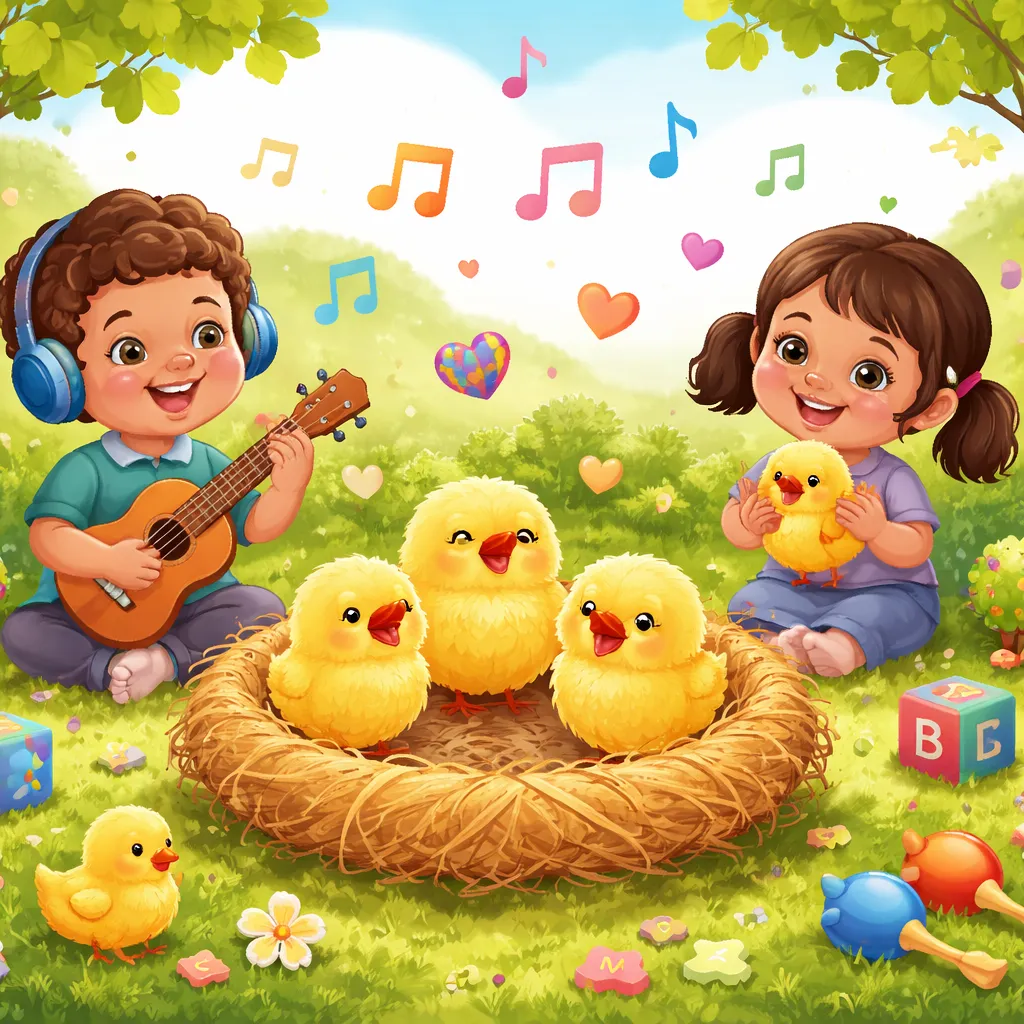

Some songs capture the tender care between mothers and babies. The Spanish Song: The Little Chickies (Los pollitos dicen) does exactly that. This beloved nursery rhyme from the Spanish-speaking world tells the story of tiny chicks calling for their mother when they are hungry or cold. For families learning Spanish together, this song offers a beautiful way to explore animal words, family relationships, and the universal feeling of being cared for. Let us discover what makes this traditional song so special for young learners.
What Is the Story Behind This Famous Song?
The Spanish Song: The Little Chickies (Los pollitos dicen) is one of the most famous children's songs in the Spanish language. It has been sung by generations of children across Spain and Latin America. The simple melody and tender lyrics make it perfect for even the youngest learners.
The song describes tiny chicks that say "pío, pío" when they are hungry or cold. Their mother hen immediately comes to help them. She finds food for them and keeps them warm under her wings. The chicks sleep peacefully, protected by their mother's love.
This song teaches children about the bond between parents and children. The chicks depend on their mother for everything. The mother hen gives all she has to care for them. This mirrors the love children receive from their own families.
The repeated "pío, pío" sounds are easy for children to say. They imitate the actual sound of baby chicks, making the song come alive. Children love making the sound and pretending to be tiny chicks.
Understanding this背景 helps families appreciate the song's connection to nature and family love. It opens conversations about animals, needs, and the special care parents provide.
The Complete Lyrics of the Song
Reading the words helps us understand this tender scene. Here are the lyrics to the Spanish Song: The Little Chickies (Los pollitos dicen) in Spanish and English.
Los pollitos dicen pío, pío, pío
Cuando tienen hambre, cuando tienen frío
The little chicks say peep, peep, peep
When they are hungry, when they are cold
La gallina busca el maíz y el trigo
Les da la comida y les presta abrigo
The hen looks for corn and wheat
She gives them food and lends them shelter
Bajo sus dos alas se están quietecitos
Y hasta el otro día duermen los pollitos
Under her two wings they stay very still
And until the next day the little chicks sleep
Learning New Words from the Song
The Spanish Song: The Little Chickies (Los pollitos dicen) introduces many useful words. Let us explore them in both Spanish and English.
First, "los pollitos" means the little chicks. "Pollito" is a chick, and adding "s" makes it plural. The ending "-ito" shows something small and cute. This is a common suffix in Spanish.
"Pío" is the sound chicks make. It's like "peep" in English. Repeating it three times "pío, pío, pío" mimics the constant sound of baby birds.
"Hambre" means hunger. "Tienen hambre" means they are hungry. This phrase teaches a common feeling.
"Frío" means cold. "Tienen frío" means they are cold. These two phrases "tienen hambre" and "tienen frío" are essential for children to express their needs.
"La gallina" is the mother hen. "Gallo" is rooster, so "gallina" is the female.
"Busca" means looks for or searches. This verb shows the mother's action.
"El maíz" is corn. "El trigo" is wheat. These are foods for chickens.
"Les da la comida" means gives them the food. "Comida" is a general word for food.
"Les presta abrigo" means lends them shelter or warmth. "Abrigo" can mean coat, shelter, or warmth.
"Bajo sus dos alas" means under her two wings. "Alas" are wings. This image is very protective.
"Se están quietecitos" means they stay very still. "Quieto" means still, and "-ecitos" makes it even smaller and cuter.
"Hasta el otro día" means until the next day.
"Duermen" means they sleep. This verb is essential for bedtime routines.
Exploring Pronunciation and Rhythm
The Spanish Song: The Little Chickies (Los pollitos dicen) offers wonderful practice with Spanish pronunciation and rhythm. The gentle, rocking melody makes it easy to follow.
Listen to "Los pollitos dicen pío, pío, pío". The rhythm goes los po-LLI-tos DI-cen Pí-o, Pí-o, Pí-o. The double L in "pollitos" is pronounced like a soft "y" or "j" sound in many Spanish dialects. The accent on "pío" makes it rise.
The phrase "Cuando tienen hambre, cuando tienen frío" repeats the structure. CUAN-do TIE-nen HAM-bre, CUAN-do TIE-nen FRí-o. The rhythm teaches the natural stress patterns of Spanish words.
"Bajo sus dos alas se están quietecitos" has a gentle flow. BA-jo sus dos A-las se es-TáN quie-te-CI-tos. The diminutive "-ecitos" adds four quick syllables at the end.
Finding Grammar Patterns in the Lyrics
The Spanish Song: The Little Chickies (Los pollitos dicen) offers useful grammar examples for Spanish learners. One pattern appears with the verb "tener" meaning "to have". "Tienen hambre" and "tienen frío" use "tener" to express physical states. In Spanish, you don't say "I am hungry" but "I have hunger". This is an important difference from English.
The song uses the present tense throughout. "Dicen", "tienen", "busca", "da", "presta", "están", "duermen" all describe what happens regularly. This teaches children to talk about habitual actions.
Another pattern appears with indirect object pronouns. "Les da" means "gives them". "Les presta" means "lends them". The "les" replaces "to them" and comes before the verb. This structure is essential in Spanish.
The diminutive suffixes "-ito" and "-ecito" appear in "pollitos" and "quietecitos". These show affection and smallness. Spanish uses diminutives constantly to express warmth.
The preposition "bajo" means "under". This teaches location words.
Fun Learning Activities for the Whole Family
Listening to the Spanish Song: The Little Chickies (Los pollitos dicen) can inspire many family activities. Here are some ideas to try together.
First, act out the song. One person is the mother hen. Others are little chicks. When the chicks say "pío, pío", they can shiver for cold or rub tummies for hunger. The hen brings food (pretend corn) and covers the chicks with her wings. They sleep until morning. This dramatic play builds vocabulary through movement.
Second, learn about real chicks. If possible, visit a farm or watch videos of baby chicks. Notice how they stay close to their mother. Use Spanish words from the song. "Los pollitos" (the chicks), "la gallina" (the hen), "pío pío" (their sound). This connects language to real life.
Third, practice expressing needs. Use the structure from the song to talk about being hungry or cold. "Tengo hambre" (I'm hungry), "Tengo frío" (I'm cold). Encourage children to use these phrases at appropriate times.
Creating Printable Materials at Home
Families can make simple learning tools based on the Spanish Song: The Little Chickies (Los pollitos dicen). These activities help reinforce new ideas.
Create bilingual animal flashcards. On one side, write the Spanish word and draw a picture. Pollito (chick), gallina (hen), maíz (corn), trigo (wheat). On the other side, write the English word. Practice by matching.
Make a feelings chart with "hambre" and "frío". Draw faces showing hunger and cold. Add other feelings like "sue?o" (sleepy) and "feliz" (happy). Practice saying "Tengo..." with each.
Create a fill-in-the-blank page using song lyrics. Remove key words like "pollitos", "hambre", "frío", "gallina", "maíz", "comida", and "alas". Leave blanks where those words belong. Listen to the song together and fill in the missing words. This builds listening and spelling skills.
Connecting the Song to Daily Life
The Spanish Song: The Little Chickies (Los pollitos dicen) connects to daily life through the universal experience of being cared for. Every child knows what it feels like to be hungry or cold and have a parent help.
Talk with your children about times when you took care of them. Use Spanish to share. "Cuando tenías hambre, te di comida" (When you were hungry, I gave you food), "Cuando tenías frío, te di una manta" (When you were cold, I gave you a blanket). This builds personal connection to vocabulary.
The song also teaches about animal families. Chicks have a mother who cares for them. In our families, we care for each other. Use Spanish to talk about family roles. "Mamá me cuida" (Mom takes care of me), "Papá me da comida" (Dad gives me food).
Parents can model the caring language from the song. When helping a child, say "Como la gallina con sus pollitos" (Like the hen with her chicks). This makes children feel loved while learning Spanish.
Educational Games to Play Together
Games make learning with the Spanish Song: The Little Chickies (Los pollitos dicen) exciting. Here are some simple games to try.
Play the "tengo hambre" game. One person says "Tengo hambre" (I'm hungry). Others must find something to "feed" them from a collection of toy food or pictures. Name each food in Spanish. "Aquí hay maíz" (Here is corn), "Toma pan" (Take bread). This builds food vocabulary.
Try the mother hen game. One person is the mother hen and closes their eyes. The chicks hide. The hen calls "?Dónde están mis pollitos?" (Where are my chicks?). The chicks respond "?Pío, pío!" The hen finds them by following the sound. This builds listening and speaking.
Play the temperature game. Touch different things and describe them. "La sopa está caliente" (Soup is hot), "El hielo está frío" (Ice is cold). Then talk about how you feel. "Tengo calor" (I'm hot), "Tengo frío" (I'm cold). This builds sensory vocabulary.
Why This Song Helps Language Learning
The Spanish Song: The Little Chickies (Los pollitos dicen) helps learners in special ways. The gentle, repetitive melody makes words easy to remember. Children can sing along quickly, building confidence.
The simple vocabulary matches what beginners need. Words for animals, food, weather, and feelings appear in early lessons. Learning them through song makes them stick.
The family theme creates emotional connection. Children feel the love between mother hen and chicks. This warmth makes the language meaningful.
The "pío, pío" sounds are fun to say. They build pronunciation skills through play.
Making Music Part of Your Routine
Families can make songs a regular part of Spanish learning. Choose one song each week to explore together. Listen during meals or quiet moments.
The Spanish Song: The Little Chickies (Los pollitos dicen) works perfectly for comforting moments. Play it when children need warmth and care. Let the music wrap around them like a mother hen's wings.
Remember that language learning thrives in loving moments. When children associate Spanish with the care of a mother hen, they learn naturally. They understand that Spanish is the language of love and protection.
Keep singing, keep caring, and keep growing together. In the warm nest of bilingual learning, every new word is like a little chick, safe under the wings of family love.