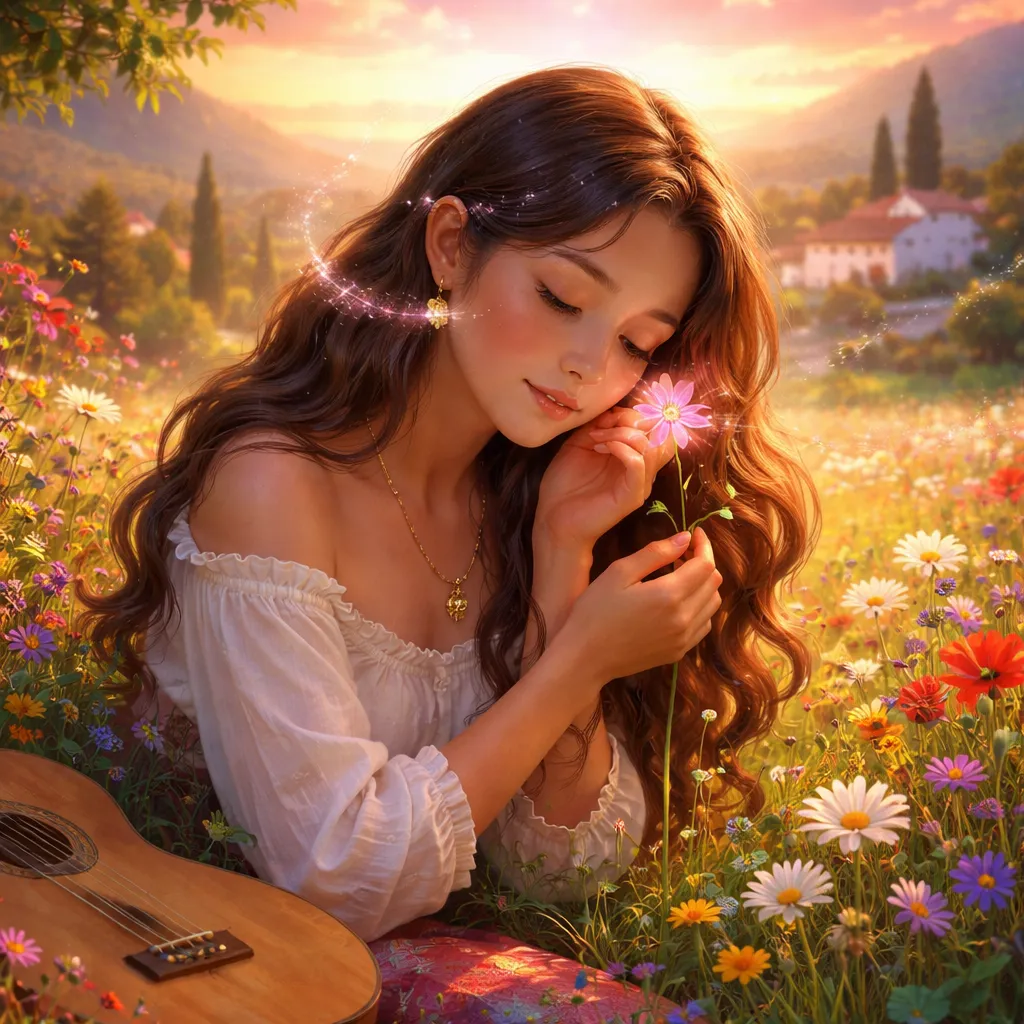

Have you ever bent down to look at a tiny flower growing in a crack in the sidewalk or in a big garden? In Spanish, there is a sweet, curious song that asks a little flower a very important question. It’s a song about beauty, growth, and the secret life of plants. Let’s lean in close and listen to the gentle tune of “The Little Flower (La florecita).”
About the Song
Here are the gentle, questioning words of this traditional Spanish song. This is a common and beautiful version:
Florecita, florecita,
¿dónde estás que no te veo?
Con el sol de la mañana
yo te encuentro y te deseo.
Florecita, florecita,
¿de qué color te pondrás?
¿Serás blanca, serás roja,
o de un amarillo sol?
Florecita, florecita,
con cuidado te regaré.
Para que crezcas bonita
y alegría nos des.
English Translation:
Little flower, little flower,
where are you that I don’t see you?
With the morning sun
I find you and I wish for you.
Little flower, little flower,
what color will you be?
Will you be white, will you be red,
or of a sun-like yellow?
Little flower, little flower,
with care I will water you.
So that you grow up pretty
and give us joy.
This is a classic Spanish folk song and nature rhyme for children. The sweet word “florecita” uses the affectionate, small ending “-cita” to mean “dear little flower.” The song is a tender, one-sided conversation with a flower that is perhaps just beginning to grow. The singer is searching for the flower, then wonders about its future color, and finally promises to take care of it. It is a song about anticipation, care, and the simple joy that nature’s beauty brings. The melody is usually soft, lyrical, and a little wondering, perfect for a quiet moment of observation.
What the Song is About
The song paints a picture of a child’s gentle interaction with a growing plant. Imagine a child walking through a garden in the early morning. They are looking for a special little flower they know is there, but it’s so small it’s hard to see. The child sings softly, “Little flower, where are you that I don’t see you?” Then, a ray of the morning sun breaks through the leaves and shines right on a tiny green sprout or a closed bud. The child smiles and says, “Ah! With the morning sun, I find you!” The child feels happy and makes a wish for the flower.
Now that the flower is found, the child’s imagination grows. They look at the small green bud and wonder, “What color will you be when you open up?” The child thinks of possibilities: a pure white flower, a bright red one, or a cheerful, sunny yellow one. The child is excited for the surprise. Then, the child makes a promise. They know the flower needs help to grow. They sing, “With care, I will water you.” The child imagines coming back every day with a little watering can, giving the plant just what it needs. Why? So the little flower can grow up to be pretty and strong, and its beauty will bring happiness to everyone who sees it. The song is about patience, care, and the hope we put into helping living things grow.
Who Made It & Its Story
“The Little Flower (La florecita)” is a beloved traditional Spanish children’s song with no single known author. It comes from the oral tradition of songs that parents and grandparents sing to connect children with the natural world. The song reflects a culture that values appreciation for simple, everyday beauty and gentle nurturing. Gardens, balconies, and public parks full of flowers are central to life in many Spanish-speaking countries, and this song is a musical expression of that love. It is often used in preschools and homes to teach children about plants, colors, and the responsibility of caring for another living thing, even a very small one.
This gentle song is loved for three beautiful reasons. First, it turns the act of observing a plant into a poetic, musical conversation, fostering a deep sense of connection with nature. Second, it teaches empathy and responsibility by framing the care of a plant as a loving promise. Third, its simple, repetitive structure and hopeful questions make it easy for children to learn and to apply to their own experiences with plants, pets, or even younger siblings.
When to Sing It
This song is perfect for calm, observant moments. You can sing it softly while watering plants at home or in a garden, talking to each one as you go. You can hum it on a spring walk, looking for the first flowers of the season and wondering what color they will be. You can also chant it as a quiet activity while planting seeds in a pot, promising to take care of them as they grow.
What Children Can Learn
This hopeful, caring song is a wonderful teacher about nature, Spanish language, and kindness.
Vocabulary
The song teaches us words for nature, colors, and actions in Spanish. A “little flower” (florecita) is a small, pretty flower. The “morning sun” (sol de la mañana) is the sun when it first rises. To “find” (encontrar) means to see or discover something you were looking for. To “wish for” or “desire” (desear) means to hope for something. “Color” (color) is what makes things red, blue, yellow, etc. “White” (blanca), “red” (roja), and “yellow” (amarillo) are colors. “Care” or “carefully” (con cuidado) means doing something with attention so you don’t hurt it. To “water” (regar) means to give water to a plant. To “grow” (crecer) means to get bigger. “Joy” or “happiness” (alegría) is a feeling of great happiness.
Let’s use these words! You can say, “I find a pretty rock with the morning sun.” Or, “With care, I water the plant so it will grow.” New word: Nurture. This means to care for and protect something while it is growing, just like the singer nurtures the little flower in the song.
Language Skills
This song is a lovely lesson in asking questions about the future and using the future tense to make promises.
Concept Definition: A question about the future is when we ask what will happen later. The song is full of curiosity about what the flower will become. A promise is a statement that you will do something. The song uses a special verb form to make that promise.
Features and Types: In the song, we see questions about the future using the word “¿Qué…?” (What…?) and the future tense verb “te pondrás” (will you be/become). We also see the future tense used to make a promise: “te regaré” (I will water you) and “crezcas” ([so that] you grow). The “-ré” ending in “regaré” is a common way to say “I will” in Spanish.
How to Spot Them: Here is a simple “finding secret.” For future questions, look for the question word (like ¿Qué?) followed by a verb that ends with “-rás” or “-ré” or has a special future form. In the song, “te pondrás” has the “-ás” ending for “you will.” For promises (future actions), look for verbs that end with “-é” for “I will” or “-emos” for “we will,” like in “regaré” (I will water).
How to Use Them: A great way to show care is with a “promise recipe”. The pattern is: [I] + [Future Tense Verb] + [The Action].
Example from the song: “…te regaré.” (I will water you.) Future Verb=regaré.
Example you can make: “Te leeré un cuento.” (I will read you a story.)
You can also ask hopeful questions: “¿Qué serás cuando seas grande?” (What will you be when you are big?) Just use the pattern: Question Word + Future Verb + Subject.
Sounds & Rhythm Fun
Listen to the soft, flowing, and wondering rhythm of the melody. The song has a gentle, lyrical rhythm that feels like a breeze. The repetition of the call “Florecita, florecita” is sweet and easy to remember. The melody rises on the questions (“¿dónde estás…?”, “¿de qué color…?”) like a curious voice, and then settles on the lines about care and joy. The Spanish words have a beautiful, musical rhyme: “veo” and “deseo,” “pondrás” and “sol,” “regaré” and “des.” The names of the colors—blanca, roja, amarillo—sound like a happy list.
The rhythm is slow and steady. Try swaying gently like a flower in the wind: Flo-re-ci-ta, flo-re-ci-ta, ¿dón-de es-tás que no te ve-o? The repetitive structure of the verses makes the song soothing and predictable, which is perfect for a lullaby or a quiet time song. This gentle, repetitive, and questioning musical pattern is perfect for expressing care and wonder. You can write your own “growing song”! Use the same flowing melody. Try: “Semillita, semillita, ¿qué serás que no te veo? Con la tierra y un poquito de agua, yo te cuido y te deseo.” (Little seed, little seed, what will you be that I don’t see you? With soil and a little water, I will take care of you and wish for you.)
Culture & Big Ideas
“La florecita” connects deeply to the Spanish and Latin American appreciation for beauty in small things and the importance of nurturing life. Gardening, even in small pots, is a common and beloved hobby. The song reflects the value of “cariño” (tenderness) extended even to plants. The act of speaking to plants is a familiar concept, believed by some to help them grow. This song gives children a way to express that tenderness. It also connects to celebrations of spring and renewal, like festivals and holidays that feature flowers.
The song conveys three important ideas. First, it’s about attentive observation and patience. The singer looks carefully, waits for the sun to help find the flower, and is patient to see its color. Second, it expresses hope and imagination for the future. Not knowing the flower’s color is not frustrating; it’s exciting! Third, it highlights gentle responsibility and the cycle of care. The singer promises to care for the flower, and in return, the flower will give the gift of beauty and joy. This teaches that care creates beauty.
Values & Imagination
Imagine you are the tiny flower, still a seed or a sprout under the soil. You hear a soft voice singing, “Little flower, where are you?” You push up, up, up through the dark earth, reaching for the sound and the sun. The morning sun warms you, and you break through. The singer finds you! How does that feel? Happy? Seen? Now, you are a green bud. The singer wonders about your color. You don’t even know yet! It’s a secret even to you. Then, you feel gentle drops of water. The singer is keeping their promise. You drink and feel yourself growing stronger, ready to open and show your beautiful color as a thank you. Now, imagine you are the child. You make the promise to water the flower. How do you make sure you are careful? Do you use a small cup? Do you sing while you water? Draw the story. Draw the child searching in a garden. Draw the sunbeam pointing to a tiny sprout. Draw the child watering the sprout. Finally, draw a big, beautiful flower in full bloom, with the child smiling next to it. This shows the story from search to care to joy.
The song encourages patience, responsibility, and finding joy in nurturing growth. A wonderful activity is to “Adopt a Plant.” Plant a fast-growing seed (like a bean or a sunflower seed) in a cup. Each day when you check on it, sing the first two lines of the song (“Florecita… ¿dónde estás?”). When you water it, sing the last verse (“con cuidado te regaré…”). Keep a simple drawing diary of its growth. This connects the song to a real, nurturing project.
So, as the last note about giving joy fades, think about the gentle cycle in this tender tune. It is a vocabulary lesson in nature and colors. It is a language lesson in asking about the future and making promises. It is a music lesson in a soft, wondering rhythm. From the first search for the flower to the final gift of joy, it wraps lessons in patience, care, and hopeful growth in a melody that feels like a loving whisper to a tiny green friend. “The Little Flower (La florecita)” teaches us to look closely at small wonders, to care for them with kindness, and to find happiness in helping beautiful things grow.
Your Core Takeaways
You are now an expert on the song “The Little Flower (La florecita).” You know it is a traditional Spanish song about searching for, wondering about, and promising to care for a little flower. You’ve learned Spanish words like “florecita,” “regar,” and color words, and you’ve practiced asking questions about the future and making promises with the future tense. You’ve felt its gentle, flowing rhythm and created your own growing verse. You’ve also discovered the song’s message about nurturing life and the joy that comes from caring for something.
Your Practice Missions
First, go on a “Florecita Search.” In a garden, park, or even looking at a houseplant, choose one small flower or bud. Sing the first verse to it: “Florecita, florecita, ¿dónde estás que no te veo?” Then, when you’ve found it, ask it the color question from the song. Observe it for a few days to see if it changes. This mission makes you a careful observer like the singer.
Second, make a “Promise Card” for something you care for. Think of a plant, a pet, or even a younger sibling. Draw a picture of it. On the card, write a promise in Spanish using the future tense, like in the song. For example: “Te regaré cada día” (I will water you every day) or “Te leeré un cuento” (I will read you a story). Decorate the card and place it where you can see it to remember your promise. This turns the song’s lesson into a personal commitment.