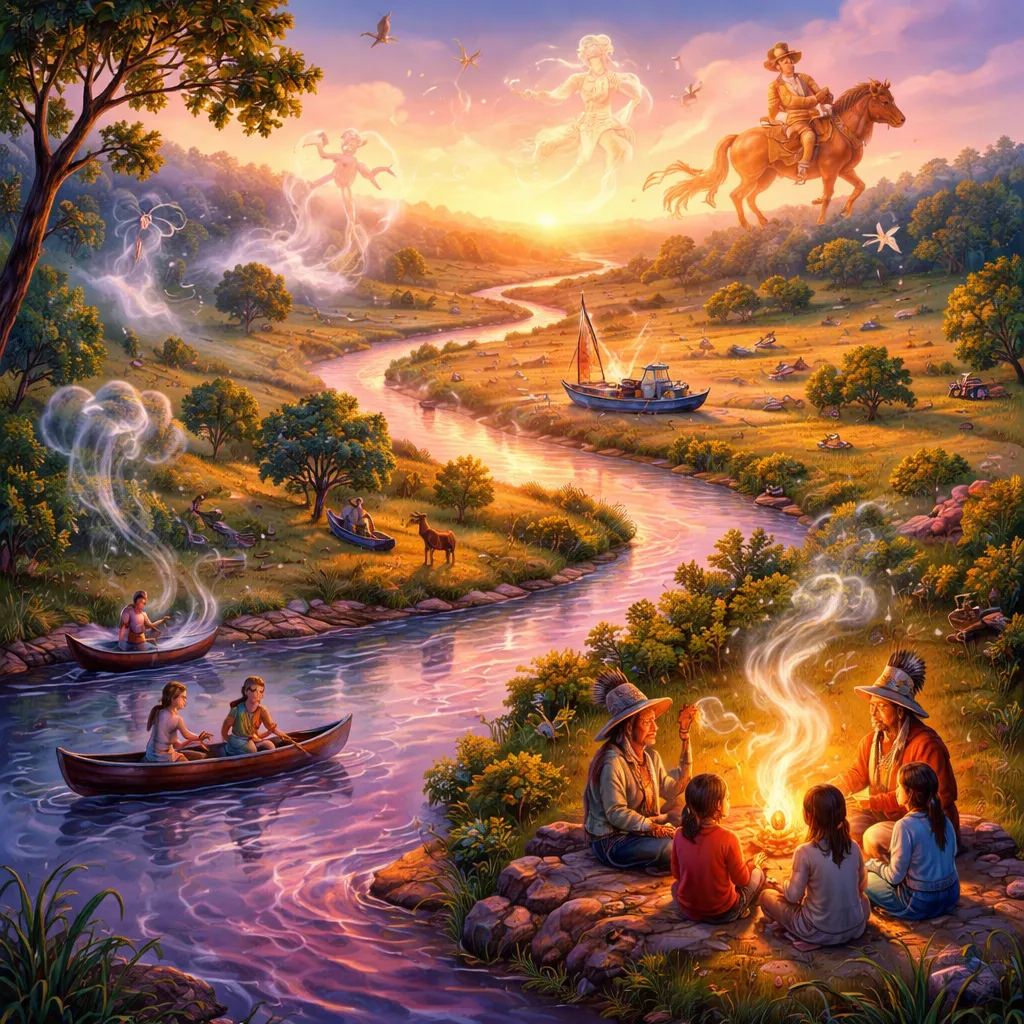

Have you ever had to say goodbye to someone you care about, even if it’s just for a little while? It’s a feeling that mixes sadness with hope. Long ago, in the wide-open spaces of the West, people sang a gentle song about that very feeling. It’s a song about a river, a valley, and a fond farewell. Let’s learn about the folk ballad “Red River Valley.”
About the Song
Let’s read the tender, nostalgic words of this classic tune.
From this valley they say you are going,
We will miss your bright eyes and sweet smile,
For they say you are taking the sunshine
That has brightened our pathway awhile.
Come and sit by my side if you love me,
Do not hasten to bid me adieu,
But remember the Red River Valley,
And the one that has loved you so true.
This song is a traditional American and Canadian folk song and cowboy ballad. It is a slow, melodic song about parting and remembrance. The “Red River Valley” refers to a real region along the border of the United States and Canada. The song is sung from the perspective of someone whose loved one is leaving the valley. The singer is sad to see them go, asks for a moment more together, and hopes to be remembered. The song’s exact origins are unknown, but it became popular in the late 19th century among cowboys, settlers, and soldiers, often as a song of longing and farewell.
What the Song is About
The song paints a quiet, heartfelt scene. Two people are standing together, perhaps on a porch or near a riverbank in the Red River Valley. One of them is about to leave—maybe to move west, to go to war, or to find work. The singer has heard the news: “they say you are going.”
The singer tells the person how much they will be missed. They say the person’s “bright eyes and sweet smile” are like sunshine that has made their life happier. The singer then makes a gentle request. They ask the person to stay just a little longer: “Come and sit by my side if you love me.” They ask the person not to rush to say goodbye (“adieu”). Most importantly, they ask the person to always remember this valley and to remember the singer, who has loved them truly. The song is a beautiful, sad, and loving goodbye.
Who Made It & Its Story
“Red River Valley” is a traditional folk song, so its original author is unknown. It likely emerged in the 1870s or 1880s from the oral tradition of cowboys, pioneers, and possibly even from the Métis people in Canada. The song has many variations in lyrics and is claimed by both the United States and Canada. One story says it was sung by the Métis people of Manitoba about the departure of Wolseley’s soldiers in 1870. Another says it was a cowboy song from Texas. Its melody is simple and haunting, perfect for singing around a campfire or on a long trail ride, which helped it spread wherever people moved and had to say goodbye.
This song has remained a beloved standard for three touching reasons. First, its melody is incredibly soothing, gentle, and easy to sing, which makes its sad words feel comforting. Second, its theme is universal. Everyone, at some point, has had to say a difficult goodbye, so the song’s feeling is easy to understand. Third, it is a direct link to the history and folklore of the North American frontier, giving us a musical sense of the loneliness and connections of life in the old West.
When to Sing It
This song is perfect for quiet, reflective moments. You can sing it softly when a family member or friend is leaving for a trip, as a musical way to say you’ll miss them. You can sing it during a calm evening, looking out at the sunset. You can also hum it while doing a quiet activity like drawing or journaling, thinking about someone you care about.
What Children Can Learn
This gentle, emotional ballad is a wellspring of learning. Let’s explore the lessons carried by its melody.
Vocabulary
The song teaches us poetic and emotional words. A “valley” is a low area of land between hills or mountains. “Bright” means shining or full of light. A “pathway” is a path or a way. To “brighten” means to make lighter or happier. To “hasten” means to hurry. “Adieu” is a French word used in English to mean “goodbye,” often for a long time. “Remember” means to keep someone or something in your mind.
Let’s use these words! You can say, “The lamp brightened the dark room.” Or, “Do not hasten, we have plenty of time.” New word: Nostalgia. This is a bittersweet longing for the past. The song is full of nostalgia for times shared.
Language Skills
This song is a beautiful lesson in using the present continuous tense for future plans and the imperative mood for polite requests. The present continuous is used for planned future events: “they say you are going.” This tells us the departure is arranged.
The song then uses the imperative for requests: “Come and sit by my side… Do not hasten…” These are direct but gentle commands, showing the singer’s desire. The song also uses the present simple tense to state a fact about the past that affects the present: “you are taking the sunshine that has brightened our pathway.” The present perfect “has brightened” shows an action that started in the past and continues to have effect now.
Sounds & Rhythm Fun
Listen to the slow, flowing, river-like rhythm of the melody. The song uses a gentle, predictable rhyme scheme: “going” and “smile” (a near-rhyme), “love me” and “adieu” (a near-rhyme), “Valley” and “true.” The long ‘o’ and ‘i’ sounds make it sound sorrowful and sweet.
The rhythm is a slow, waltzing 3/4 time, which gives it a swaying feel. Try swaying gently: From this VAL-ley they SAY you are GO-ing. The melody moves step-by-step, like a calm river, and is easy to remember because of its repetitive structure. This soothing, flowing rhythm makes the song feel like a lullaby and helps the emotional words stick in your memory. You can write your own farewell song! Use the same waltzing rhythm. Try: “From this classroom you are going, we will miss your laugh and cheer, for you’re taking all the fun times we have had throughout the year. Come and share one more high-five, do not hurry to the door, but remember second grade and the friends you’re leaving for.”
Culture & Big Ideas
“Red River Valley” is a classic piece of North American frontier folklore. It comes from a time of great movement—cattle drives, homesteading, and military postings—when goodbyes were often long and possibly permanent. The song reflects the values of loyalty, memory, and the deep connections formed in isolated communities. It is a quintessential “cowboy ballad” that speaks to the loneliness and romance of the Western myth.
The song expresses three timeless ideas. First, it’s about the pain and beauty of parting. It shows that saying goodbye is hard because the person has made your life brighter, which is actually a compliment. Second, it emphasizes the importance of memory and place. The singer asks to be remembered, linking their love to a specific, beautiful place (the valley). Third, it’s about cherishing the present moment. The request to “sit by my side” shows a desire to hold onto the last bits of time together, teaching us to be fully present with loved ones.
Values & Imagination
Imagine you are in the Red River Valley. What does it look like? Is the river red from the clay? Are the fields wide and green? What time of day is it? A sunset? Imagine the person who is leaving. Are they a cowboy with a hat? A soldier? A pioneer in a wagon? What does their “bright eyes and sweet smile” look like? Now imagine you are the one staying. How do you feel? Sad, but also proud? Draw a picture of the farewell scene. Show the valley, the two people, and the path leading away. Include details that show the time period, like old-fashioned clothes or a horse.
The song encourages us to express our feelings and to value our time with others. A lovely idea is to have a “Remember the Good Times” share. When someone in your family is going away for a while (even for a work trip), sit together and share one happy memory you have with them. You can say, “I will remember the time we…” This turns the song’s wish into a real, positive action that strengthens your bond.
So, as the final notes of this valley ballad drift away, think about the connections it describes. It is a vocabulary lesson in poetic farewells. It is a grammar lesson in talking about future plans and making polite requests. It is a music lesson in a slow, swaying waltz. From the first line about “going” to the final plea to “remember,” it wraps the universal experience of parting in a melody that feels as wide and timeless as the valley itself. “Red River Valley” teaches us that goodbyes are a part of life, that love is tied to memory and place, and that music gives us a gentle way to say what is in our hearts.
Your Core Takeaways
You are now a friend to the song “Red River Valley.” You know it is a traditional American/Canadian folk ballad about a sad farewell. You’ve learned words like “valley,” “brighten,” and “adieu,” and you’ve practiced using the present continuous for future plans and the imperative for requests. You’ve felt its gentle waltz rhythm and created your own farewell verse. You’ve also discovered the song’s connection to cowboy and pioneer life and its messages about the pain of parting, the importance of memory, and cherishing the present moment.
Your Practice Missions
First, create a “Farewell Gift” song. Think of someone you know who might be moving away, changing schools, or even just going on a long vacation. Write one new verse to the tune of “Red River Valley” for them. Use your own words to say what you’ll miss and what you hope they remember. You can sing it to them or write it in a card.
Second, map the “Red River Valley.” The song is named for a real place. With a grown-up’s help, look online or in an atlas to find the Red River. It flows between the states of Texas and Oklahoma, and also between Minnesota and North Dakota. There is also a Red River in Manitoba, Canada. Trace its path on a map. Then, draw your own imaginary “Red River Valley”—what would it look like? What would you name the river that runs through it? This connects the song’s story to geography.