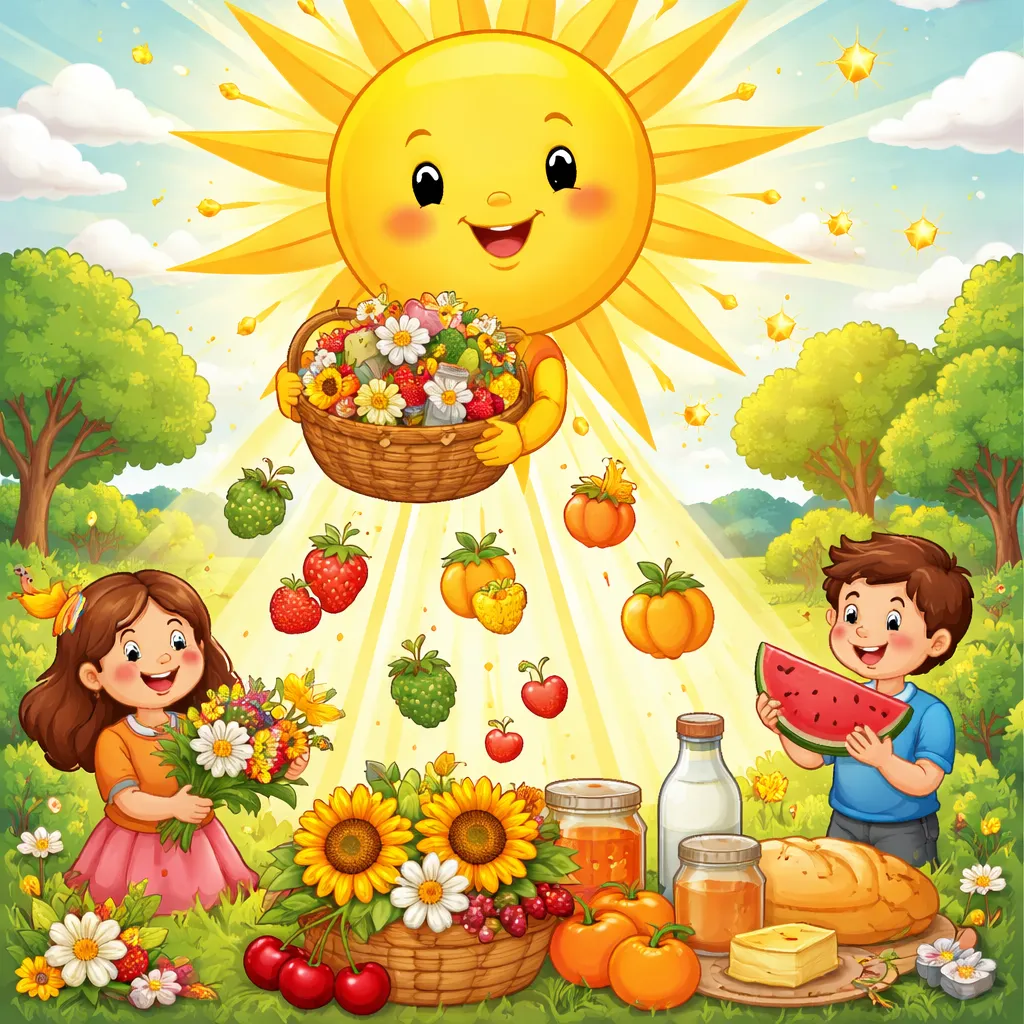

Have you ever woken up feeling a warm patch of sunlight on your blanket? In Spanish, there is a gentle, welcoming song that greets the morning sun as a friendly visitor bringing gifts of warmth. It is a cozy hello to the day, full of gratitude and light. Let’s stretch and smile as we learn the bright, kind song “The Little Sun (El solcito).”
About the Song
Here are the warm, comforting words of this traditional Spanish song, often sung as a good morning lullaby.
Solcito, solcito,
caliéntame un poquito.
Para hoy, para mañana,
para toda la semana.
Solcito, solcito,
calienta mi carita.
Solcito, solcito,
calienta mi manita.
Solcito, solcito,
despierta a mi mamá.
Solcito, solcito,
despierta a mi papá.
Solcito, solcito,
despierta al bebé también.
Y a todos los niñitos
que se quieren despertar.
English Translation:
Little sun, little sun,
warm me up a little bit.
For today, for tomorrow,
for the whole week.
Little sun, little sun,
warm my little face.
Little sun, little sun,
warm my little hand.
Little sun, little sun,
wake up my mommy.
Little sun, little sun,
wake up my daddy.
Little sun, little sun,
wake up the baby too.
And all the little children
who want to wake up.
This is a classic Spanish morning song and lullaby. The affectionate word “solcito” uses the cute, small ending “-cito” to mean “dear little sun.” The song is a personal, gentle request to the sun. The singer asks the sun for its warmth, not just for a moment, but for days to come. It then shows the sun’s warmth touching the singer’s own face and hand, and spreading to wake up the whole family and all children. It is a song about welcoming the new day, feeling gratitude for the sun’s comfort, and sharing that warm feeling with loved ones. The melody is usually soft, rising, and full of gentle warmth, like the first rays of morning light.
What the Song is About
The song paints a quiet, loving picture of a morning ritual with the sun. Imagine waking up in your bed. A soft, yellow beam of sunlight comes through the window and falls on your blanket. You smile and talk to it. You make a small, happy request: “Little sun, warm me up a little bit.” You ask for its cozy warmth to last a long time—for today, tomorrow, and the whole week ahead.
You feel the sun’s gentle heat on your skin. It touches your cheeks, making them feel toasty and pink. It warms your hand, and you wiggle your fingers in the light. The sun’s job is not just to warm you. It has more work to do! The sun’s light moves through the house like a friendly messenger. It peeks into your parents’ room, gently encouraging them to wake up and start their day. It shines softly on a sleeping baby’s crib. The song imagines the sun traveling all over the world, visiting every child’s window who is ready to start a new day with a smile. It is a song about connection—between us and the sun, and between all families waking up together.
Who Made It & Its Story
“The Little Sun (El solcito)” is a cherished traditional Spanish folk song and nursery rhyme. Like many lullabies, its specific author is lost to time, born from generations of parents singing to their children at sunrise or bedtime. The song reflects a culture that greets the day with warmth and family connection. In many Spanish-speaking homes, mornings are a cherished time for family. This song turns the simple, universal act of feeling the morning sun into a ritual of gratitude and togetherness. It personifies the sun as a benevolent, almost magical friend who visits each person individually. It is often used to gently wake children, to soothe them, or to express a hopeful, positive start to the day, reinforcing a sense of security and shared experience.
This gentle song is loved for three heartwarming reasons. First, it creates an immediate feeling of personal connection and comfort by speaking directly to the sun and asking for its warmth for oneself and one’s family. Second, it teaches simple, useful daily routine vocabulary (wake up, warm) and the concept of time (today, tomorrow, week) in a natural, repetitive way. Third, it fosters a sense of gratitude, family bonding, and a positive outlook on starting the day, making the sunrise feel like a personal gift.
When to Sing It
This song is perfect for calm, loving moments. You can sing it softly as a waking-up song in the morning, when the first sunlight comes into your bedroom. You can hum it as a gentle lullaby at naptime or bedtime, wishing for the sun’s return the next day. You can also chant it together as a family while having a cozy breakfast, greeting the new day with smiles.
What Children Can Learn
This tender, repetitive song is a wonderful teacher about daily life, Spanish language, and care.
Vocabulary
The song teaches us words for family, the body, time, and gentle actions in Spanish. The “little sun” (solcito) is our friendly, warm sun. To “warm” (calentar) means to make something nice and warm, not hot. A “little bit” (un poquito) means a small amount. “Today” (hoy) is this day. “Tomorrow” (mañana) is the day after today. The “week” (semana) is seven days. A “face” (cara) is the front part of your head. A “hand” (manita) is the end of your arm. To “wake up” (despertar) means to stop sleeping. “Mommy” (mamá) and “Daddy” (papá) are your parents. A “baby” (bebé) is a very young child.
Let’s use these words! You can say, “The solcito warms my face in the morning.” Or, “Tomorrow, I will play in the garden.” New word: Sunbeam. This is a ray or beam of light from the sun, just like the warm light in the song.
Language Skills
This song is a beautiful lesson in making polite requests and using reflexive verbs for personal actions.
Concept Definition: A polite request is a nice way to ask for something, not a demand. The song shows us how to ask the sun nicely. A reflexive verb is a special action word where the person doing the action also receives the action. It often describes things you do to yourself, like waking yourself up or washing yourself.
Features and Types: In the song, we see a polite request with “caliéntame” (warm me). The “-me” at the end means “me,” making it a personal ask. We also see the verb “despertar” (to wake up). When it’s “despierta a mi mamá,” it means “wake up my mom.” But the song also says “que se quieren despertar” (who want to wake up). Here, “despertar” is used with “se” to mean “wake themselves up.” This is the reflexive form, showing the children doing the action to themselves.
How to Spot Them: Here is a simple “finding secret.” For polite requests, look for action words that have a little word like “me,” “te,” or “nos” attached to the end, like in “caliéntame” (warm me). For reflexive verbs, look for the little word “se” right before the verb, as in “se quieren despertar” (they want to wake themselves up).
How to Use Them: A great way to make a kind request is with the “friendly ask recipe”. The pattern is: [Person’s Name or Thing] + [Action Verb with -me/-te/-nos ending].
Example from the song: “Solcito, caliéntame.” (Little sun, warm me.) Verb with -me=caliéntame.
Example you can make: “Mamá, ayúdame.” (Mom, help me.)
You can also talk about your morning routine with reflexive verbs: “Me levanto” (I get myself up), “Me lavo la cara” (I wash my face).
Sounds & Rhythm Fun
Listen to the soothing, repetitive, and flowing rhythm of the melody. The song has a lullaby’s gentle, rocking feel, like being slowly warmed by the sun. The beautiful, loving repetition of “Solcito, solcito” feels like a gentle tap on the shoulder or a soft call. The melody often rises gently on “caliéntame” (warm me) and then settles, mimicking the spreading of warmth. The “-ito” ending in “solcito,” “poquito,” “carita,” and “manita” creates a sweet, rhyming sound that makes the song feel cute and affectionate. Words like “hoy,” “mañana,” and “semana” have a nice rhythmic flow that helps remember the days.
The rhythm is slow and steady. Try gently patting your hand on your other arm to the beat: Sol-ci-to, sol-ci-to, ca-lién-ta-me un poi-qui-to. The repetition of the structure makes it incredibly easy to remember and sing along, even for the youngest singers. This gentle, repetitive, and affectionate musical pattern is perfect for making requests and greetings. You can write your own “good morning” song! Use the same soothing melody. Try: “Estrellita, estrellita, brilla un poquito. Para mi, para ti, para nuestro día feliz.” (Little star, little star, shine a little bit. For me, for you, for our happy day.)
Culture & Big Ideas
“El solcito” connects to the importance of family, morning routines, and showing “cariño” (affection) in Spanish-speaking cultures. The day often starts with close family interaction. The song reflects a tradition of using diminutives (like -cito, -ita) to express tenderness and care, turning the sun, face, and hand into dear, small things to be cherished. It also mirrors a cultural appreciation for the sun’s role in daily life, especially in regions with warm, sunny climates where morning light is a vibrant and integral part of the day. The act of greeting the sun is a simple, shared moment of gratitude.
The song conveys three warm ideas. First, it’s about expressing gratitude for nature’s gifts in a personal way. The singer doesn’t just notice the sun; they thank it and ask for its continued blessing. Second, it expresses the interconnectedness of self, family, and community. The warmth starts with “me,” moves to “my face,” “my hand,” then to “my mom,” “my dad,” the “baby,” and finally to “all the little children.” It shows how a good feeling can and should be shared. Third, it highlights gentle routines and positive beginnings. Waking up is framed not as a chore, but as a gentle, shared event welcomed by the sun’s kindness.
Values & Imagination
Imagine you are the first sunbeam of the morning. You peek over the edge of the world, soft and golden. A child is sleeping. You slowly, carefully stretch across the floor, up onto the bed, and onto the child’s closed eyelids. How do you help them wake up? Do you tickle their cheeks with warmth? The child smiles and asks you for warmth. You glow a little brighter on their face and hand. Your job is not done! You slide under the door to the next room. You find a sleeping parent and gently touch their shoulder with your light. How do you wake them without a sound? You are a quiet, warm messenger for the whole world. Now, imagine you are the child. You feel the warmth and say “thank you” to the sun. You think of all the other children waking up at the same time, all feeling the same sun. How does that make you feel? Connected? Happy? Draw the sun’s journey. Draw a smiling “solcito” in the corner. Draw lines (sunbeams) coming from it. One beam touches a child in bed. Another beam touches a parent. Another beam touches a house far away. This shows how one sun connects everyone in the morning.
The song encourages gratitude, empathy, and a gentle start to the day. A wonderful activity is a “Warmth Chain.” In the morning, when you feel the sun, say or think, “The sun warms me.” Then, do one small, warm, kind action for someone in your family, like giving a hug or saying good morning with a smile. Tell them, “Now I share the sun’s warmth with you.” They can then pass it on. This turns the song’s idea into a real chain of kindness.
So, as the last wish for the week’s warmth lingers in the air, think about the gentle power in this simple tune. It is a vocabulary lesson in family, body, and time. It is a language lesson in making polite requests and talking about daily routines. It is a music lesson in a soft, repetitive melody that feels like a hug. From the first request to the little sun to the final image of all children waking, it wraps lessons in gratitude, connection, and gentle beginnings in a melody that feels like a warm blanket. “The Little Sun (El solcito)” teaches us to be thankful for nature’s gifts, to share warmth with our family, and to welcome each new day with a kind and open heart.
Your Core Takeaways
You are now an expert on the song “The Little Sun (El solcito).” You know it is a traditional Spanish morning song where we ask the sun for warmth for ourselves and our family. You’ve learned Spanish words like “solcito,” “calentar,” and “despertar,” and you’ve practiced making polite requests and talking about morning routines. You’ve felt its soft, soothing rhythm and created your own greeting verse. You’ve also discovered the song’s link to family warmth and its messages about gratitude, sharing, and gentle new beginnings.
Your Practice Missions
First, have a “Sunbeam Conversation.” Tomorrow morning, find a sunbeam in your room. Sit in it or put your hand in it. Say hello to the “solcito” in Spanish. Make a polite request from the song: “Solcito, caliéntame un poquito.” Then, think of one person you’d like the sunbeam to visit next (your pet, a toy, a plant) and say, “Solcito, calienta a mi…” (warm my…). This mission brings the song’s conversation to life.
Second, create a “Family Wake-Up Map.” Draw a simple picture of your home in the morning. Draw a sun outside. Then, draw lines from the sun to where everyone sleeps (your room, parents’ room, etc.). Label each person with the Spanish word from the song: “mamá,” “papá,” “bebé,” “niño/niña.” Sing the song while pointing to each person on your map. This helps you connect the song’s words to your own loving family.