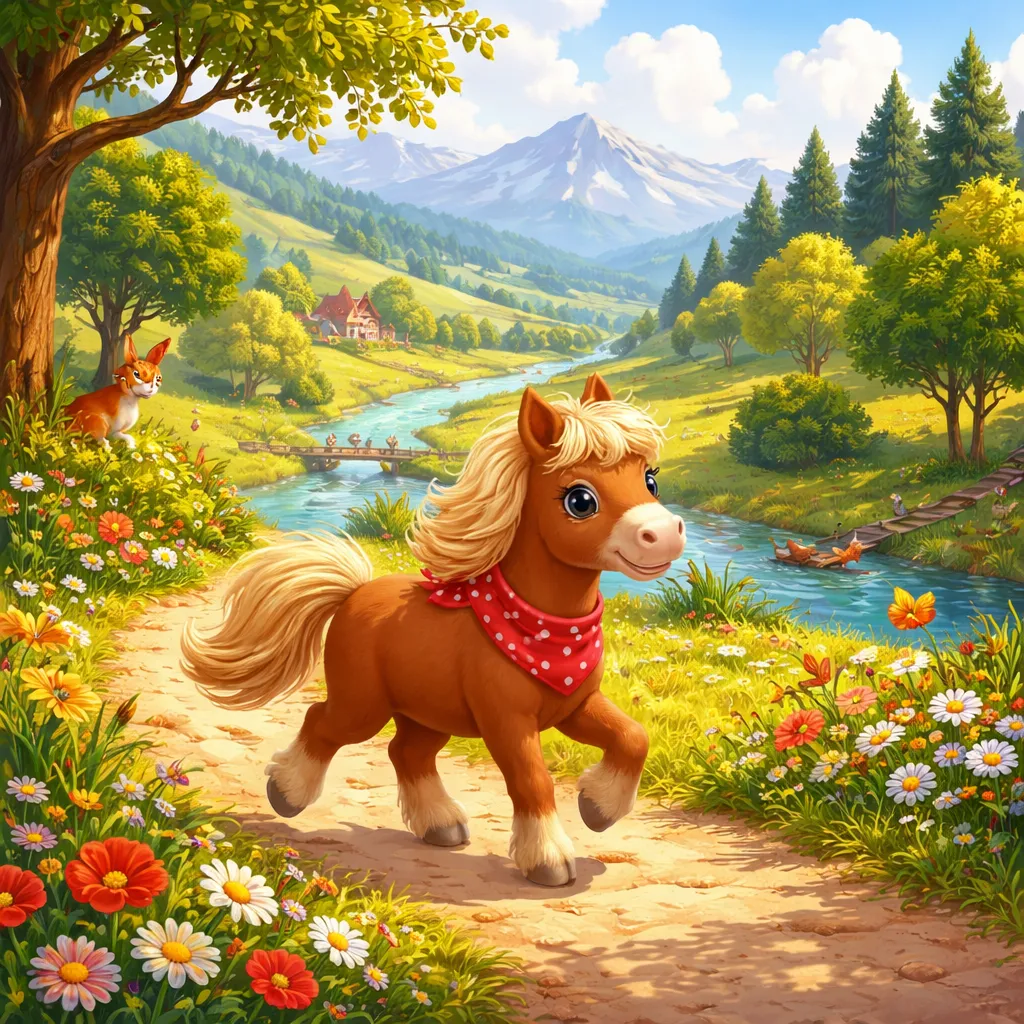

Have you ever watched a horse run across a field? Its mane flows in the wind, and its hooves make a happy, clopping sound. In Germany, there is a song that makes you want to move like a horse, full of energy and joy. It is a song about movement and sound. Let’s get ready to gallop and learn the active song “The Little Horse (Das kleine Pferd).”
About the Song
Here are the energetic, rhythmic lyrics of a popular traditional German children’s song:
Das kleine Pferd, das kleine Pferd,
das läuft so schnell, hüh, hott, galopp!
Das kleine Pferd, das kleine Pferd,
das frisst den Hafer, mampf, mampf, mampf!
Das kleine Pferd, das kleine Pferd,
das trinkt das Wasser, schlürf, schlürf, schlürf!
Das kleine Pferd, das kleine Pferd,
das schläft im Stall, ganz sacht und still.
English Translation:
The little horse, the little horse,
it runs so fast, giddy-up, gallop!
The little horse, the little horse,
it eats the oats, munch, munch, munch!
The little horse, the little horse,
it drinks the water, slurp, slurp, slurp!
The little horse, the little horse,
it sleeps in the stable, very softly and quiet.
This is a lively and beloved German-language action song for children. The song is a fun story of a horse’s busy day. “The little horse, the little horse, it runs so fast, giddy-up, gallop!” it starts with a burst of speed and excitement. The song then shows what the horse needs after all that running. “It eats the oats, munch, munch, munch! It drinks the water, slurp, slurp, slurp!” Finally, tired from its day, “it sleeps in the stable, very softly and quiet.” The song takes us on a little journey from high energy to peaceful rest, all about the life of a horse.
What the Song is About
The song is a playful day in the life of a little horse. Imagine a wide, open field at sunrise. A beautiful brown horse is ready to run. “The little horse, the little horse, it runs so fast, hüh, hott, gallop!” It gallops across the grass, its hooves pounding a fast rhythm on the ground.
After running, the horse is hungry and thirsty. “The little horse, the little horse, it eats the oats, munch, munch, munch!” It enjoys its food from a bucket. Then, “The little horse, the little horse, it drinks the water, slurp, slurp, slurp!” It drinks deeply from a trough. All that activity makes the horse very sleepy. “The little horse, the little horse, it sleeps in the stable, very softly and quiet.” It goes into its cozy stable, lies down on the soft hay, and closes its eyes for a quiet sleep. The song is about the exciting actions and simple needs of a friendly animal.
Who Made It & Its Story
“Das kleine Pferd” is a classic German folk and movement song that fits into a long tradition of animal-themed action songs for children. While the original creator is unknown, its simple, effective structure has made it a favorite in German playgroups, kindergartens, and riding schools for beginners (“Reitschulen”). The song reflects the cultural familiarity with horses, not just as farm animals but also as companions for sport and leisure. The exciting sound “hüh, hott!” is a traditional German call to make a horse go faster.
This active song is loved for three energetic reasons. First, it is a fantastic way to learn vivid German action verbs like “laufen” (to run), “fressen” (to eat, for animals), and “trinken” (to drink) through immediate physical imitation. Second, it features wonderful, playful onomatopoeia (“mampf,” “schlürf”) and a traditional riding command (“hüh, hott!”), making language learning loud, funny, and culturally rich. Third, it presents a clear, relatable sequence of activities (play, eat, drink, sleep), helping children understand daily rhythms and animal care in a memorable, rhythmic way.
When to Sing It
This song is perfect for burning energy and acting out a story. You can sing it as a full-body action game, galloping around the room, pretending to eat and drink, and finally curling up to “sleep.” You can chant it rhythmically while bouncing on a hobby horse or a pretend horse. You can also sing it as a calming transition song, starting with loud galloping and ending with whispering the final, quiet line about sleeping in the stable.
What Children Can Learn
This dynamic, sequential song is a wonderful teacher about animals, their actions, and the flow of a day in German.
Vocabulary
The song teaches us strong words for animals, actions, food, and places in German. “The” (Das). “Little” (kleine). “Horse” (Pferd). “It” (das / es). “Runs” (läuft). “So” (so). “Fast” (schnell). “Giddy-up!” (Hüh, hott! – a call to horses). “Gallop!” (galopp!). “Eats” (for animals) (frisst). “The” (den). “Oats” (Hafer). “Munch” (mampf). “Drinks” (trinkt). “The” (das). “Water” (Wasser). “Slurp” (schlürf). “Sleeps” (schläft). “In the” (im). “Stable” (Stall). “Softly” and quiet (sacht und still).
Let’s use these words! You can describe fast movement: “Der Junge läuft schnell.” (The boy runs fast.) You can talk about what you drink: “Ich trinke Milch.” (I drink milk.) New word: Galoppieren. This is the German verb for “to gallop,” the fast running style of the little horse in the song.
Language Skills
This song is excellent for learning about different actions and the sequence of events. The key verbs are “läuft” (runs), “frisst” (eats), “trinkt” (drinks), and “schläft” (sleeps). The song shows us a clear order: first running, then eating, then drinking, then sleeping.
Concept Definition: Action verbs are doing words. They tell us what is happening. A sequence is the order in which things happen, like steps in a story or a day. In the song, the horse does things in a certain order: it runs, then it eats, then it drinks, then it sleeps.
Features and Types: The verbs in the song are all in the “he/she/it” form because they are about the horse (“das Pferd”). “Läuft” (runs), “frisst” (eats), “trinkt” (drinks), “schläft” (sleeps). They follow a logical sequence of a busy creature’s day: high-energy activity, followed by refueling with food and water, followed by rest.
How to Spot Them: Here is a simple “what happens next?” trick. Listen for action words that tell a story. Ask: “What does the horse do first? What does it do after that?” The words that answer are the action verbs, and their order is the sequence. In the song, the sequence is clear: laufen -> fressen -> trinken -> schlafen.
How to Use Them: A great way to tell a simple story is the “Day Formula”. Describe actions in order using “und dann” (and then).
Example from the song’s pattern: “Das Pferd läuft. Dann frisst es. Dann trinkt es. Dann schläft es.” (The horse runs. Then it eats. Then it drinks. Then it sleeps.)
Example you can make: “Ich spiele. Dann esse ich. Dann lese ich. Dann schlafe ich.” (I play. Then I eat. Then I read. Then I sleep.)
Sounds & Rhythm Fun
Listen to the energetic, trotting rhythm of the melody. The song often has a bouncy, clip-clop tune that makes you think of horse hooves. The fantastic sound effects are the best part! The riding call “Hüh, hott! Galopp!” is exciting to shout. The munching sound “mampf, mampf, mampf!” and the drinking sound “schlürf, schlürf, schlürf!” are funny and perfect for dramatic play. The quiet ending “ganz sacht und still” creates a lovely contrast.
The rhythm is perfect for movement: galloping on the spot for the first verse, pretending to eat from your hand, pretending to drink noisily, and finally curling up silently. The repetitive “Das kleine Pferd” line starts each new action, making the sequence easy to follow. This musical pattern is perfect for creating your own animal day song. You can write your own “Der kleine Vogel” (The Little Bird) song! Try: “Der kleine Vogel, der kleine Vogel, der fliegt so hoch, schwupp, in die Luft! Der kleine Vogel, der kleine Vogel, der pickt den Wurm, pick, pick, pick! …Der kleine Vogel, der kleine Vogel, der schläft im Nest, ganz sacht und still.” (The little bird… flies so high, whoosh, into the air!… pecks the worm, peck, peck, peck!… sleeps in the nest, very softly and quiet.)
Culture & Big Ideas
“Das kleine Pferd” connects to the German culture of horseback riding (“Reiten”), country fairs, and a love for animals and nature. Horses are important in German tradition, from farm work to sport. The song includes the traditional command “Hüh, hott!” used to encourage horses to go. It reflects a child-friendly understanding of animal care, showing that even powerful, fast animals need food, water, and rest.
The song conveys three active, important ideas. First, it encourages empathy and understanding of an animal’s daily needs and rhythms (exercise, food, water, sleep). Second, it celebrates energetic movement and play, followed by the satisfaction of meeting basic needs and peaceful rest. Third, it teaches sequencing and storytelling through a clear, logical order of events, a key cognitive skill.
Values & Imagination
Imagine you are a strong, beautiful “kleines Pferd.” You stand in a sunny field in the morning. “The little horse, the little horse, it runs so fast, hüh, hott, gallop!” You feel the wind in your mane as you race across the meadow, feeling free and fast. You get hungry. “The little horse, the little horse, it eats the oats, munch, munch, munch!” The oats taste sweet and crunchy. You get thirsty. “The little horse, the little horse, it drinks the water, slurp, slurp, slurp!” The cool water feels wonderful. Now you are tired. “The little horse, the little horse, it sleeps in the stable, very softly and quiet.” You walk into your cozy, quiet stable, lie down on the soft hay, and drift into a peaceful dream. How does the ground feel under your hooves when you run? How does the cool water taste? Draw the little horse’s day. Draw four boxes in a row. In the first, draw a running horse and write “läuft schnell.” In the second, draw a horse eating and write “frisst Hafer.” In the third, draw a horse drinking and write “trinkt Wasser.” In the fourth, draw a sleeping horse in a stable and write “schläft im Stall.” This shows the song’s clear sequence.
The song encourages us to move our bodies with joy like a galloping horse, to take care of ourselves by eating and drinking after activity, and to appreciate the quiet comfort of rest. A wonderful activity is the “Pferdetag” (Horse Day) sequence game. Act out the four actions from the song in order: gallop, then munch from your hand, then slurp an imaginary drink, then curl up to sleep. Say the German words for each action as you do them: “laufen… fressen… trinken… schlafen.” This connects you to the song’s spirit of active, sequential play.
So, from the fast gallop to the quiet stable, this song is a journey. It is a vocabulary lesson in animal actions, sounds, and needs. It is a language lesson in using action verbs like “läuft” and telling a simple sequence. It is a music lesson in a bouncy, clip-clopping melody full of fun sound effects. “The Little Horse (Das kleine Pferd)” teaches us to be active, to care for our needs, and to enjoy a good story with a beginning, middle, and end.
Your Core Takeaways
You are now an expert on the song “The Little Horse (Das kleine Pferd).” You know it is a lively German song about a horse that gallops, eats oats, drinks water, and sleeps. You’ve learned German words like “Pferd,” “läuft,” “schnell,” “frisst,” “Hafer,” “trinkt,” and “Stall,” and you’ve practiced using action verbs and understanding a sequence of events. You’ve felt its energetic, trotting rhythm and created your own animal day verse. You’ve also discovered the song’s message about energetic play, taking care of basic needs, and following the order of a simple, satisfying day.
Your Practice Missions
First, play the “Was macht das Pferd?” (What does the horse do?) game. Act out the four main actions from the song in order. As you do each one, say the German word loudly: “Laufen! (gallop) Fressen! (munch) Trinken! (slurp) Schlafen! (pretend to sleep).” This mission makes you move and remember the song’s sequence.
Second, be a “Tagesplan” (Daily Plan) storyteller. Think about your own day. Pick four things you do, like play, eat, read, and sleep. Say them in order in German: “Ich spiele. Ich esse. Ich lese. Ich schlafe.” You just told a tiny story about your day, just like the song tells the horse’s story. This mission lets you use the song’s storytelling skill to talk about yourself.