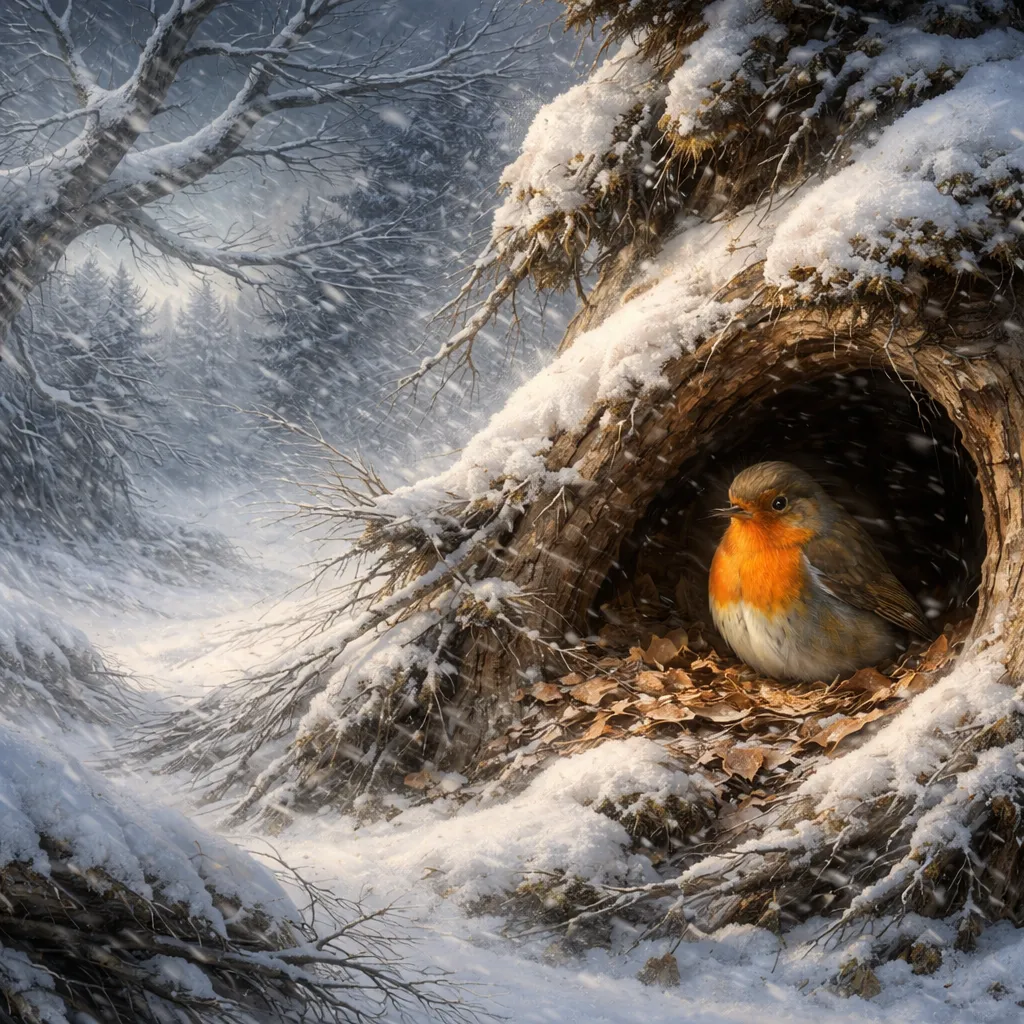

Have you ever felt a cold, strong wind that makes the trees shiver and sends brown leaves dancing down the street? That wind has a name, and it’s the star of an old, gentle song. It tells a story about what happens to our animal friends when winter comes. Let’s discover the song “The North Wind Doth Blow.”
About the Song
Let’s read the beautiful, old-fashioned words of this rhyme.
The north wind doth blow,
And we shall have snow,
And what will poor robin do then?
Poor thing.
He’ll sit in the barn,
To keep himself warm,
And hide his head under his wing.
Poor thing.
This song is a traditional English nursery rhyme. It is a short, caring poem about a little robin facing the coming winter. The song asks a worried question about the bird and then gives a gentle answer. It uses older words like “doth” (an old way to say “does”) which gives it a classic, storytelling feel. It is a very old rhyme from England, first published in the 1700s. It comes from a time when people lived closer to nature and keenly observed the changing seasons and the struggles of wildlife.
What the Song is About
The song paints a quiet, chilly scene. First, we feel the weather changing. A strong, cold north wind begins to blow hard, shaking the bare branches. The sky grows gray. The singer knows this wind brings snowflakes, which will soon cover the ground in white.
Then, the singer thinks of a small, familiar bird: the robin with its red breast. They feel worried for the “poor robin.” What will it do when the world turns cold and white? The singer imagines the robin’s solution. The little bird will fly to a safe place, a quiet barn. It will sit still in the hay to keep its tiny body warm. And when it sleeps, it will tuck its small head snugly under its soft feathery wing, hiding from the cold.
Who Made It & Its Story
“The North Wind Doth Blow” is a traditional folk rhyme, so its original author is unknown. It was passed down through generations by word of mouth. The rhyme captures a very common sight in the British countryside: the European robin, a bird that stays through the winter, seeking shelter in gardens and farmyards. The song reflects the empathy and close attention people once had for the creatures sharing their environment.
This simple song has lasted for centuries for three lovely reasons. First, it creates instant empathy. Calling the robin “poor thing” makes us care about its fate. Second, it is a perfect, tiny lesson about seasons and animal adaptation, teaching children how birds survive winter. Third, the language is poetic and memorable. The rhyme of “blow” and “snow,” and “warm” and “wing,” along with the gentle repetition of “poor thing,” makes it stick in your heart and mind.
When to Sing It
This song is perfect for quiet, observant moments. You can sing it softly on a cold, windy day while looking out the window, wondering where the birds are. You can sing it as a gentle lullaby at bedtime, picturing all creatures tucked in safely. You can also hum it while on a winter walk, looking for real robins in trees or hedges.
What Children Can Learn
This small, caring rhyme is full of important lessons. Let’s explore the warmth of knowledge inside it.
Vocabulary
The song introduces some descriptive and older words. The “north wind” is a cold wind that comes from the north, often bringing winter weather. “Doth” is an old word meaning “does.” A “robin” is a small, plump bird with a bright red-orange breast. A “barn” is a large farm building used for storing hay or keeping animals. A “wing” is the part of a bird’s body that it uses for flying. To “hide” means to put something where it cannot be seen.
Let’s use these words in new sentences! You can say, “The strong north wind made the flag flap.” Or, “I saw a robin hunting for worms.” You might explain, “The tractor is parked in the barn.” New word: Shelter. This is a place that gives protection from bad weather or danger. The barn provided shelter for the robin. We all need shelter from a storm.
Language Skills
This song is a great example of using the Future Tense to make a prediction. We use the future tense to talk about things that haven’t happened yet but will happen. The song uses the simple future with “will” and “shall.”
Look at the structure: “The north wind doth blow, and we shall have snow.” The word “shall” is a more formal, older version of “will.” It predicts what is going to happen next because of the wind. Then it asks, “what will poor robin do?” This is a future tense question. The answer is also in the future tense: “He’ll (he will) sit in the barn… and hide his head…” This shows us how to talk about what comes next, making it a perfect song for anticipating changes, like the seasons.
Sounds & Rhythm Fun
Listen to the gentle music of the words. The main rhymes are “blow” with “snow,” and “warm” with “wing” (a soft rhyme). The repetition of the sympathetic phrase “Poor thing” acts like a gentle sigh or a refrain, tying the verses together with feeling.
The rhythm is slow, steady, and a bit solemn, like a quiet observation. Try tapping a slow beat: the NORTH wind DOTH BLOW, and WE shall HAVE SNOW. The melody, if sung, is usually simple, soft, and a little sad, matching the worried mood. This slow, measured pace makes the rhyme feel thoughtful and easy to remember, like a worried thought you can’t shake. You can write your own season song! Use the same thoughtful pattern. Try: “The autumn rain doth fall, and leaves cover the ground, and what will the busy squirrel do then? Poor thing. He’ll hide in the oak tree, as cozy as can be, and curl his tail all around. Poor thing.”
Culture & Big Ideas
The robin is a beloved national bird in the United Kingdom, commonly seen on Christmas cards. This rhyme connects to the British experience of winter, which is often wet and windy. The song reflects a cultural affection for this friendly bird and an understanding of the harshness of the winter season, a time when people historically also had to prepare and take shelter.
The song teaches three profound ideas. First, it’s about empathy and compassion. The singer projects human-like feelings (“poor thing”) onto the robin, encouraging us to care for creatures different from ourselves. Second, it’s about preparation and foresight. The song recognizes the cause (north wind) and effect (snow), and focuses on the solution (finding shelter). Third, it explores interdependence with nature. It places human concern (“we shall have snow”) alongside animal struggle, reminding us we share the same world and weather.
Values & Imagination
Let your imagination follow the robin. What does the barn look like inside? Is it dusty and full of golden hay? What does the wind sound like whistling through the cracks in the walls? How does it feel to be a small, feathered creature in a big, dark space? Is the robin lonely? Or is it grateful to be out of the storm? Imagine you are the robin. Describe what you see from your perch in the barn. Draw a picture from the robin’s point of view, looking out of the barn door at the swirling snow.
The song inspires us to be helpers. A simple and wonderful idea is to make a “Winter Care Package” for the birds. On a cold day, ask a grown-up to help you mix birdseed with a little peanut butter or suet. Press the mix into a pinecone or a small dish. Hang it outside a window where you can see it. You are providing shelter from hunger, just like the barn provided shelter from the cold. This turns the song’s empathy into action.
This old rhyme, therefore, is much more than a few lines about weather. It is an invitation to observe, to care, and to think ahead. It uses the graceful language of the past to talk about a timeless truth: winter comes, and all creatures must find their way to endure it. The song “The North Wind Doth Blow” doesn’t shout; it whispers. It whispers a question about a robin, and in doing so, it teaches us about the future tense. It whispers a picture of a barn, and in doing so, it teaches us about shelter. It whispers “poor thing,” and in doing so, it plants a seed of kindness that can grow for a lifetime. From the first chilly line to the final, tucked-in image, it wraps learning in warmth and concern, making its lessons unforgettable.
Your Core Takeaways
You now know the gentle, wintry song “The North Wind Doth Blow.” You understand it’s a traditional English rhyme that shows empathy for a robin in winter. You’ve learned words like “doth” and “barn,” and you can confidently use “will” and “shall” to talk about the future. You’ve felt its slow, thoughtful rhythm and written your own seasonal poem. You’ve also discovered the song’s deep messages about compassion, preparation for change, and our connection to the natural world.
Your Practice Missions
First, be a weather reporter and poet. The next time you feel a cold wind or see a gray sky, go to a window. Say the first two lines of the song: “The north wind doth blow, and we shall have snow.” Then, look carefully outside. What animal do you see? A squirrel? A sparrow? Finish the song for that animal. Make up your own two lines: “And what will the busy squirrel do then? Poor thing. He’ll scamper up high, in his nest in the sky, and wait for the storm to be done.”
Second, build an indoor “shelter.” The robin found a barn. Use pillows, blankets, and chairs to build a cozy fort or tent in your living room. This is your shelter from the pretend “north wind.” Crawl inside with a flashlight and a book. While you’re in there, draw a picture of a robin safe in its own shelter, whether it’s a barn, a thick bush, or a nest. This helps you feel the comfort of shelter the song describes.