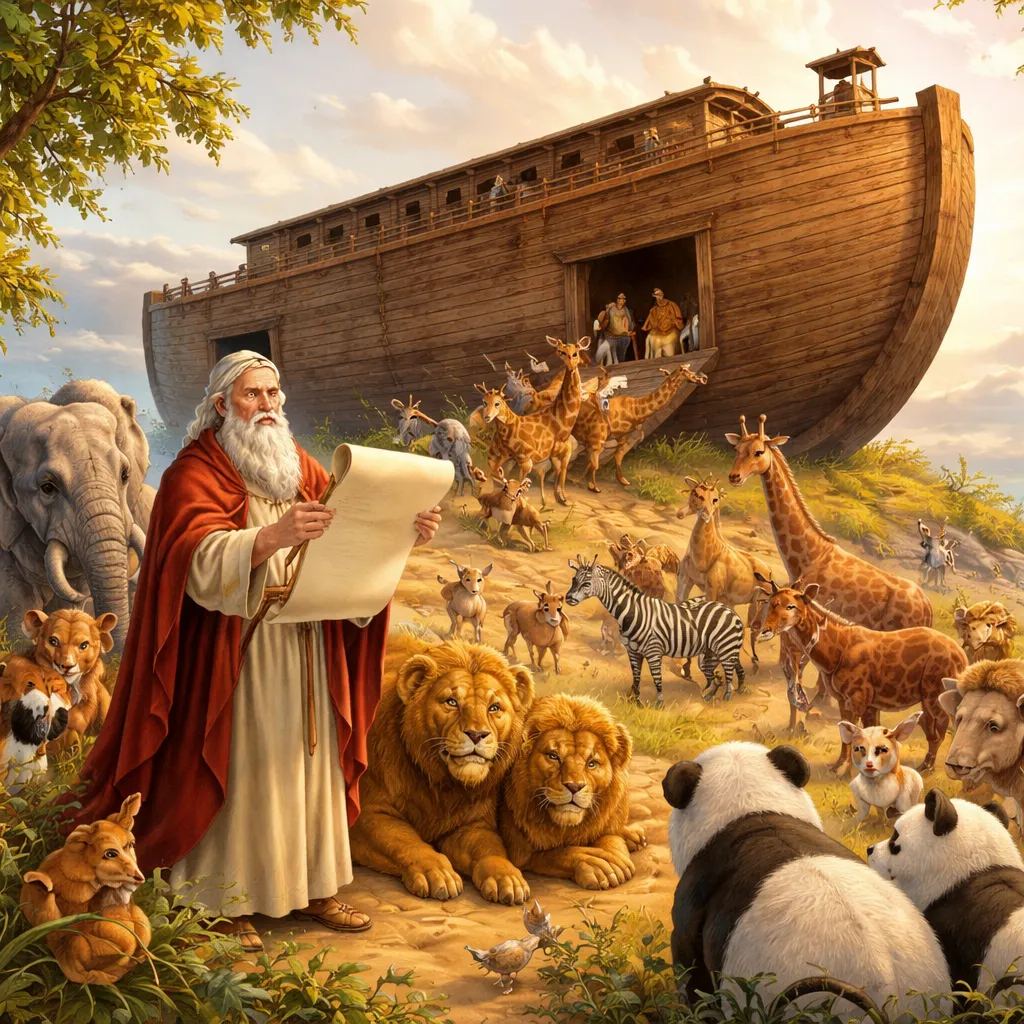

Have you ever seen a really, really heavy rainstorm? What if it rained for days and days, and the whole world started to flood? A long, long time ago, a story from the Bible tells of a man who was warned about such a flood. He had a huge job: to build a giant boat to save his family and two of every kind of animal. There is a famous, joyful song that tells this story of teamwork and survival. Let’s learn about the spiritual “Who Built the Ark?”
About the Song
Let’s read the building, joyful words of this famous call-and-response song.
Who built the ark? Noah, Noah!
Who built the ark? Brother Noah built the ark.
Now, didn’t old Noah build the ark?
He built it out of hick’ry bark.
He built it long, both wide and tall,
Plenty of room for the large and small.
The animals, they came in by twosies, twosies,
Animals came in by twosies, twosies.
Elephants and kangaroosies, roosies,
Children of the Lord.
The animals, they came in by threesies, threesies,
Animals came in by threesies, threesies.
Fleas and gnats and bumblebeesies, beesies,
Children of the Lord.
It rained forty days and it rained forty nights,
Noah, he had to keep the ark a-tight.
The sun came out and dried up the land,
Glory, glory, hallelujah! The dove brought the branch in his hand.
Who built the ark? Noah, Noah!
Who built the ark? Brother Noah built the ark.
This song is a traditional American spiritual and cumulative song. It is based on the Biblical story of Noah’s Ark from the Book of Genesis. The song is structured as a lively call-and-response, where a leader asks a question and the group gives the answer. It tells the story of Noah following God’s instruction to build a huge ark to survive a great flood. The song lists the materials, describes the animals coming in pairs (and playfully in “threesies” for insects), and celebrates the end of the flood. It is a song of faith, obedience, survival, and the joy of preserving life.
What the Song is About
The song paints a picture of a massive, community-building project. It starts with the big question: “Who built the ark?” The answer is shouted with joy: “Noah, Noah!” The singer confirms that “old Noah” built it out of “hick’ry bark” (hickory wood), and he built it big enough for all.
Then, the fun part: the animals arrive. The song says they came in “twosies,” like elephants and kangaroos. Then, for tiny creatures, it jokes that they came in “threesies,” like fleas and bees. This adds humor and imagination to the story. The song describes the great rain that lasted forty days and nights, and how Noah had to keep the ark safe. Finally, the sun comes out, a dove brings an olive branch as a sign of dry land, and everyone sings “Glory, hallelujah!” The song ends by asking the first question again, bringing the story full circle. It’s a musical celebration of a huge, successful rescue mission.
Who Made It & Its Story
“Who Built the Ark?” is a traditional African American spiritual, so its original author is unknown. It comes from the rich tradition of Black sacred music in the 19th century, where Bible stories were turned into songs of hope, resilience, and coded messages about deliverance from hardship. The story of Noah’s flood—a tale of surviving a great disaster through faith and hard work—resonated deeply. The song became a standard in Sunday schools, summer camps, and scouting groups because of its energetic call-and-response format and fun animal verses. It has been recorded by countless gospel, folk, and children’s artists, making it a beloved way to tell one of the world’s oldest stories.
This spiritual has remained a favorite for three joyful reasons. First, its call-and-response structure is incredibly engaging and perfect for group singing, pulling everyone into the story. Second, it turns a serious Biblical tale into a fun, rhythmic, and sometimes silly list of animals, which makes it very appealing to children. Third, it carries a powerful message of hope, preparation, and care for all living things, values that are important in any culture or family.
When to Sing It
This song is perfect for energetic, group storytelling. You can sing it on a family road trip, taking turns being the caller and naming different animals. You can chant it while building a fort with pillows and blankets, pretending it’s your own ark. You can also sing it on a rainy day, listening to the rain and feeling cozy and safe inside, just like the animals in the ark.
What Children Can Learn
This story-song is a wonderful vessel for learning. Let’s explore what it teaches.
Vocabulary
The song teaches us specific, descriptive, and playful words. An “ark” is a large boat built to save people and animals from a flood. “Hick’ry” is short for hickory, a type of strong North American tree. “Bark” is the tough outer covering of a tree. “Twosies” and “threesies” are playful ways to say “twos” and “threes.” “Kangaroosies” and “beesies” are silly, rhyming extensions of animal names. “Gnats” are very small flying insects. A “dove” is a bird, often a symbol of peace. A “branch” is a part of a tree.
Let’s use these words! You can say, “The boat was built from strong oak wood.” Or, “The gnats were buzzing around the fruit.” New word: Cumulative. This describes a song where each verse adds new elements, building on the previous one. This song cumulatively adds animals and events.
Language Skills
This song is a masterful lesson in using the simple past tense for storytelling and forming questions in the past tense. The song asks a question about a past action: “Who built the ark?” and then answers it: “Noah built the ark.” The entire story is told in the past tense: “He built it… The animals came… It rained.”
The song also uses the structure “didn’t old Noah build the ark?” which is a negative question used for emphasis, expecting a “yes” answer. The playful creation of words like “twosies” and “roosies” teaches about rhyming and wordplay to fit a song’s rhythm.
Sounds & Rhythm Fun
Listen to the steady, marching, building rhythm of the melody. The song is built for call-and-response, making it easy for a leader and a group to sing together. The verses have a strong, bouncy rhythm and use fun, repetitive rhymes: “ark” and “bark,” “tall” and “small,” “twosies” and “roosies,” “nights” and “tight,” “land” and “hand.”
The rhythm is a strong 4/4 time, perfect for clapping and stomping. Try a steady clap: WHO BUILT the ARK? NO-ah, NO-ah! The melody is simple, repetitive, and based on a scale, which makes it very easy to learn and remember. This repetitive, responsive, and joyful musical pattern is what makes the song so infectious. You can write your own rescue mission song! Use the same call-and-response structure. Try: “Who built the rocket? Zoe, Zoe! Who built the rocket? Sister Zoe built the rocket! She built it out of metal plates, to carry all her friendly mates. The aliens, they came in onesies, onesies, from planets around red sunsies, sunsies!”
Culture & Big Ideas
“Who Built the Ark?” is a vibrant part of African American spiritual and gospel tradition. It shows how Biblical stories were adapted into music that provided hope, taught lessons, and built community. The song connects to the universal human theme of preparing for disaster and working together to survive. The story of Noah is shared by Judaism, Christianity, and Islam, making the song a bridge between cultures. The playful, cumulative style of the song also links it to a wider tradition of folk songs for children that are designed to be fun, memorable, and educational.
The song conveys three important ideas. First, it’s about preparation, obedience, and hard work. Noah listened to a warning, made a plan, and worked hard to build the ark, which saved his family. Second, it highlights care for all creatures and biodiversity. The ark saved two (or three!) of every kind, showing that every creature has value and deserves protection. Third, it expresses hope and renewal after a crisis. The flood was scary, but the rainbow and the dove’s branch symbolize a new beginning and divine promise, teaching that there is hope after the storm.
Values & Imagination
Imagine you are Noah. How do you feel building such a huge boat? Tired? Determined? Imagine the sound of all the animals coming aboard. The trumpeting of elephants? The hopping of kangaroos? The buzzing of bees? What does the ark smell like? Wood and animals? Now, imagine being inside during the storm. Is it noisy? Dark? Then, imagine the door opening and seeing the sun and the green branch. Draw a picture of the ark. Don’t just draw the outside. Cut your paper in half to make a door that opens. On the outside, draw the rain and waves. On the inside, draw all the animals safe and dry, and Noah’s family smiling. This shows the song’s message of safety and care.
The song encourages preparedness, caring for animals, and finding joy in working together. A lovely idea is to have a “Family Ark” project. With your family, build a small model ark from cardboard or LEGO. Then, gather toy animals or draw them, and make sure you have two of each. As you place them in the ark, talk about why it’s important to protect animals and nature. This turns the song’s story into a hands-on lesson.
So, as the last “Brother Noah built the ark” echoes, think about the journey this song takes you on. It is a vocabulary lesson in animals and building. It is a grammar lesson in past tense storytelling and questions. It is a music lesson in energetic call-and-response. From the first question to the final celebration, it wraps lessons in preparation, care for life, and joyful hope in a tune that makes you want to clap, shout, and build something amazing. “Who Built the Ark?” teaches us that with a plan and hard work, we can weather any storm, that every creature is important, and that after the rain, the sun always comes out.
Your Core Takeaways
You are now an expert on the song “Who Built the Ark?” You know it is a traditional spiritual about Noah’s Ark, told through a lively call-and-response. You’ve learned words like “ark,” “hick’ry,” and “gnats,” and you’ve practiced the simple past tense and asking questions. You’ve felt its strong, clapping rhythm and created your own rescue verse. You’ve also discovered the song’s place in spiritual tradition and its messages about preparation, caring for all creatures, and the hope that follows a crisis.
Your Practice Missions
First, host an “Ark Animal Parade.” Gather your family and any stuffed animals or toys. Line them up. One person is the caller, asking “Who built the ark?” Everyone else answers. Then, march around the room with your animals, singing the verses. When you sing “the animals came in by twosies,” hold up two toys. This active play brings the song to life.
Second, design an “Ark Blueprint.” Noah had to build the ark “long, both wide and tall.” Draw the blueprints for your own ideal ark. How many rooms does it have? Where do the elephants sleep? Where is the food stored? Label your design. This activity encourages planning, creativity, and thinking about the needs of others, just like Noah did.