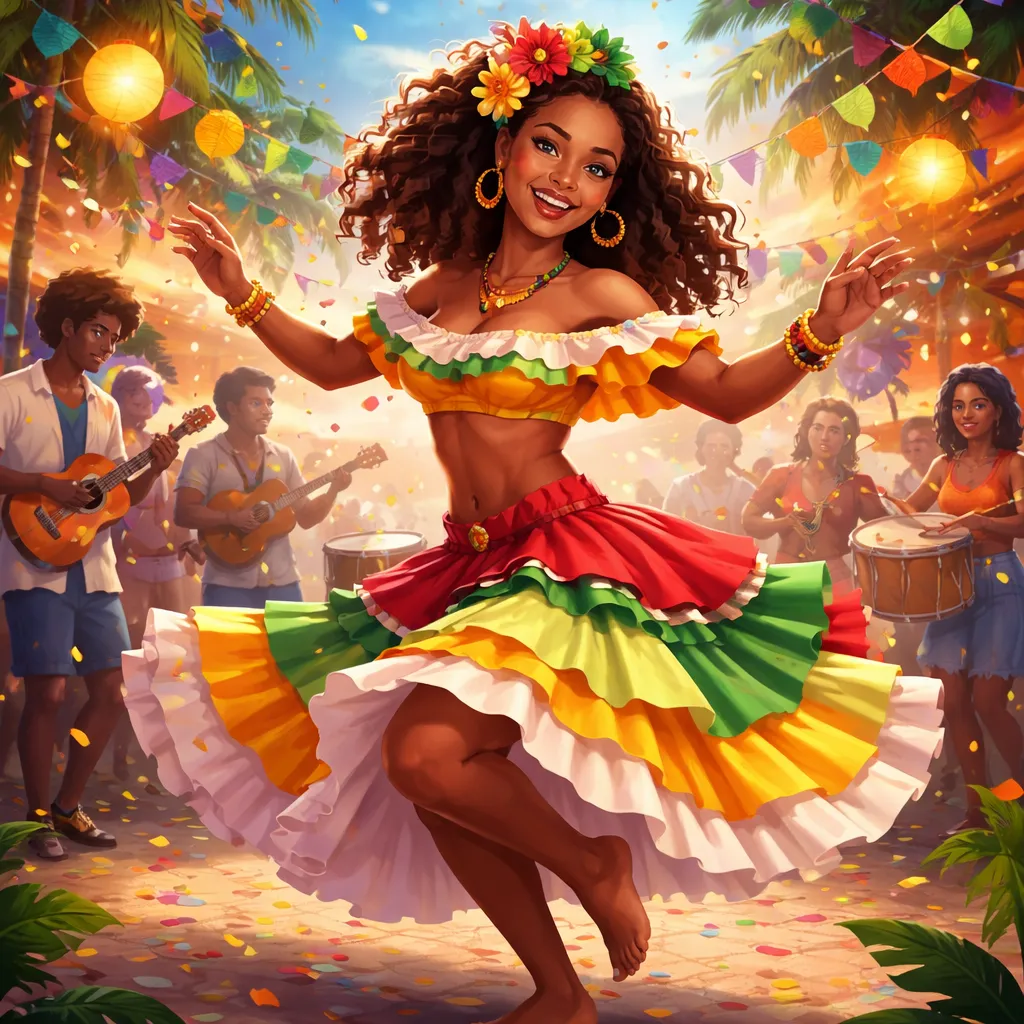

Have you ever heard music that makes your whole body want to move? A rhythm that makes you tap your feet and clap your hands? In Brazil, there is a song that is pure movement and joy. It is a call to dance, a game of rhythm, and a celebration of a fun character. Let’s find the beat and learn the energetic, playful song “Samba Lelê.”
About the Song
Here are the classic, interactive lyrics of the traditional Brazilian children’s song. This is the most common and lively version:
Samba Lelê está doente,
Está com a cabeça quebrada.
Samba Lelê precisava
É de umas boas palmadas.
Samba, samba, samba, Lelê!
Samba, samba, samba, Sinhá!
Samba, samba, samba, Lelê!
Pisa na barra da saia, Sinhá!
English Translation:
Samba Lelê is sick,
Has a headache.
Samba Lelê needed
Was some good spanks. (Note: In the playful context, this refers to clapping/stamping to the rhythm to “cure” her.)
Samba, samba, samba, Lelê!
Samba, samba, samba, Sinhá!
Samba, samba, samba, Lelê!
Step on the hem of the skirt, Sinhá!
This is a classic Portuguese-language children’s circle game and song from Brazil, deeply connected to the culture of Samba. The song talks about a character named “Samba Lelê,” who might be a dancer, and “Sinhá,” an old-fashioned, respectful way to say “Miss” or “Madam.” The lyrics are playful and silly. It says Samba Lelê is “sick with a headache,” and the “cure” is to samba and clap! The song quickly turns into a cheerful chant to dance (“Samba, samba, samba!”). The melody is incredibly catchy, rhythmic, and perfect for clapping and dancing in a circle.
What the Song is About
The song is a funny, playful excuse to dance and make music together. Imagine a dancer named Samba Lelê. The song starts by saying, “Samba Lelê is sick, has a headache.” You might picture Lelê feeling tired and lying down. But then, the song gives a funny “cure”: “Samba Lelê needed was some good palmadas.” In the context of the game, “palmadas” means claps—loud, rhythmic hand claps to the beat of the music. The idea is that the music and dance will make the headache go away!
Then, the cure begins! The music changes. Everyone starts chanting: “Samba, samba, samba, Lelê! Samba, samba, samba, Sinhá!” You shout for Lelê and Sinhá to dance. You clap your hands to the strong beat. Finally, you sing, “Step on the hem of the skirt, Sinhá!” This is a playful instruction for the dancer to move her feet so much in the samba rhythm that she steps on the hem of her own long, twirly skirt! The song is not a real story; it is a fun, rhythmic game about using dance as medicine for boredom or sadness, full of energy and laughter.
Who Made It & Its Story
“Samba Lelê” is a traditional Brazilian folk song and circle game for children, part of the rich oral tradition of “brincadeiras cantadas” (sung games). Its origins are in the playful, rhythmic world of Brazilian folk traditions, mixing Portuguese words with the irresistible beat of Samba rhythms. The character “Samba Lelê” is a legendary figure in Brazilian folklore, often represented as a skilled samba dancer, and the song celebrates her. The song is a joyful introduction for children to the rhythms, movements, and communal spirit of Samba, a dance and music style that is at the heart of Brazilian cultural identity, especially during celebrations like Carnival.
This vibrant song is loved for three energetic reasons. First, it is an incredibly fun and simple way for children to engage with the core rhythm of Samba through clapping, chanting, and simple dance moves. Second, it uses playful, silly lyrics that tell a mini-story and then explode into pure rhythmic celebration, making it memorable and engaging. Third, it is a fantastic group activity that builds community, coordination, and a sense of shared joy, as everyone claps and chants together in a circle.
When to Sing It
This song is perfect for any time you need energy and movement. You can sing and dance to it at a birthday party, forming a circle and clapping while some friends dance in the middle. You can chant it during a playdate to get the wiggles out, turning the room into a mini Carnival parade. You can also clap and sing it in the car or on a walk, turning steps into samba beats.
What Children Can Learn
This rhythmic, joyful song is a wonderful teacher about music, movement, and Portuguese language.
Vocabulary
The song teaches us words for dance, actions, and parts of the body in Portuguese. “Samba” is both a famous Brazilian dance and music style and the verb meaning “to dance the samba.” “Lelê” is a name, like a nickname for a dancer. “Is sick” (está doente) means not feeling well. “Has a headache” (está com a cabeça quebrada) literally means “has a broken head,” a funny way to say a bad headache. “Needed” (precisava) means required. “Some good claps/spanks” (umas boas palmadas) refers to hand claps to the beat. “Miss/Madam” (Sinhá) is a respectful title for a woman. “Step” (Pisa) means to put your foot down. “On the hem” (na barra) means on the bottom edge. “Of the skirt” (da saia) is the clothing a dancer might wear.
Let’s use these words! You can say, “My friend and I love to samba to happy music.” Or, “I have a headache, I need to rest.” New word: Rhythm. This is a strong, regular, repeated pattern of sound or movement, like the clapping beat in “Samba Lelê.”
Language Skills
This song is a great lesson in using the verb “to be” in Portuguese, specifically the word “está,” which is used for temporary states or conditions, like feelings or locations.
Concept Definition: The verb “to be” is a very important word that tells us what someone is or how they are. In Portuguese, there are two main verbs for “to be”: “ser” and “estar.” The song uses “estar” (seen here as “está”). We use “estar” for feelings, locations, and temporary conditions. It’s like a snapshot of how someone is right now.
Features and Types: Look at “estar” in the song. The first line is: “Samba Lelê está doente.” This means “Samba Lelê is sick.” Being sick is a temporary condition; she won’t be sick forever. The next line is: “Está com a cabeça quebrada.” This means “(She) is with a broken head (has a headache).” Having a headache is also a temporary feeling. The word “está” tells us about her current, temporary state.
How to Spot Them: Here is a simple “feeling or place finder” trick. Ask: “Is the sentence telling me how someone feels right now or where something is right now?” If the answer is yes, you often use “estar.” Look for words that describe temporary things like “happy,” “sad,” “tired,” “here,” or “there.” In the song, “doente” (sick) is a feeling, so it uses “está.”
How to Use Them: A great way to say how you feel is the “right now feeling recipe”. The pattern is: [Person] + [está] + [Feeling or Temporary State].
Example from the song: “Samba Lelê está doente.” (Samba Lelê is sick.)
Example you can make: “Eu estou feliz.” (I am happy.) or “O livro está na mesa.” (The book is on the table.)
Sounds & Rhythm Fun
Listen to the infectious, syncopated rhythm of the melody. This is the rhythm of Samba! The first part of the song has a melody that tells the silly story. Then, the rhythm changes for the chant: “Samba, samba, samba, Lelê!” This part is all about the beat. The repetition of “Samba” three times creates a driving, exciting pattern that makes you want to move. The names “Lelê” and “Sinhá” have strong, open vowel sounds (eh, ah) that are perfect for shouting in rhythm. The clapping that goes with the song (“palmadas”) adds a strong percussion sound.
The rhythm is lively, upbeat, and makes your body sway. The clear, repetitive chant in the second half is incredibly easy to remember and helps everyone join in at the same time, creating a powerful group sound. This call-and-response rhythm is perfect for creating new dance chants. You can write your own “Samba” chant! Use the same rhythm. Try: “Samba, samba, samba, amigo! Samba, samba, samba, agora! Samba, samba, samba, amigo! Bate palmas com vigor!” (Samba, samba, samba, friend! Samba, samba, samba, now! Samba, samba, samba, friend! Clap your hands with strength!)
Culture & Big Ideas
“Samba Lelê” is a joyful gateway into Brazil’s most famous cultural export: Samba music and dance, and the huge celebration of Carnival. Samba is more than just music; it is a community activity that brings people together with drums, singing, and dancing. During Carnival, giant parades with “escolas de samba” (samba schools) fill the streets with this exact kind of rhythm and energy. This song is like a tiny, child-friendly piece of that huge party, teaching kids the joy of moving together to a shared beat.
The song conveys three important ideas. First, it shows how music, dance, and community are connected as a form of joy and even “medicine” for feeling down. The “cure” for Lelê’s headache is to dance and clap! Second, it teaches body coordination and rhythmic confidence through simple, repetitive chants and movements. Third, it celebrates playfulness and humor, using silly problems (a broken head!) and funny solutions (dancing it away!) to create a lighthearted, fun atmosphere.
Values & Imagination
Imagine you are at a big, colorful street party—a Carnival parade! You are dressed in a bright costume. The drums are beating: “Tum-ta-tum, tum-tum!” You hear the call: “Samba, samba, samba, Lelê!” You start to move. Your feet tap quickly. Your hips sway side to side. Your hands clap above your head. You are dancing with hundreds of people, all moving to the same happy rhythm. How do you feel? Tired? No! You feel full of energy and joy! Now, imagine you are Samba Lelê. Your head hurts, but your friends start to clap and sing for you. The rhythm enters your body. You start to tap your foot. You smile. You get up and dance, and your headache flies away! Draw the dance. Draw yourself or Samba Lelê in the middle of the page. Draw lines and shapes around to show movement. Draw musical notes in the air. Use bright colors for the clothes. This captures the song’s energy.
The song encourages using movement and music to express joy and feel better. It shows that dancing is something we can do together with friends. A wonderful activity is to have a “Samba Circle.” Gather friends or family. Stand in a circle. Play the song or just chant “Samba, samba, samba, Lelê!” together. Everyone can do a simple samba step: step to the right, tap left foot; step to the left, tap right foot. Clap on the beats. Feel the shared rhythm and energy. This turns the song into a shared experience of joy.
So, from the funny complaint of a headache to the explosive, joyful chant of the dance, this song takes you on a rhythmic journey from stillness to movement. It is a vocabulary lesson in feelings, dance, and body parts. It is a language lesson in talking about how you feel right now. It is a music lesson in the exciting, syncopated rhythm of Samba. “Samba Lelê” teaches us that music and dance are powerful, that moving together brings joy, and that sometimes the best cure for a low mood is a good beat and a happy shout with friends.
Your Core Takeaways
You are now an expert on the song “Samba Lelê.” You know it is a traditional Brazilian circle game and dance song that uses a silly story to get everyone moving to a samba rhythm. You’ve learned Portuguese words like “samba,” “doente,” “cabeça,” and “palmadas,” and you’ve practiced using “está” to say how someone feels right now. You’ve felt its infectious, clapping rhythm and created your own dance chant. You’ve also discovered the song’s message about dance as joy, the power of community rhythm, and the fun of playful, physical music.
Your Practice Missions
First, be a “Rhythm Doctor.” The song says Samba Lelê’s cure was clapping and dancing. Your mission is to be a doctor for a quiet moment. Next time you or a friend feels a little bored or quiet, “prescribe” the “Samba Lelê” cure. Put on some music (or just chant), clap the rhythm, and do three silly dance moves. See if it changes the feeling in the room. This mission helps you use the song’s idea of music as medicine.
Second, create a “Sinhá’s Skirt.” The song says “Pisa na barra da saia, Sinhá!” (Step on the hem of the skirt, Sinhá!). Imagine that long, twirly skirt. Find a scarf, a towel, or a piece of fabric. Tie it around your waist like a skirt. Now, try to dance and move your feet quickly like in a samba. Can you make the skirt’s hem swing? Can you pretend to step on it? This playful movement connects you to the song’s final, funny instruction and lets you move to the rhythm.