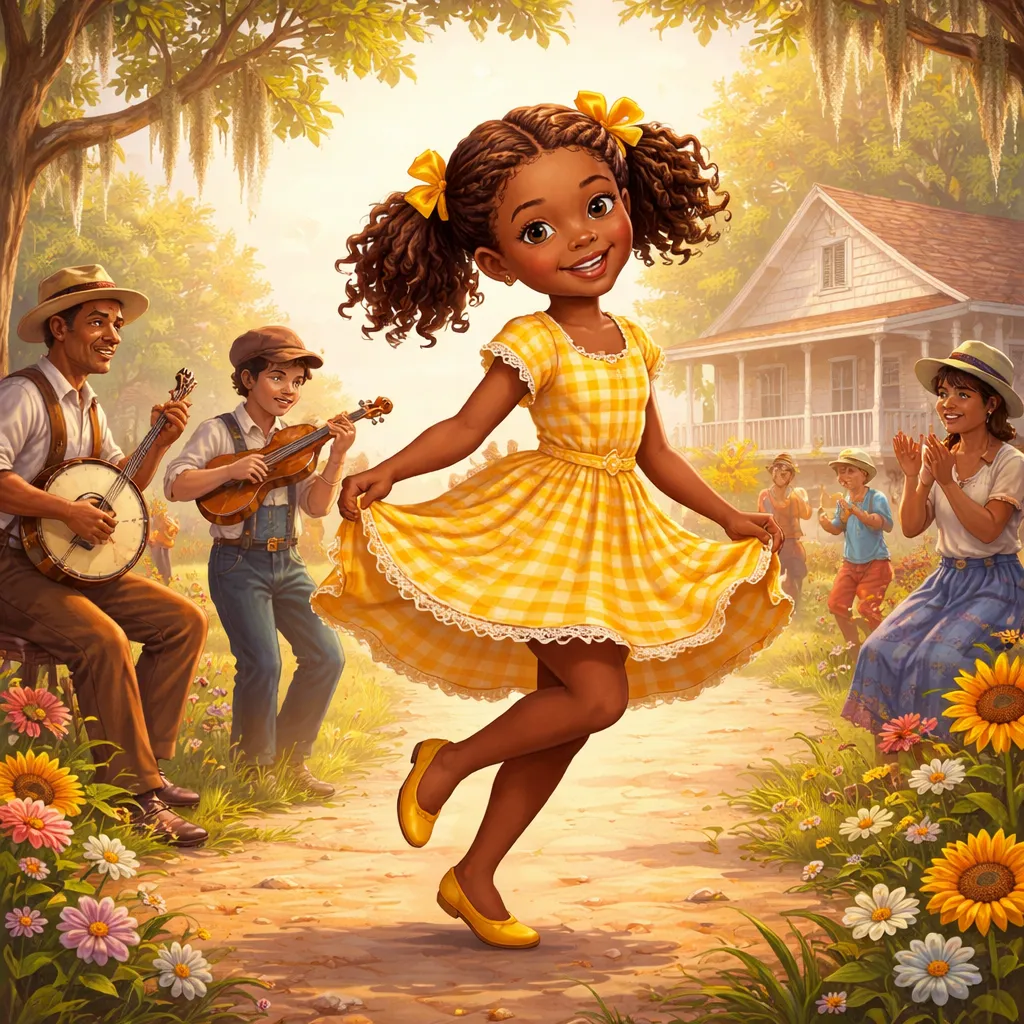

Have you ever had a friend with a name that is just so fun to say that you want to make a little song about it? Maybe you clap and chant their name on the playground. A long, long time ago, someone made a very catchy, bouncy song about a girl with a fun name. It’s a song that makes you want to clap, dance, and call out. Let’s learn about the folk song “Li’l Liza Jane.”
About the Song
Let’s read the rhythmic, name-filled words of this classic tune.
I know a gal, her name is Liza,
Li’l Liza, Li’l Liza Jane.
I know a gal, her name is Liza,
Li’l Liza, Li’l Liza Jane.
Oh, Liza, Li’l Liza Jane.
Oh, Liza, Li’l Liza Jane.
I’m gonna take her to the ball, Liza,
Li’l Liza, Li’l Liza Jane.
I’m gonna take her to the ball, Liza,
Li’l Liza, Li’l Liza Jane.
Oh, Liza, Li’l Liza Jane.
Oh, Liza, Li’l Liza Jane.
This song is a traditional American folk song, also known as “Little Liza Jane.” It became a standard in early jazz and Dixieland music. The song is built on a very simple, repeating structure. It introduces a girl named Liza, often called “Li’l” (little) Liza Jane. The singer declares that they know her and then makes a plan to take her to a ball, which is a big, fancy dance party. The song is often sung in a call-and-response style, where a leader sings a line and a group answers. Its upbeat, simple melody made it perfect for dancing, clapping, and becoming a playground chant.
What the Song is About
The song paints a cheerful, simple picture. The singer is talking about a girl they know. Her name is Liza, and she is sometimes called “Li’l Liza Jane,” which makes her sound sweet and young. The singer repeats her name many times because it’s fun to say and easy to remember.
Then, the singer shares a happy plan. They are going to take Liza to a ball. A ball is a special event where people dress up and dance. This shows that the singer likes Liza and wants to do something fun with her. The song doesn’t tell a long story with problems or endings. It’s a short, joyful celebration of a person and a plan. It’s about friendship, excitement, and the fun of repeating a catchy name and a simple idea.
Who Made It & Its Story
“Li’l Liza Jane” is a traditional folk song, so its original author is unknown. It likely has roots in African American folk music from the southern United States in the late 19th or early 20th century. The song was first published in 1916. It became a huge hit in the 1920s jazz age, recorded by many early jazz bands. Its simple structure made it easy for musicians to improvise around, and its catchy chorus made it a favorite for audiences to clap and sing along to. The song’s journey from folk tune to jazz standard shows how music can evolve and bring people together for pure, simple fun.
This song has remained a favorite for three bouncy reasons. First, its melody and rhythm are incredibly catchy, upbeat, and easy to learn, making it impossible not to tap your feet. Second, it uses wonderful repetition and a fun name that gets stuck in your head in a happy way. Third, it is a perfect song for call-and-response and group participation, which builds a sense of community and shared joy, whether in a music class, at a party, or on the playground.
When to Sing It
This song is perfect for energetic, group fun. You can sing it while jumping rope or playing hopscotch, using the rhythm for your game. You can chant it as a family while cleaning up toys, making the work go faster. You can also sing it as a silly greeting, substituting the name “Liza” for the name of a friend or family member you’re happy to see.
What Children Can Learn
This simple, joyful song is a bundle of lessons about language and music. Let’s see what we can learn.
Vocabulary
The song teaches us casual and descriptive words. “Li’l” is a short, informal way of writing and saying “little.” “Liza” and “Jane” are common first names for girls. A “gal” is an old-fashioned, casual word for a girl or young woman. A “ball” is a large, formal party where people dance. “Gonna” is a casual way of saying “going to.”
Let’s use these words! You can say, “My li’l brother is learning to walk.” Or, “We are gonna have a picnic tomorrow.” New word: Nickname. This is a friendly, informal name for someone. “Li’l Liza Jane” is like a nickname.
Language Skills
This song is a great lesson in using the simple present tense to state facts and “gonna” for future plans. The song states a simple fact in the present: “I know a gal, her name is Liza.” This is how we talk about things that are true now.
The singer then uses “gonna” (going to) to talk about a future plan: “I’m gonna take her to the ball.” This is a very common, informal way to express the future. The song also practices direct address by talking right to Liza: “Oh, Liza…” and uses repetition to make the name and the plan memorable.
Sounds & Rhythm Fun
Listen to the bouncy, skipping, cheerful rhythm of the melody. The song is in a lively 4/4 time. The repetition of the name “Li’l Liza Jane” is the most fun part. The song is often sung with a call-and-response pattern. The lyrics have a clear, catchy rhyme: “Liza” and “Liza,” “Jane” and “Jane,” “ball” and “ball.”
The rhythm is steady and peppy. Try clapping on the beat: I KNOW a GAL, her NAME is LI-za. The melody uses just a few notes and is based on a very simple, repeating pattern. This simple, repetitive, and energetic musical pattern is what makes the song so easy to remember and so fun to sing. You can write your own name song! Use the same bouncy rhythm. Try: “I know a friend, his name is Ben, Li’l Benjy, Li’l Benjy Ben. I’m gonna play some ball with Ben, Li’l Benjy, Li’l Benjy Ben.”
Culture & Big Ideas
“Li’l Liza Jane” is a classic example of early American jazz and folk music crossover. It comes from a time when music was shared in communities, at dances, and in parks. The song reflects the social joy of the jazz age, a time when new music made people want to move. It connects to the tradition of using songs to celebrate everyday people and simple pleasures. The song’s structure is rooted in African American musical traditions like call-and-response, which highlight community participation. It is a musical snapshot of a time of creativity and fun.
The song conveys three simple but important ideas. First, it’s about celebrating individuals. The whole song is built around the name and presence of one person, Liza, teaching us that it feels good to be noticed and sung about. Second, it expresses anticipation for a happy event. The plan to go to the ball is a small, exciting future hope that gives the song its energy. Third, it highlights the joy of participation and repetition. The song is designed for everyone to join in, and the repeating lines make it easy and satisfying, showing that sometimes the most fun comes from doing something simple together.
Values & Imagination
Imagine Li’l Liza Jane. What does she look like? Is she wearing a special dress? How does she feel having a song about her? Now, imagine the ball. What does it look like? A big hall with lights? People dancing? What music is playing? Draw a picture of the song. On one side, draw Liza with a big smile. On the other side, draw the singer in nice clothes, holding out a hand to lead her to a big, glittering ballroom. Draw musical notes floating around them. This shows the excitement of the song.
The song encourages us to notice and appreciate our friends, to look forward to fun events, and to find joy in singing together. A lovely idea is to have a “Name Chant” circle. With your family, sit in a circle. One person says their name in a rhythmic way (like “Li’l Emma, Li’l Emma Lou”). Everyone else repeats it back with the same rhythm. Go around the circle. This builds on the song’s celebration of names and rhythm.
So, as the last “Li’l Liza Jane” fades, think about the cheerful energy of this old tune. It is a vocabulary lesson in names and casual talk. It is a grammar lesson in stating facts and making future plans. It is a music lesson in a bouncy, call-and-response rhythm. From the first introduction of Liza to the final plan for the ball, it wraps lessons in celebration, anticipation, and shared fun in a tune that makes you want to clap, dance, and sing a friend’s name. “Li’l Liza Jane” teaches us that friends are worth singing about, that looking forward to fun is half the joy, and that the simplest songs are often the most fun to share.
Your Core Takeaways
You are now an expert on the song “Li’l Liza Jane.” You know it is a traditional American folk and jazz song about a girl and a plan to go to a ball. You’ve learned words like “li’l,” “gal,” and “gonna,” and you’ve practiced the simple present tense and informal future with “gonna.” You’ve felt its bouncy, clapping rhythm and created your own name verse. You’ve also discovered the song’s place in jazz history and its messages about celebrating individuals, anticipating fun, and the joy of group participation.
Your Practice Missions
First, host a “Li’l Liza Jane” parade. With your family, form a line and march around your home. One person is the caller, singing the verses. Everyone else is the chorus, singing back “Li’l Liza Jane!” Clap and stomp to the beat as you march. This brings the song’s energy to life.
Second, design a “Ball Invitation.” The singer is going to take Liza to a ball. Design a fancy, colorful invitation to this imaginary ball. Who is it for? (You can invite a family member, a toy, or a friend.) Where is the ball? What will you do there? Decorate your invitation and present it. This activity lets you imagine the fun event the song promises.