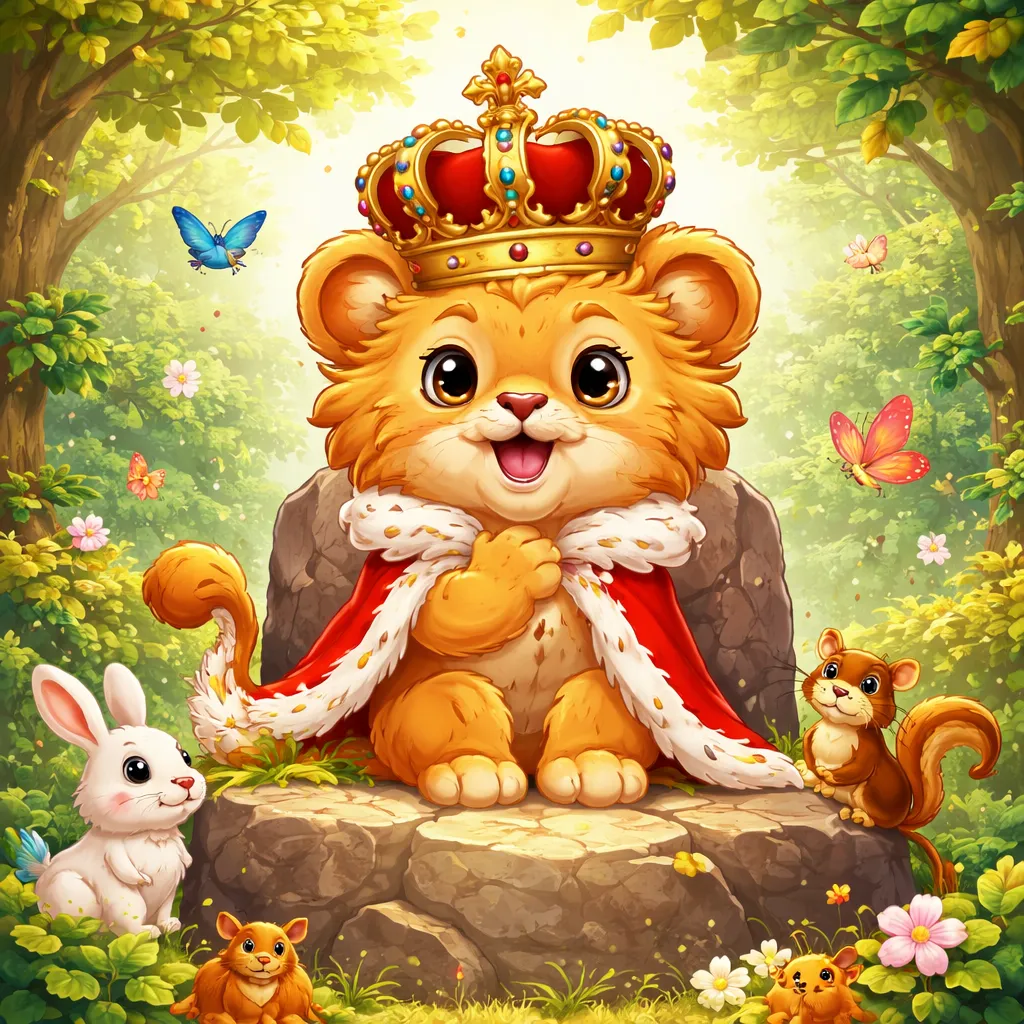

Have you ever seen a picture of a big, strong cat with a magnificent mane of hair around its head? It doesn’t meow—it lets out a powerful roar that can be heard from far away! This animal is the lion, often called the king of the jungle. In Korea, a country that values strength and character, there is a proud song about this noble animal. Let’s roar with the Korean Song: The Little Lion (사자).
About the Song
Here is a mighty verse from this beloved song in Korean and English:
사자야 사자야 멋진 사자야
(Sajaya sajaya meotjin sajaya)
Lion, lion, splendid lion
큰 울음소리 포효하네
(Keun ureumsori pohyohane)
Roaring with a great cry
가족을 지키는 우리 사자
(Gajogeul jikineun uri saja)
Our lion who protects its family
동물들의 왕이네
(Dongmuldeurui wangine)
The king of animals
This song’s original Korean name is “사자” (Saja), which means “lion.” It is a popular and powerful Korean children’s song. The song is a tribute to the lion’s majesty and role. The music is often strong, proud, and full of grandeur. The Korean Song: The Little Lion (사자) is a musical crown, celebrating the lion’s courage, its protective nature, and its respected place in the animal world.
What the Song is About
The song is a declaration of the lion’s noble qualities. First, we address it with admiration: “Lion, lion, splendid lion.” We hear its most famous sound: “Roaring with a great cry.” The roar is the lion’s way of speaking to its territory. The song then tells us about its most important job: “Our lion who protects its family.” The lion is not just fierce; it is a guardian. Finally, we acknowledge its title: “The king of animals.” This title comes from its strength and its role as a protector. The whole song is about respect for the lion’s power, its sense of duty, and the leadership it represents.
Who Made It & Its Story
This song is a modern Korean children’s song, created to teach about animals and values. While the specific creator isn’t widely known, it reflects a global understanding of the lion as a symbol. Lions are not native to Korea, so the song comes from a place of learning about the world’s great animals. The Korean Song: The Little Lion (사자) is loved for three regal reasons. First, it presents the lion not just as a scary predator, but as a noble protector and family leader, which are positive values. Second, it is exciting and fun to sing, especially when you get to let out a big, pretend roar. Third, its melody is often bold and declarative, easy to remember, and makes children feel strong and proud when they sing it.
When to Sing It
You can sing this song while standing tall and strong, puffing out your chest and giving your best, gentle roar. It’s perfect to chant during a game where you pretend to protect your toys or your friends. You could also sing it with a group, taking turns being the “lion” who leads and protects the “pride.”
The Korean Song: The Little Lion (사자) teaches us about noble strength. But a true leader is also wise and learns. This song is a lesson in leadership. It teaches us new words, how to express actions with power, and the qualities of a good protector. Let’s explore this royal lesson.
What Children Can Learn
Vocabulary
This song helps us learn words for strength, family, and leadership.
Pride: A group of lions living together. A lion family is called a pride.
Mane: The long, thick hair around a male lion’s neck. The lion’s mane makes it look majestic.
Guardian: A defender or protector. The lion is the guardian of its pride.
Courage: The ability to do something that frightens you; bravery. A lion shows courage.
Authority: The power to give orders and make decisions. The lion has authority in its territory.
Noble: Having high moral principles; magnificent. The song describes the lion as splendid or noble.
Language Skills
This song is a great example of using the Present Simple Tense for General Truths and Characteristics. We use this tense to talk about facts, habits, and things that are always true.
What Is It?: Think of the Present Simple as the “Always Is” tense. It describes permanent states or repeated actions. The lion is the king. It roars.
Finding the Secret: Look for verbs that describe a general fact or a habitual action. They don’t have “-ing” and are in their base form (with an ‘s’ for he/she/it). Ask: “Is this a fact that is always true?”
Using It:
◦   Formula: [Subject] + [verb] (with 's' for he/she/it).

◦   Examples: “The sun rises in the east. A lion protects its family.”

◦   In the song: “Our lion protects its family. It is the king.” These are stated as general truths about the lion.
Sounds & Rhythm Fun
Listen to the proud, marching rhythm. The Korean Song: The Little Lion (사자) often has a strong, steady, and confident beat. It might sound like the deliberate steps of a lion patrolling its territory. The melody is bold and often repeats, making it easy to remember. This powerful, regal rhythm makes you feel strong and helps the lyrics about protection and leadership stick in your mind. You can use this same proud, steady rhythm to make up a song about any leader or protector you know.
Culture & Big Ideas
In Korea, the lion is often seen as a mythical guardian. Stone statues of lions, called 해태 (Haetae), are found at palaces like Gyeongbokgung to ward off evil spirits. The song connects to this idea of the lion as a protective symbol. The Korean Song: The Little Lion (사자) teaches three important ideas. First, True Strength Protects: Real power is not for bullying; it is for guarding those who are weaker, like the lion protecting its pride. Second, Leadership is Responsibility: Being a “king” or a leader means taking care of others, not just enjoying power. Third, The Importance of Family: Even the mightiest king’s most important job is keeping its family safe.
Values & Imagination
Imagine you are the little lion. What does it feel like to let out a roar that everyone hears? How do you make sure your family feels safe? This song teaches you that courage is best used to help and protect others. It shows that being a leader means being responsible and kind, not just being the strongest or loudest. A simple idea: Think of one way you can be a “protector” today. Maybe you can stand up for a friend, help a sibling, or take care of a pet. You are using your inner courage.
Your Core Takeaways
The Korean Song: The Little Lion (사자) is a powerful lesson in courage, protection, and noble leadership. You learned words like “pride,” “mane,” “guardian,” and “courage.” You discovered how to use the Present Simple tense to state general facts and truths. You marched to the song’s strong, proud rhythm. You also connected the lion to Korean guardian statues and the value of protection. Most importantly, the song teaches that true strength is gentle and protective, that leadership means taking care of your team, and that using your voice and courage for good is the most kingly thing you can do.
Your Practice Missions
- Be a “Fact Finder.” Choose an animal you like. Say two true facts about it using the Present Simple tense. Example: “An elephant has big ears. It eats plants.” This practices stating general truths.
- Create a “Protector’s Badge.” Design a medal or a badge for a protector. It could be for a lion, a firefighter, a teacher, or even yourself. Draw it and write one word on it that means “protection” or “courage.” Wear it or display it. Explain to someone what the badge means and why protectors are important. This turns the song’s lesson into a symbol of values.