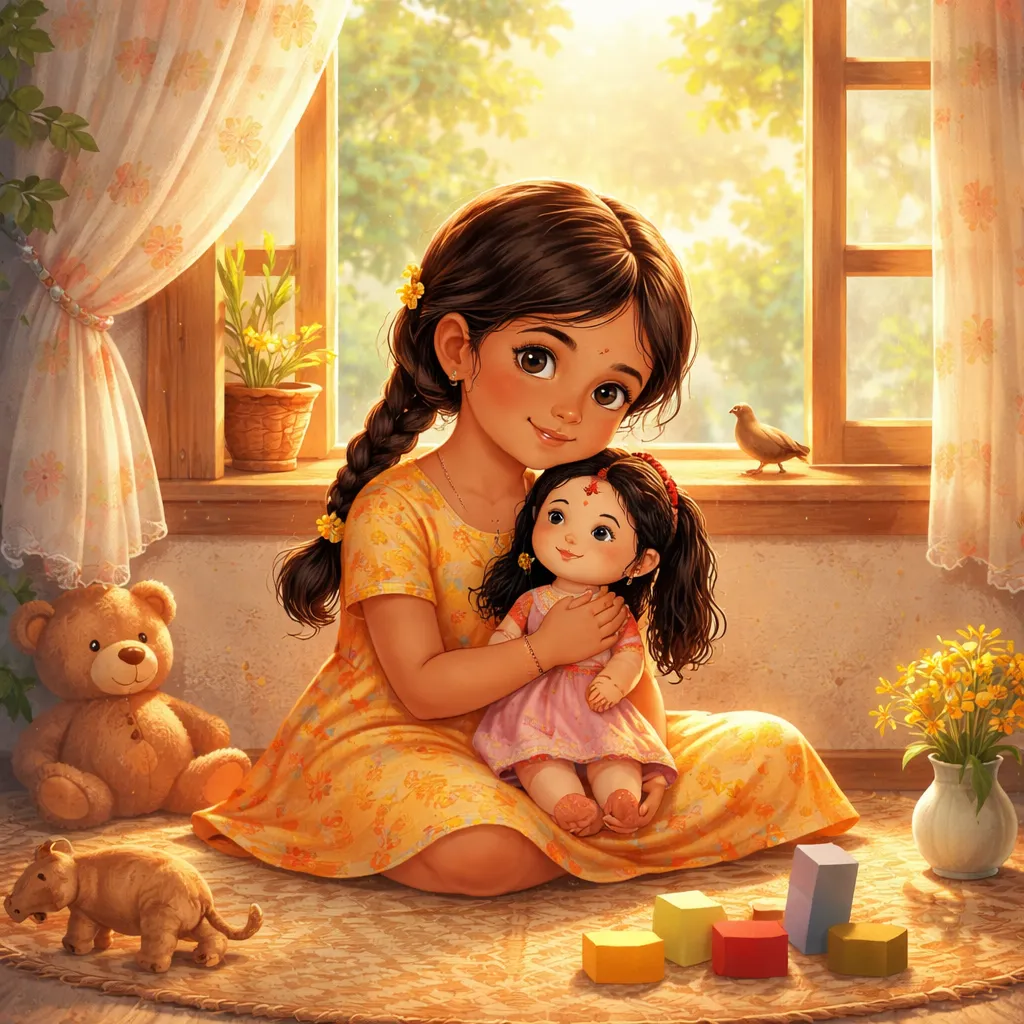

Do you have a special toy? A soft animal, a cool car, or maybe a doll that you like to talk to and play with? That toy is more than just plastic or cloth. It can be a friend who listens to all your stories. In Bangladesh and West Bengal, a region famous for its stories and art, there is a gentle song about such a friend. Let’s meet the Bengali Song: The Little Doll (পুতুল).
About the Song
Here is a sweet verse from this traditional song in Bengali and English:
পুতুল আমার, ছোট্ট পুতুল
(Putul amar, chhoto putul)
My doll, little doll
তোমার দুটি চোখে স্বপ্ন ভরা
(Tomar duti chokhe swapnom bhora)
Your two eyes are full of dreams
আমি তোমায় কোলে করি, গান শোনাই
(Ami tomay kole kori, gaan shonai)
I hold you in my lap, I sing to you
তুমি আমার সাথী
(Tumi amar sathi)
You are my companion
This song’s original name is “পুতুল” (Putul), the Bengali word for “doll.” It is a cherished traditional Bengali children’s song. The song is a loving conversation between a child and their doll. The music is soft, gentle, and feels like a lullaby. The Bengali Song: The Little Doll (পুতুল) is a musical hug, celebrating the deep friendship a child can have with a beloved toy and the caring feelings that grow from that friendship.
What the Song is About
The song is a quiet moment of love and care. First, the child speaks directly to the doll, calling it “my doll, little doll.” The child looks closely and sees that the doll’s “two eyes are full of dreams.” This means the child imagines the doll has its own hopes and stories. Then, the child shows how they care: “I hold you in my lap, I sing to you.” We can picture a child rocking the doll gently, humming a soft tune. The song ends with a simple truth: “You are my companion.” The doll is not just a toy; it is a true friend who is always there to listen and share quiet moments. The whole song is about tenderness, imagination, and the special bond between a child and their favorite thing.
Who Made It & Its Story
This song is a traditional Bengali folk song, passed down from grandparents to parents to children. The original creator is lost in time, because it belongs to every Bengali child who has ever held a doll. The song connects to the rich craft of doll-making in Bengal, from simple clay toys to elaborate cloth dolls. A time when dolls are especially celebrated is during Durga Puja, where beautiful clay dolls of the goddess are made and worshipped. The Bengali Song: The Little Doll (পুতুল) is beloved for three gentle reasons. First, it validates a child’s emotional world, showing that loving a toy is a real and important feeling. Second, it encourages nurturing behavior and empathy, as the child in the song acts as a caretaker. Third, its melody is incredibly soothing and simple, perfect for singing at bedtime or during quiet play, making its message of affection easy to remember and feel.
When to Sing It
You can sing this song softly while you are playing with your own doll or stuffed animal, maybe while brushing its hair or putting it to sleep. It’s perfect to hum during a quiet car ride or just before bed, thinking about your favorite things. You could also sing it with a friend, each of you holding your own “doll” and taking turns saying the lines.
The Bengali Song: The Little Doll (পুতুল) shows us a beautiful friendship. But friendships, even with toys, can teach us many things. This song is a gentle teacher. It introduces us to words for feelings and care, shows us how to talk about what belongs to us, and shares a piece of Bengali culture. Let’s sit down with our learning doll and see what lessons we can share.
What Children Can Learn
Vocabulary
This song helps us learn words for emotions, care, and friendship.
Companion: A friend or partner who you spend a lot of time with. Your doll can be a loyal companion.
Tenderness: Gentle, kind, and loving feelings or actions. Holding a doll shows tenderness.
Imagination: The ability to form pictures or ideas in your mind of things that are not real. You use your imagination when you pretend your doll can dream.
Nurture: To care for and protect someone or something while they are growing. Parents nurture children. You can nurture your doll.
Cherish: To love and care for someone or something very much. You cherish your favorite toy.
Empathy: The ability to understand and share the feelings of another. Thinking about your doll’s “dreams” is a form of empathy.
Language Skills
This song is a perfect example of using Possessive Pronouns to show who something belongs to. Words like “my,” “your,” and “our” are possessive pronouns.
What Are They?: Think of possessive pronouns as “ownership words.” They tell us who the owner is without using a name. “My doll” means the doll belongs to me. “Your eyes” means the eyes belong to you.
Finding the Secret: Look for words that come before a noun (person, place, or thing) and answer the question “Whose?” The word that answers is the possessive pronoun.
Using Them:
◦   Common possessive pronouns are: my, your, his, her, its, our, their.

◦   Formula: [Possessive Pronoun] + [Noun].

◦   Examples: “My book.” “Your turn.” “Our house.”

◦   In the song: “My doll... Your two eyes... You are my companion.” These words clearly show the close bond between the child and the doll.
Sounds & Rhythm Fun
Listen to the lullaby rhythm. The Bengali Song: The Little Doll (পুতুল) has a very slow, soft, and rocking rhythm. It sounds like a gentle heartbeat or a quiet sway. The melody uses few notes and repeats in a comforting way. This calm, repetitive rhythm helps create a safe, loving feeling and makes the short, sweet lyrics easy to memorize and whisper. You can use this same rocking, gentle rhythm to make up a lullaby for anything you care about—a pet, a plant, or even a favorite rock.
Culture & Big Ideas
This song connects to the deep cultural importance of dolls and storytelling in Bengal. A beautiful example is the tradition of পুতুল নাচ (Putul Naach), or puppet theater, where string puppets tell epic stories. The song reflects the idea of giving life and story to inanimate objects. The Bengali Song: The Little Doll (পুতুল) teaches three important ideas. First, Friendship Has Many Forms: A true friend can be anyone you love and trust, even if they don’t talk back. Second, Care Builds Character: Practicing being gentle and kind with a toy helps us learn to be gentle and kind with people. Third, Imagination is a Superpower: When you look at a doll and see dreams in its eyes, you are using your imagination, which is a powerful tool for creativity and understanding others.
Values & Imagination
Imagine you are the child in the song. What kind of dreams do you think are in your doll’s eyes? Adventures in space? A picnic in a flower field? This song teaches you the value of being a good friend and a gentle caretaker. It shows that taking time for quiet, loving moments is important. A simple idea: Find a small box or basket. Make a soft bed inside with a cloth or tissue. This is now your doll’s special bed. Place your doll in it and sing the song. You are practicing nurture and creating a ritual of care.
Your Core Takeaways
The Bengali Song: The Little Doll (পুতুল) is a tender lesson in friendship, empathy, and gentle care. You learned feeling words like “companion,” “tenderness,” and “nurture.” You discovered how to use possessive pronouns like “my” and “your” to show belonging. You felt the song’s soft, lullaby rhythm. You also connected the doll to Bengali traditions like puppet theater. Most importantly, the song teaches that true friendship is about love and attention, that taking care of things teaches us to be kind, and that our imagination can fill the world with beautiful stories.
Your Practice Missions
- Be a “Possessive Pronoun” Storyteller. Hold your doll or a favorite toy. Tell someone three things about it using “my” and “your.” Example: “This is my doll. I like your blue dress. Will you be my friend today?” This helps you practice the language of belonging and friendship.
- Host a “Dreams in Their Eyes” Drawing Time. Draw a picture of your doll or stuffed animal. Then, draw a thought bubble above its head. Inside the bubble, draw the “dreams” you imagine it has—maybe it’s flying, eating cake, or exploring a jungle. Share your drawing and explain the dream. You are practicing empathy and imagination, just like the child in the song.