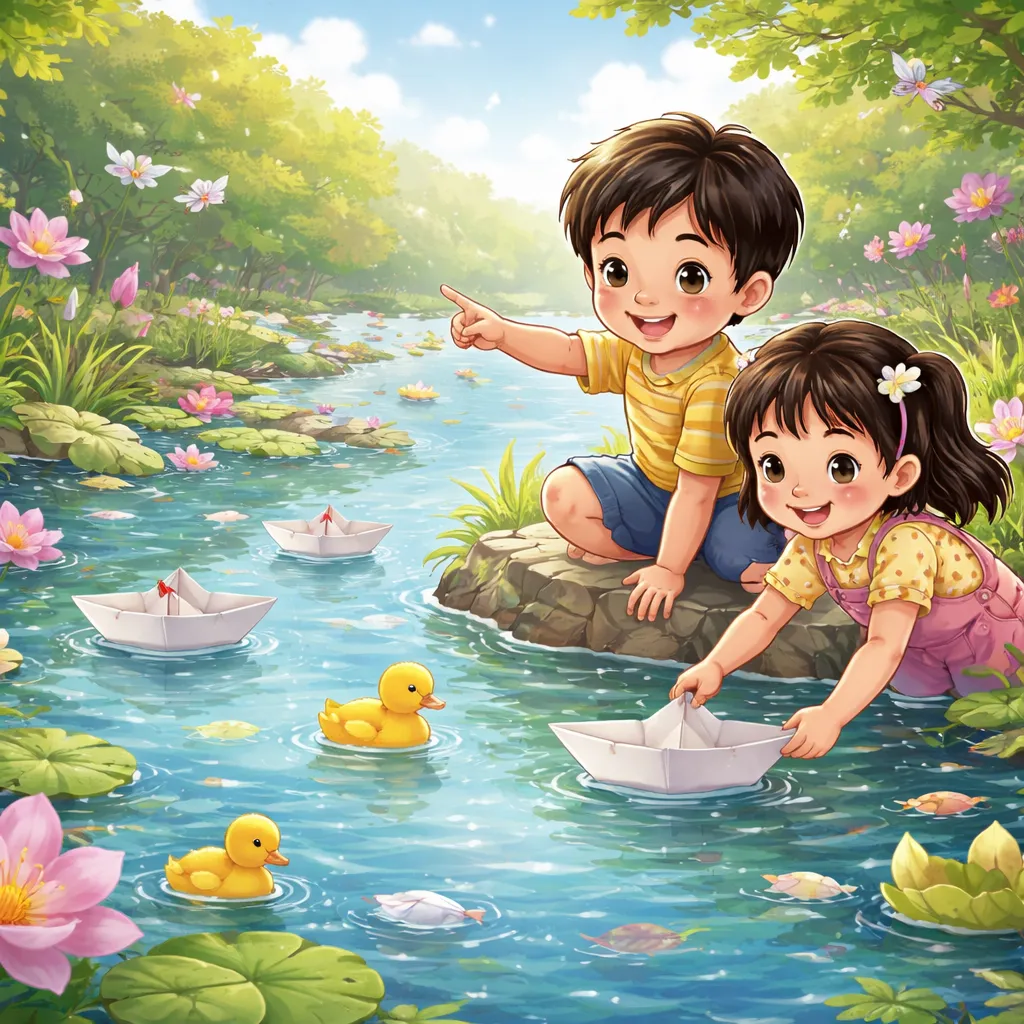

Some songs carry children's dreams across water. The Chinese Songs: Little Paper Boat (小纸船) does exactly that. This gentle song tells of a paper boat floating on rivers and streams, carrying hopes and wishes. For families learning English and Chinese together, this song offers a beautiful way to explore water words, imagination, and the simple joy of making something with our hands. Let us discover what makes this traditional song so special for young learners.
What Is the Story Behind This Famous Song?
The Chinese Songs: Little Paper Boat (小纸船) is a beloved children's song from China. It describes a child who folds a paper boat and sets it floating on water. The boat travels downstream, carrying the child's dreams and hopes.
Making paper boats is a traditional childhood activity across many cultures. Children learn to fold paper into simple boat shapes. They float them in puddles, streams, and bathtubs. Watching the boat sail away sparks imagination. Where will it go? What will it see?
In Chinese culture, water represents flow and change. Floating a paper boat can symbolize sending wishes into the world. Children imagine their boats reaching faraway places.
The song uses simple, poetic language. The paper boat is small and delicate. The water carries it gently. The child watches until it disappears around a bend.
The melody is gentle and flowing, like water itself. It moves smoothly, rising and falling like waves. Children often rock side to side while singing, imagining themselves on the boat.
Understanding this背景 helps families appreciate the song's connection to childhood imagination. It opens conversations about dreams, journeys, and the simple magic of water.
The Complete Lyrics of the Song
Reading the words helps us understand this gentle floating dream. Here are the lyrics to the Chinese Songs: Little Paper Boat (小纸船) in Chinese characters, pinyin, and English.
小纸船,小纸船,轻轻放在水上面
Xiǎo zhǐ chuán, xiǎo zhǐ chuán, qīng qīng fàng zài shuǐ shàng miàn
Little paper boat, little paper boat, gently place on water surface
风儿吹,浪花儿推,摇摇晃晃走向前
Fēng er chuī, làng huā er tuī, yáo yáo huàng huàng zǒu xiàng qián
Wind blows, small waves push, rocking and swaying move forward
小纸船,小纸船,带着梦想去远航
Xiǎo zhǐ chuán, xiǎo zhǐ chuán, dài zhe mèng xiǎng qù yuǎn háng
Little paper boat, little paper boat, carrying dreams go sailing far
穿过小河,绕过青山,要到大海看一看
Chuān guò xiǎo hé, rào guò qīng shān, yào dào dà hǎi kàn yī kàn
Go through small river, go around green mountain, want to go to big sea take a look
Learning New Words from the Song
The Chinese Songs: Little Paper Boat (小纸船) introduces many useful words. Let us explore them in both Chinese and English.
First, "小纸船" (xiǎo zhǐ chuán) means little paper boat. "小" (xiǎo) means small. "纸" (zhǐ) means paper. "船" (chuán) means boat. These three characters together create a clear picture.
"轻轻" (qīng qīng) means gently or lightly. Repeating the word makes the action even softer. This teaches children how Chinese uses repetition for emphasis.
"放" (fàng) means to place or put. "在水上面" (zài shuǐ shàng miàn) means on the water surface. "水" (shuǐ) is water, one of the most important Chinese characters.
"风儿吹" (fēng er chuī) means wind blows. "风" (fēng) is wind. "吹" (chuī) means blow. The "儿" (er) adds a gentle, affectionate tone.
"浪花儿推" (làng huā er tuī) means small waves push. "浪花" (làng huā) literally means wave flowers, a beautiful way to describe wave foam. "推" (tuī) means push.
"摇摇晃晃" (yáo yáo huàng huàng) means rocking and swaying. This repeated phrase sounds like the motion of a boat on water. Children love saying it.
"走向前" (zǒu xiàng qián) means walk forward or move ahead. The boat moves forward on its journey.
"带着梦想" (dài zhe mèng xiǎng) means carrying dreams. "带" (dài) means bring or carry. "梦想" (mèng xiǎng) means dreams. This phrase teaches that boats can carry more than people. They carry hopes too.
"去远航" (qù yuǎn háng) means go sailing far away. "远" (yuǎn) means far. "航" (háng) means sail or navigate.
"穿过小河" (chuān guò xiǎo hé) means go through small river. "穿" (chuān) means pass through. "过" (guò) means cross. "小河" (xiǎo hé) means small river.
"绕过青山" (rào guò qīng shān) means go around green mountain. "绕" (rào) means go around. "青山" (qīng shān) means green mountain.
"要到大海看一看" (yào dào dà hǎi kàn yī kàn) means want to go to big sea take a look. "大海" (dà hǎi) means big sea. "看一看" (kàn yī kàn) means take a look, showing the boat's curiosity.
Exploring Pronunciation and Rhythm
The Chinese Songs: Little Paper Boat (小纸船) offers wonderful practice with Mandarin tones and rhythm. The flowing melody matches the water theme perfectly.
Listen to "xiǎo zhǐ chuán" repeated. The tones go: xiǎo (third tone, falling then rising), zhǐ (third tone), chuán (second tone, rising). Three tones in sequence require careful practice.
The phrase "yáo yáo huàng huàng" uses second tone for "yáo" (rising) and fourth tone for "huàng" (falling). The repeated sounds imitate the rocking motion.
"chuān guò xiǎo hé" uses first tone for "chuān" (high level), fourth tone for "guò" (falling), third tone for "xiǎo", and second tone for "hé" (rising). This variety keeps the melody interesting.
Finding Grammar Patterns in the Lyrics
The Chinese Songs: Little Paper Boat (小纸船) offers useful grammar examples for Chinese learners. One pattern appears with the directional complements. "走向前" (zǒu xiàng qián) uses "向" (xiàng) to show direction. "穿过" (chuān guò) and "绕过" (rào guò) use "过" (guò) to show passing through or around.
The song uses "着" (zhe) in "带着" (dài zhe) to show an ongoing action. The boat carries dreams as it travels. This particle is essential for describing continuous states.
Another pattern appears with the desiderative "要" (yào) meaning want to. "要到大海看一看" shows the boat's desire. This word helps children express what they want.
The phrase "看一看" (kàn yī kàn) shows the verb reduplication pattern. Repeating the verb adds a sense of trying or doing briefly. This appears often in Chinese.
The song uses location words like "上面" (shàng miàn) meaning surface. These words help describe where things are.
Fun Learning Activities for the Whole Family
Listening to the Chinese Songs: Little Paper Boat (小纸船) can inspire many family activities. Here are some ideas to try together.
First, make paper boats together. Learn a simple origami boat fold. Use different colors and sizes of paper. Practice the Chinese words while folding. "纸" (zhǐ) for paper. "船" (chuán) for boat. This hands-on activity connects language to creation.
Second, float your boats. Find a safe place with water. A bathtub, a sink, a small stream, or a puddle after rain works. Gently place boats on water and watch them float. Use Chinese words from the song. "轻轻放" (gently place) and "摇摇晃晃" (rocking and swaying). This makes the song come alive.
Third, imagine where your boats will go. Will they go down a small river? Around a mountain? To the big sea? Draw maps of their journeys and describe them in Chinese. "小船去大海" (little boat goes to big sea). This builds imagination and narrative skills.
Creating Printable Materials at Home
Families can make simple learning tools based on the Chinese Songs: Little Paper Boat (小纸船). These activities help reinforce new ideas.
Create bilingual boat vocabulary flashcards. On one side, write the Chinese character and pinyin for boat words. Boat, 船. Water, 水. Wind, 风. Wave, 浪. Dream, 梦. On the other side, write the English word and draw a picture. Review these cards together during boat play.
Make a paper boat folding instruction sheet. Draw simple steps for folding a paper boat. Write key Chinese words at each step. "折纸" (fold paper), "翻过来" (turn over), "轻轻拉" (gently pull). This builds following directions in Chinese.
Create a fill-in-the-blank page using song lyrics in pinyin. Remove key words like "zhǐ chuán", "shuǐ", "fēng", "làng", "mèng xiǎng", and "dà hǎi". Leave blanks where those words belong. Listen to the song together and fill in the missing words. This builds listening and character recognition.
Connecting the Song to Daily Life
The Chinese Songs: Little Paper Boat (小纸船) connects to daily life through water and imagination. Every child has played with water. Every child has dreamed of faraway places.
Talk with your children about where water flows near your home. A stream? A river? A lake? The sea? Use Chinese words to describe them. "小河" (small river) or "大海" (big sea). This builds geography vocabulary.
The song also teaches about dreams. What do your children dream about? Where do they imagine going? Use Chinese to share these dreams. "我想去大海" (I want to go to the big sea) or "我的梦想是..." (my dream is...). This builds personal expression.
Parents can model imagination. When floating a paper boat, wonder aloud where it might go. "小船会看到什么?" (What will the little boat see?) This encourages children to imagine and use language.
Educational Games to Play Together
Games make learning with the Chinese Songs: Little Paper Boat (小纸船) exciting. Here are some simple games to try.
Play the boat race game. Make several paper boats. Float them in water and gently blow to make them move. Use Chinese to cheer them on. "快走,小船!" (Go quickly, little boat!) or "风吹啊吹" (wind blows and blows). This builds action vocabulary.
Try the journey storytelling game. One person starts a story about a paper boat's journey. "小船从小河出发" (little boat starts from small river). Next person adds a sentence. "它遇到一条大鱼" (it meets a big fish). Continue building the story. This builds narrative skills.
Play the water word game. Take turns naming things related to water in Chinese. River, lake, sea, rain, wave, drop. See how many you can name. This builds category vocabulary.
Why This Song Helps Language Learning
The Chinese Songs: Little Paper Boat (小纸船) helps learners in special ways. The gentle tempo makes words easy to hear. Each syllable is clear. This helps children catch new vocabulary without feeling rushed.
The repetition in the song reinforces key phrases. "小纸船" repeats at the beginning of verses. "摇摇晃晃" repeats the rocking motion. Repetition builds memory without effort.
The water theme connects to universal play experiences. Children everywhere have played with water and boats. This makes the Chinese words meaningful and memorable.
The dream theme captures imagination. Children love thinking about where boats might go. This engagement keeps them interested in the language.
Making Music Part of Your Routine
Families can make songs a regular part of bilingual learning. Choose one song each week to explore together. Listen during bath time or while playing with water.
The Chinese Songs: Little Paper Boat (小纸船) works perfectly for bath time. Play it while floating toys in the water. Let the music accompany water play.
Remember that language learning thrives in playful moments. When children associate Chinese with floating boats and flowing water, they learn naturally. They understand that words connect to their favorite activities.
Keep singing, keep folding paper boats, and keep sending dreams across the water together. In the great river of bilingual learning, every new word is like a little boat carrying your family forward on an exciting journey.