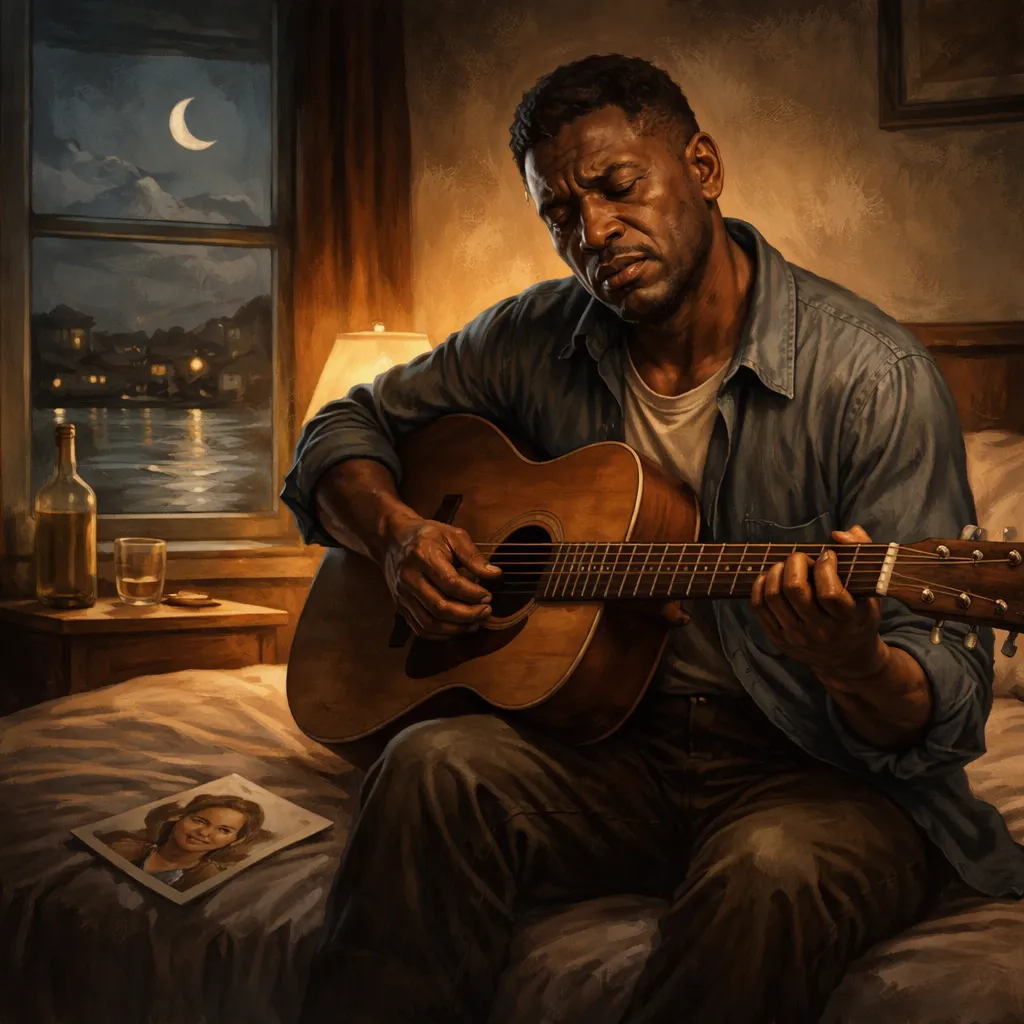

When the evening gets dark and quiet, sometimes our thoughts can feel a little heavy. We might think about mistakes we’ve made or people we miss. There is a very famous, beautiful song that turns that feeling of sadness into a gentle, musical sigh. It’s a song that sounds like a lullaby but carries a story of deep regret. Let’s learn about the folk ballad “Goodnight, Irene.”
About the Song
Let’s read the sorrowful, poetic words of this classic song.
Irene, goodnight, Irene, goodnight,
Goodnight, Irene, goodnight, Irene,
I’ll see you in my dreams.
Last Saturday night I got married,
Me and my wife settled down.
Now me and my wife are parted,
I’m gonna take a little stroll downtown.
Sometimes I live in the country,
Sometimes I live in the town.
Sometimes I take a great notion
To jump into the river and drown.
Irene, goodnight, Irene, goodnight,
Goodnight, Irene, goodnight, Irene,
I’ll see you in my dreams.
I asked your mother for you,
She told me you was too young.
I wish to the Lord I’d never seen your face,
Or heard the lying tongue that you sung.
Irene, goodnight, Irene, goodnight,
Goodnight, Irene, goodnight, Irene,
I’ll see you in my dreams.
This song is a traditional American folk ballad. The most famous version was performed and adapted by the legendary folk and blues musician Huddie William Ledbetter, known as Lead Belly, in the 1930s. The song is a slow, melancholic tune that mixes the form of a lullaby with a story of heartbreak, regret, and troubled thoughts. The singer addresses a woman named Irene, saying goodnight and that he will see her in his dreams. The verses tell of a failed marriage, thoughts of despair, and a bitter quarrel with Irene’s mother. The song became a national hit in 1950 when the folk group The Weavers recorded a cleaned-up version, introducing its haunting melody to millions.
What the Song is About
The song paints a picture of a man who is very sad and lonely. He is saying goodnight to Irene, a woman he once loved. The chorus is gentle, like a lullaby, but also very final, as if he is saying a forever goodbye and can only be with her in dreams.
The verses explain his sadness. He got married last Saturday, but he and his wife have already parted ways. Now he wanders the town alone. His feelings are so heavy that he sometimes thinks about jumping into a river. He also remembers asking Irene’s mother for permission to marry her, but her mother said she was too young. This memory makes him so upset that he wishes he had never met Irene or heard her “lying tongue.” The song is about the pain of lost love, the weight of regret, and the struggle with very dark feelings, all wrapped in a deceptively soft melody.
Who Made It & Its Story
The song “Goodnight, Irene” is a folk song with origins in the late 19th century. It was passed down orally, and its exact author is unknown. The song was famously collected and recorded by the folklorist John Lomax from the musician Lead Belly in 1933. Lead Belly learned it from his uncle and made it his own signature song. The lyrics recorded by Lead Belly were raw and dealt with adult themes of despair. In 1950, the folk group The Weavers released a smoothed-out version that became a number one hit, though they changed some of the darker lyrics. The song’s journey from a prison farm (where Lead Belly was recorded) to the top of the pop charts is a key story in the history of American folk music revival.
This ballad has remained powerful for three compelling reasons. First, its melody is hauntingly beautiful, simple, and unforgettable, making it easy to sing and hard to forget. Second, it honestly expresses deep, difficult emotions like regret and despair, which can make people who are sad feel understood. Third, it represents a crucial link in the chain of American folk music, showing how songs passed from person to person can eventually touch the whole nation.
When to Sing It
This song is for quiet, thoughtful moments, perhaps with a grown-up to explain the feelings. You can hum the gentle chorus as a way to say a soft goodnight to someone. You can listen to it on a calm evening, thinking about how music can express feelings that are hard to say in words. It is not a playful song, but one that can help you understand and talk about big emotions like sadness.
What Children Can Learn
This emotional, historical song is a deep well of lessons about language, music, and human feelings.
Vocabulary
The song teaches us strong emotional and narrative words. “Goodnight” is a farewell said at night. “Settled down” means to start a stable life. “Parted” means separated or no longer together. A “stroll” is a leisurely walk. A “notion” is an idea or impulse. To “drown” is to die by being underwater and unable to breathe. “I wish to the Lord” is an old, strong way of saying “I really wish.”
Let’s use these words! You can say, “We took a stroll through the park after dinner.” Or, “I had a notion to draw a picture.” New word: Melancholy. This is a deep, pensive sadness. The song is full of melancholy.
Language Skills
This song is a great lesson in using the simple past tense for storytelling and the future tense for promises or predictions. The song tells a story in the past: “Last Saturday night I got married… we settled down… we are parted.” The past tense sets the scene for what happened.
The chorus uses the future tense for a gentle promise: “I’ll see you in my dreams.” The line “I’m gonna take a little stroll” uses “gonna” (going to) for immediate future intention. The song also uses direct address throughout, talking right to Irene, which makes it feel very personal.
Sounds & Rhythm Fun
Listen to the slow, swaying, waltz-like rhythm of the melody. The song is in a gentle 3/4 time, which gives it a lullaby feel. The repetition of “Goodnight, Irene” is hypnotic and soothing, even though the words are sad. The verses have a clear, sad rhyme scheme: “down” and “town,” “notion” and “drown,” “young” and “sung.”
The rhythm is steady and mournful. Try a slow sway: I-rene, GOOD-night, I-rene, GOOD-night. The melody uses a small range of notes and is based on a simple, repeating pattern. This simple, repetitive, and haunting musical pattern is what makes the song so memorable. You can write your own goodnight song! Use the same waltzing rhythm. Try: “Moonbeam, goodnight, moonbeam, goodnight. Goodnight, moonbeam, I’ll turn off the light. I’ll see you tomorrow when the sky is blue, and I’ll have sweet dreams thinking of you.”
Culture & Big Ideas
“Goodnight, Irene” is a cornerstone of 20th-century American folk music. Its popularity, especially through The Weavers’ version, helped spark the folk revival that led to artists like Bob Dylan. The song comes from the African American folk tradition as sung by Lead Belly, and its crossover success shows how music can cross cultural lines. The song reflects the hardships of life—love gone wrong, economic struggle, despair—that were common themes in early folk and blues. It is a piece of social history, giving voice to the pain and resilience of ordinary people.
The song conveys three profound ideas. First, it’s about the expression of deep sorrow and regret. The song doesn’t hide the singer’s pain; it puts it into words and music, which can be a way of coping. Second, it touches on the theme of dreams as an escape. The singer can only be with Irene in his dreams, showing how our minds can go to a better place when reality is hard. Third, it highlights the enduring power of a simple, beautiful melody. Even with sad words, the tune itself is comforting, teaching that music can hold and soothe complex feelings.
Values & Imagination
Imagine you are the singer. Why are you so sad? What does Irene look like in your memory? What does the river look like? Dark and cold? Now, imagine you are saying goodnight to a feeling, like sadness itself. How would that feel? Draw a picture of two scenes. On one side, draw the singer walking alone downtown at night. On the other side, draw a dream bubble with a happy memory of the singer and Irene together. This shows the difference between his sad reality and his dream.
The song provides a chance to talk about healthy ways to handle big, sad feelings. A valuable activity is to have a “Goodnight to a Worry” ritual. With a grown-up, talk about a small worry or sadness. Write it down on a piece of paper. Then, fold it up, say “goodnight” to it, and put it away in a box. This symbolic action, inspired by the song, can help children learn to put aside worries at bedtime.
So, as the last “in my dreams” fades, think about the heavy beauty of this old ballad. It is a vocabulary lesson in emotion and story. It is a grammar lesson in past storytelling and future hopes. It is a music lesson in a slow, waltzing lullaby. From the first goodnight to the final bitter wish, it wraps lessons in expressing sorrow, the comfort of dreams, and the healing power of song in a tune that feels like a shared sigh. “Goodnight, Irene” teaches us that it’s okay to feel deep sadness, that music can carry our heaviest feelings, and that even in goodbye, there can be a gentle melody.
Your Core Takeaways
You have learned about the folk ballad “Goodnight, Irene.” You know it was popularized by Lead Belly and tells a story of heartbreak and regret. You’ve learned words like “notion” and “parted,” and you’ve practiced the simple past tense and future promises. You’ve felt its slow, waltzing rhythm and created your own goodnight verse. You’ve also discovered the song’s role in folk music history and its messages about expressing sorrow, escaping to dreams, and the comforting power of a simple tune.
Your Practice Missions
First, have a “Quiet Goodnight” moment. With a family member, sit quietly and hum the chorus of “Goodnight, Irene” very softly. Then, say goodnight to each other and share one hope for a sweet dream. This focuses on the song’s lullaby quality.
Second, create a “Dream Portrait.” The singer says he’ll see Irene in his dreams. Draw or describe a portrait of someone you love, but draw them in a dreamlike way—maybe with stars around them or in a beautiful, imaginary place. Share your portrait and explain why you chose that dream setting. This activity focuses on the song’s theme of happy dreams rather than the sadness.