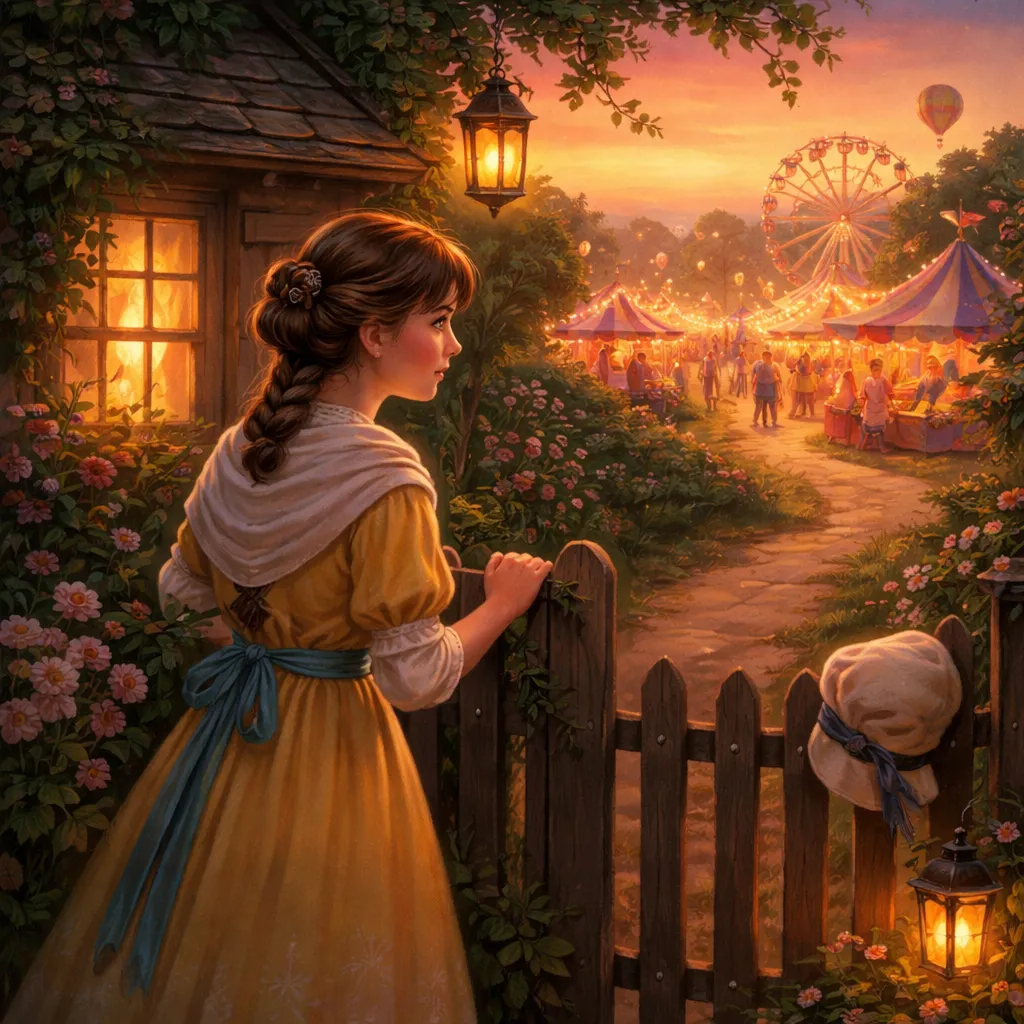

Have you ever waited for something really exciting, like a birthday or a visitor, and they just don’t arrive? The minutes feel like hours, and you start to wonder what could possibly be the delay. There is a very old, catchy song about exactly that feeling. It’s a song about a promise broken and the funny, frustrating mystery of waiting. Let’s learn about the folk song “Oh, Dear! What Can the Matter Be?”
About the Song
Let’s read the story-filled, impatient words of this classic tune.
Oh, dear! What can the matter be?
Dear, dear! What can the matter be?
Oh, dear! What can the matter be?
Johnny’s so long at the fair.
He promised he’d buy me a trinket to please me,
And then for a smile, oh, he vowed he would tease me,
He promised he’d bring me a bunch of blue ribbons
To tie up my bonny brown hair.
Oh, dear! What can the matter be?
Dear, dear! What can the matter be?
Oh, dear! What can the matter be?
Johnny’s so long at the fair.
This song is a traditional English folk song that dates back to at least the 18th century. It is a lively, rhythmic tune that tells a very relatable story. The song is sung from the perspective of someone, likely a young woman, who is waiting for a young man named Johnny. He went to the fair and promised to return with gifts, but he is taking a very, very long time. The singer repeats the exasperated question, “What can the matter be?” as they wonder what is causing the delay. The song captures the mixed feelings of excitement, impatience, and worry that come with waiting for someone you care about.
What the Song is About
The song paints a clear picture of someone pacing and worrying. The singer is waiting for Johnny to come back from the fair. A fair in the 1700s was a huge event with games, food, and shopping. Johnny has been gone for so long that the singer is getting upset. They keep asking the same frustrated question: “What can the matter be?” or “What could possibly be the problem?”
To explain why they’re so upset, the singer lists all the wonderful promises Johnny made before he left. He said he’d buy a small gift (“a trinket”) to make her happy. He promised to tease her playfully to make her smile. Most specifically, he vowed to bring back a bunch of beautiful blue ribbons to tie up her lovely (“bonny”) brown hair. But none of these promised things are here, because Johnny isn’t here! The song is a funny, dramatic complaint about broken promises and the agony of waiting, set to a tune that makes you want to tap your feet.
Who Made It & Its Story
“Oh, Dear! What Can the Matter Be?” is a traditional folk song, so its original author is unknown. It was first published in England in the 1780s. The song became very popular in the music halls of the 19th century. It is a great example of a narrative folk song—a short story set to music. The song reflects the social customs of the time, where fairs were major courting events and small gifts like ribbons were tokens of affection. Its catchy, repetitive chorus made it easy to remember and sing, ensuring it was passed down through generations. It remains a standard in collections of English folk music and children’s songs.
This song has remained popular for three relatable reasons. First, its chorus is incredibly catchy and fun to sing, with its repeated, dramatic questions. Second, it tells a complete, understandable, and funny little story about impatience and disappointment that anyone of any age can understand. Third, it provides a glimpse into historical social life (fairs, courting rituals) in a way that is light and engaging, not like a history lesson.
When to Sing It
This song is perfect for playful, dramatic moments. You can sing it in a silly, exaggerated way when you’re waiting for a family member who is running late. You can sing it as a comedic duet with a friend, one being the impatient singer and the other pretending to be the dawdling Johnny. You can also chant it while doing a task that feels like it’s taking forever, like waiting for cookies to bake or for a game to load.
What Children Can Learn
This story-song is a wonderful package of lessons in language and emotion. Let’s explore what’s the matter.
Vocabulary
The song teaches us expressive and old-fashioned words. “Oh, dear!” is an exclamation of worry, disappointment, or impatience. “What can the matter be?” means “What could be the problem?” A “trinket” is a small, inexpensive piece of jewelry or ornament. To “vow” means to make a serious promise. A “bunch” is a collection of things held together. “Ribbons” are long, narrow strips of fabric used for tying or decoration. “Bonny” is a Scottish and Northern English word meaning pretty or beautiful.
Let’s use these words! You can say, “My grandmother gave me a shiny trinket.” Or, “She had bonny, red curls.” New word: Procrastinate. This means to delay or put off doing something. Johnny is procrastinating at the fair!
Language Skills
This song is a great lesson in using the subjunctive mood for questions about possibility and the simple past tense for reporting promises. The key question uses “can” and “be” to ask about a present possibility: “What can the matter be?” This is a way to speculate about an unknown problem.
The verses use the simple past tense to report what Johnny said: “He promised he’d buy me… he vowed he would tease me…” The word “would” is used as the past tense of “will” in reported speech. The song also uses the contraction “he’d” (he would) to fit the rhythm, which is a common feature in conversational singing.
Sounds & Rhythm Fun
Listen to the bouncy, slightly cheeky rhythm of the melody. The song uses wonderful repetition. The worried question is sung three times in the chorus, making the singer’s impatience very clear. The verses have a clear, quick rhyme scheme: “please me” and “tease me,” “ribbons” and hair (a near-rhyme).
The rhythm is a lively 6/8 time, which gives it a skipping, galloping feel. Try clapping a quick, triple rhythm: Oh, DEAR! What CAN the MAT-ter BE? The melody is simple, based on a scale, and is very easy to learn and remember. This catchy, repetitive, and slightly nagging musical pattern is what makes the song so fun and memorable. You can write your own waiting song! Use the same bouncy rhythm. Try: “Oh, no! Where can my pencil be? Oh, no! Where can my pencil be? I need to write a note, you see, but it’s hiding from me!”
Culture & Big Ideas
“Oh, Dear! What Can the Matter Be?” is a classic piece of English folk culture from the Georgian era. It reflects a time when community fairs were central to social and economic life—places for trade, entertainment, and romance. The song touches on the formalities of courtship, where small gifts (trinkets, ribbons) were important symbols. It is also a song about the universal experience of time moving slowly when you’re anticipating something, a feeling that hasn’t changed for centuries.
The song conveys three relatable ideas. First, it’s about the frustration of broken promises and delayed gratification. Johnny’s delay makes the promised rewards feel even more desirable and his absence more annoying. Second, it highlights the drama of small events. The song turns a simple case of someone being late into a grand, musical mystery, teaching us that our everyday feelings are worth singing about. Third, it’s about questioning and speculation. The singer doesn’t know the answer, so they keep asking the question, which is the first step in problem-solving and storytelling.
Values & Imagination
Imagine you are the singer waiting by the window or garden gate. What do you see? An empty road? Other people returning from the fair? How do you feel? Anxious? A little angry? Excited? Now, imagine Johnny at the fair. What is he doing that’s making him so late? Did he get distracted by a puppet show? Is he stuck winning a giant teddy bear? Did he simply lose track of time? Draw a comic strip of the song. In the first panel, show the singer waiting. In thought bubbles, show the promised ribbons and trinket. In the second panel, show Johnny having a hilarious adventure at the fair. This shows two sides of the story.
The song encourages us to think about patience, promises, and empathy. A lovely idea is to play the “What Can the Matter Be?” mystery game. A family member pretends to be late for a silly reason (like “I was training a squirrel to juggle”). Everyone else sings the chorus, and then the latecomer explains their imaginary, ridiculous delay. This turns frustration into creative, shared storytelling.
So, as the last frustrated chorus fades, think about the timelessness of this little drama. It is a vocabulary lesson in expression and old gifts. It is a grammar lesson in asking speculative questions and reporting speech. It is a music lesson in a bouncy, impatient rhythm. From the first “Oh, dear!” to the final mention of brown hair, it wraps lessons in anticipation, promise-keeping, and the humor of minor frustrations in a tune that is as catchy as it is complain-y. “Oh, Dear! What Can the Matter Be?” teaches us that it’s okay to be impatient, that small promises matter, and that sometimes, the best way to deal with waiting is to sing a funny song about it.
Your Core Takeaways
You are now an expert on the song “Oh, Dear! What Can the Matter Be?” You know it is an 18th-century English folk song about someone waiting impatiently for a person who is late from the fair. You’ve learned words like “trinket,” “vowed,” and “bonny,” and you’ve practiced asking “what can the matter be?” and reporting past promises. You’ve felt its lively, galloping rhythm and created your own waiting verse. You’ve also discovered the song’s glimpse into historical social life and its messages about delayed gratification, the drama of small things, and the act of questioning.
Your Practice Missions
First, stage a “Waiting Drama.” With a family member, act out the song. One person is the singer, pacing and looking at a clock. The other person is Johnny, who finally arrives with a “bunch of blue ribbons” (could be blue socks, paper strips, or a drawing). Perform the song with your actions. Discuss how it feels to wait and to be the late one.
Second, design a “Fair Promise” poster. Johnny promised ribbons and a trinket. Design a poster advertising the amazing, imaginary gifts someone could bring you from a fantasy fair. What would they be? A cloud in a jar? A song from a bird? Draw and label these “promised” items. Present your poster and explain why you chose them. This activity connects the song’s theme of promised gifts to your own creativity.