
What is the Rhyme "Down by the Bay"?
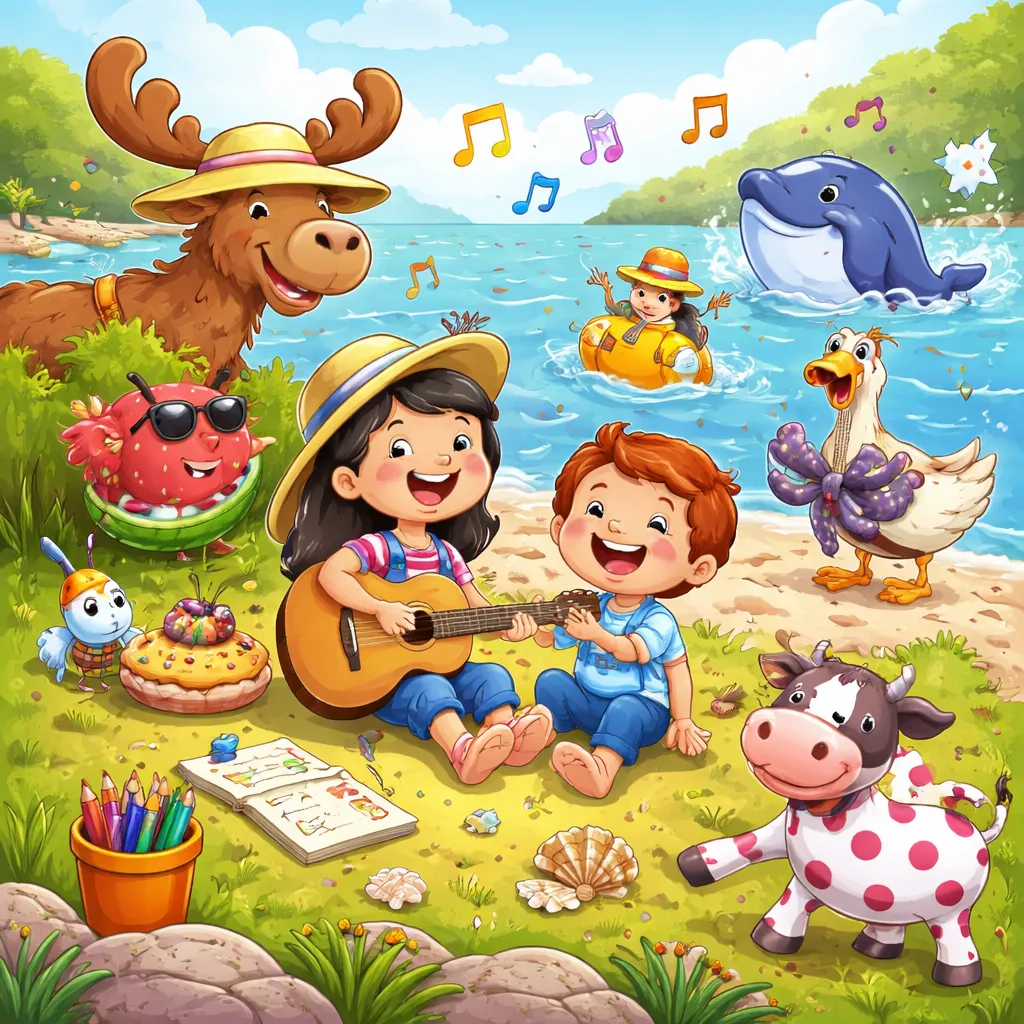
"Down by the Bay" is a playful and imaginative English nursery rhyme that children absolutely adore. The song invites children to imagine all sorts of silly things that could happen down by the bay. Did you ever see a whale with a polka-dot tail? Did you ever see a moose kissing a goose? The English song: Down by the Bay has been delighting children for generations with its ridiculous rhymes. The repetitive chorus is easy to learn and sing along. The silly questions spark creativity and make children laugh. Best of all, the song invites children to create their own funny rhymes. This turns language learning into a creative game that children want to play again and again.
The Complete Lyrics of the Nursery Rhyme
Let us look at the words together. The song has a repeating chorus with different verses.
Down by the bay,
Where the watermelons grow,
Back to my home,
I dare not go,
For if I do,
My mother will say,
"Did you ever see a [silly thing] down by the bay?"
Common verses include:
Did you ever see a whale with a polka-dot tail?
Did you ever see a moose kissing a goose?
Did you ever see a bear combing his hair?
Did you ever see a llama wearing pajamas?
Did you ever see a fly wearing a tie?
Did you ever see a cat wearing a hat?
Vocabulary Learning from the Song
This English song: Down by the Bay introduces children to words about nature, animals, and silly combinations. Each word builds their understanding of language and imagination.
First, the song teaches about a "bay." A bay is a body of water partly surrounded by land. It is a peaceful place where watermelons might grow. This creates a calm, sunny setting in children's minds.
"Watermelons" are large, sweet fruits with green skin and red insides. You can show your child a real watermelon. Talk about its color, shape, and taste. This connects the song to real food.
The song teaches animal words. "Whale," "moose," "bear," "llama," "fly," "cat." Each animal appears in a silly situation. Children learn animal names while laughing at the images.
Silly descriptive words appear throughout. "Polka-dot tail" means a tail with round spots. "Kissing a goose" is a funny image. "Combing his hair" gives a bear human actions. "Wearing pajamas" and "wearing a tie" dress animals in human clothes. These silly combinations spark imagination.
The phrase "I dare not go" means I am too scared to go. This adds a little playful drama to the song.
Phonics Points to Practice
Let us listen for special sounds in the song. Phonics helps children connect letters to the sounds they hear. This English song: Down by the Bay gives us many sounds to explore.
Listen to the "b" sound at the beginning of "bay." It is a strong sound made by pressing lips together. Say "down by the bay" slowly. Feel your lips press together. Practice other "b" words like "ball," "book," and "baby."
The "w" sound appears in "watermelons" and "whale." It is made with rounded lips. Practice other "w" words like "water," "window," and "wagon."
Listen to the "m" sound in "mother" and "more." It is a humming sound made with lips together. Practice other "m" words like "mommy," "milk," and "moon."
The long "a" sound in "bay" and "say" says its own name. You can hear it in words like "play," "day," and "way." The rhyming pattern in each verse helps children hear these sounds.
The "wh" sound in "whale" and "where" is special. It starts with a little breath. Practice other "wh" words like "wheat," "wheel," and "whisper."
Grammar Patterns We Can Learn
This silly rhyming song teaches important grammar in a very natural way. The English song: Down by the Bay introduces question forms, rhyming patterns, and creative sentence building.
The song uses question forms throughout. "Did you ever see a whale with a polka-dot tail?" This teaches children how to ask questions about past experiences. You can practice this pattern in daily life. "Did you ever see a rainbow?" "Did you ever eat a watermelon?" "Did you ever visit the beach?"
The song uses rhyming patterns. "Bay" and "say" rhyme. "Whale" and "tail" rhyme. "Moose" and "goose" rhyme. This teaches children to listen for similar sounds in words. Rhyming is an important pre-reading skill.
The song builds creative sentences. "[Animal] with a [silly description]." This pattern lets children create endless new verses. You can practice this pattern. "A frog on a log." "A snake eating cake." "A bee drinking tea."
Learning Activities to Do at Home
Bringing this English song: Down by the Bay into your daily life is simple and joyful. Here are some activities you can try with materials you already have.
A wonderful activity is the "Silly Rhyme" game. After singing the song, ask your child to create a new silly rhyme. "Did you ever see a frog on a log?" "Did you ever see a snake eating cake?" Write down their ideas and sing them together. This builds creativity and phonemic awareness.
Another activity is the "Watermelon Snack" time. Enjoy some real watermelon together. Talk about where watermelons grow. Down by the bay! Count the seeds. This connects the song to a tasty treat.
You can also have a "Bay Scene" drawing activity. Draw a picture of a bay with water, sand, and watermelon plants. Add silly animals doing funny things. A whale with polka dots. A moose kissing a goose. This builds creativity and comprehension.
Printable Materials for Learning
Creating simple printables can make this English song: Down by the Bay more visual and engaging. You can make these materials together with your child.
Rhyming cards are perfect for this song. Draw or print pictures of rhyming pairs. Whale and tail. Moose and goose. Bear and hair. Llama and pajamas. Fly and tie. Cat and hat. Your child can match the rhyming pairs. This builds phonemic awareness.
A bay scene coloring page is always popular. Draw a bay with water, watermelons, and silly animals doing funny things. Let your child color the scene. Write "Down by the Bay" at the top. Display their artwork proudly.
You can also create simple word cards. Write words from the song on cards. "Bay," "watermelons," "home," "mother," "whale," "tail," "moose," "goose," "bear," "hair," "llama," "pajamas," "fly," "tie," "cat," "hat." Show each card as you sing that word. This builds early reading skills.
A create-your-own-rhyme page lets children write or draw their own silly verses. Provide a template: "Did you ever see a ______ with a ______?" Fill in the blanks together.
Educational Games for Deeper Learning
Games make learning active and exciting. They encourage children to use the language from the English song: Down by the Bay in new and creative ways.
The "Rhyme Time" game builds phonemic awareness. Say a word and ask your child to find a rhyming word. "What rhymes with bay?" Play, day, say. "What rhymes with cat?" Hat, bat, sat. This builds important pre-reading skills.
The "Animal Actions" game adds movement. Pretend to be each animal doing the silly action. Be a whale with a polka-dot tail (wiggle your tail). Be a moose kissing a goose (blow kisses). Be a bear combing hair (pretend to comb). This builds gross motor skills and imagination.
The "Mother Says" game uses the mother in the song. Take turns being the mother who asks silly questions. "Did you ever see a pig doing a jig?" The other person answers "yes" or "no" and then acts it out. This builds question and answer skills.
The "Watermelon Counting" game practices numbers. Count watermelon seeds (real or drawn). Count how many watermelons are growing down by the bay. This builds early math skills.
The "Bay Exploration" conversation builds geography knowledge. What is a bay? How is it different from an ocean or lake? Look at pictures of real bays. This builds science and geography vocabulary.
The "Dare Not Go" discussion explores the phrase. Why doesn't the child dare go home? Because mother will ask silly questions! Is that scary or funny? This builds understanding of playful language.
The "Costume Party" dress-up connects to the verses. Wear silly combinations like pajamas and a tie. Dress up animals in human clothes. This builds imagination and social play.
The "Song Writing" activity extends learning. Create a whole new verse with your child's own silly rhyme. Write it down, draw a picture, and sing it together. This builds literacy and creativity in one joyful activity.