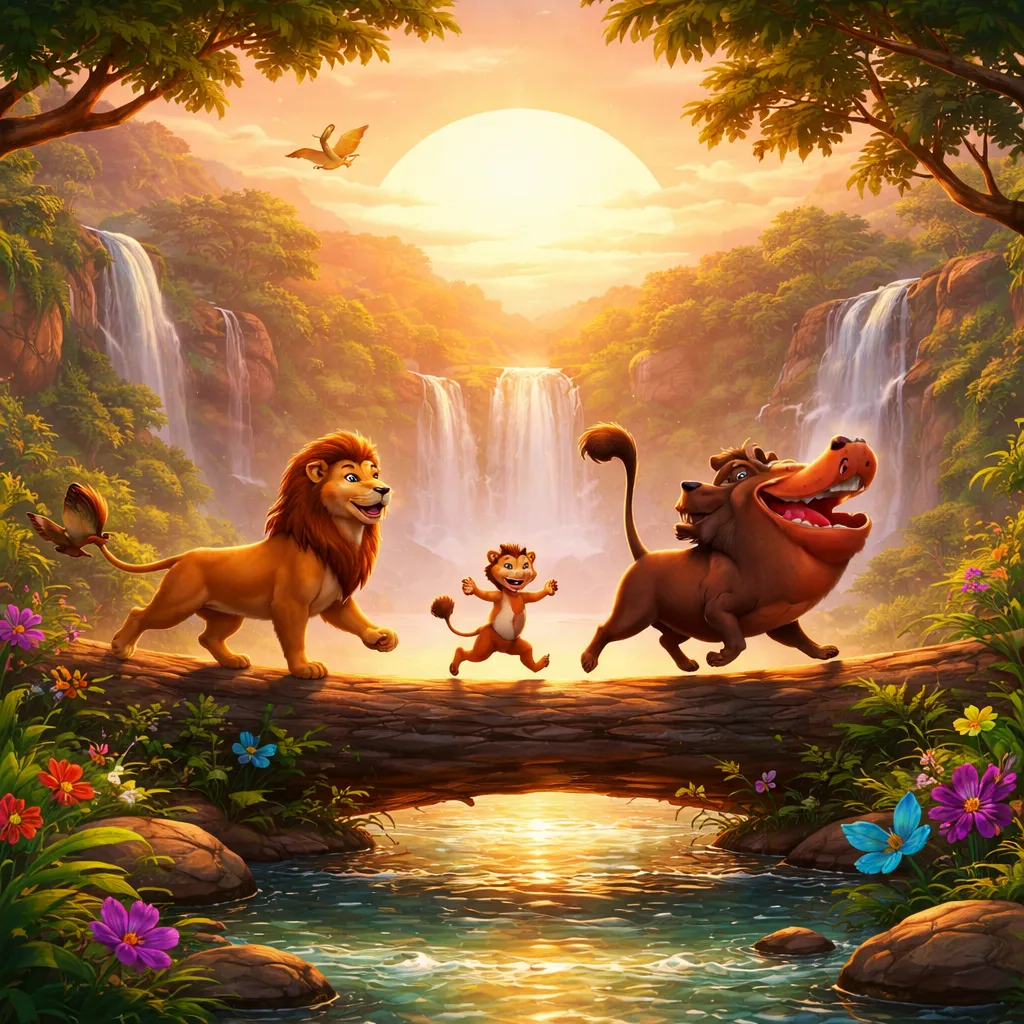

What is the Story Behind "Hakuna Matata" from The Lion King?
"Hakuna Matata" is the joyful and carefree song from Disney's The Lion King. Timon the meerkat and Pumbaa the warthog sing it to teach young Simba their philosophy of life. The English song: Hakuna Matata (from The Lion King) introduces a phrase from Swahili that means "no worries." Timon and Pumbaa explain that when they were young and had problems, they learned to put their worries behind them and live in the moment. The song is upbeat, funny, and full of positive energy. Children love the silly lyrics and the catchy tune. The message is simple but powerful. Don't worry about the past. Don't stress about the future. Enjoy life right now. This song has become a beloved anthem for generations of children learning to let go of their worries.
The Complete Lyrics of the Song
Let us look at some key parts of the song. The lyrics tell the story of their worry-free philosophy.
Hakuna Matata! What a wonderful phrase!
Hakuna Matata! Ain't no passing craze.
It means no worries for the rest of your days.
It's our problem-free philosophy.
Hakuna Matata!
When he was a young warthog,
When I was a young warthog,
Very nice!
Thanks!
He found his aroma lacked a certain appeal.
He could clear the savannah after every meal.
I'm a sensitive soul, though I seem thick-skinned.
And it hurt that my friends never stood downwind.
And oh, the shame! He was ashamed!
Thought of changin' my name.
But every time that I got downhearted,
You'd simply me remind.
Hakuna Matata!
Vocabulary Learning from the Song
This English song: Hakuna Matata (from The Lion King) introduces children to a Swahili phrase and wonderful words about feelings and friendship. Each word builds their understanding of language and emotions.
First, the song teaches the phrase "Hakuna Matata." This is from Swahili, a language spoken in Africa. It means "no worries" or "no problems." Children love saying this fun phrase.
The song teaches about "worries." Worries are thoughts that make us feel anxious or scared. The song says we can live without them.
"A problem-free philosophy" means a way of thinking that doesn't include problems. Timon and Pumbaa choose to live this way.
The song has funny parts about Pumbaa's "aroma." Aroma usually means a nice smell, but here it means his bad smell! He could "clear the savannah after every meal." This makes children laugh.
The song teaches about feelings. "Sensitive soul" means someone who feels things deeply. "Thick-skinned" means not easily hurt. "Ashamed" means feeling embarrassed. "Downhearted" means sad. These are important emotional words.
Phonics Points to Practice
Let us listen for special sounds in the song. Phonics helps children connect letters to the sounds they hear. This English song: Hakuna Matata (from The Lion King) gives us many sounds to explore.
Listen to the "h" sound at the beginning of "Hakuna." It is a gentle breath sound. Put your hand in front of your mouth and say "Hakuna." Feel the air. Practice other "h" words like "happy," "house," and "hello."
The "m" sound appears in "Matata." It is a humming sound made with lips together. Practice other "m" words like "mommy," "milk," and "moon."
Listen to the "w" sound in "wonderful" and "worries." It is made with rounded lips. Practice other "w" words like "water," "window," and "wagon."
The "p" sound in "phrase" and "problem" is a quick sound made by pressing lips together. Practice other "p" words like "pig," "pan," and "pretty."
The long "a" sound in "Matata" and "phrase" and "craze" says its own name. You can hear it in words like "cake," "rain," and "play."
Grammar Patterns We Can Learn
This carefree song teaches important grammar in a very natural way. The English song: Hakuna Matata (from The Lion King) introduces the phrase "it means," past tense verbs, and the concept of "no worries."
The song uses "it means" to explain the phrase. "Hakuna Matata means no worries." This teaches children how to define words. You can practice defining words. "Happy means feeling good." "Tired means needing rest."
The song uses past tense when Pumbaa tells his story. "He found his aroma lacked appeal." "It hurt that my friends never stood downwind." "He was ashamed." These are all past tense verbs. You can talk about past events. "I found a shell at the beach." "I was happy yesterday."
The phrase "no worries" means don't worry, it's okay. This is a comforting phrase. You can use it in daily life. "You dropped your toy? No worries, we can find it." "You made a mistake? No worries, let's try again."
Learning Activities to Do at Home
Bringing this English song: Hakuna Matata (from The Lion King) into your daily life is simple and joyful. Here are some activities you can try with materials you already have.
A wonderful activity is the "Worry Jar" craft. Decorate a jar together. When your child has a worry, write it on a small piece of paper and put it in the jar. Talk about how Timon and Pumbaa say "no worries." At the end of the day, you can throw the worries away together. This builds emotional regulation.
Another activity is the "Problem-Free Dance." Put on the song and dance with no worries. Wiggle, jump, spin, laugh. Let go of any stress and just enjoy moving. This builds physical activity and joyful expression.
You can also have a "Sensitive Soul" discussion. Talk about feelings. When do you feel sensitive? When do you feel hurt? What helps when you feel downhearted? This builds emotional vocabulary and connection.
Printable Materials for Learning
Creating simple printables can make this English song: Hakuna Matata (from The Lion King) more visual and engaging. You can make these materials together with your child.
Worry cards help with the worry jar activity. Print cards that say "I am worried about..." with space to write or draw. Use them to capture worries and then let them go.
A coloring page is always popular. Draw Timon, Pumbaa, and young Simba smiling and dancing. Add the words "Hakuna Matata" in big letters. Let your child color the scene. Display their artwork proudly.
You can also create simple word cards. Write key words from the song on cards. "Hakuna," "Matata," "wonderful," "phrase," "worries," "problem-free," "philosophy," "young," "warthog," "aroma," "savannah," "sensitive," "soul," "ashamed," "downhearted." Show each card as you sing that word. This builds early reading skills.
A feelings chart helps children identify emotions. Draw faces showing different feelings. Happy, sad, worried, ashamed, downhearted, sensitive. Talk about each one.
Educational Games for Deeper Learning
Games make learning active and exciting. They encourage children to use the language from the English song: Hakuna Matata (from The Lion King) in new and creative ways.
The "No Worries" game practices letting go. When something small goes wrong, practice saying "Hakuna Matata" together. Spilled milk? Hakuna Matata! Dropped toy? Hakuna Matata! This builds resilience and a positive attitude.
The "Swahili Words" game introduces more Swahili. Learn a few simple Swahili words. "Jambo" means hello. "Asante" means thank you. "Rafiki" means friend. This builds cultural awareness.
The "Aroma Game" is silly fun. Close your eyes and try to identify things by smell. A flower? An orange? Soap? This builds sensory awareness.
The "Sensitive Soul" empathy game builds understanding. Talk about times when feelings get hurt. How can we help friends who feel sad or embarrassed? This builds social skills.
The "Stand Downwind" science discussion explores wind. What does "downwind" mean? If you stand downwind, the wind blows the smell toward you. You can explore wind with a feather or bubble. This builds science understanding.
The "Problem-Free" discussion explores the song's philosophy. Can we really have no worries? Sometimes worries are real. But we can learn to let go of small worries and face big ones with courage. This builds critical thinking.
The "New Philosophy" game encourages creativity. Create your own life philosophy in a fun phrase. "Happy Happy Day" means be happy every day. "Fun Forever" means always find fun. This builds language and self-expression.
The "Timon and Pumbaa" role play is creative fun. Act out the characters. One person is Timon, one is Pumbaa. Sing the song together with big personalities. This builds confidence and social skills.