
What is the Rhyme "Polly Put the Kettle On"?
"Polly Put the Kettle On" is a cheerful and simple English nursery rhyme about getting ready for tea time. The song tells the story of children playing together. Polly puts the kettle on to boil water for tea. Then Sukey takes it off again when everyone is done. The English song: Polly Put the Kettle On has been sung by generations of children playing tea parties. The simple commands and responses make it perfect for pretend play. Children love to act out the roles of Polly and Sukey. The rhyme introduces daily routines in a fun way. Boiling water, making tea, and sitting down to drink together are all part of family life. This song turns ordinary moments into playful games that children love to repeat.
The Complete Lyrics of the Nursery Rhyme
Let us look at the words together. The rhyme has several verses.
Polly put the kettle on,
Polly put the kettle on,
Polly put the kettle on,
We'll all have tea.
Sukey take it off again,
Sukey take it off again,
Sukey take it off again,
They've all gone away.
Vocabulary Learning from the Song
This English song: Polly Put the Kettle On introduces children to words about kitchen items, actions, and family routines. Each word builds their understanding of daily life.
First, we meet "Polly" and "Sukey." These are friendly names for girls. Polly is often short for Mary or Molly. Sukey is an old nickname for Susan. Using names makes the song feel personal and friendly.
The song teaches about a "kettle." A kettle is a pot used to boil water for tea. You can show your child a real kettle in your kitchen. Talk about how we use it to make hot drinks. Always remind children that kettles get very hot and are only for grown-ups to use.
The word "tea" is a warm drink that many families enjoy. Even if your family does not drink tea, children understand it as a special drink for grown-ups. Tea time can mean any time we sit together for a warm drink and conversation.
Action words are very important. "Put on" means placing the kettle on the stove to heat. "Take off" means removing it when the water is boiled. "Have tea" means drinking tea together. These verbs help children describe kitchen activities.
The phrase "all gone away" means everyone has left. After tea, people go back to their activities.
Phonics Points to Practice
Let us listen for special sounds in the song. Phonics helps children connect letters to the sounds they hear. This English song: Polly Put the Kettle On gives us many sounds to explore.
Listen to the "p" sound at the beginning of "Polly" and "put." It is a quick sound made by pressing lips together. Say "Polly put" slowly. Feel how your lips pop open. Practice other "p" words like "pig," "pan," and "pretty."
The "k" sound appears in "kettle" and "cake" but here it is "kettle." It is made at the back of the throat. Practice other "k" words like "kite," "kangaroo," and "kiss."
Listen to the "t" sound in "put" and "kettle" and "take." It is a quick sound made with the tongue behind the teeth. Practice other "t" words like "toy," "table," and "tickle."
The long "e" sound in "tea" and "we'll" and "away" has different vowels but "tea" gives us the long "e." You can hear it in words like "bee," "tree," and "me."
The "s" sound in "Sukey" and "so" is a soft sound made by pushing air through the teeth. Practice other "s" words like "sun," "sand," and "sing."
Grammar Patterns We Can Learn
This tea time song teaches important grammar in a very natural way. The English song: Polly Put the Kettle On introduces imperatives, future tense, and the concept of sequence.
The song uses imperative forms throughout. "Polly put the kettle on." "Sukey take it off again." These are commands telling someone what to do. Children hear imperatives every day. "Please sit down." "Wash your hands." "Come to the table." The song adds playful imperatives to the mix.
The song uses future tense with "we'll." "We'll all have tea." "We'll" is short for "we will." This teaches children how we talk about things that will happen later. You can make plans using this pattern. "We'll have lunch soon." "We'll go to the park tomorrow."
The song shows sequence. First Polly puts the kettle on. Then they have tea. Then Sukey takes the kettle off because everyone has gone away. This simple sequence helps children understand the order of events.
Learning Activities to Do at Home
Bringing this English song: Polly Put the Kettle On into your daily life is simple and joyful. Here are some activities you can try with materials you already have.
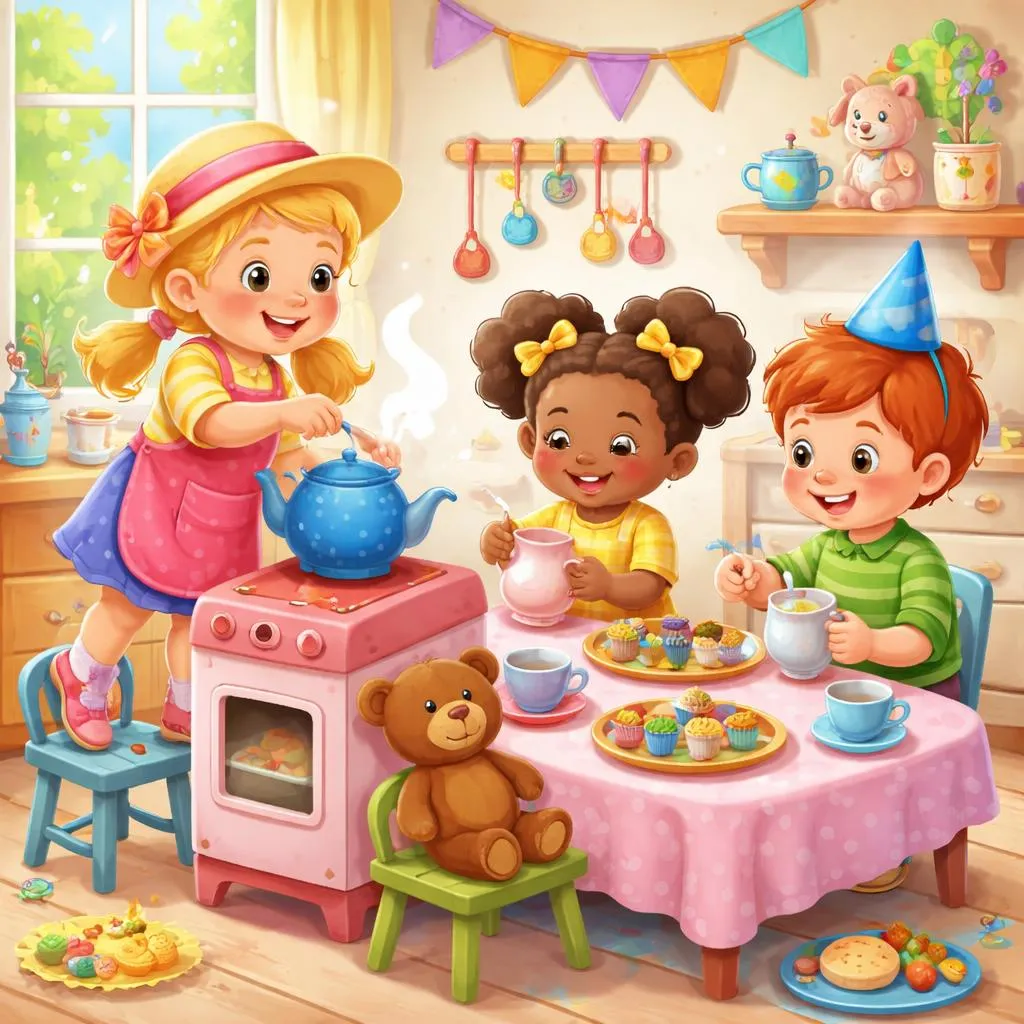
A wonderful activity is the "Tea Party" pretend play. Set up a little table with cups, saucers, and a pretend kettle. Use a teapot if you have one. Take turns being Polly and Sukey. Sing the song while you act out putting the kettle on, pouring tea, and drinking together. This builds imagination and social skills.
Another activity is the "Kitchen Helper" game. When you are making real tea or hot chocolate, let your child help with safe parts. They can put the tea bags in cups or stir. Sing the song while you work. This connects the rhyme to real family routines.
You can also have a "Name Game" using the song. Replace Polly and Sukey with names from your family. "Mommy put the kettle on." "Daddy put the kettle on." "[Child's name] put the kettle on." This makes the song personal and includes everyone.
Printable Materials for Learning
Creating simple printables can make this English song: Polly Put the Kettle On more visual and engaging. You can make these materials together with your child.
A tea party coloring page is perfect. Draw a table with a kettle, teapot, cups, and saucers. Add Polly and Sukey sitting together. Let your child color the scene. Write "Polly Put the Kettle On" at the top. Display their artwork proudly.
Sequence cards help with story order. Draw simple pictures on separate cards. Polly putting kettle on. Everyone having tea. Sukey taking kettle off. Everyone going away. Your child can arrange the cards in order and retell the story. This builds sequencing and narrative skills.
You can also create simple word cards. Write words from the song on cards. "Polly," "kettle," "on," "tea," "Sukey," "off," "away." Show each card as you sing that word. This builds early reading skills.
A placemat for tea time adds fun. Draw a simple placemat design with cups and kettles. Laminate it or cover with clear paper. Use it during pretend tea parties. This makes the play more special.
Educational Games for Deeper Learning
Games make learning active and exciting. They encourage children to use the language from the English song: Polly Put the Kettle On in new and creative ways.
The "New Drink" game encourages creativity. Ask your child, "What if we made something different instead of tea?" Hot chocolate? Lemonade? Apple cider? Create new verses. "Polly put the cocoa on, we'll all have hot chocolate." This shows children how to adapt the song pattern.
The "Who's Coming to Tea?" game builds imagination. Ask your child, "Who would you invite to your tea party?" Stuffed animals? Dolls? Family members? Imaginary friends? Set places for everyone and sing the song. This builds social skills and creativity.
The "Hot and Cold" game explores temperature. The kettle gets hot. Tea is hot. What else is hot? Soup, bath water, the sun. What is cold? Ice cream, snow, lemonade. This builds vocabulary through temperature concepts.
The "Tea Party Manners" game teaches polite language. Practice saying "please" and "thank you" during pretend tea. "Would you like more tea, please?" "Thank you, this is delicious." This builds social skills.
The "Kitchen Safety" conversation is important. Talk about why only grown-ups use real kettles. Water is very hot and can hurt. But in pretend play, we can do anything safely. This builds safety awareness.
The "Counting Cups" game practices numbers. Count how many cups are at the tea party. Count how many people are coming. Count how many cookies to serve. This builds early math skills.
The "What's Missing?" game uses the ending. After everyone goes away, what is left on the table? The kettle? The cups? The cookies? This builds observation and memory.
The "Tea Time Rhythm" game adds music. Tap a gentle rhythm while singing. Pat your knees for each syllable. This builds rhythm awareness and listening skills.
The "Family Tea Time" ritual uses the song in real life. Once a week, have a special family tea time with real (decaf) tea or a special drink. Sing the song together before you begin. This creates a loving family tradition that children will remember forever.