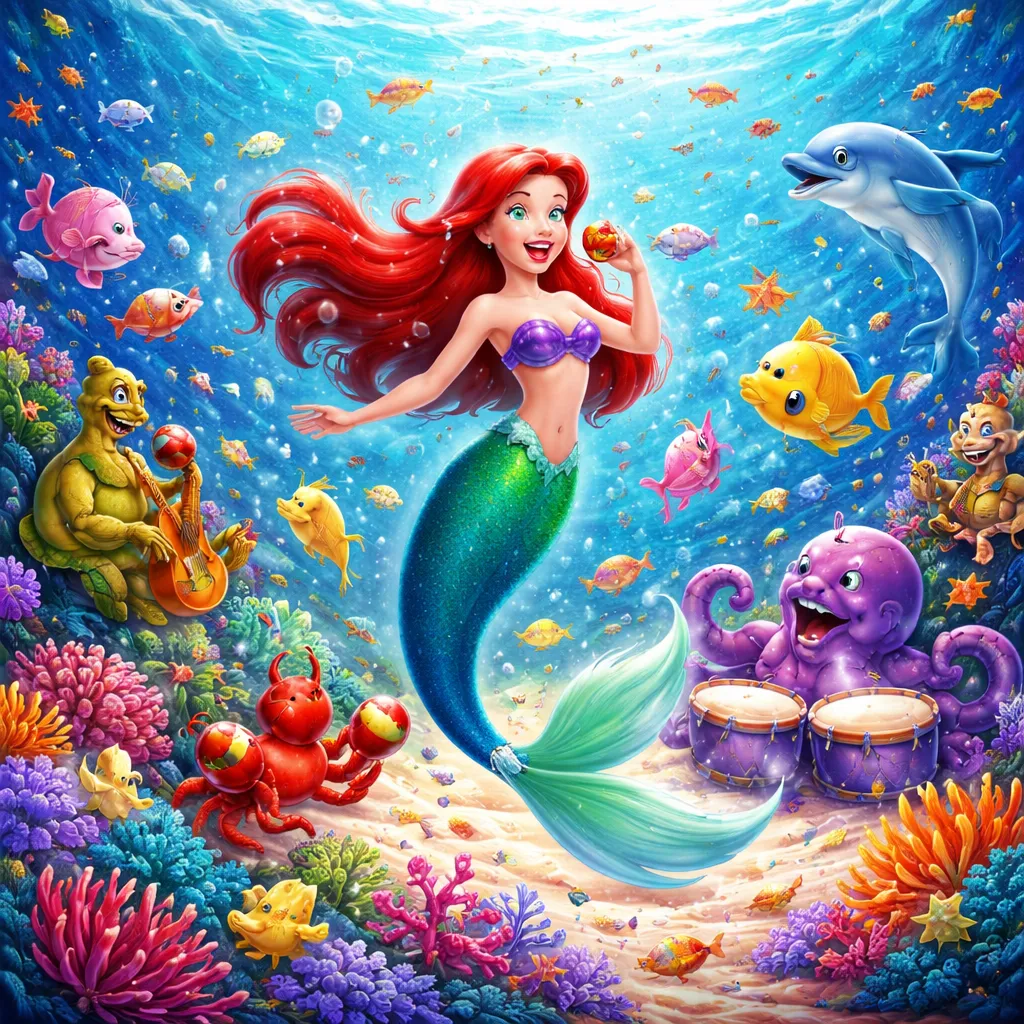

What is the Story Behind "Under the Sea" from The Little Mermaid?
"Under the Sea" is the lively and unforgettable Calypso-style song from Disney's The Little Mermaid. Sebastian the crab sings it to Ariel to convince her that life under the ocean is better than life on land. The English song: Under the Sea (from The Little Mermaid) is bursting with energy, rhythm, and wonderful ocean characters. Sebastian points out all the wonderful things happening in the ocean. The fish dance, the crabs play instruments, and everyone has a wonderful time. He warns Ariel that life on land is not as great as she imagines. Children love the upbeat tempo and the colorful images of sea creatures having a party. The song teaches about ocean life, gratitude for where you are, and the joy of music and dance.
The Complete Lyrics of the Song
Let us look at some key parts of the song. The lyrics are fast and full of sea creature fun.
The seaweed is always greener
In somebody else's lake.
You dream about going up there,
But that is a big mistake.
Just look at the world around you,
Right here on the ocean floor.
Such wonderful things surround you,
What more is you lookin' for?
Under the sea, under the sea,
Darling it's better down where it's wetter,
Take it from me.
Up on the shore they work all day,
Out in the sun they slave away,
While we devotin' full time to floatin',
Under the sea.
Vocabulary Learning from the Song
This English song: Under the Sea (from The Little Mermaid) introduces children to wonderful words about ocean life, music, and happiness. Each word builds their understanding of language and sea creatures.
First, the song teaches about "seaweed." Seaweed is a plant that grows in the ocean. It's "greener in somebody else's lake" means things always look better somewhere else. This is a valuable life lesson.
The song introduces many sea creatures. "Flounder" is a fish, and a character in the movie. "Crab" is Sebastian. "Fish," "shrimp," and "snails" are all ocean animals. You can learn about each one.
The song teaches about music. "Blowin' a harp" means playing the harp. "Band" is a group of musicians. Children learn that music brings joy.
The phrase "under the sea" means beneath the ocean's surface. It's a whole different world down there.
The song compares life under the sea to life on land. "Up on the shore they work all day." Under the sea, they "devotin' full time to floatin'" which means they relax and enjoy life.
Phonics Points to Practice
Let us listen for special sounds in the song. Phonics helps children connect letters to the sounds they hear. This English song: Under the Sea (from The Little Mermaid) gives us many sounds to explore.
Listen to the "s" sound at the beginning of "sea." It is a soft sound made by pushing air through the teeth. Say "under the sea" slowly. Feel the air. Practice other "s" words like "sun," "sand," and "sing."
The "b" sound appears in "better" and "big." It is a strong sound made by pressing lips together. Practice other "b" words like "ball," "book," and "baby."
Listen to the "f" sound in "fish" and "floatin'." It is made by putting top teeth on bottom lip and blowing air. Practice other "f" words like "fun," "family," and "flower."
The "sh" sound in "shore" and "slave" has an "sh" in "shore." Practice other "sh" words like "shoe," "ship," and "fish."
The long "e" sound in "sea" and "greener" and "dream" says its own name. You can hear it in words like "bee," "tree," and "me."
Grammar Patterns We Can Learn
This joyful song teaches important grammar in a very natural way. The English song: Under the Sea (from The Little Mermaid) introduces comparisons, present tense verbs, and the phrase "it's better."
The song uses comparisons. "The seaweed is always greener in somebody else's lake." This compares two places. You can practice making comparisons. "My ice cream is bigger than yours." "Her shoes are shinier than mine."
The song uses present tense verbs. "They work all day." "We devotin' full time." These describe things happening now. You can use present tense in daily life. "We eat dinner." "The fish swim." "The music plays."
The phrase "it's better" is a comparison. Sebastian thinks life under the sea is better. You can talk about what is better in different situations. "It's better to share." "It's better to be kind."
Learning Activities to Do at Home
Bringing this English song: Under the Sea (from The Little Mermaid) into your daily life is simple and joyful. Here are some activities you can try with materials you already have.
A wonderful activity is the "Ocean Creature" craft. Make different sea creatures from paper plates, paper bags, or clay. Fish, crabs, shrimp, snails. Use them to act out the song. This builds creativity and fine motor skills.
Another activity is the "Calypso Dance" party. Put on the song and dance like sea creatures. Wiggle like a fish. Crawl like a crab. Wave like seaweed. This builds gross motor skills and joyful expression.
You can also have a "Ocean vs. Land" discussion. Sebastian thinks the ocean is better. Ariel thinks land is better. Talk about different places. What's good about each? What do you like best? This builds comparison and critical thinking.
Printable Materials for Learning
Creating simple printables can make this English song: Under the Sea (from The Little Mermaid) more visual and engaging. You can make these materials together with your child.
Sea creature cards are perfect for this song. Draw or print pictures of different sea creatures. Fish, crab, shrimp, snail, flounder, seaweed. Hold up each card as they are mentioned in the song. This builds vocabulary and comprehension.
A coloring page is always popular. Draw an underwater scene with fish, crabs, seaweed, and bubbles. Add Sebastian conducting his band. Let your child color the scene. Write "Under the Sea" at the top. Display their artwork proudly.
You can also create simple word cards. Write key words from the song on cards. "Sea," "seaweed," "greener," "lake," "dream," "mistake," "world," "ocean," "floor," "wonderful," "shore," "work," "sun," "floatin'." Show each card as you sing that word. This builds early reading skills.
A comparison chart helps with the song's theme. Draw two columns. One for "Under the Sea" and one for "On Land." List good things about each place.
Educational Games for Deeper Learning
Games make learning active and exciting. They encourage children to use the language from the English song: Under the Sea (from The Little Mermaid) in new and creative ways.
The "New Sea Creatures" game encourages creativity. Ask your child, "What other sea creatures could be in Sebastian's band?" An octopus playing drums? A seahorse dancing? A whale singing? Create new verses about them. This shows children how to extend the pattern.
The "Ocean Facts" game builds science knowledge. Learn one fact about each sea creature in the song. Where do crabs live? What do shrimp eat? How do fish breathe? This builds curiosity about nature.
The "Gratitude Practice" connects to the song's message. Sebastian wants Ariel to appreciate where she is. Practice being grateful for your home, your family, your toys. What are you thankful for today?
The "Instrument Sounds" game explores music. Sebastian's band has many instruments. Make sounds of different instruments with your voice. Drums, harps, horns. This builds phonemic awareness and creativity.
The "Float or Sink" science experiment is fun. Gather objects and predict if they will float or sink in water. Test them. Talk about why some things float and some sink. This builds science understanding.
The "Seaweed Art" project is sensory fun. Use green streamers or crepe paper to make seaweed. Hang it up and pretend to swim through it. This builds creativity and gross motor skills.
The "Different Perspectives" discussion explores the song's theme. The grass is always greener on the other side. But is it really? Talk about appreciating what you have. This builds emotional intelligence.
The "Calypso Rhythm" game adds music. Clap along to the rhythm of the song. Use simple percussion instruments if you have them. Maracas, drums, shakers. This builds musical awareness.