
Original Story:
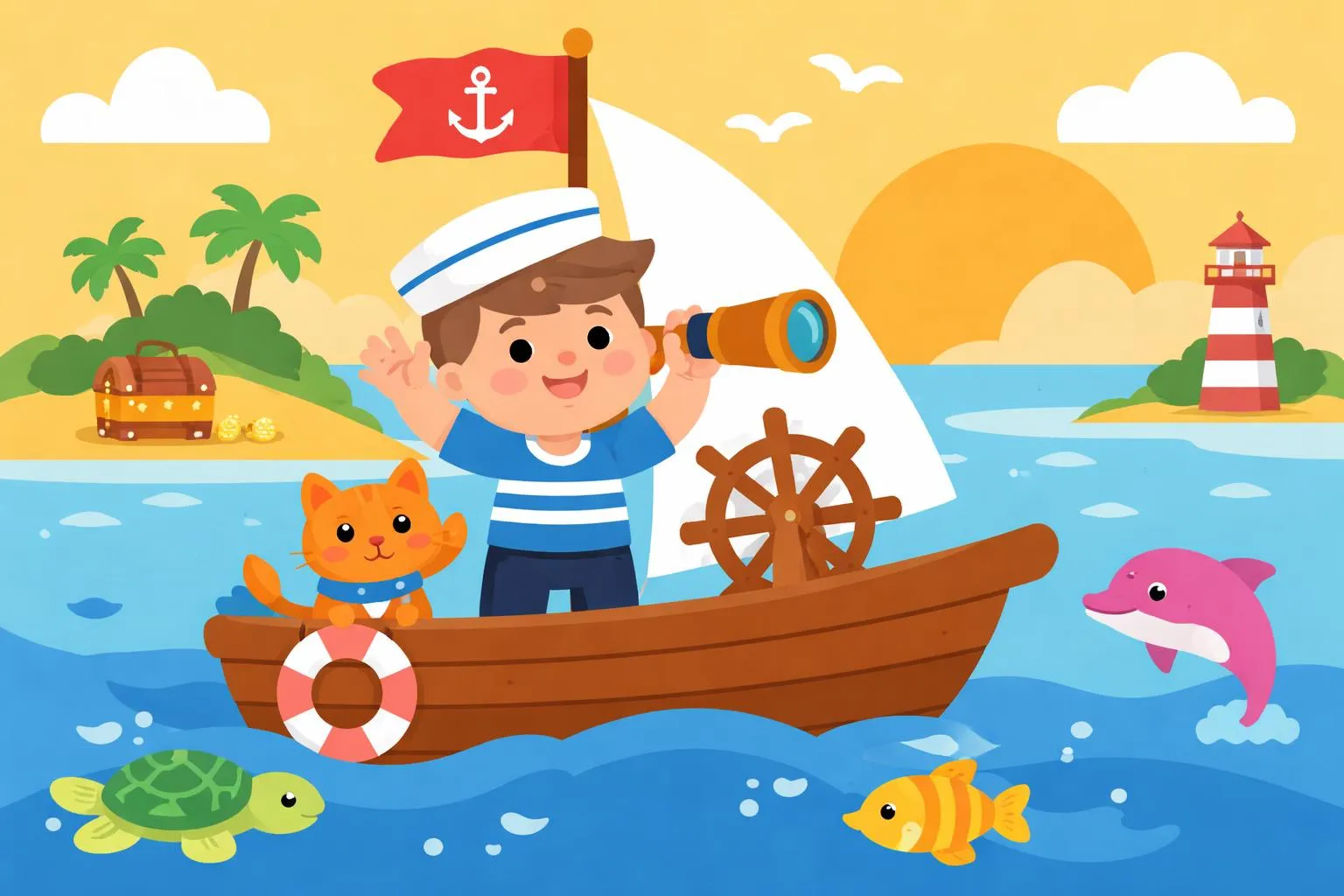
Oh for the breath of the briny deep,
And the tug of the bellying sail,
With the sea–gull’s cry across the sky
And a passing boatman’s hail.
For, be she fierce or be she gay,
The sea is a famous friend alway.
Ho! for the plains where the dolphins play,
And the bend of the mast and spars,
And a fight at night with the wild sea–sprite
When the foam has drowned the stars.
And, pray, what joy can the landsman feel
Like the rise and fall of a sliding keel?
Fair is the mead; the lawn is fair
And the birds sing sweet on the lea;
But the echo soft of a song aloft
Is the strain that pleases me;
And swish of rope and ring of chain
Are music to men who sail the main.
Then, if you love me, let me sail
While a vessel dares the deep;
For the ship ’s my wife, and the breath of life
Are the raging gales that sweep;
And when I ‘m done with calm and blast,
A slide o’er the side, and rest at last.
Expansion and Analysis
Summary and Interpretation
This poem vividly expresses a sailor’s deep love and longing for the sea. The speaker yearns for the fresh, salty air ("the breath of the briny deep") and the sensation of the sail filled with wind. The sounds of the sea, such as the cry of the seagull and the greeting of a passing boatman, enrich the imagery and evoke the lively atmosphere of life at sea.
The sea is described as a constant and famous friend, whether it is calm or stormy ("be she fierce or be she gay"). The poem captures the beauty of the ocean environment, from dolphins playing in the waves to the bending of the ship’s mast and the mysterious battle with a "wild sea-sprite" at night.
The speaker contrasts the pleasures of the land—meadows, lawns, and birdsong—with the unique and thrilling music of the sea: the swish of rope and the ring of chain. The sea is not just a place but a way of life, almost a beloved partner ("the ship’s my wife"). The raging gales are described as the breath of life, emphasizing the sailor’s passion and connection to the ocean.
Finally, the poem ends with a sense of peace and rest after the excitement of sailing, suggesting a natural cycle of adventure and calm.
Background and Author Introduction
This poem belongs to the tradition of maritime poetry, which celebrates the sea and the life of sailors. Such poetry often reflects the challenges, beauty, and mystery of the ocean, as well as the emotional bond sailors feel toward their ships and the sea itself.
Though the author of this particular poem is not named here, it echoes the style of 19th-century sea poets like John Masefield or Rudyard Kipling, who wrote extensively about the sea’s power and allure. These poets often drew from their own experiences or the stories of sailors to create vivid, emotional works that connect readers to the maritime world.
Reflection and Insights
Reading this poem invites us to appreciate the freedom, adventure, and connection to nature that the sea offers. It contrasts the predictable calm of land with the dynamic, sometimes dangerous, but always thrilling life at sea. The poem also highlights the sailor’s respect and love for their ship, which is more than just a vessel—it is a companion and protector.
For readers, especially children and students, this poem can inspire curiosity about the ocean and the lives of sailors. It encourages a sense of adventure and respect for nature’s forces.
Educational Value and Learning Points
- Vocabulary and Imagery: Students can learn descriptive words related to the sea, such as "briny," "bellying sail," "mast," "spar," and "keel." The poem offers rich imagery that helps develop visualization skills.
- Poetic Devices: The poem uses rhyme, rhythm, and personification (the ship as a wife, the sea as a friend), which are important literary techniques to study.
- Themes: Adventure, nature, companionship, and the contrast between land and sea life.
- Cultural and Historical Context: Understanding maritime life and the importance of the sea in human history.
- Emotional Expression: The poem is a good example of expressing deep feelings and passion through poetry.
Practical Applications and Life Lessons
- In Learning: Students can practice writing their own poems about nature or places they love, using sensory details and emotions.
- In Life: The poem teaches the value of following one’s passion and appreciating the natural world.
- In Social Studies: It can lead to discussions about sailors’ lives, ocean exploration, and environmental awareness.
- In Critical Thinking: Comparing life at sea and life on land helps develop analytical skills.
Reading Comprehension Exercises
Questions
- What does the speaker mean by "the breath of the briny deep"?
- How does the poem describe the sea’s personality?
- What sounds does the speaker mention that are part of the sea experience?
- Why does the speaker say the ship is like a wife?
- What contrast is made between the land and the sea in the poem?
- What emotions does the poem convey about sailing?
- Identify two poetic devices used in the poem.
- What might the "wild sea-sprite" symbolize?
- How does the poem end, and what feeling does this ending give?
- What lessons can readers learn from this poem about adventure and nature?
Answers
- It refers to the fresh, salty air coming from the deep ocean.
- The sea is described as both fierce and joyful, a constant and famous friend.
- The cry of the sea-gull, a passing boatman’s hail, the swish of rope, and the ring of chain.
- Because the ship is the sailor’s constant companion and source of life, like a spouse.
- The land is calm and peaceful with meadows and birdsong, while the sea is dynamic, wild, and full of adventure.
- The poem conveys excitement, passion, longing, and eventually peace.
- Rhyme and personification.
- The sea-sprite may symbolize the mysterious and sometimes dangerous forces of the sea.
- It ends with the sailor resting after the adventure, giving a feeling of calm and completion.
- Readers learn to appreciate nature’s power, the joy of adventure, and the importance of companionship.
This poem offers a beautiful glimpse into the life and spirit of sailors, making it a valuable resource for learning language, literature, and life lessons.