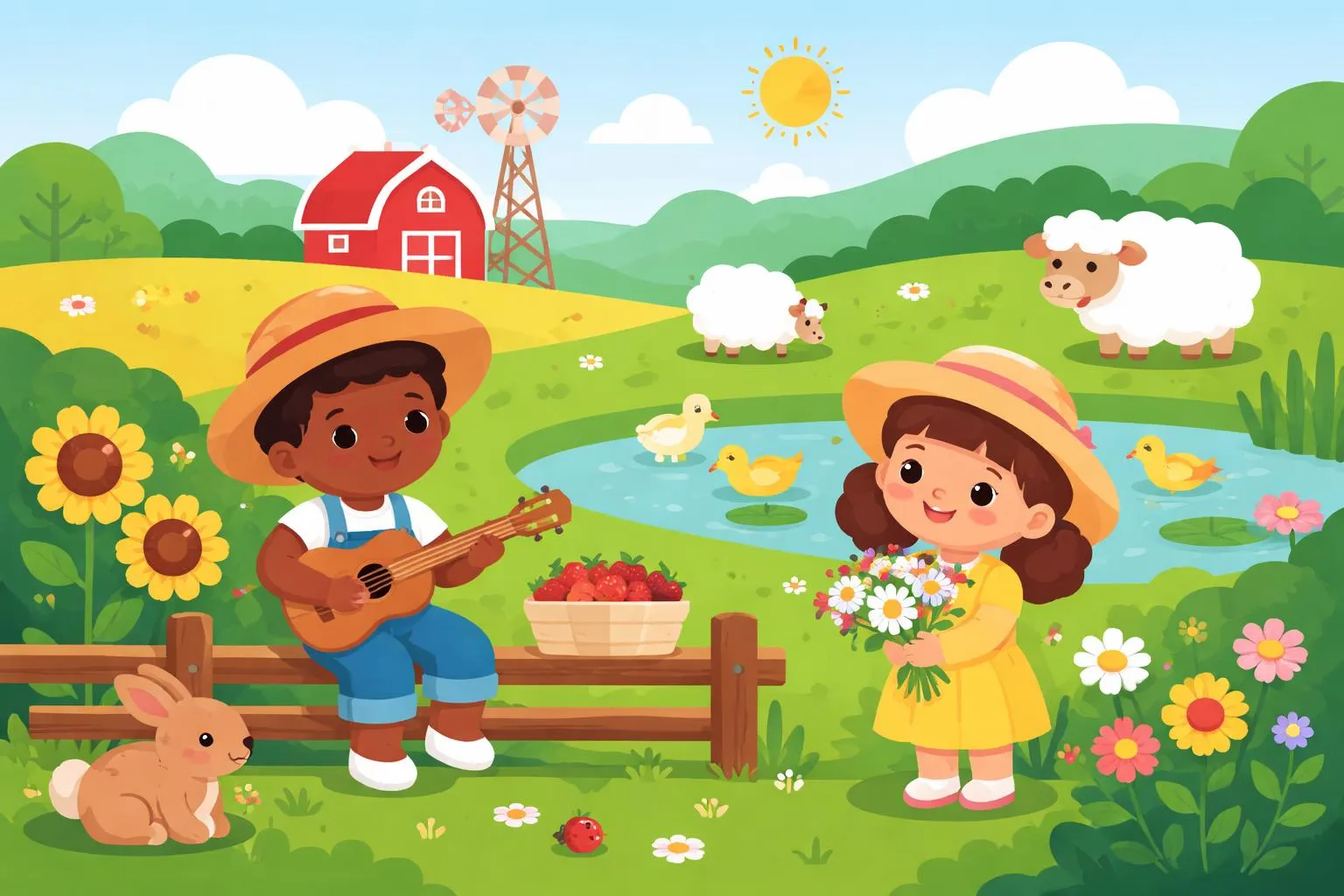

Original Story:
It’s hot to–day. The bees is buzzin’ Kinder don’t–keer–like aroun’ An’ fur off the warm air dances O’er the parchin’ roofs in town. In the brook the cows is standin’; Childern hidin’ in the hay; Can’t keep none of ‘em a workin’, ‘Cause it’s hot to–day.
It’s hot to–day. The sun is blazin’ Like a great big ball o’ fire; Seems as ef instead o’ settin’ It keeps mountin’ higher an’ higher. I’m as triflin’ as the children, Though I blame them lots an’ scold; I keep slippin’ to the spring–house, Where the milk is rich an’ cold.
The very air within its shadder Smells o’ cool an’ restful things, An’ a roguish little robin Sits above the place an’ sings. I don’t mean to be a shirkin’, But I linger by the way Longer, mebbe, than is needful, ‘Cause it’s hot to–day.
It’s hot to–day. The horses stumble Half asleep across the fiel’s; An’ a host o’ teasin’ fancies O’er my burnin’ senses steals,— Dreams o’ cool rooms, curtains lowered, An’ a sofy’s temptin’ look; Patter o’ composin’ raindrops Or the ripple of a brook.
I strike a stump! That wakes me sudden; Dreams all vanish into air. Lordy! how I chew my whiskers; ‘Twouldn’t do fur me to swear. But I have to be so keerful ‘Bout my thoughts an’ what I say; Somethin’ might slip out unheeded, ‘Cause it’s hot to–day.
Git up, there, Suke! you, Sal, git over! Sakes alive! how I do sweat. Every stitch that I’ve got on me, Bet a cent, is wringin’ wet. If this keeps up, I’ll lose my temper. Gee there, Sal, you lazy brute! Wonder who on airth this weather Could ‘a’ be’n got up to suit?
You, Sam, go bring a tin o’ water; Dash it all, don’t be so slow! ‘Pears as ef you tuk an hour ‘Tween each step to stop an’ blow. Think I want to stand a meltin’ Out here in this b’ilin’ sun, While you stop to think about it? Lift them feet o’ your’n an’ run.
It ain’t no use; I’m plumb fetaggled. Come an’ put this team away. I won’t plow another furrer; It’s too mortal hot to–day. I ain’t weak, nor I ain’t lazy, But I’ll stand this half day’s loss ‘Fore I let the devil make me Lose my patience an’ git cross.
Story Explanation and Analysis
This charming story vividly captures the oppressive heat of a summer day and its effects on both people and animals. The narrator describes how the heat influences the environment: bees buzzing lazily, children hiding in the hay instead of working, cows standing in the brook to cool off, and horses stumbling sleepily across the fields. The sun is portrayed as a relentless "great big ball o’ fire," intensifying the discomfort.
The narrator, who seems to be a farmer or farmworker, shares his own struggle to keep working under such conditions. He tries to stay productive but finds himself slipping away to the spring-house, where the milk is cold and refreshing—a small relief from the heat. The story also highlights the narrator's internal conflict: he wants to work hard but is tempted by the desire to rest and escape the heat.
The language is colloquial and rustic, with dialect words like "keer" (care), "fur" (for), and "git" (get), which add authenticity and charm. The story's tone is lighthearted yet honest, showing the universal human experience of battling discomfort while trying to fulfill responsibilities.
Background and Author Introduction
This story is a classic example of rural American literature, reflecting life on a farm during a hot summer day. Such stories often come from authors who grew up in or experienced rural life firsthand, using their observations to create relatable, vivid narratives. The dialect and setting suggest the author aimed to preserve the voice and lifestyle of rural communities, making the story both a literary piece and a cultural record.
While the exact author is not specified here, this style is reminiscent of writers like James Whitcomb Riley or other regional storytellers who celebrated rural life and its simple truths. These writers often aimed to connect readers with the rhythms of nature and everyday struggles, highlighting human resilience and humor.
Reflections and Insights
Reading this story encourages us to appreciate the challenges of farm life and the natural world’s influence on human behavior. It reminds us that everyone, regardless of age or role, is affected by the environment. The narrator’s patience and humor in dealing with the heat teach us about endurance and maintaining a positive attitude even when conditions are tough.
The story also invites readers to notice small joys—like the singing robin and the cool spring-house—that provide comfort during difficult times. This perspective encourages mindfulness and gratitude, valuable lessons for children and adults alike.
Learning Points for Children and Students
- Vocabulary and Dialect: Students can learn about regional dialects and how language reflects culture and place.
- Descriptive Writing: The story is a great example of using vivid imagery to describe weather, animals, and emotions.
- Themes: Understanding themes such as perseverance, patience, and the impact of nature on daily life.
- Emotional Awareness: Recognizing how external conditions affect mood and behavior.
- Cultural Appreciation: Gaining insight into rural life and historical ways of living.
Practical Applications in Life and Study
- Science: Discuss the effects of heat on living beings and the environment.
- Literature: Analyze narrative voice and how dialect adds authenticity.
- Social Studies: Explore rural community life and historical farming practices.
- Personal Development: Learning patience and coping strategies for uncomfortable situations.
- Creative Writing: Practice writing descriptive passages inspired by nature and weather.
Reading Comprehension Questions
- Why are the children hiding in the hay instead of working?
- What does the narrator do to find relief from the heat?
- How does the heat affect the horses and cows?
- What feelings does the narrator express about working in the hot weather?
- What small details in the story show signs of nature providing comfort?
- Why does the narrator say he won’t plow another furrow?
- How does the use of dialect words affect the tone of the story?
- What lessons about patience and endurance can be learned from this story?
Answers
- The children are hiding in the hay because it is too hot to work.
- The narrator slips away to the spring-house where the milk is cold to find relief.
- The horses stumble half asleep, and the cows stand in the brook to cool off.
- The narrator feels tired, hot, and frustrated but tries to keep working without losing his temper.
- The singing robin and the cool spring-house air provide comfort amidst the heat.
- Because it is "too mortal hot" and he does not want to lose his patience or get angry.
- The dialect words give the story a rustic, authentic feel and make the tone more conversational and relatable.
- The story teaches that sometimes it’s okay to rest and be patient when conditions are difficult, rather than pushing oneself too hard.
This story is a wonderful resource for children and students to explore language, nature, and human emotions, while also learning valuable life lessons about endurance and kindness to oneself in challenging times.