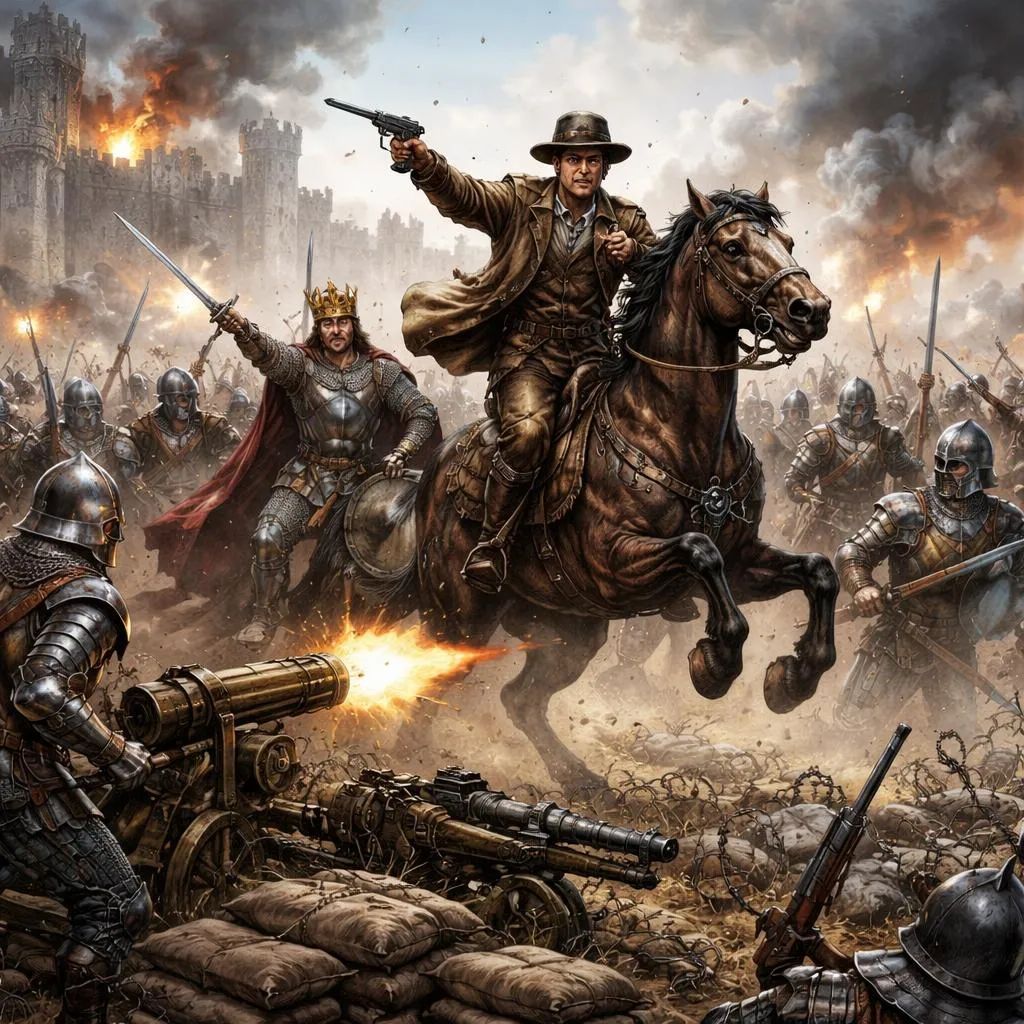

The excerpt you have just read is a dramatic and imaginative retelling of the legendary conflict surrounding King Arthur, Queen Guenever, and Sir Launcelot, set in a futuristic or alternate reality where ancient chivalry meets modern technology and political upheaval. This passage vividly portrays the tragic downfall of Arthur’s kingdom, the betrayal and war that ensue, and the rise of a republic amid chaos and despair.
Background and Author Introduction
This story is inspired by the timeless Arthurian legends, which have been told and retold for centuries in various forms—from medieval romances to modern novels. The original tales revolve around King Arthur, the noble ruler of Camelot; his queen, Guenever; and his greatest knight, Sir Launcelot. These stories explore themes of loyalty, love, honor, betrayal, and the struggle between good and evil.
The version you read is a creative reinterpretation that blends the old world with new inventions like electric light, stock markets, and modern warfare, reflecting the tensions between tradition and progress. The author, though not named here, demonstrates a deep understanding of the Arthurian mythos while adding layers of political intrigue and technological innovation that challenge the characters’ ideals and fates.
Detailed Interpretation and Significance
At its core, this narrative explores the tragic consequences of mistrust and jealousy. The suspicion cast upon Queen Guenever and Sir Launcelot by King Arthur’s nephews triggers a chain of events leading to civil war and the collapse of the kingdom. The story highlights how even the most noble intentions can be undermined by deceit and ambition.
The use of modern elements such as stock markets and electric fences symbolizes the clash between old values and new realities. The knights, once symbols of chivalry and honor, are now entangled in political machinations and technological warfare. This fusion invites readers to reflect on how progress can both empower and endanger society.
The proclamation of a republic at the end signals a profound shift from monarchy to democracy, suggesting that when old institutions fail, people must take responsibility for their own governance. It raises questions about power, authority, and the role of the individual in shaping history.
Lessons and Insights for Students
-
The Importance of Trust and Integrity: The downfall of Arthur’s kingdom begins with suspicion and betrayal. Students can learn that trust is the foundation of any strong relationship—whether personal, social, or political—and that integrity must be upheld even in difficult times.
-
Critical Thinking About Authority: The story challenges the idea of unquestioned monarchy by showing its vulnerabilities and the eventual rise of a republic. This encourages young readers to think critically about leadership, governance, and their own role as citizens.
-
Adaptability and Innovation: The blending of medieval and modern elements teaches the value of adapting to change. Students can appreciate how innovation can be a tool for survival and progress but must be handled responsibly.
-
Courage and Resilience: Characters like Clarence and the loyal boys who defend Merlin’s cave demonstrate bravery and determination. These qualities inspire students to face challenges with courage and to stand up for their beliefs.
-
The Complexity of Human Emotions: The story portrays love, jealousy, loyalty, and revenge, showing that human emotions are complex and can lead to both noble and destructive actions. Understanding this complexity helps students develop empathy and emotional intelligence.
Applying These Lessons in Daily Life
-
In School: Emulate the knights’ loyalty and courage by supporting classmates and standing up against bullying or injustice. Use critical thinking skills to question information and make informed decisions.
-
In Social Settings: Build trust through honesty and respect. Recognize that misunderstandings can cause conflict, and strive to communicate openly and kindly.
-
In Personal Growth: Embrace change and be open to learning new skills or ideas. Face difficulties with resilience, knowing that setbacks can lead to growth.
-
In Civic Engagement: Understand the importance of participating in community and democratic processes. Recognize that leadership comes with responsibility and that everyone has a voice.
Cultivating Positive Values from the Story
-
Honor and Responsibility: Like the knights, take responsibility for your actions and honor your commitments.
-
Justice and Fairness: Advocate for fairness in your community and stand against unfair treatment.
-
Innovation with Ethics: Use creativity and technology to solve problems, but consider the ethical implications.
-
Teamwork and Unity: Work collaboratively, valuing the strengths and perspectives of others.
Conclusion
This retelling of the Arthurian saga offers a rich tapestry of adventure, tragedy, and hope. It invites young readers to explore timeless themes through a fresh lens, encouraging them to reflect on their own values and the world around them. By studying these stories, students gain not only literary appreciation but also practical wisdom to navigate life’s challenges with courage, integrity, and insight.