
Original Story:
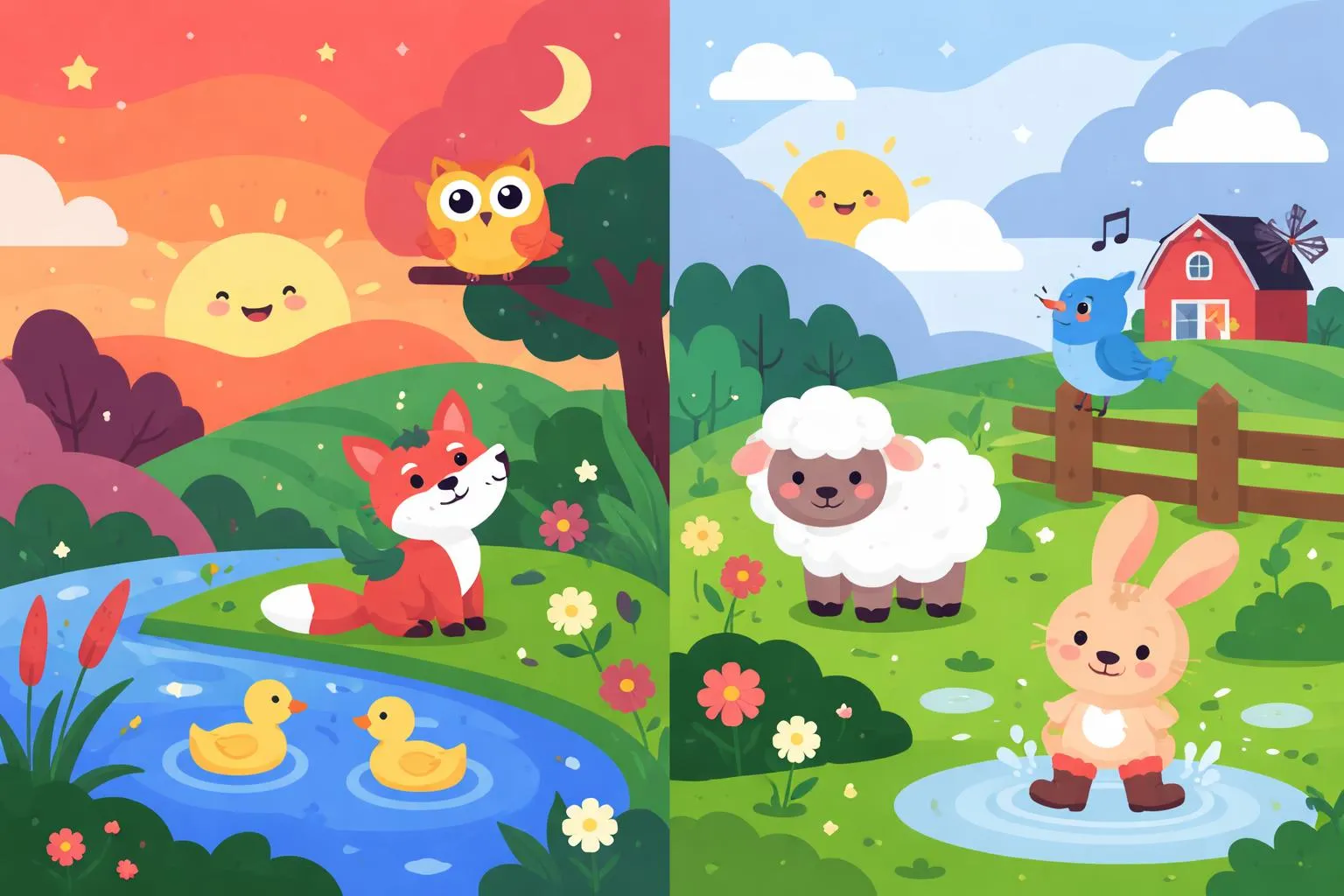
Evening red and morning gray
Sets the traveler on his way;
Evening gray and morning red,
Brings down rain upon his head.
Explanation and Interpretation
This short poem is a traditional weather proverb that uses simple imagery to describe how the colors of the sky at different times of the day can predict the weather. The "evening red" and "morning gray" suggest good weather ahead, encouraging travelers to set out on their journey. Conversely, "evening gray" and "morning red" warn of rain, signaling that travelers should prepare for wet conditions.
The poem uses contrasting colors to symbolize different weather patterns. The red sky at night often indicates high pressure and stable air coming in from the west, which typically means good weather. On the other hand, a red sky in the morning can mean that a storm system is approaching, bringing rain.
This rhyme is a simple, memorable way for children and learners to understand basic weather forecasting based on natural signs.
Background and Author Introduction
This proverb is part of traditional folk wisdom passed down through generations. It is often attributed to sailors and farmers who relied heavily on natural signs to predict weather before modern meteorology existed. The exact author is unknown, as it comes from oral tradition, but it has been recorded in various forms in English-speaking cultures.
The rhyme is a classic example of how people historically used observation of nature to make practical decisions. It reflects the human connection with the environment and the importance of paying attention to natural cues.
Reflection and Appreciation
Reading this poem reminds us of the value of simple wisdom and how nature itself can be a guide in our daily lives. It encourages mindfulness and attentiveness to the world around us. For children, it is an excellent introduction to the idea that weather can be predicted by observing the sky.
The poem’s rhythm and rhyme make it easy to remember, which is why it has endured for so long. It also teaches an important lesson about preparation and awareness—knowing when to start a journey or when to take shelter based on environmental signs.
Learning Points for Children and Students
From this poem, children and students can learn:
- Basic weather prediction: Understanding how natural signs like sky color relate to weather changes.
- Observation skills: Encouraging careful watching of the environment.
- Vocabulary: Words like evening, morning, traveler, gray, and red.
- Rhyme and rhythm: Recognizing poetic devices that make language memorable.
- Cause and effect: Linking sky color to weather outcomes.
Practical Applications and Life Lessons
- In daily life: Children can learn to look at the sky and make simple predictions about the weather, which can help with planning outdoor activities.
- In school: Teachers can use this poem to introduce basic meteorology and environmental science.
- In travel and safety: Understanding weather signs can teach children the importance of preparation and caution.
- Critical thinking: Encourages questioning and verifying natural signs with actual weather outcomes.
Reading Comprehension Questions
- What does a red sky in the evening usually mean?
- According to the poem, what weather is expected if the morning sky is red?
- Why do you think travelers would pay attention to the colors of the sky?
- What can you learn about nature from this poem?
- Can you think of other natural signs that help predict weather?
Answers
- A red sky in the evening usually means good weather is coming.
- If the morning sky is red, the poem says it will bring rain.
- Travelers pay attention to the sky colors to know if the weather will be good or bad for their journey.
- The poem teaches us that nature gives us clues about what will happen, like changes in weather.
- Possible answers include observing clouds, wind direction, animal behavior, or temperature changes.
This poem is a wonderful tool for children to connect language learning with real-world observation, encouraging both literacy and scientific curiosity.