
Original Story:
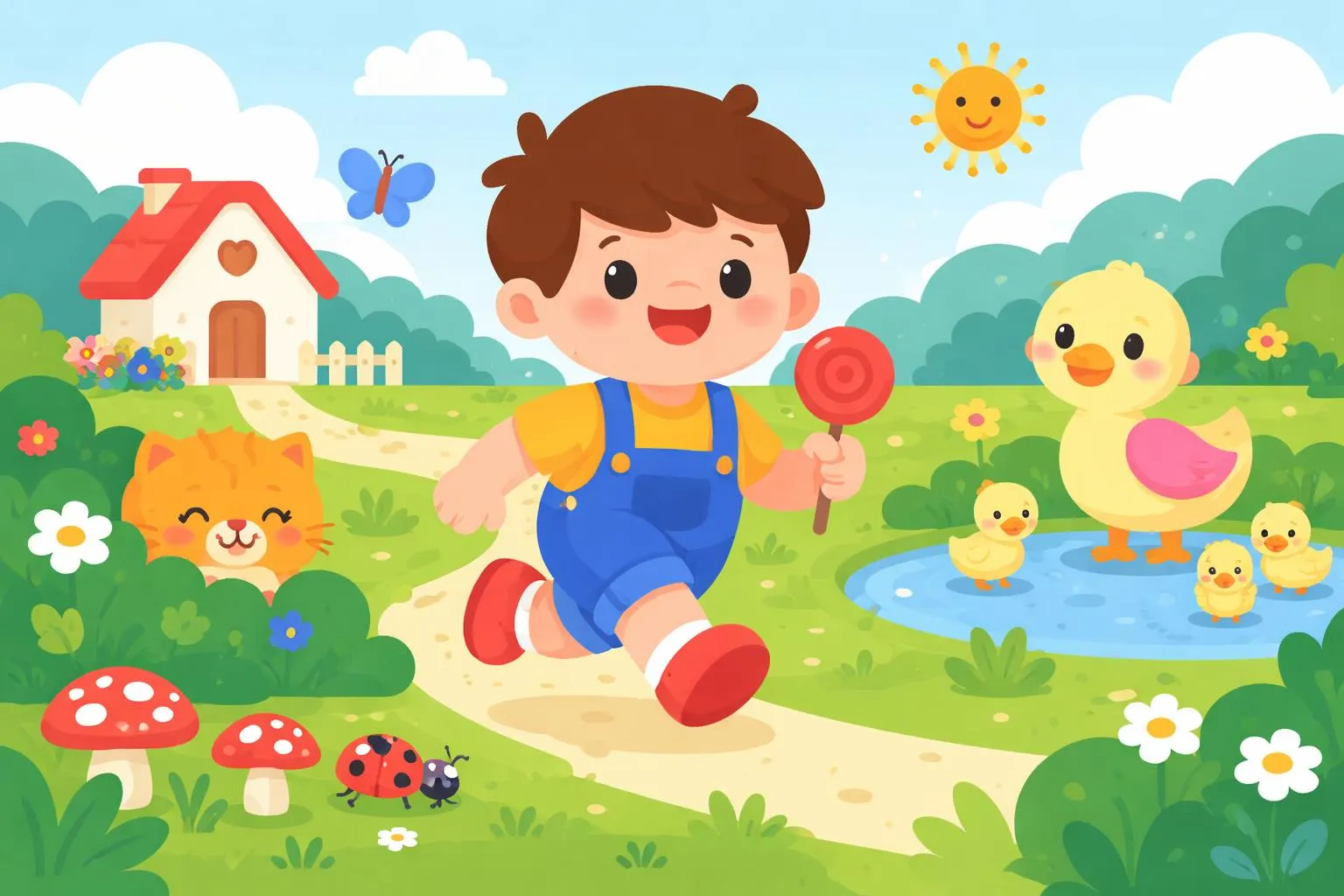
Georgy-porgy, pudding and pie,
Kissed the girls and made them cry.
When the boys came out to play,
Georgy-porgy ran away.
Expansion and Analysis of "Georgy-porgy"
Introduction and Explanation
The nursery rhyme "Georgy-porgy" is a short and simple verse that tells a brief story about a boy named Georgy-porgy. The rhyme describes how Georgy-porgy kissed the girls, which made them cry, and when the boys came out to play, he ran away. This little poem captures a playful yet slightly mischievous scene from childhood.
The rhyme can be interpreted as a reflection of early childhood interactions, where children are learning about social boundaries, emotions, and reactions. Georgy-porgy's actions—kissing the girls and causing them to cry—may symbolize the confusion and misunderstandings that young children sometimes experience in social settings. His running away when the boys appear could indicate a fear of confrontation or a desire to avoid trouble.
Background and Author Information
The exact origins of "Georgy-porgy" are unclear, as it is a traditional English nursery rhyme passed down through oral tradition. Nursery rhymes like this one often date back to the 18th or 19th century and were used to entertain children while also teaching simple lessons or social norms.
The rhyme’s playful rhythm and rhyming scheme make it easy for children to remember and recite. Although the author is unknown, the rhyme’s longevity highlights its popularity and effectiveness as a tool for early childhood education and entertainment.
Literary and Cultural Significance
"Georgy-porgy" is an example of how nursery rhymes use simple language and repetitive sounds to engage young listeners. The rhyme’s use of rhyme and rhythm helps develop phonemic awareness, an important skill for early reading.
The story also subtly introduces children to the concepts of cause and effect (Georgy-porgy’s actions lead to the girls crying) and social dynamics (his reaction to the boys’ arrival). This makes it a useful starting point for discussions about emotions, empathy, and appropriate social behavior.
Lessons and Learning Points for Children and Students
From this rhyme, children can learn several important lessons:
- Understanding Emotions: Recognizing that actions can affect others’ feelings, as shown by the girls crying.
- Social Awareness: Observing how Georgy-porgy reacts differently when boys appear, highlighting social cues and peer influence.
- Language Skills: Enhancing vocabulary and phonological skills through rhyme and repetition.
- Moral Reflection: Considering why certain behaviors might upset others and how to interact kindly.
Practical Applications in Life and Learning
- In the Classroom: Teachers can use this rhyme to initiate conversations about feelings and social interactions. It can serve as a prompt for role-playing exercises where children practice expressing emotions and resolving conflicts.
- At Home: Parents can read this rhyme with their children to discuss how to treat friends with kindness and respect.
- Language Development: The rhyme’s simple structure helps young learners practice pronunciation, rhythm, and memorization.
- Creative Activities: Children can create drawings or stories inspired by the rhyme, encouraging imagination and comprehension.
Challenges and Focus Areas
- Understanding Context: Young children might find it difficult to grasp why the girls cried or why Georgy-porgy ran away. Adults should guide them through these concepts.
- Emotional Intelligence: Teaching empathy and appropriate responses to others’ feelings can be challenging but is essential.
- Pronunciation Practice: Some children may need help with the rhyme’s rhythm and sounds, which can be addressed through repeated reading and singing.
Reading Comprehension Exercises
Questions:
- Who is the main character in the rhyme?
- What did Georgy-porgy do to the girls?
- How did the girls feel after Georgy-porgy kissed them?
- What did Georgy-porgy do when the boys came out to play?
- Why do you think the girls cried?
- What lesson can we learn from this rhyme about how to treat others?
Answers:
- The main character is Georgy-porgy.
- He kissed the girls.
- The girls felt sad and cried.
- Georgy-porgy ran away.
- The girls cried because they did not like being kissed by Georgy-porgy.
- We can learn that it is important to respect other people’s feelings and to be kind to others.
This nursery rhyme, while short and simple, provides a valuable opportunity for children to explore emotions, social behavior, and language skills in an engaging and memorable way. Through guided discussion and activities, "Georgy-porgy" can become a meaningful part of early childhood education.