
Original Story:
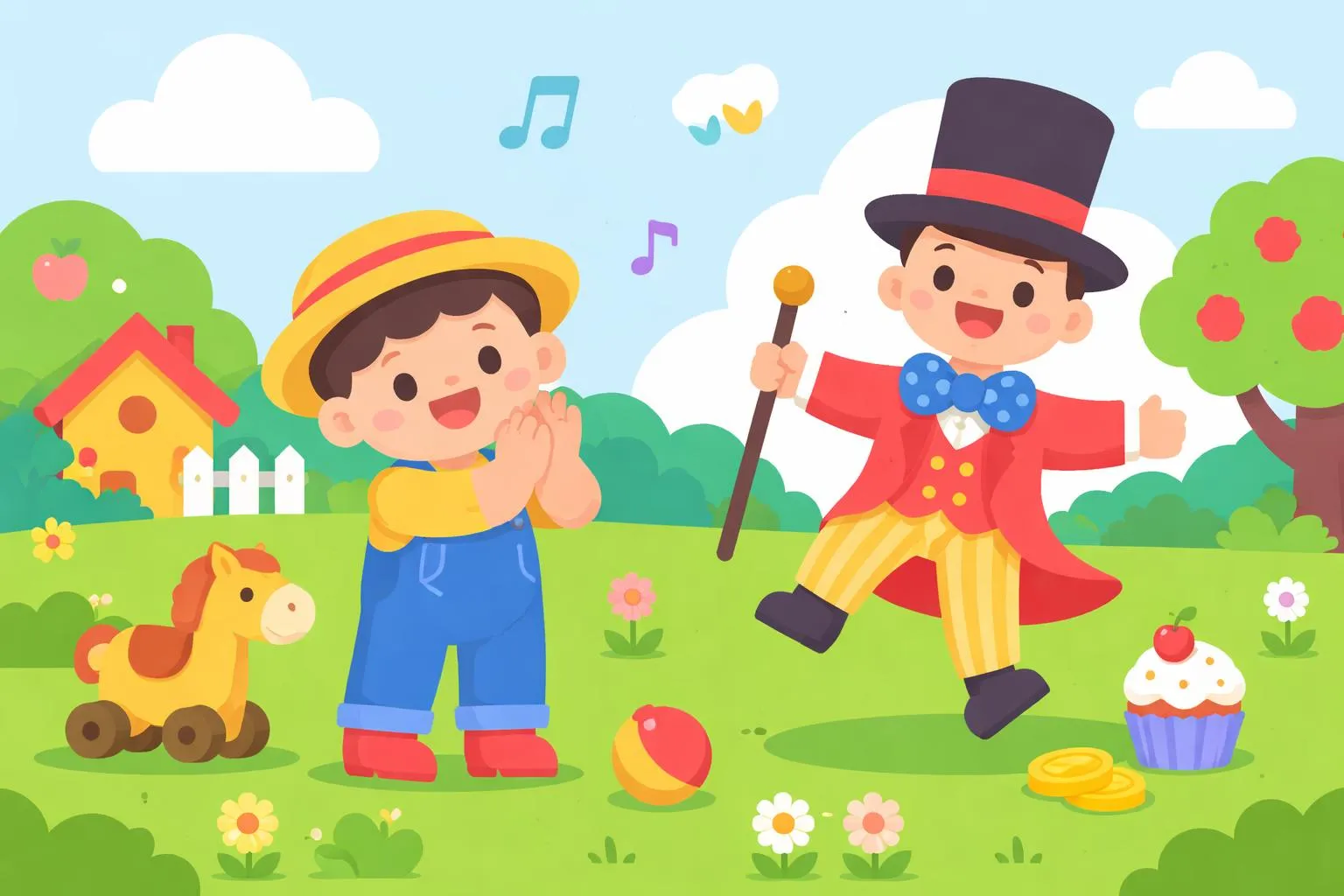
Handy Spanky, Jack-a-dandy,
Loves plum-cake and sugar-candy;
He bought some at a grocer’s shop.
And out he came, hop-hop-hop.
Expansion and Analysis
Summary and Explanation
This short and charming rhyme tells the story of a lively character named Handy Spanky, also called Jack-a-dandy, who has a fondness for sweet treats like plum-cake and sugar-candy. The poem captures a simple moment: Handy Spanky visits a grocer’s shop, purchases his favorite sweets, and happily hops away, enjoying his delightful purchase. The repeated phrase "hop-hop-hop" adds a playful rhythm and energy to the scene, evoking a sense of joy and lightheartedness.
Interpretation and Appreciation
Though brief, this rhyme is a wonderful example of children’s traditional verse that combines rhythm, rhyme, and vivid imagery. The use of alliteration ("plum-cake and sugar-candy") and the onomatopoeic "hop-hop-hop" make the poem engaging and easy to remember, which is ideal for young readers and listeners. The character of Handy Spanky represents a carefree and joyful child, emphasizing themes of simple pleasures and happiness in everyday moments.
Background and Author Introduction
This rhyme is part of traditional English nursery rhymes, often passed down orally through generations. The exact author is unknown, as is common with many folk rhymes, but it reflects the cultural and social environment of children’s literature in the 18th and 19th centuries. Such rhymes were created to entertain children, teach language skills, and develop memory through repetition and rhythm.
Reflections and Insights
Reading this rhyme encourages children to appreciate the joy in small things, such as buying and enjoying sweets. It also promotes language development through its rhythmic and rhyming structure. For adults and educators, it serves as a reminder of the importance of simple, playful moments in childhood.
Educational Value and Learning Points
From this rhyme, children and students can learn:
- Vocabulary: Words like plum-cake, sugar-candy, grocer’s shop, and expressions like hop-hop-hop.
- Rhythm and Rhyme: Understanding how rhyme schemes and rhythmic patterns make poems memorable.
- Alliteration and Onomatopoeia: Identifying literary devices that enhance the sound and feel of poetry.
- Cultural Context: Gaining insight into historical children’s literature and traditional rhymes.
- Character and Emotion: Recognizing feelings of happiness and excitement through the character’s actions.
Practical Applications and Life Lessons
- In Language Learning: Teachers can use this rhyme to teach phonics, pronunciation, and rhyme recognition.
- In Creative Writing: Students can be inspired to create their own rhymes using similar structures.
- In Social Studies: Exploring historical shops like grocer’s shops and traditional treats to understand past lifestyles.
- In Daily Life: Encouraging children to find joy in small experiences and express their feelings through creative language.
Reading Comprehension Practice
Questions:
- Who is the main character in the rhyme?
- What does Handy Spanky love to eat?
- Where does Handy Spanky buy his sweets?
- How does Handy Spanky leave the shop?
- What literary device is used in the phrase "hop-hop-hop"?
Answers:
- The main character is Handy Spanky, also called Jack-a-dandy.
- He loves plum-cake and sugar-candy.
- He buys his sweets at a grocer’s shop.
- He leaves the shop hopping, described as "hop-hop-hop."
- The phrase uses onomatopoeia, mimicking the sound of hopping.
This simple rhyme offers a delightful way to engage young learners with language, rhythm, and cultural history, making it a valuable resource for educators and parents alike.