
Original Story:
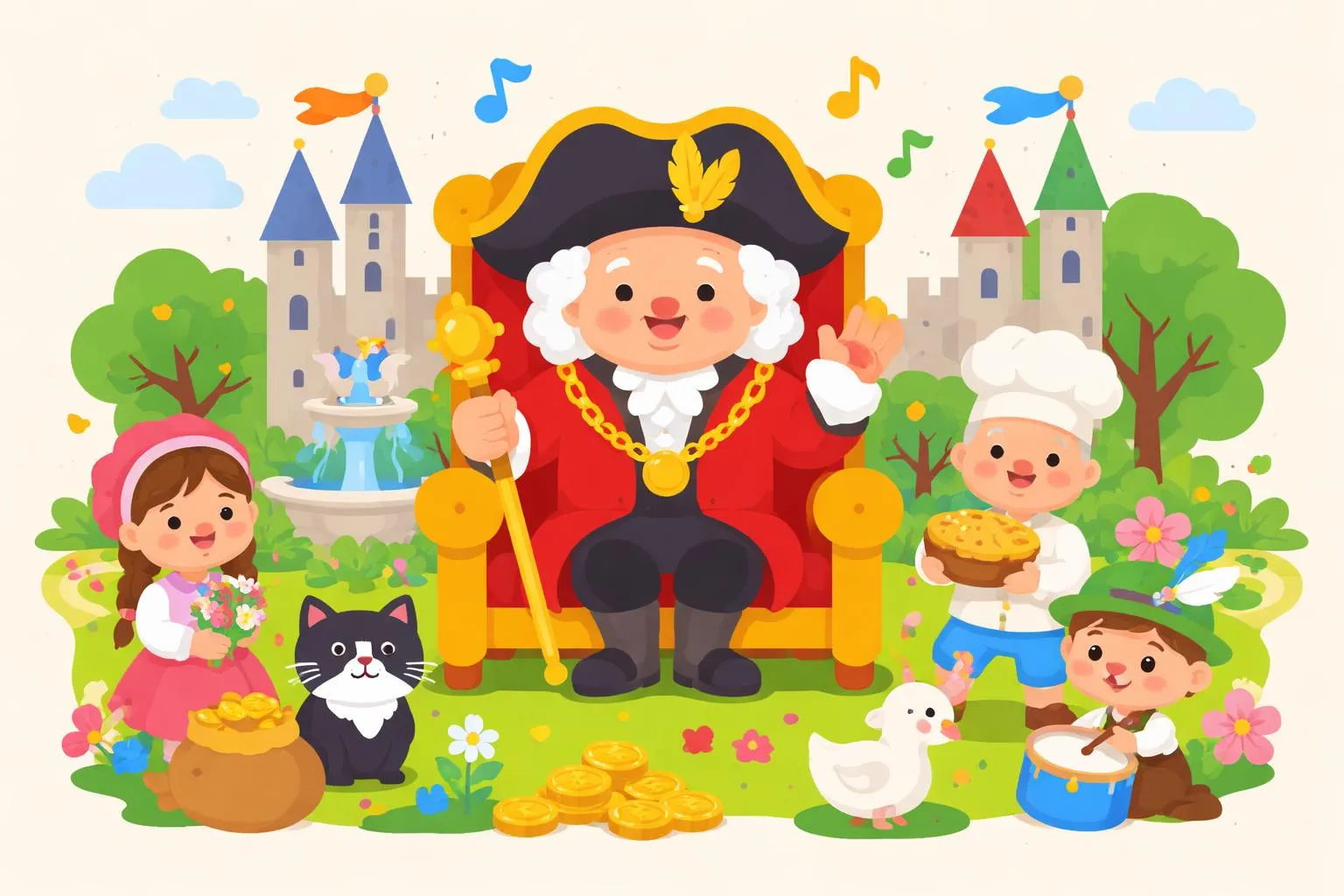
Here sits the Lord Mayor.........................forehead. Here sits his two men ......................eyes. Here sits the rooster...............................right cheek. Here sits the hen...........................left cheek. Here sit the little chickens.....................tip of nose. Here they run in............................mouth Chin-chopper, chin-chopper, chin-chopper, chin!..chuck the chin.
Expansion and Analysis of the Story
Summary and Interpretation
This short and rhythmic story presents a playful and imaginative scene where different characters—the Lord Mayor, his two men, a rooster, a hen, and little chickens—are each assigned to a specific part of the face. The Lord Mayor sits on the forehead, the two men on the eyes, the rooster on the right cheek, the hen on the left cheek, and the little chickens on the tip of the nose. The story culminates with the phrase "Chin-chopper, chin-chopper, chin-chopper, chin!..chuck the chin," which adds a lively and rhythmic ending that invites children to engage physically, perhaps by gently tapping or moving their chin.
This story is a playful rhyme that encourages children to use their imagination and body awareness. It connects characters and animals to parts of the face, making it easier for young learners to remember facial features while enjoying a fun narrative.
Background and Author Introduction
While the exact origins and author of this particular rhyme are unclear, it belongs to a long tradition of children's oral storytelling and nursery rhymes that use repetition, rhythm, and simple imagery to engage young minds. Such rhymes have been passed down through generations, often used by parents and educators to teach language, body parts, and social roles in an entertaining way.
The story’s structure, with its repetitive and rhythmic pattern, aligns with many traditional nursery rhymes designed to develop phonemic awareness and motor skills in early childhood education.
Reflection and Personal Response
Reading this story evokes a sense of joy and playfulness. It reminds us of the importance of simple, imaginative play in childhood development. The story’s rhythm and association with body parts make it a perfect tool for interactive learning. It encourages children to move, touch, and explore their own faces, fostering a connection between language and physical experience.
Educational Value and Learning Points
Children and students can learn several key concepts from this story:
- Body Awareness: By associating characters with parts of the face, children learn to identify and name facial features.
- Imaginative Play: The story encourages creativity by transforming familiar body parts into a stage for characters.
- Language Development: The rhythmic and repetitive structure helps develop phonological awareness and memory.
- Social Roles: Introducing figures like the Lord Mayor and his men subtly introduces children to social hierarchy and roles in a community.
- Animal Recognition: The inclusion of the rooster, hen, and little chickens helps children recognize and name common farm animals.
Practical Applications in Life and Learning
- In the Classroom: Teachers can use this rhyme as a fun warm-up activity to teach body parts, encourage participation, and develop listening skills.
- At Home: Parents can engage children in interactive storytelling, helping them learn vocabulary and body awareness through play.
- Speech Therapy: The repetitive sounds and rhythm can support speech development and articulation practice.
- Cultural Learning: This story can be a starting point to discuss community roles and farm animals, linking language learning with social studies.
Challenges and Learning Focus
- Pronunciation Practice: The repetitive "chin-chopper" phrase can be challenging for young learners but is excellent for practicing consonant sounds.
- Memory Retention: Remembering the position of each character on the face encourages memory skills.
- Understanding Metaphor: Younger children may need guidance to understand the imaginative assignment of characters to face parts.
Reading Comprehension Exercises
-
Where does the Lord Mayor sit?
a) On the nose
b) On the forehead
c) On the chin
Answer: b) On the forehead -
Who sits on the right cheek?
a) The hen
b) The rooster
c) The little chickens
Answer: b) The rooster -
What is the last phrase in the story?
a) Chin-chopper, chin-chopper, chin-chopper, chin!..chuck the chin.
b) Here sit the little chickens.
c) Here sits the Lord Mayor.
Answer: a) Chin-chopper, chin-chopper, chin-chopper, chin!..chuck the chin. -
Which characters sit on the eyes?
a) The Lord Mayor’s two men
b) The little chickens
c) The hen and rooster
Answer: a) The Lord Mayor’s two men -
What can children learn from this story?
a) How to cook
b) Names of facial parts and animals
c) How to write stories
Answer: b) Names of facial parts and animals
This simple yet imaginative story is a wonderful resource for early childhood education, combining language learning, body awareness, and social imagination in a playful and memorable way.