
Original Story:
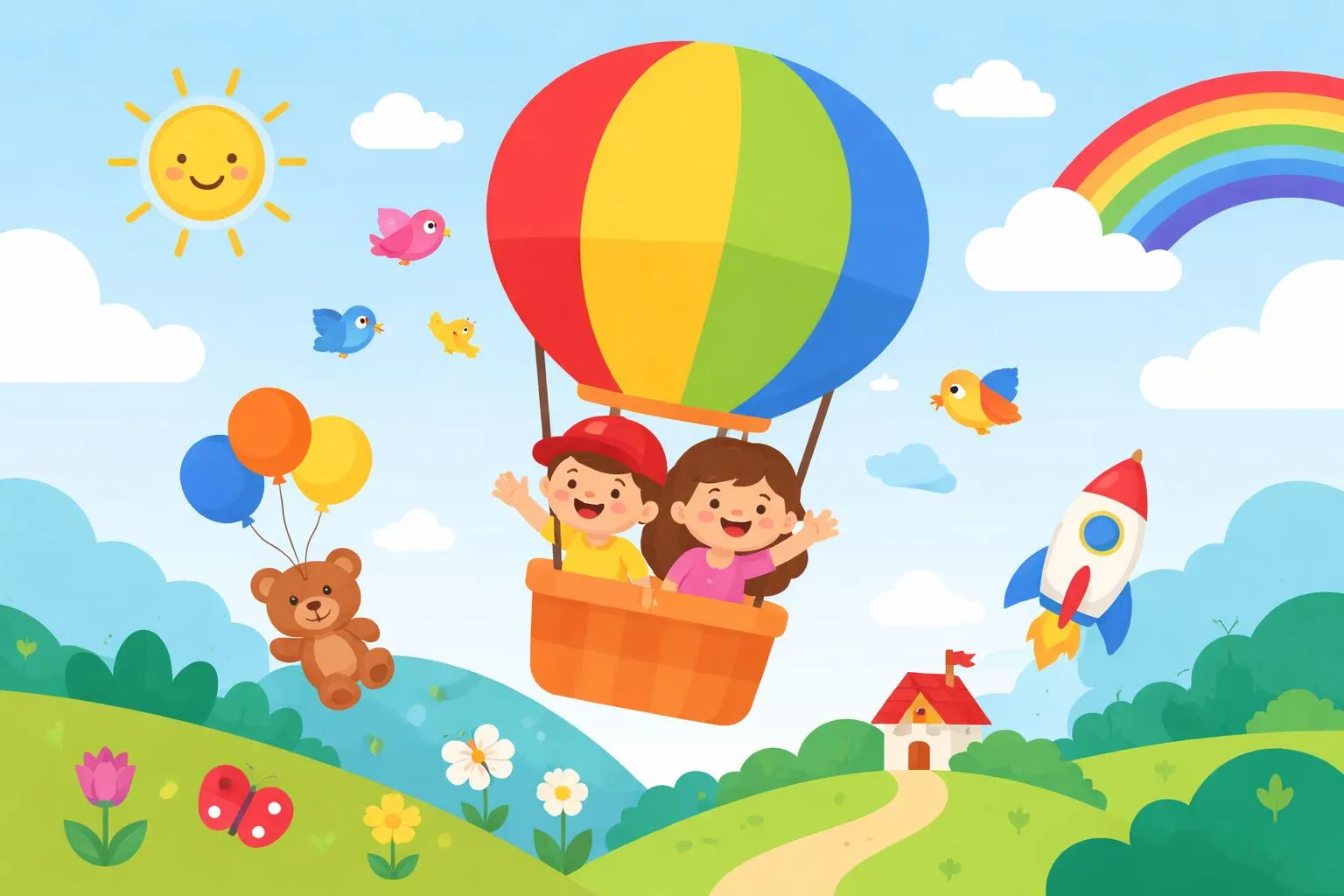
Here we go up, up, up,
Here we go down, down, down-y;
Here we go up, and here we go down,
And here we go round, round, round-y.
Expansion and Analysis
Summary and Interpretation
This simple and rhythmic children's story captures the playful movements of going up, down, and round. The repetitive structure and musicality make it easy for children to follow and engage with the text. The story reflects the natural curiosity and physical activity of young children, encouraging them to explore different directions and motions in a fun and interactive way.
The phrases "Here we go up," "Here we go down," and "Here we go round" describe basic movements that are familiar to children, often associated with play, dance, or physical exercises. The use of repetition and rhyme helps reinforce language patterns and motor coordination.
Creative Background and Author Introduction
This type of children's rhyme is often part of traditional nursery rhymes or playground chants, designed to be simple, memorable, and enjoyable for young learners. While the specific author of this rhyme is unknown, it belongs to a genre of oral storytelling and songs passed down through generations to aid early childhood development.
The rhyme likely originated from the need to combine physical movement with verbal learning, helping children develop both language and gross motor skills simultaneously. Such stories and rhymes are often used by educators and parents worldwide to create an interactive learning environment.
Reflection and Personal Response
Reading this story reminds us of the joy and simplicity of childhood play. It highlights how movement and language can be intertwined to create an engaging learning experience. The cheerful tone and rhythmic flow make it a perfect tool for bonding between adults and children, encouraging active participation and shared fun.
Learning Points for Children and Students
From this story, children can learn:
- Directional vocabulary: words like up, down, and round.
- Rhythm and rhyme: recognizing patterns in language.
- Motor skills: mimicking the movements described fosters physical coordination.
- Listening and memory skills: repetition aids memory retention.
- Social interaction: often used in group play, promoting cooperation.
Practical Applications and Learning Insights
In daily life and educational settings, this rhyme can be used to:
- Warm up before physical activities or sports.
- Teach basic prepositions and directional concepts.
- Encourage children to follow instructions and improve concentration.
- Develop a sense of rhythm and timing through movement.
- Create a joyful, interactive classroom atmosphere.
Challenges and Focus Areas
- Pronunciation and clarity: children might need guidance to pronounce repetitive sounds clearly.
- Understanding spatial concepts: some children may require additional visual or physical demonstrations.
- Maintaining engagement: varying the speed and style of recitation can help keep children interested.
Reading Comprehension Questions
- What are the three main movements mentioned in the story?
- Why do you think the story repeats the words "up" and "down"?
- How can this story help children learn?
- What kind of activities can you do while reading this story?
- Who might use this rhyme and for what purpose?
Answers
- The three main movements are up, down, and round.
- The repetition helps children remember the words and understand the rhythm of the story.
- It helps children learn directional words, improve motor skills, and develop memory and listening skills.
- Children can move their bodies up and down or spin around while reciting the rhyme.
- Parents, teachers, or caregivers might use this rhyme to teach children language, movement, and coordination.
This simple yet effective rhyme is a valuable tool in early childhood education, combining language learning with physical activity to promote holistic development.