
Original Story:
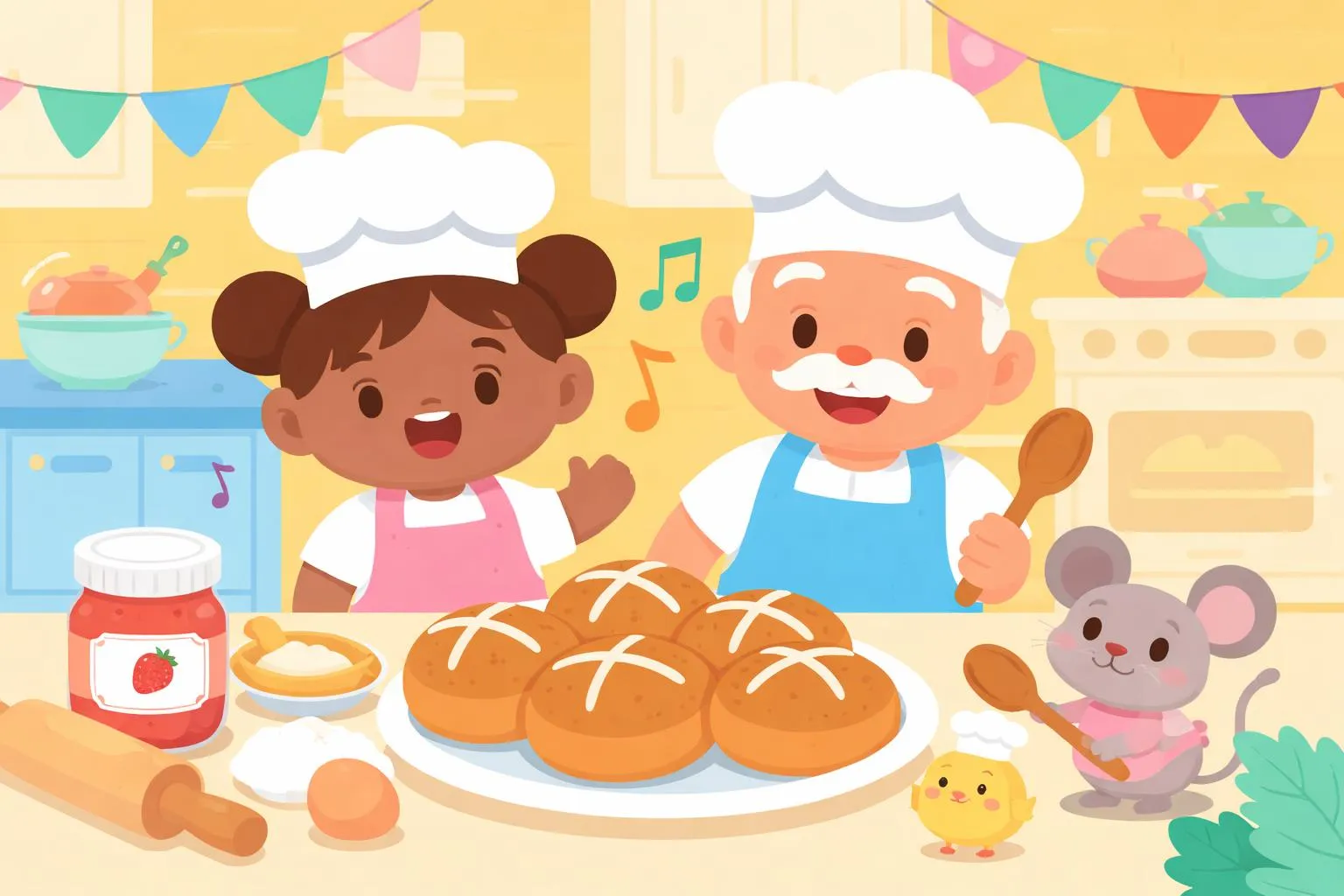
Hot-cross buns, Hot-cross buns,
One a penny, two a penny,
Hot-cross buns.
Hot-cross buns, Hot-cross buns,
If you have no daughters,
Give them to your sons.
Expansion and Analysis
Introduction and Meaning
The nursery rhyme "Hot-cross buns" is a traditional English folk song that has been sung by children for many generations. The song is short and repetitive, making it easy for young children to memorize and sing along. The phrase "one a penny, two a penny" refers to the price of hot-cross buns, which were traditionally sold for a penny each or two for a penny, indicating a bargain or a sale.
The rhyme is centered around hot-cross buns, which are sweet, spiced buns marked with a cross on top. These buns are traditionally eaten on Good Friday in many English-speaking countries, symbolizing the crucifixion of Jesus Christ. The cross on the bun represents the Christian cross, and the spices inside are said to represent the spices used to embalm Christ's body.
The line "If you have no daughters, give them to your sons" humorously suggests that if you do not have daughters to receive the buns, you can give them to your sons instead, indicating the buns are for all children regardless of gender.
Background and Author
The exact origin of the "Hot-cross buns" rhyme is unknown, but it dates back to at least the 18th century. It was originally a street cry used by vendors selling hot-cross buns during the Easter season. These buns were highly popular and considered a special treat. The rhyme’s simple melody and repetitive structure helped vendors attract attention and sell their goods.
The author of the rhyme is anonymous, as is common with many traditional folk songs and nursery rhymes passed down orally through generations. Over time, it has become a staple in children’s literature and early music education.
Interpretation and Appreciation
This rhyme is a wonderful example of how simple language and repetition can create a memorable and engaging song for children. It teaches rhythm, rhyme, and basic counting (one a penny, two a penny), which are foundational skills in early childhood education.
The rhyme also introduces cultural and historical elements, such as the tradition of hot-cross buns and their significance during Easter. This can spark curiosity in children about holidays, customs, and the stories behind them.
Educational Value and Learning Points
Children and students can learn several things from this nursery rhyme:
- Language Skills: The rhyme helps develop vocabulary, pronunciation, and rhythm.
- Counting and Numbers: The phrase "one a penny, two a penny" introduces simple counting and the concept of pricing.
- Cultural Awareness: It introduces the tradition of hot-cross buns and the significance of Easter customs.
- Music and Memory: The repetitive melody aids memory retention and musical ear training.
- Social Sharing: The line about giving buns to sons or daughters encourages sharing and kindness.
Practical Applications and Life Lessons
- In the Classroom: Teachers can use this rhyme to teach children about rhythm, rhyme, and counting. It can also be a fun way to introduce cultural traditions.
- In Daily Life: Parents can use the rhyme during baking or buying hot-cross buns, turning everyday activities into learning moments.
- Moral Lessons: Sharing food with others, regardless of gender, promotes inclusivity and generosity.
- Language Development: Singing nursery rhymes like this one helps young learners improve their English fluency and confidence.
Reading Comprehension Practice
Questions:
- What is the main subject of the nursery rhyme "Hot-cross buns"?
- What does the phrase "one a penny, two a penny" mean?
- Why are hot-cross buns traditionally eaten on Good Friday?
- What does the rhyme suggest if you have no daughters?
- How can this rhyme help children in their learning?
Answers:
- The main subject is hot-cross buns, a type of sweet spiced bun.
- It means the buns were sold for one penny each or two buns for a penny.
- They are eaten on Good Friday because the cross on the bun symbolizes the Christian cross and the spices represent those used to embalm Jesus Christ.
- The rhyme suggests giving the buns to your sons if you have no daughters.
- It helps with language skills, counting, cultural awareness, memory, and social sharing.
This nursery rhyme, while simple, holds a rich cultural history and offers valuable educational benefits, making it a timeless piece for children’s learning and enjoyment.