
Original Story:
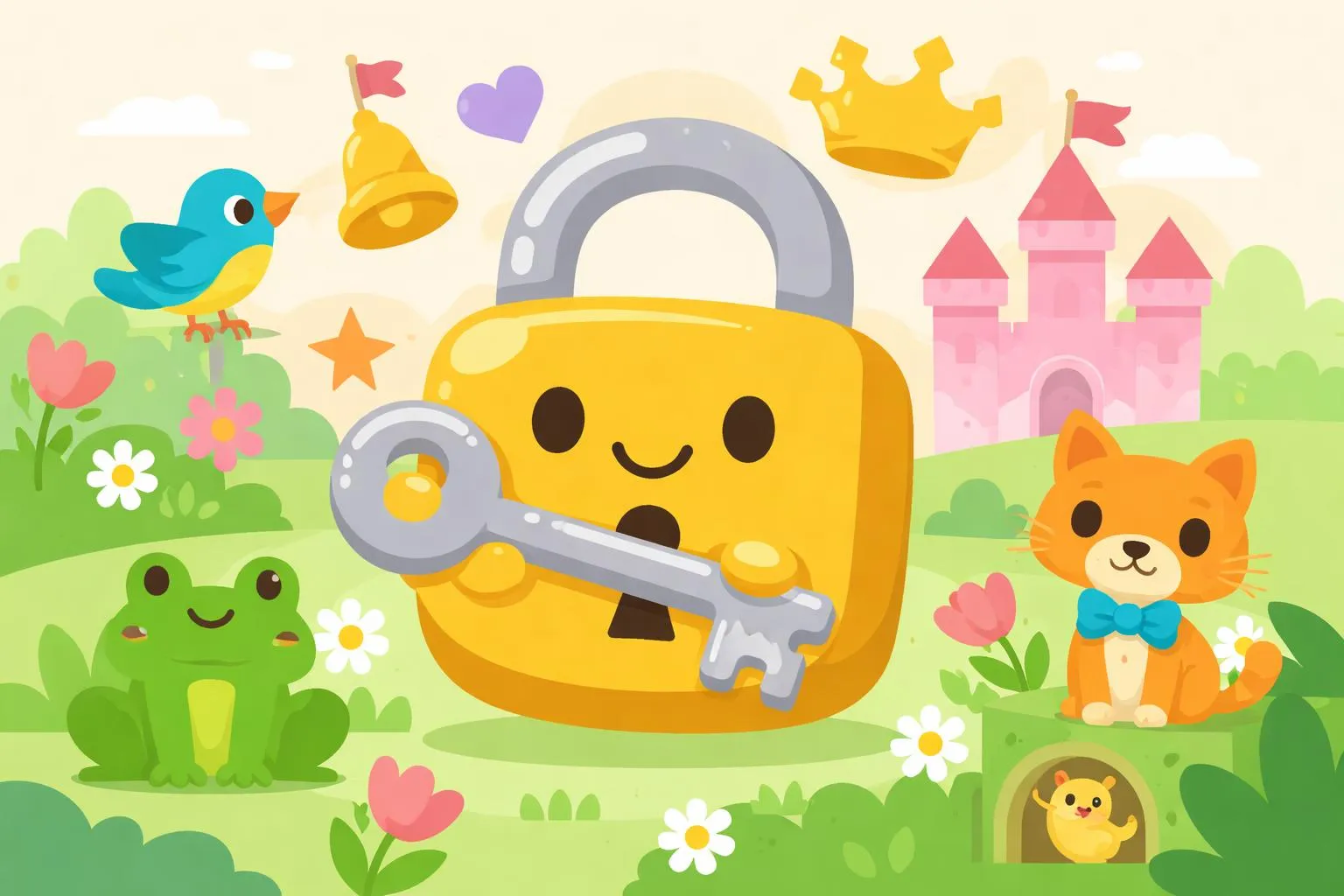
- I am a gold lock.
- I am a gold key.
- I am a silver lock,
- I am a silver key.
- I am a brass lock,
- I am a brass key.
- I am a monk lock.
- I am a monk-key.
Expanded Article
Story Explanation and Interpretation
This short and simple story presents a series of paired objects: locks and their corresponding keys, described by their materials or types—gold, silver, brass, and monk. Each lock is matched with a key of the same kind, symbolizing a perfect fit or connection. The story’s repetitive structure highlights the harmony between the lock and its key, emphasizing the idea that every problem (lock) has a solution (key) that fits perfectly.
The use of different metals and the term "monk" adds a layer of symbolism. Gold, silver, and brass represent different values and qualities, while the “monk lock” and “monk-key” suggest something spiritual or unique, possibly indicating that some solutions are not just physical but also spiritual or moral.
Background and Author Introduction
This story likely originates from a traditional or educational context where simple objects are used to teach children about relationships, matching, and problem-solving. The author is unknown, but the story’s style is typical of early childhood education materials designed to introduce concepts of pairing and categorization.
The story’s simplicity makes it accessible to young learners, and its repetitive format aids memory and understanding. It can be used to teach vocabulary related to metals and objects, as well as abstract ideas like compatibility and fitting solutions.
Reflection and Insights
Reading this story encourages children to think about how things fit together in the world, both literally and metaphorically. It teaches patience and observation, as children learn to recognize matching pairs. It also subtly introduces the concept that different problems require different solutions, and that understanding the nature of a problem is key to finding the right answer.
The mention of a "monk lock" and "monk-key" invites curiosity and discussion about spirituality or uniqueness, encouraging children to think beyond the physical world.
Educational Value and Learning Points
Children and students can learn several important lessons from this story:
- Vocabulary Building: Learning names of metals (gold, silver, brass) and objects (lock, key).
- Matching Skills: Understanding pairs and how certain items correspond to each other.
- Problem Solving: Recognizing that every problem has a specific solution.
- Symbolism: Introducing abstract thinking about spiritual or unique solutions.
- Memory and Repetition: The repetitive structure helps reinforce learning.
Practical Applications and Life Lessons
- In Daily Life: Children can learn to organize and match objects, like socks or puzzle pieces, improving their cognitive skills.
- In Learning: The story can be used to teach categorization and classification in science and language lessons.
- In Social Skills: Understanding that everyone has a unique role or solution to a problem promotes empathy and cooperation.
- In Moral Education: The monk lock and key can be a starting point for discussions about values, ethics, and inner harmony.
Reading Comprehension Exercises
Questions:
- What are the different types of locks mentioned in the story?
- How does the story show that each lock has a matching key?
- What might the "monk lock" and "monk-key" symbolize?
- Why do you think the story repeats the same pattern with different materials?
- What can children learn from this story about solving problems?
Answers:
- The types of locks mentioned are gold lock, silver lock, brass lock, and monk lock.
- The story pairs each lock with a key of the same material or type, showing a perfect match.
- The "monk lock" and "monk-key" might symbolize spiritual or unique solutions beyond physical objects.
- The repetition helps children recognize patterns and understand the concept of matching pairs.
- Children can learn that every problem has a specific solution that fits it perfectly.
This story is a simple yet powerful tool for early education, combining vocabulary learning with deeper lessons about problem-solving, matching, and the value of different kinds of solutions.