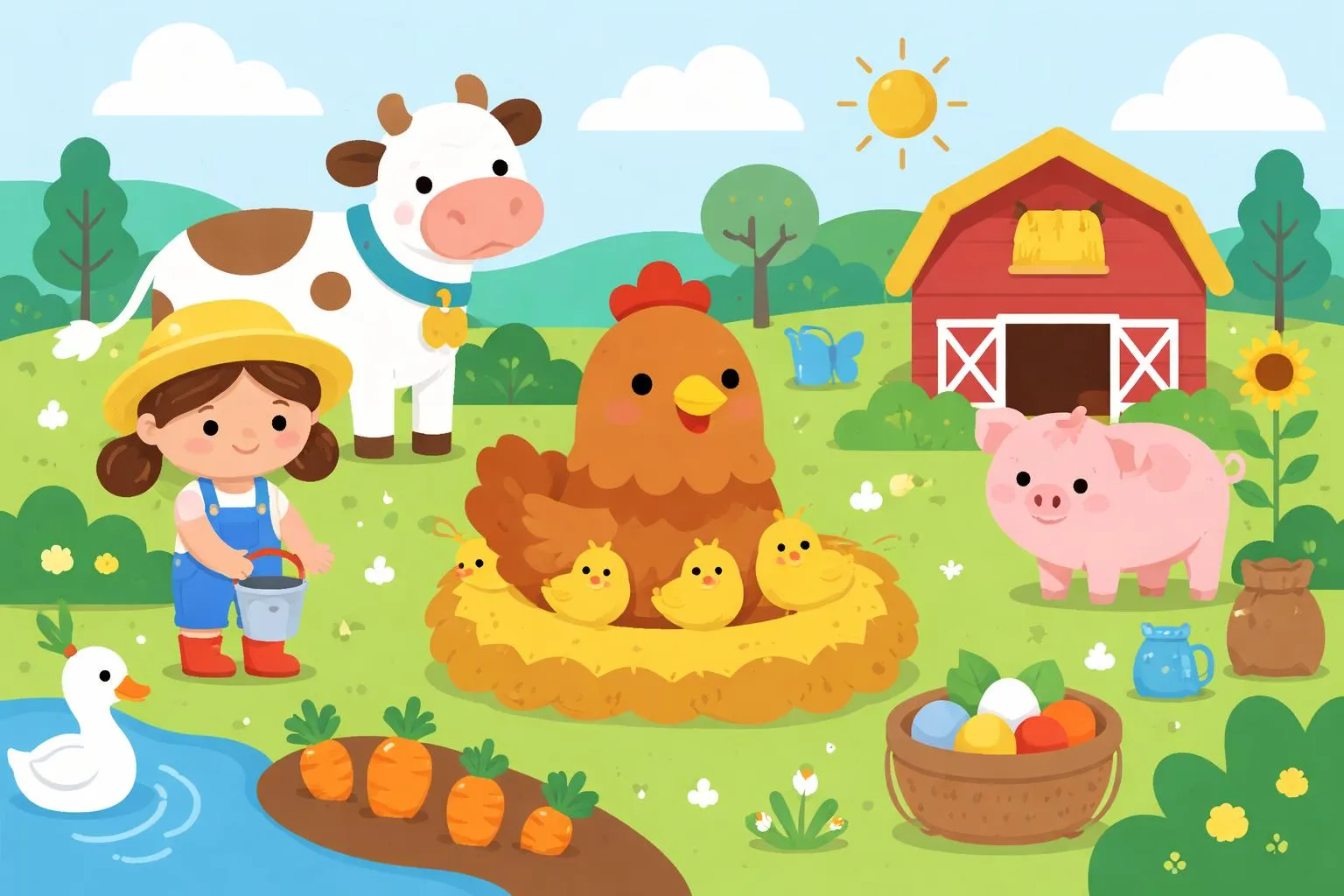

Original Story:
I had a little hen, the prettiest ever seen,
She washed me the dishes, and kept the house clean:
She went to the mill to fetch me some flour,
She brought it home in less than an hour;
She baked me my bread, she brew’d me my ale,
She sat by the fire and told many a fine tale.
Expansion and Analysis of the Story
Summary and Interpretation
This charming little poem tells the story of a dedicated and caring hen who performs many helpful tasks for her owner. The hen is described as the "prettiest ever seen," emphasizing her special place in the narrator's life. She not only keeps the house clean and washes dishes but also goes out to fetch flour from the mill, bakes bread, brews ale, and entertains with stories by the fire.
The poem highlights themes of hard work, loyalty, and kindness. The hen’s willingness to serve and care for her owner reflects the values of responsibility and helpfulness. It also creates a warm, cozy atmosphere where the hen’s efforts contribute to a happy and comfortable home.
Creative Background and Author Introduction
This poem is a traditional nursery rhyme or children’s story that likely originated from folk tales or early children’s literature. Such stories were often passed down orally before being written down. The author is unknown, as is common with many traditional nursery rhymes, but the story reflects the agrarian lifestyle of past centuries when animals were integral to daily life.
The poem’s simple language and repetitive structure make it easy for children to understand and remember. It serves as an early example of storytelling that combines rhythm and rhyme to engage young listeners.
Reflection and Personal Response
Reading this poem evokes a sense of nostalgia and appreciation for simple, everyday acts of kindness and care. It reminds us how even small creatures, like a hen, can play an important role in our lives. The story encourages gratitude for those who help us, whether animals or people, and teaches the value of cooperation and mutual support.
Educational Value and Learning Points
Children and students can learn several important lessons from this poem:
- Responsibility and Hard Work: The hen’s many tasks show how contributing to household chores is valuable.
- Gratitude: Appreciating the efforts of others, even those who might seem small or insignificant.
- Storytelling and Imagination: The hen telling tales by the fire encourages creativity and the joy of sharing stories.
- Vocabulary Building: Words like mill, flour, brew’d, and ale introduce children to new terms related to traditional life and cooking.
- Rhyme and Rhythm: The poem’s structure helps children develop phonemic awareness and memory skills.
Practical Applications and Life Lessons
- At Home: Children can learn to help with chores such as cleaning, cooking, or tidying up, understanding that everyone’s contribution matters.
- In School: Teachers can use this poem to introduce topics about farm life, traditional roles, and the importance of cooperation.
- In Social Situations: The story fosters empathy and respect for helpers, whether family members, friends, or community workers.
- Creative Writing: Students can be inspired to write their own stories or poems about helpful animals or family members.
Reading Comprehension Exercises
-
Who is the main character in the poem?
a) A little dog
b) A little hen
c) A little girl
d) A little cat -
What tasks does the hen do?
a) Washes dishes and keeps the house clean
b) Goes to the mill to fetch flour
c) Bakes bread and brews ale
d) All of the above -
How does the hen entertain the narrator?
a) By singing songs
b) By telling many fine tales
c) By dancing
d) By playing games -
What qualities does the hen show in the poem?
a) Laziness and selfishness
b) Hard work and kindness
c) Anger and impatience
d) Fear and sadness -
What can children learn from this poem?
a) To ignore chores
b) To appreciate and help others
c) To be selfish
d) To avoid storytelling
Answers
- b) A little hen
- d) All of the above
- b) By telling many fine tales
- b) Hard work and kindness
- b) To appreciate and help others
This poem is a delightful example of how simple stories can teach important values and language skills to children, fostering both moral development and literacy in an engaging way.