
Original Story:
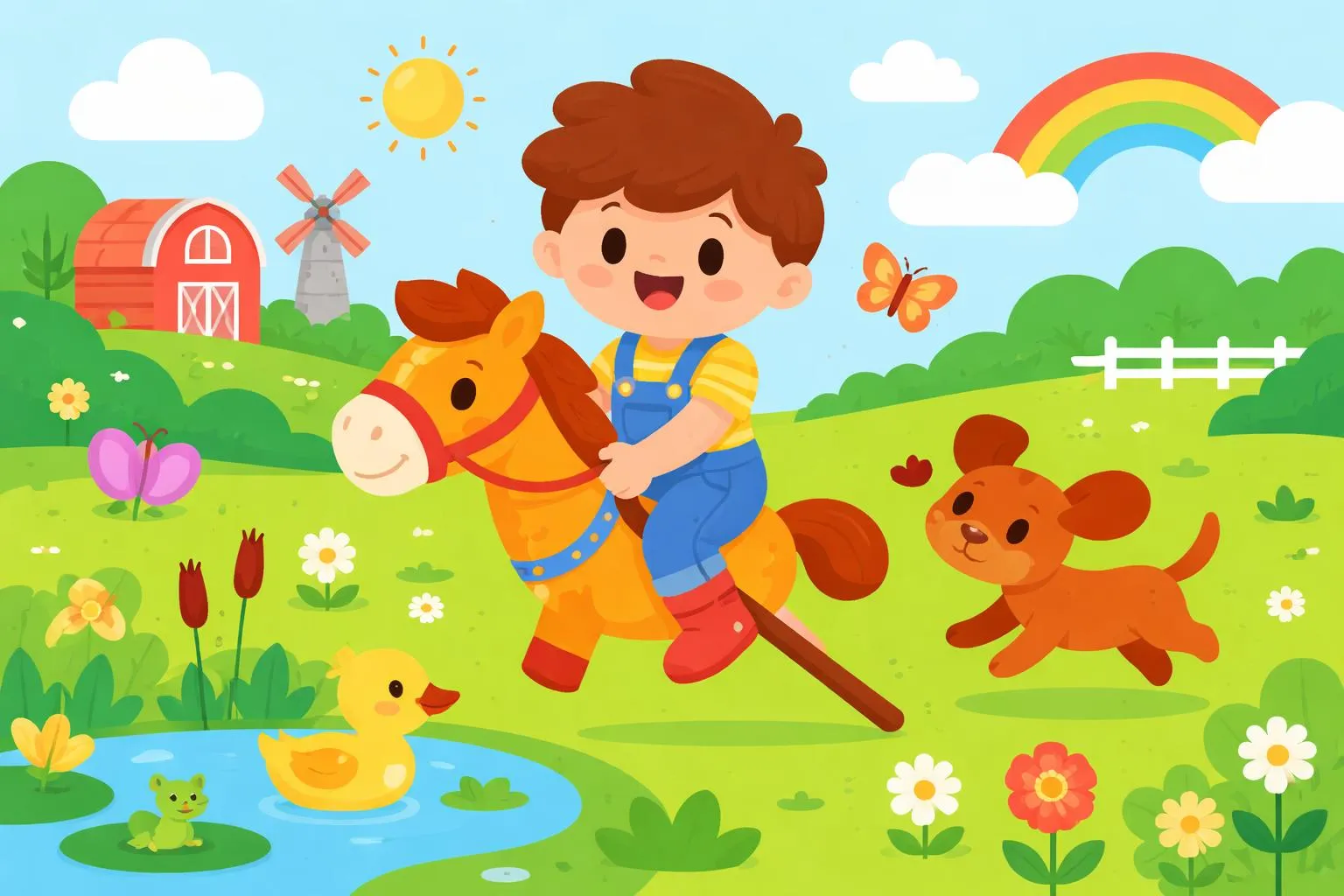
I had a little hobby horse,
And it was dapple grey;
Its head was made of pea-straw,
Its tail was made of hay.
I sold it to an old woman
For a copper groat;
And I’ll not sing my song again
Without a new coat.
Expansion and Analysis
Summary and Interpretation
This short poem tells a simple yet charming story about a child's toy—a hobby horse. The hobby horse is described as dapple grey, with a head made of pea-straw and a tail made of hay, illustrating the homemade and rustic nature of the toy. The narrator then sells the hobby horse to an old woman for a copper groat, which was a small coin used in old England. The final lines suggest that the narrator will not sing the song again without a new coat, implying a sense of loss or change, perhaps symbolizing growing up or moving on from childhood.
Literary Appreciation
The poem's rhythm and rhyme scheme make it easy to remember and recite, which is a key feature of traditional children's poetry and nursery rhymes. The imagery is vivid yet simple, evoking a nostalgic and innocent atmosphere. The use of everyday materials like pea-straw and hay highlights the creativity and resourcefulness of children in making their own toys, which adds a layer of warmth and authenticity to the poem.
Background and Author Introduction
This poem is a traditional nursery rhyme whose exact origins are uncertain, but it reflects the rural life and childhood experiences of earlier centuries. Nursery rhymes like this one were often passed down orally from generation to generation, serving both as entertainment and as a means to teach language, rhythm, and moral lessons to children.
Reflection and Personal Response
Reading this poem invites us to reflect on the simplicity and joy of childhood. The hobby horse, though made from humble materials, represents imagination and playfulness. The sale of the toy to an old woman can be seen as a metaphor for the passage of time and the transition from childhood to adulthood. It reminds us to cherish the innocence and creativity of youth.
Educational Value and Learning Points
Children and students can learn several things from this poem:
- Vocabulary and Language Skills: Words like "hobby horse," "dapple grey," "pea-straw," and "copper groat" introduce new vocabulary and historical terms.
- Rhythm and Rhyme: The poem’s simple rhyme scheme helps children understand the concept of rhyming words and poetic structure.
- Imagination and Creativity: The poem encourages children to appreciate homemade toys and to use their imagination in play.
- Historical Context: The mention of a copper groat provides an opportunity to discuss historical currency and life in the past.
- Emotional Understanding: The poem subtly touches on themes of change and loss, which can help children develop emotional awareness.
Practical Applications and Life Lessons
- In the Classroom: Teachers can use this poem to introduce poetry and rhyming patterns. It can also be a starting point for creative activities, such as making homemade toys or writing similar poems.
- At Home: Parents can encourage children to create their own toys from household items, fostering creativity and fine motor skills.
- Life Skills: The poem teaches children about the value of objects, the idea of trade or selling, and the importance of adapting to change.
Reading Comprehension Questions
- What kind of toy did the narrator have?
- What materials were used to make the hobby horse?
- To whom did the narrator sell the hobby horse?
- What did the narrator receive in exchange for the hobby horse?
- Why does the narrator say they will not sing the song again without a new coat?
- What do you think the hobby horse symbolizes in the poem?
- How does the poem make you feel about childhood?
Answers
- The narrator had a little hobby horse.
- The hobby horse's head was made of pea-straw, and its tail was made of hay.
- The narrator sold the hobby horse to an old woman.
- The narrator received a copper groat in exchange.
- The narrator implies that they need a new coat before singing the song again, possibly symbolizing a change or readiness for something new.
- The hobby horse symbolizes childhood, imagination, and innocence.
- Answers may vary; common responses include feelings of nostalgia, warmth, or sadness about growing up.
This poem offers a rich blend of language learning, historical insight, and emotional reflection, making it an excellent resource for young learners and educators alike.