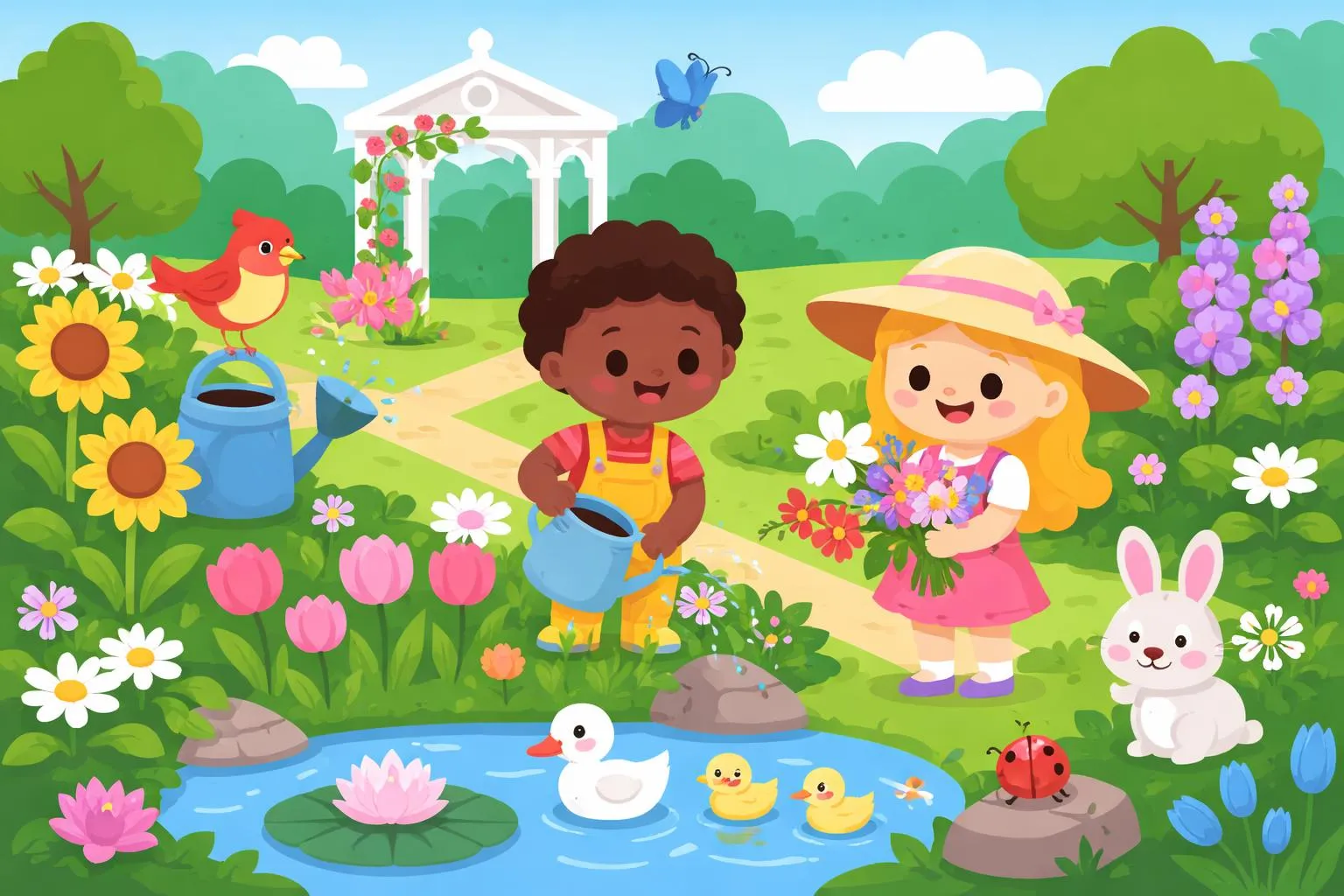

Original Story:
In this old garden, fair, I walk to–day
Heart–charmed with all the beauty of the scene:
The rich, luxuriant grasses’ cooling green,
The wall’s environ, ivy–decked and gray,
The waving branches with the wind at play,
The slight and tremulous blooms that show between,
Sweet all: and yet my yearning heart doth lean
Toward Love’s Egyptian fleshpots far away.
Beside the wall, the slim Laburnum grows
And flings its golden flow’rs to every breeze.
But e’en among such soothing sights as these,
I pant and nurse my soul–devouring woes.
Of all the longings that our hearts wot of,
There is no hunger like the want of love!
Explanation and Interpretation
This poem beautifully captures a moment of walking through an old, peaceful garden filled with lush greenery, ivy-covered walls, and delicate flowers swaying in the breeze. The speaker is deeply enchanted by the natural beauty surrounding them. However, despite this serene and charming environment, the speaker’s heart is filled with a profound yearning for love, which is described metaphorically as "Love’s Egyptian fleshpots far away." This phrase suggests a distant, almost exotic longing for love that cannot be fulfilled by the beauty of the garden alone.
The poem contrasts the external beauty of the garden with the internal emotional turmoil of the speaker. Even though the garden is full of life and sweetness, the speaker's soul is burdened by a deep emotional hunger—the desire for love, which is portrayed as the strongest and most painful longing of all.
Background and Author Introduction
This poem reflects themes common in Romantic and Victorian poetry, where nature often symbolizes beauty and tranquility, yet human emotions such as love, longing, and sorrow remain complex and sometimes painful. The imagery of the garden and the natural elements like the Laburnum tree with its golden flowers evoke a classic pastoral scene, which contrasts with the speaker’s inner emotional conflict.
The author, though not named here, likely belongs to a tradition of poets who explore the tension between the peacefulness of nature and the restless desires of the human heart. Such poets often use rich imagery and metaphor to express universal feelings of love and longing.
Reflection and Insights
Reading this poem reminds us that external beauty and comfort do not always satisfy our deepest needs. The speaker’s experience teaches us that while nature and surroundings can soothe the senses, the emotional needs of the heart, especially the need for love, are powerful and sometimes unfulfilled.
For children and students, this poem offers a chance to explore emotions and how they can be expressed through poetry. It encourages readers to recognize that feelings like longing and desire are natural parts of the human experience, and that art and poetry can help us understand and express these feelings more clearly.
Learning Points for Children and Students
- Vocabulary: Words like yearning, luxuriant, tremulous, pant, and wot (know) can be explored to build a richer English vocabulary.
- Imagery and Metaphor: Understanding how poets use nature imagery to reflect emotions.
- Themes: Love, longing, beauty, and emotional conflict.
- Emotional intelligence: Recognizing and naming feelings, understanding that it’s normal to feel longing or sadness.
- Creative writing: Students can try writing their own poems about nature and feelings.
Practical Applications and Life Lessons
- In daily life, children can learn to appreciate nature’s beauty while also recognizing their own feelings and needs.
- In school, this poem can be used to teach literary devices such as metaphor and imagery.
- In emotional development, it helps children understand that feelings of longing or sadness are part of growing up and can be expressed through writing or talking.
- In art and creativity, students can be inspired to create drawings or poems based on their own feelings and surroundings.
Reading Comprehension Questions
- What is the main setting described in the poem?
- How does the speaker feel about the garden?
- What does the phrase "Love’s Egyptian fleshpots far away" suggest?
- What is the strongest longing the speaker talks about?
- How does the poem contrast the garden’s beauty with the speaker’s feelings?
- What kind of tree is mentioned in the poem, and what is special about it?
- Why does the speaker say "I pant and nurse my soul–devouring woes"?
- What lesson can we learn from this poem about feelings and nature?
Answers
- The poem is set in an old, beautiful garden with green grasses, ivy-covered walls, and blooming flowers.
- The speaker feels enchanted and charmed by the garden’s beauty.
- It suggests a distant, almost exotic desire for love that is not fulfilled by the garden’s beauty.
- The strongest longing is the desire for love.
- The poem shows that although the garden is beautiful and soothing, the speaker’s heart is still troubled by emotional pain.
- The Laburnum tree is mentioned, and it is special because it has golden flowers that sway in the breeze.
- The speaker feels overwhelmed by deep emotional pain or longing, which is described as "soul–devouring woes."
- We learn that nature’s beauty can be comforting, but human emotions like love and longing are powerful and sometimes hard to satisfy.
This poem offers a rich opportunity for students to explore language, emotions, and the power of poetry to express complex feelings. It encourages both appreciation of the natural world and introspection about the heart’s desires.